DbcultAccessing Vault...
Cult Review
Senior Film Conservator
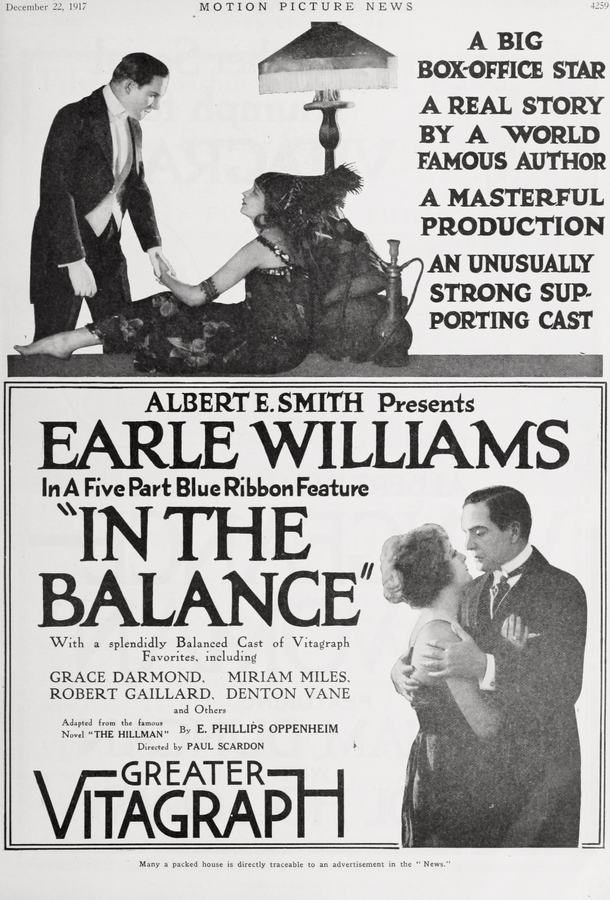
In the cinematic tapestry of early 20th-century drama, In the Balance emerges as a compelling exploration of societal divides, personal integrity, and the enduring power of love. From the moment the narrative unfolds, we are thrust into a world where rigid tradition clashes with the allure of modernity, where the pristine simplicity of rural life confronts the glittering, yet often treacherous, complexities of the urban landscape. This is not merely a tale of romance; it is a profound meditation on the choices that define us, the judgments that haunt us, and the capacity for redemption that ultimately illuminates the human spirit.
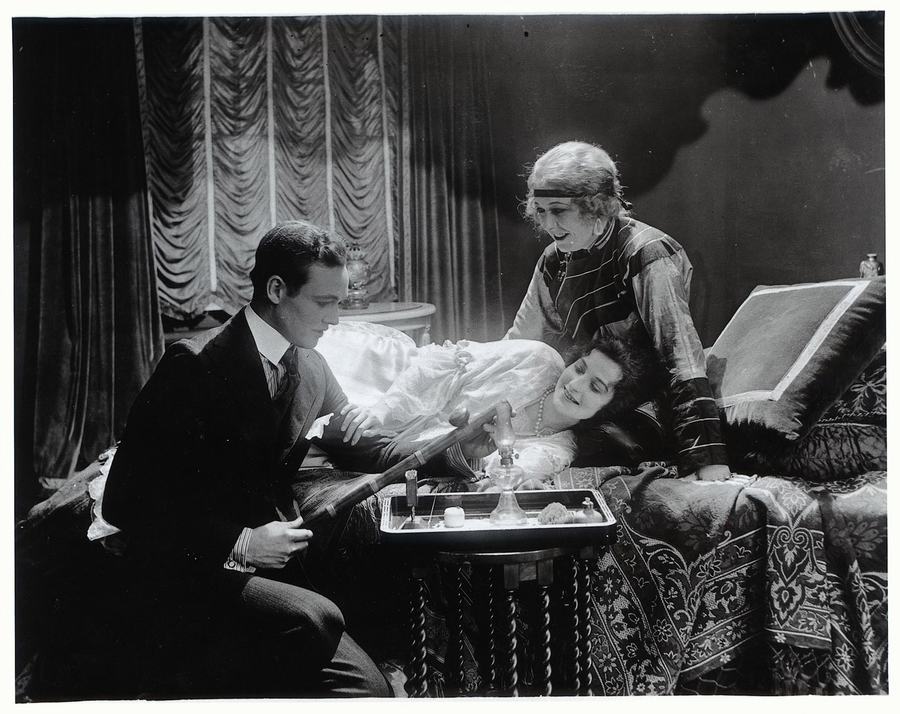
The film masterfully sets its stage with an incident that proves pivotal: an actress, Louise, portrayed with nuanced vulnerability by Julia Swayne Gordon, finds her sophisticated motor car incapacitated on a lonely road. Her intended destination, the castle of a dissolute prince, immediately casts a shadow of moral ambiguity over her character. This roadside mishap, however, is less an inconvenience and more a fateful intervention, as it introduces her to Strangeway, the enigmatic "Hillman," brought to life with a compelling blend of stoicism and burgeoning curiosity by Earle Williams. He is a man shaped by the unyielding, almost fanatical, beliefs of his family, who hold that no member should ever abandon the sanctity of their ancestral hills. This initial encounter is a masterclass in establishing contrasting worlds, hinting at the profound ideological and emotional chasm that separates these two individuals.
Their exchange of confidences at Peak Hall is the dramatic fulcrum upon which much of the subsequent narrative pivots. Strangeway, with an earnestness born of his isolated convictions, warns Louise against the corrupting influence of the Prince. His wisdom, though perhaps parochial, carries the weight of an untainted perspective. Louise, in turn, with the worldly wisdom of an artist accustomed to broader horizons, implores him to embrace the expansive possibilities of city life, to shed the constraints of his inherited dogma. It is a moment of mutual revelation and reciprocal challenge, a testament to the power of human connection to transcend even the most entrenched of beliefs. What is remarkable is that both heed the other's advice. Louise, perhaps swayed by Strangeway's sincerity or a dawning self-awareness, retreats from the Prince's orbit, returning to the city not to pursue a scandalous liaison, but to redefine her path. Strangeway, for his part, embarks on a journey into the very heart of the urban sprawl, drawn by the promise of a life beyond the hills, a decision that his family's stern tenets would undoubtedly condemn.
This reciprocal transformation sets the stage for the unfolding drama. The Prince, a figure of persistent malevolence, refuses to relinquish his pursuit of Louise. His machinations represent the darker side of metropolitan society, a world where reputation is currency and innocence is a vulnerability to be exploited. He attempts to ensnare Strangeway by introducing a notorious dancer into his path, a transparent ploy to discredit the Hillman and clear his own way to Louise. This tactic, reminiscent of the intricate social traps found in films like The Spider and the Fly, highlights the Prince's manipulative nature, yet it ultimately fails to break Strangeway's burgeoning resolve or his genuine affection for Louise. His character, though secondary to the central romance, serves as a crucial antagonist, embodying the corrupting forces that threaten to engulf our protagonists.
Strangeway's subsequent proposals to Louise are fraught with the weight of their divergent worlds and her own conflicted past. Her hesitation is understandable, a reflection of the profound choices she faces. Her life as an actress, her previous association with the Prince, and the societal expectations placed upon her create a complex web of internal conflict. This period of uncertainty is further complicated by the arrival of Strangeway's brother from the hills. This character acts as a physical manifestation of the family's rigid traditions, a living reminder of the strictures Strangeway has dared to defy. His mission to reclaim his brother underscores the powerful, almost tribal, pull of ancestral loyalties, a theme that resonates deeply and evokes parallels with the strong familial ties explored in dramas like A Son of Erin, where heritage often dictates destiny.
The narrative reaches a significant turning point when Louise, despite her continued proximity to the Prince, finally accepts Strangeway's proposal. This acceptance, however, is not without its dramatic repercussions. The Prince, enraged by what he perceives as a personal slight and the loss of his intended prize, retaliates with a scandalous remark about Louise at his club. This public defamation, designed to shatter her reputation and crush Strangeway's love, is met with an immediate, visceral response from the Hillman. His blows, delivered in defense of Louise's honor, are less an act of brute force and more a desperate cry of a love that feels betrayed. The subsequent confrontation with Louise, where she tearfully admits the truth of the Prince's damning accusation, is arguably the film's most heart-wrenching moment. It is a stark reminder that even the deepest affection can be tested by the weight of past decisions and societal judgment. This scene, brimming with raw emotion and moral complexity, could find a thematic echo in the intense moral quandaries presented in films such as Kreutzer Sonata, where truth, betrayal, and consequence intertwine with devastating effect.
Crushed and disillusioned, Strangeway retreats to the sanctuary of Peak Hill, his initial optimism for a broader life seemingly shattered. The hills, once a symbol of constraint, now offer solace from the perfidy of the city. Months pass, and the quiet rhythm of his secluded life is interrupted by news of Louise's engagement to the Prince, a development that appears to confirm his worst fears and solidify her perceived fall from grace. Yet, the narrative refuses to succumb to simple tragedy. In a powerful act of agency and vulnerability, Louise arrives at Peak Hall. Her appearance is not an act of desperation, but a courageous plea for understanding. She assures Strangeway that she is "good, not bad," explaining her promise to the Prince as a misguided commitment made when she genuinely believed in his affection. This scene is pivotal, transforming Louise from a figure of questionable repute into one deserving of empathy and forgiveness. It’s a compelling argument for looking beyond superficial judgments, much like the journey of self-discovery and societal acceptance explored in The Woman of Mystery, where a character's true nature is slowly revealed despite initial impressions.
The film's resolution is both moving and deeply satisfying. Both Strangeway and his steadfast brother, who once represented the unyielding voice of tradition, receive Louise as "one of them." This act of acceptance transcends mere romantic reconciliation; it signifies a broader integration of disparate worlds and values. Louise, the sophisticated city actress, finds belonging and redemption not in the glittering salons of the metropolis, but in the rugged, honest embrace of the hills. Strangeway, the Hillman, finds his love reaffirmed and his world expanded, not by abandoning his heritage, but by integrating a new, complex understanding of human frailty and forgiveness. The brother's acceptance is particularly poignant, symbolizing a softening of rigid adherence to ancestral custom, recognizing a deeper, more humane truth. This journey of a man from a sheltered environment venturing into the unknown and ultimately finding a richer truth echoes the thematic core of The Man from Home, where provincial innocence confronts and ultimately transforms urban sophistication.
The performances in In the Balance are uniformly strong, with Julia Swayne Gordon imbuing Louise with a captivating blend of glamour, vulnerability, and resilience. Earle Williams, as Strangeway, masterfully conveys the internal conflict of a man torn between duty and desire, tradition and progress. His transformation from stern hill-dweller to a man capable of profound forgiveness is utterly convincing. The supporting cast, including Templar Saxe as the insidious Prince, effectively fleshes out the narrative's emotional landscape. Writers Garfield Thompson and E. Phillips Oppenheim deserve commendation for crafting a narrative that is both intricate and emotionally resonant, weaving a tale that feels both grand in its scope and intimate in its exploration of human relationships. Their ability to introduce complex moral dilemmas and resolve them with a sense of earned redemption is a testament to their storytelling prowess. The film’s pacing, a crucial element in silent cinema, ensures that each dramatic beat lands with precision, building tension and emotional stakes effectively.
Beyond its immediate narrative, In the Balance offers a timeless commentary on the nature of societal judgment and the possibility of personal growth. It challenges viewers to look beyond superficial appearances and past mistakes, advocating for empathy and understanding. The film suggests that true strength lies not in unwavering adherence to dogma, but in the capacity for compassion and the courage to embrace change. It’s a narrative that speaks to the enduring human quest for belonging, for a place where one is accepted for who they are, flaws and all. The ultimate triumph is not just the union of two individuals, but the reconciliation of two worlds, proving that love, when genuine, can bridge the most formidable of divides. It is a testament to the idea that true 'balance' is found not in strict adherence to one way of life, but in the harmonious integration of diverse experiences and the unwavering belief in the human capacity for goodness. This powerful message ensures that In the Balance remains a compelling and thought-provoking cinematic experience, a quiet classic that continues to resonate with contemporary audiences seeking tales of authentic human struggle and ultimate triumph.
IMDb —
1920
Community
Log in to comment.