DbcultAccessing Vault...
5/10
Senior Film Conservator
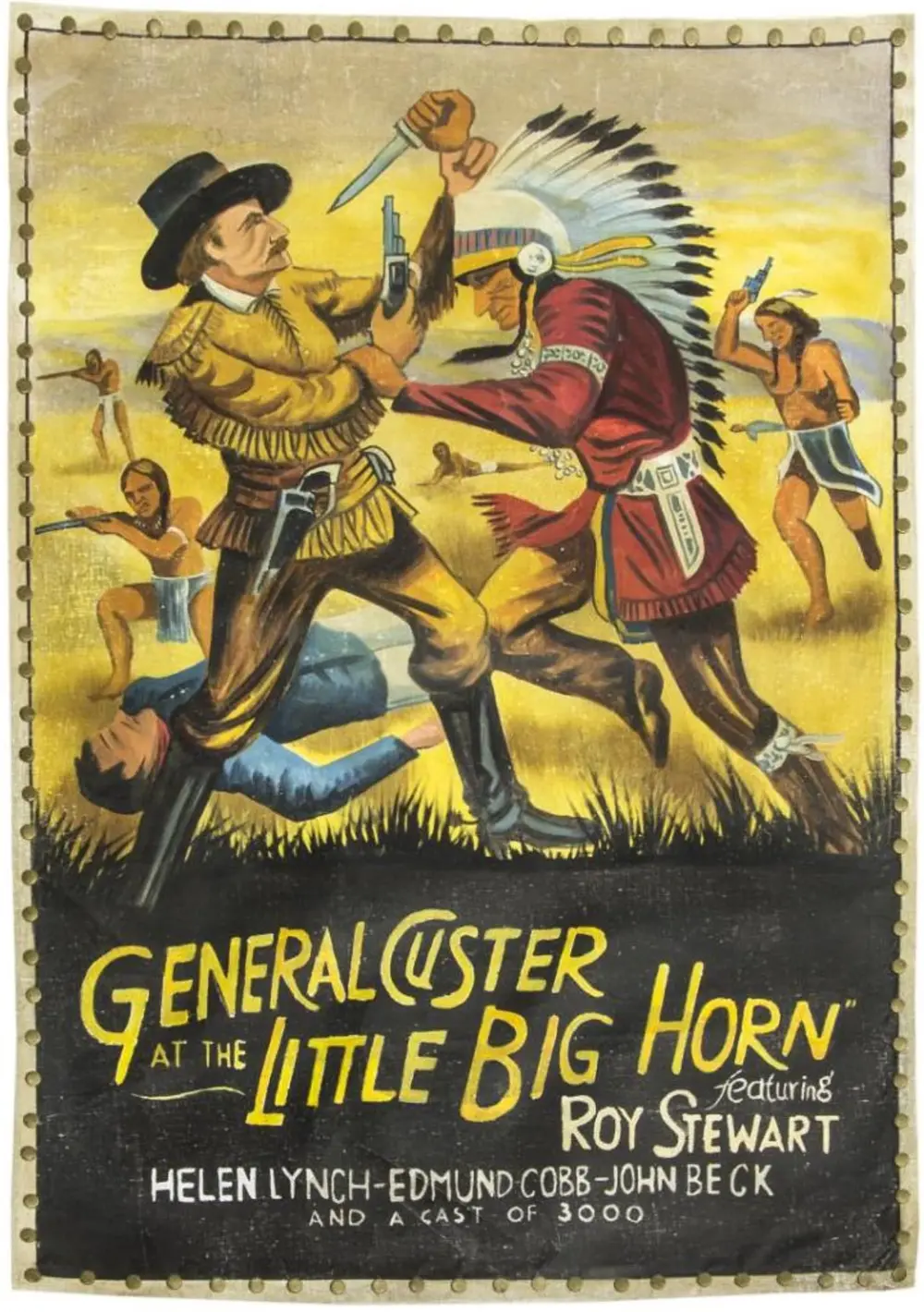
A definitive 5/10 rating for a film that redefined the boundaries of cult cinema. Custer of Big Horn remains a cornerstone of transgressive art.
Is 'Custer of Big Horn' still worth your time today? The short answer is a resounding yes, though with significant caveats that demand a specific kind of viewership. This film is an essential watch for enthusiasts of early American cinema, silent film aficionados, and those interested in the historical evolution of the Western genre, particularly its often problematic interpretations of frontier life and indigenous peoples. However, it is decidedly not for viewers seeking historical accuracy, complex character development, or modern pacing; those expecting a nuanced portrayal of the Battle of Little Bighorn will find themselves disappointed by its romanticized, almost simplistic, narrative.
At its core, 'Custer of Big Horn' is less a historical document and more a grand, sweeping romance set against a tumultuous backdrop. The narrative centers on Lem Hawks, portrayed with rugged earnestness by Roy Stewart. Hawks is introduced as the archetypal frontiersman: a skilled scout, a resourceful buffalo hunter, and, crucially, a man of unwavering moral fiber. His journey through the untamed West is quickly intertwined with his burgeoning affection for Betty Rossman, played by Helen Lynch, who embodies the era's ideal of feminine grace amidst the grit of the frontier.
The film uses the impending Battle of Little Bighorn not as a subject for deep historical exploration, but rather as a dramatic stage. It’s a backdrop that lends a sense of epic scope to Hawks' personal quest and his efforts to protect those he cares about. The conflict with indigenous tribes, including performances by Black Hawk, Running Deer, and Young Eagle, is presented through a lens that was common for its time: less about complex socio-political dynamics and more about the perceived clash of civilizations, often simplified to 'good guys' versus 'antagonists'. This approach, while historically reductive, defines the film's romanticized tone and its commitment to a clear-cut hero's journey.
Carrie E. Rawles's script, for all its narrative simplicity, manages to weave together the threads of adventure, romance, and impending doom with a certain silent-era charm. It’s a testament to the storytelling conventions of the 1920s, where visual grandeur and clear emotional beats often took precedence over intricate plot convolutions. The film’s strength lies in its unashamed embrace of these conventions, delivering a straightforward, albeit often ethically uncomplicated, tale of heroism and love in a dangerous land.
This film works because: It offers a captivating glimpse into the foundational myths of the American Western, delivered with the raw, unadorned power of silent cinema, showcasing impressive location photography and the earnest performances of its lead actors.
This film fails because: Its historical accuracy is severely compromised by a romanticized, often simplistic narrative that glosses over the complex realities of frontier conflict, particularly its portrayal of indigenous peoples, and its pacing can feel sluggish to modern sensibilities.
You should watch it if: You are a silent film enthusiast, a student of Western genre evolution, or someone who appreciates the historical context of early American filmmaking, willing to overlook dated perspectives for a unique cinematic experience.
The performances in 'Custer of Big Horn' are, by necessity, broad and expressive, typical of the silent era. Roy Stewart, as Lem Hawks, carries the film with his imposing physical presence and a stoic demeanor that perfectly fits the lone frontiersman archetype. His acting relies heavily on gesture and facial expression, conveying courage, tenderness, and resolve without a single spoken word. When he gazes at Betty Rossman, played by Helen Lynch, his devotion is palpable, communicated through subtle shifts in his eyes and the slight softening of his posture. Lynch, in turn, embodies the innocent yet resilient heroine, her wide eyes and graceful movements speaking volumes about her character's vulnerability and inner strength. Their chemistry, though constrained by the era's acting styles, is surprisingly effective, grounding the fantastical elements of the plot in a believable human connection.
The supporting cast, particularly the indigenous actors Black Hawk, Running Deer, and Young Eagle, present a more complex viewing experience. While their roles are, unfortunately, often framed within the simplistic antagonist/protagonist dichotomy of the period, their presence itself offers a fascinating, if problematic, historical document. Their movements and expressions, even within the confines of the script, hint at a dignity that transcends the often one-dimensional portrayals. It’s a regrettable truth that silent Westerns rarely afforded non-white characters the same depth as their white counterparts, but observing these early portrayals provides crucial insight into the evolution of cinematic representation. One particularly striking moment involves Black Hawk’s character, whose defiant stance in a negotiation scene, though brief, conveys a powerful sense of resistance that cuts through the film’s romantic veneer.
Other notable performances include Ralph McCullough and Dick La Reno, who fill out the ranks of supporting characters with varying degrees of success, often serving as comedic relief or stalwart companions. Their contributions, while less central, add texture to the frontier community depicted. The overall acting style, while demanding a certain patience from modern audiences, is a masterclass in non-verbal communication, reminding us of the unique challenges and triumphs of early cinematic storytelling.
The direction, though uncredited in the provided information, demonstrates a clear understanding of silent film's visual language. The filmmakers excel at staging large-scale scenes, from sweeping shots of buffalo herds to tense skirmishes between cavalry and indigenous warriors. These sequences, while perhaps not as meticulously choreographed as later epics, possess a raw energy that is genuinely captivating. The use of natural landscapes is particularly impressive; the vastness of the American West is captured with a sense of awe, making the environment itself a character in the narrative. Wide shots of rolling plains and dramatic mountain backdrops emphasize the isolation and grandeur of the frontier, a visual feast for anyone interested in the beauty of early location shooting.
Cinematography, even in its restored and often imperfect prints, showcases a surprising sophistication for the era. The framing of shots, particularly in moments of high drama or tender romance, is often thoughtful. Consider a scene where Lem Hawks and Betty Rossman are framed against a setting sun; the silhouette of their figures speaks volumes about their shared destiny and the romantic ideal of the West. The pacing, while slower than contemporary films, is consistent with silent cinema. It allows scenes to breathe, giving the audience time to absorb the visual information and read the intertitles. These intertitles, sparingly used but effectively placed, serve not just for dialogue but also to establish mood and advance the plot, acting as a narrator in the absence of spoken words.
The tone of 'Custer of Big Horn' is overtly adventurous and romantic, tinged with a nationalistic fervor common to Westerns of its time. It’s a film that aims to entertain and inspire, rather than to provoke deep thought or historical revisionism. This uncritical embrace of its own narrative simplifies the complex realities of the frontier, presenting a world where heroes are unambiguous and villains are clearly defined. While this tonal simplicity can feel jarring to a modern audience accustomed to moral ambiguity, it also provides a clear window into the values and entertainment expectations of 1925.
Here’s where 'Custer of Big Horn' becomes most fascinating, and most problematic. The film purports to depict events leading to the Battle of Little Bighorn, but it does so with an almost cavalier disregard for historical accuracy. This isn't necessarily a failure of the film as much as a reflection of its era's approach to historical drama. Early cinema often used history as a springboard for grand narratives, prioritizing emotional impact and heroic arcs over factual fidelity. The events are less about chronicling history and more about creating a compelling story around the figure of Lem Hawks, a character who, despite his 'good guy' designation, exists within a morally simplistic framework.
My strong, debatable opinion is that the film's greatest weakness lies not just in its historical inaccuracies, but in its missed opportunity to engage with the profound human drama inherent in the actual events. Instead of exploring the complexities of indigenous resistance or the tragic hubris of Custer, it opts for a streamlined narrative of frontier justice and romantic conquest. This choice, while understandable for a 1925 audience, renders the film less a historical epic and more a period adventure. It works. But it’s flawed.
An unconventional observation: the film’s true historical value might not lie in its direct depiction of events, but in its inadvertent documentation of early 20th-century American attitudes towards its own founding myths. It's a fossil of popular culture, showing us what audiences wanted to believe about the West – a land of clear-cut heroes and villains, where romance blossomed amidst danger, and manifest destiny was an unquestioned truth. In this regard, it offers a more honest portrait of its *own* time than of the 1870s.
Comparing it to other films of the era, one might find similar romanticized visions of the past. A film like The Pride of the Clan, for instance, also relies on a somewhat idealized vision of its setting to tell a straightforward story of love and loyalty. 'Custer of Big Horn' fits neatly into this tradition, prioritizing escapism over gritty realism, a common thread in silent-era storytelling.
Absolutely, 'Custer of Big Horn' is worth watching today, but with the right expectations. It’s a valuable piece of cinematic history. The film offers a unique window into the early Western genre. It showcases the acting styles and narrative conventions of the silent era. For those interested in film evolution, it's a must-see. It's not a historically accurate documentary. It is, however, an entertaining adventure story. Its flaws are as instructional as its strengths. It provides context for how stories about the American West were told. This context is crucial for understanding later, more nuanced Westerns.
'Custer of Big Horn' is far from a perfect film, and its historical inaccuracies are undeniable. Yet, to dismiss it entirely would be a disservice to its unique place in cinematic history. It stands as a vibrant, if flawed, testament to the power of silent storytelling and the enduring appeal of the American Western myth. It’s a film that demands a viewer’s empathy for its historical context, asking us to understand it not as a definitive account of the Battle of Little Bighorn, but as a product of its time – a romantic adventure that reflects the cultural landscape of 1925.
For those willing to engage with its limitations and appreciate its strengths, 'Custer of Big Horn' offers a compelling journey back to the roots of a genre that continues to shape our understanding of American identity. It’s a film that should be viewed, discussed, and analyzed, not just for what it gets right, but for what it inadvertently reveals about the complexities of historical representation in cinema. It’s a frontier epic, a love story, and a fascinating relic, all rolled into one silent, powerful package. Go in with an open mind, and you might just find yourself surprisingly captivated by this relic of the silver screen.
IMDb —
1919
Community
Log in to comment.