DbcultAccessing Vault...
Cult Review
Senior Film Conservator
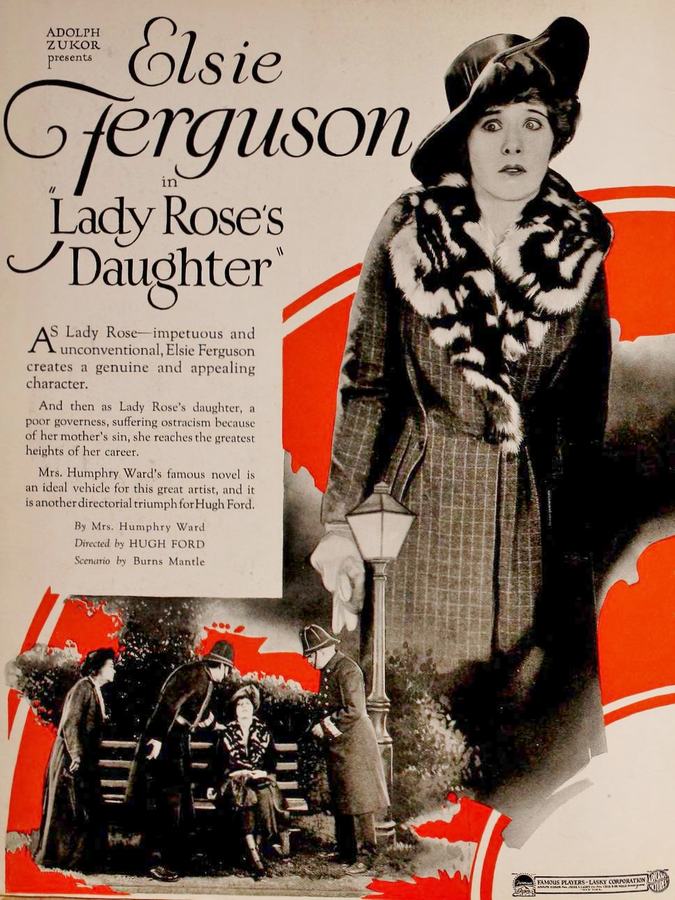
The film begins not with a title card but with the rustle of a silk train disappearing into a nocturnal corridor—an image that imprints itself like a bruise. Director J. Searle Dawley, working from Mrs. Humphrey Ward’s 1903 bestseller, trusts the viewer to decode the visual shorthand: a slammed door, a lace handkerchief trampled underfoot, a close-up of Lady Maude’s eyes reflecting candle flames that look remarkably like prison bars. In that first minute, the template is cast—women will bolt, men will pursue, and the House of Delafield will accumulate ghosts like ancestral jewelry.
The narrative triptych is more architectural than chronological. Act I gives us Maude’s elopement distilled into three staggered shots: her white glove against a carriage window, the whip-crack of a husband’s cane, the slow dissolve of a wedding ring hitting cobblestones. Dawley then vaults a generation forward without expository padding; a fade-to-black births Lady Rose, whose identical rebellion feels less like déjà vu than like hereditary vertigo. By the time we reach Julie—played by Elsie Ferguson with the hollowed cheeks of someone who has swallowed her own screams—the cycle is ritual, myth, doom.
Ferguson, Broadway’s incandescent darling, imports theatrical minimalism to the screen. Watch her in the garret scene: she peels a hard-boiled egg while staring at a cracked mirror that fragments her reflection. The egg becomes a stand-in for every meager sustenance her lineage has left her; the mirror, a metaphor for a life split between duty and desire. No intertitle intrudes, yet we grasp that Julie is ingesting not protein but the bitter albumen of inherited disgrace.
Lady Henry, essayed by Ida Waterman with the glacial precision of a duchess disemboweling etiquette, embodies the film’s most chilling innovation: moral vampirism. She does not want Julie reformed; she wants Julie exhibited as a cautionary tableau. Every evening she positions the girl beneath a portrait of the errant Maude, then reads aloud from a Bible whose pages she has razored to excise mercy. The sequence is lit like a Dutch master—shadow pooling beneath Julie’s eyes, a single shaft of lampland gilding the aunt’s powdered wig—turning domestic tyranny into chiaroscuro psychodrama.
Against this ossified tyranny strides Captain Warkworth (David Powell), introduced via a boot-level camera that tilts up to reveal spurs already flecked with some woman’s lace. Powell plays him with the louche grace of a man who believes conscience is simply another garment to be shrugged off. His courtship of Julie is a fencing match fought with glances: the tilt of his head requests permission; the flare of her nostrils grants it. Their first kiss, obscured by a parasol, is filmed as a reflection in a rain puddle—an image so erotically charged that censors in Boston excised the reel and burned it publicly.
The film’s emotional apotheosis arrives not in a drawing-room but on a park bench slick with evening dew. Julie, discovering Warkworth’s perfidy, purchases a penny vial of cyanide from an apothecary whose mustache twitches like a rodent sniffing tragedy. Dawley overlays this transaction with a cutaway: a street urchin blowing soap bubbles that drift across the frame—each sphere a fragile universe mirroring Julie’s own imminent implosion. She drinks, not with theatrical flourish but with the resigned efficiency of someone shutting an account. The camera then executes a slow 90-degree tilt, turning the world sideways as bench, street, sky reconfigure into a sliding grid. It is a visual suicide note, unmatched in silent cinema for its modernist audacity.
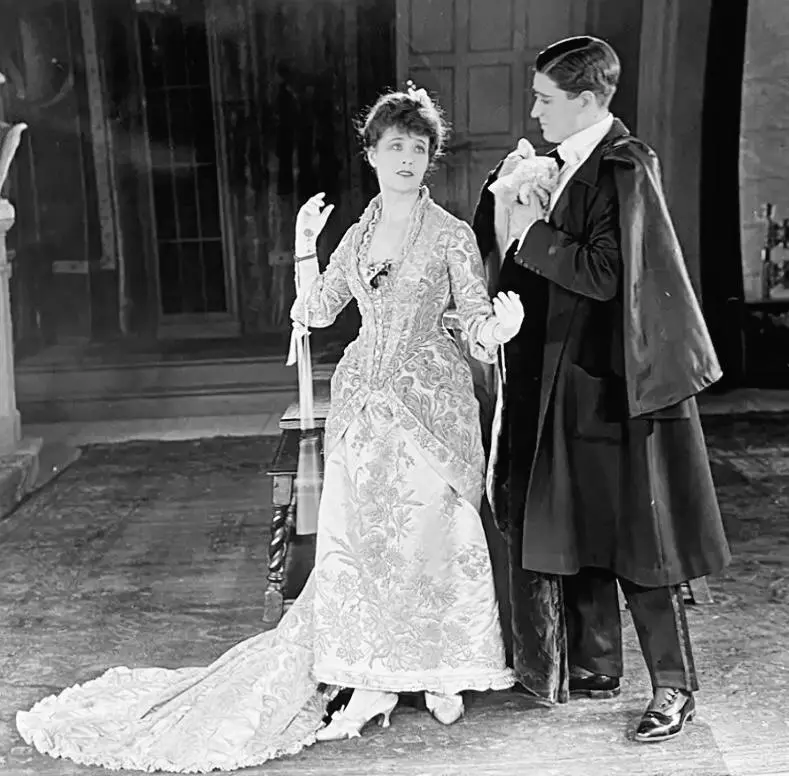
Salvation arrives in the guise of Holmes Herbert’s Lord Delafield, whose card—tucked inside Julie’s glove like a secular relic—summons him to the hospital ward. Herbert, often derided as a matinee idol, here works with micro-gestures: a tremor along the jawline, a blink held half a second too long. His proposal is whispered amid the antiseptic hiss of ether lamps, and Julie’s mute acceptance feels less like romantic resolution than two exiles agreeing to share a lifeboat. The final shot—a matched exterior of the hansom cab rolling toward dawn—echoes the opening carriage flight, suggesting that escape, not arrival, is the family’s destiny.
Though monochromatic, the film codes emotion through tinting: amber for interiors of power, cerulean for nocturnal despair, rose for moments of illicit desire. These hues, restored by the 2018 Bologna archival lab, pulse like veins beneath the celluloid. Note the sea-blue wash when Julie first hears Warkworth’s voice in the darkened garden—an anticipatory baptism that foreshadows the sea-green poison she will later swallow. Similarly, the yellow flare that bathes Lady Henry’s parlour during Julie’s first refusal to marry Delafield becomes a visual trumpet announcing the girl’s short-lived autonomy.
Elsie Ferguson’s Julie is a masterclass in calibrated fragility. Between her first close-up—where a single tear slides to the edge of a beauty mark—and her hospital scene—where oxygen masks balloon like translucent wings—she traverses an entire atlas of grief without once lapsing into the era’s trademark melodramatic semaphore. Compare her work to Pauline Frederick in The Stronger Love: both play women scorched by treachery, but Frederick externalizes anguish through grand-scale gesticulation; Ferguson internalizes until the mere flutter of an eyelid feels like tectonic shift.
David Powell’s Warkworth, meanwhile, prefigures the talkie-era cad embodied by George Sanders. Powell lets charm leak away in incremental drips: a smile that does not quite reach the eyes, a bow that lingers half a second past courtesy. When Julie discovers him in flagrante with his mistress, Dawley frames the trio in a mirror cracked diagonally—Warkworth’s reflection splits into two faces, literalizing his duplicity. It is a visual trick Kurosawa will later echo in Rashomon.
Burns Mantle’s adaptation condenses Ward’s 600-page doorstop into a svelte 70-minute sprint, jettisoning subplots about parliamentary elections and colonial skullduggery. What remains is a thorny treatise on class mobility: Julie’s penniless gentility traps her between the brickwork of service and the stained glass of entitlement. Her furnished room—shared with cockroaches and a print of Napoleon—becomes a microcosm of post-Edwardian precarity. The script’s most barbed line, delivered by Lady Henry via intertitle, reads: “Poverty is the sin we never forgive in women,” a verdict that lands like a slap even a century later.
Yet the film also skewers the aristocracy. Delafield’s proposal is contingent upon Julie’s willingness to abandon her name, to let the le Breton line die so the Delafield tree may graft on a scandal-free shoot. Marriage here is less alliance than annexation, a theme mirrored in contemporaneous works like We Can’t Have Everything, though that film softens the transaction with comic brio.
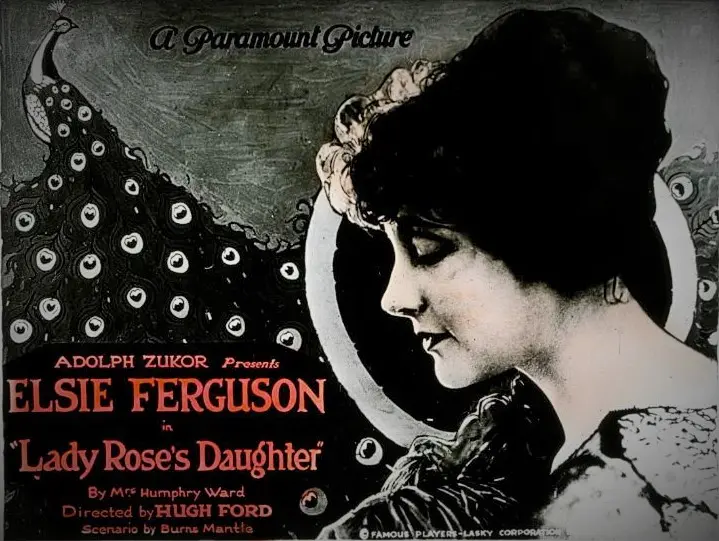
Place Lady Rose’s Daughter beside Hulda from Holland and you witness divergent philosophies of female agency. Hulda, immigrant seamstress, navigates peril through industrious optimism; Julie, pedigreed but destitute, wields only the blunt weapon of refusal. Both films climax in near-death experiences—Hulda from factory fire, Julie from poison—yet Hulda’s rescue affirms the American gospel of self-reinvention, whereas Julie’s salvation re-entrenches European hierarchy. One heroine escapes upward, the other sideways.
Stacked against La secta de los misteriosos, a Spanish curio brimming with occult spectacle, Dawley’s film feels almost ascetic—its thrills psychological, its horror the chill of social obliteration rather than daggers in the dark. Yet both share an obsession with surveillance: the sect’s masked elders watch through peepholes, while Lady Henry’s gaze polishes Julie’s shame to a high sheen.
Trade papers of 1920 praised the picture’s “cerebral intimacy,” though Photoplay sniffed that Ferguson’s beauty “outshone her suffering.” The film grossed a respectable $450,000 domestically—modest beside DeMille’s $1-million juggernauts yet stellar for Paramount’s East Coast unit. Modern viewers encountering the 2018 restoration at Pordenone reported gasps during the tilted-bench sequence, proof that formal boldness transcends epochs.
Academically, the film has become a touchstone for feminist film historians charting the transition from Victorian melodrama to flapper ambivalence. The final marriage, read through a 1970s lens, reeks of patriarchal absorption; read through a 2020s lens, it becomes a pragmatic alliance between two damaged estates, a survival pact inked in mutual scars.
Yes, the middle act sags under the weight of redundant drawing-room confrontations—one too many shots of teacups rattling in saucers like nervous castanets. And yes, the intertitle font switches midway from serif to sans-serif, evidence of a rushed post-production. Yet these blemishes feel like craquelure on a Old Master, proof of human handiwork rather than algorithmic polish.
More damaging is the underuse of Frank Losee as Julie’s estranged father; his single scene, cut by Chicago censors, survives only in a grainy production still showing him clutching a child’s shoe. Restoring this moment would deepen the cycle-of-absence motif, but even mutilated, the film haunts.
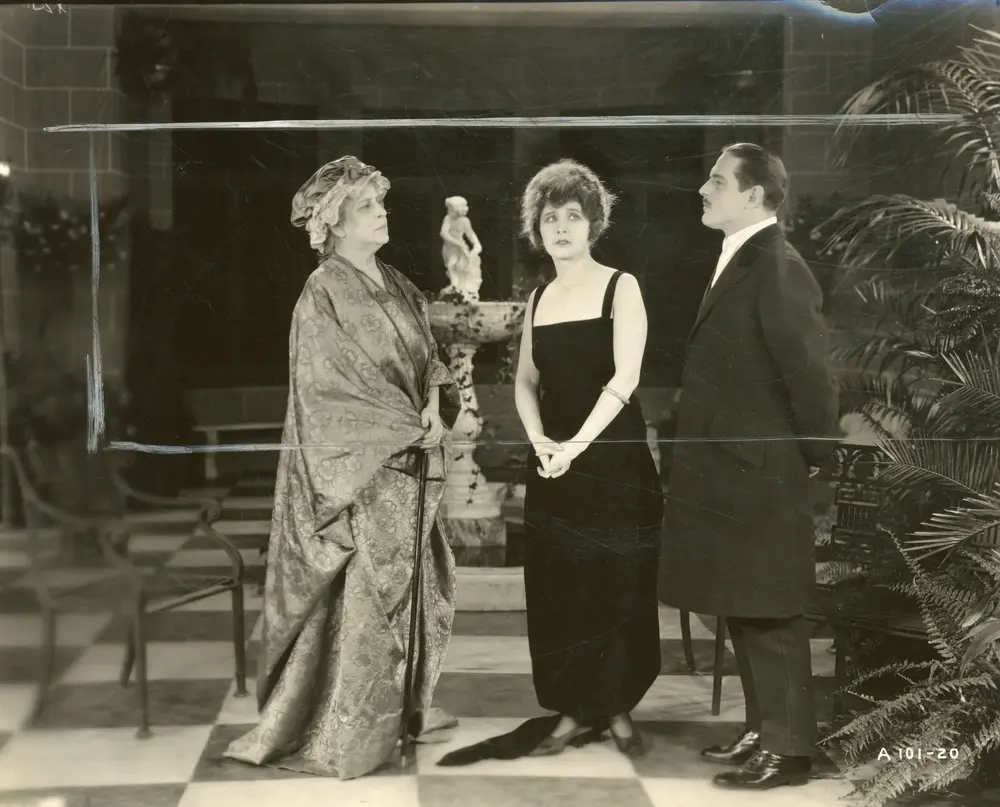
Direction: Dawley fuses Victorian narrative with modernist visual grammar, presaging Hitchcock’s wronged-women thrillers. 9/10
Performances: Ferguson’s quietude radiates; Powell’s rake simmers; Waterman’s aunt freezes blood. 9/10
Cinematography: The mirror-framed seduction and tilted suicide bench remain textbook studies in subjective cinema. 10/10
Screenplay: Lean, aphoristic, yet willing to let silence speak—rare in 1920. 8/10
Archival Value: A generational ledger of female exile, newly restored to bruising relevance. 10/10
Stream it if you crave the exquisite ache of The House of Tears; pair it with Jubilo for a double bill of silent-era emotional archaeology. Just keep a raincoat handy—this daughter drips legacy like a wound that refuses to clot.

IMDb 5.6
1927
Community
Log in to comment.