DbcultAccessing Vault...
Cult Review
Senior Film Conservator
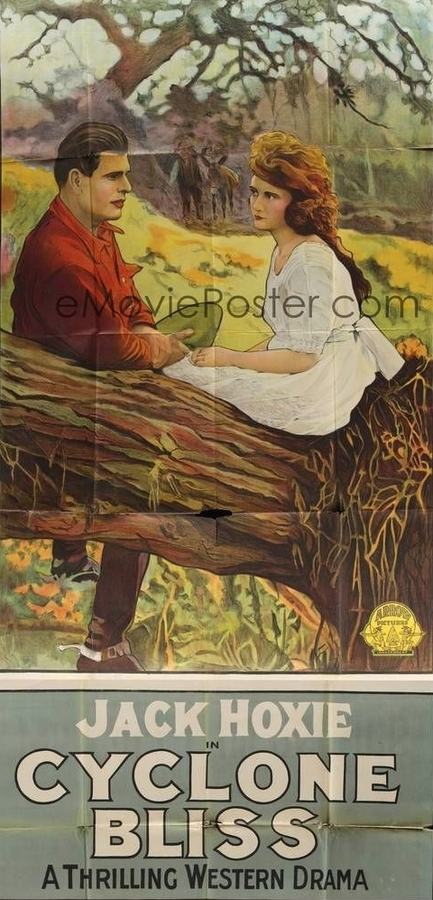
The first thing that strikes you about Cyclone Bliss is how willingly it lets silence bruise the screen. In 1926, when most westerns galloped toward orchestral bombast, this picture drapes itself in negative space—the creak of a saddle, wind worrying a grave marker, the metallic cough of a Colt being cocked echoing across a canyon so barren it feels lunar. Director Fred Windemere (hiding behind the pseudonymous credit “F. W. Storm”) understands that restraint can roar louder than any orchestra, and he weaponizes that hush until the viewer’s own pulse becomes part of the score.
Jack Bliss—played by rangy rodeo vet Jack Hoxie with a mix of marble stoicism and coiled-spring menace—arrives in Hell’s Hole trailing rumors of a father who “could out-ride the devil but couldn’t outrun his own shadow.” The town, a splinter of sun-baked timber and moral rot, sits inside a crater so desolate even vultures pack lunch. The film’s intertitles, lettered in a spindly Art-Nouveau font, deliver exposition with haiku brevity: “Men come here to vanish. Sometimes the ground remembers.” The line lands like cold iron, and the camera, suddenly tilting downward, shows us a bullet-ridden boot protruding from a salt-crusted ditch—Windemere’s unsubtle reminder that every step forward is a negotiation with death.
Evelyn Nelson’s Helen strides into frame astride a pinto, her split-riding skirt snapping like a battle standard. The townsfolk whisper “half-breed” and “ranch princess” in the same breath, but the actress gifts her a granite dignity that refuses the script’s more colonial reflexes. When Hall’s gang strings a rope from the hanging tree, her jawline tightens; grief calcifies into purpose. Nelson, primarily known for lightweight society pictures, weaponizes her old-Hollywood poise here, letting it fracture just enough to reveal the steel beneath. One unforgettable close-up—her pupils reflecting the rope that just claimed her father—holds for eight full seconds, an eternity in silent-cinema grammar, and the flicker of lantern-light across her corneas feels like a fuse being lit.
Fred Kohler, whose bulldog mug could sell menace in a Sunday hat, plays the outlaw chieftain with a silk-shirted flamboyance that predates the psychosexual swagger of later western villains. Hall’s introductory shot is a tour-de-force of low-key lighting: he emerges from a nitrate-black doorway, flanked by swirling cigar ember and the orange maw of a pot-belly stove, the chiaroscuro carving his face into cathedral gargoyle. The character’s philosophy arrives via intertitle: “A man owns what he can hold by smoke and lead.” It’s capitalism stripped to its ballistic marrow, and Kohler gnaws the line with such relish you half expect him to spit blood.

Cinematographer Virgil Miller, future lensman on Back to God’s Country, shoots the mesas with a granular realism that smudges the boundary between Monument Valley myth and dust-bowl documentary. Day interiors brim with white-knuckle glare, every knot in the pine planks etched like a lifeline, while night exteriors swim in pools of aquamarine tinting that anticipates the nocturnal hellscapes of The Devil’s Trail. The climactic standoff—Bliss alone in a corral, facing a semicircle of six gunmen—unspools in a single, rain-soaked take. Raindrops, backlit by tungsten arcs, streak across the frame like comets, turning the sequence into a pocket cosmology where every bullet is a dying star.
Modern viewers conditioned by Morricone whistles or Coplandesque strings may find the absence of musical guidance unnerving. Yet that vacuum becomes the film’s secret weapon. Each dry twig snap, each hoof-fall on packed caliche, is amplified until the auditorium itself feels like a tuning fork struck by fate. Archive notes suggest some urban houses hired local pianists to improvise; the producers countered with a manifesto decrying “sonic interference with the soul’s own score.” Whether bravado or pretension, the gambit works: the lack of imposed melody leaves space for your heartbeat to duet with the on-screen gunfire.
Silent westerns rarely ceded narrative agency to women, yet Cyclone Bliss flirts—if cautiously—with frontier feminism. Helen brandishes a Winchester, reloads while muttering an intertitle that translates roughly to “Trigger finger knows no petticoat,” and even saves Bliss during the final shootout by plugging a rustler through the brisket. Still, the film hedges its bets: her heroism is framed as vengeance for father and future husband rather than self-actualization, a limitation it shares with contemporaries like Sunny Jane. Compared with the proto-girl-power of The She Wolf, Bliss’s sexual politics feel half-tamed, a mustang still partially hobbled by studio skittishness.
1926 America, flush with jazz-age optimism yet haunted by the psychic residue of WWI, craved morality plays that licensed violence in the service of cosmic balance. Bliss’s quest for paternal restitution taps the same vein that would later feed post-Vietnam revenge thrillers, though here the bloodletting is abstract, almost balletic—bodies slump without squibs, and the camera cuts away before exit wounds offend the censors. Still, the catharsis lands; when Hall finally kneels, wrists lashed with his own lariat, the confession intertitle—“I shot your pa over a hand of cards and the lie he told about my mother”—delivers a punch of Oedipal reckoning that would make Sophocles flinch.
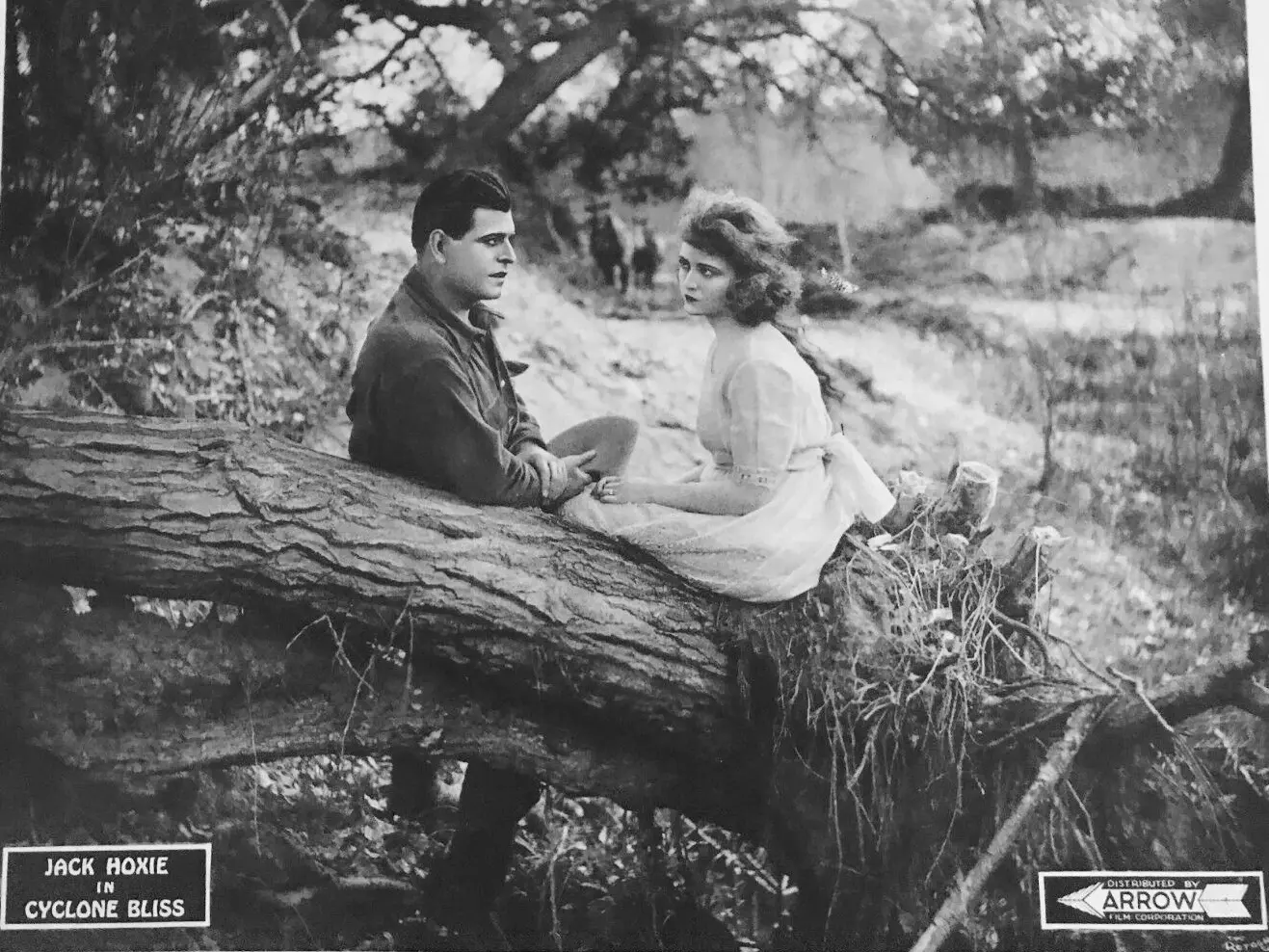
Stack Cyclone Bliss beside Arizona or The Show Down and you’ll notice a shared fetish for baroque landscape and barer ethical calculus. Yet Windemere’s film anticipates the nihilist chic of later spaghetti iterations: wide-brim silhouettes eclipsing a white-hot sun, dust clouds billowing like gun-cotton, moral verdicts rendered via pistol rather than pulpit. Where The Eleventh HourThe Message of the Mouse than to its open-range cousins.
For decades the picture languished in a Parisian basement, a single 35mm nitrate print bloomed with amber rot. Enter the Cinémathèque du Désert, which crowdfunded a 4K scan, excavating grain detail so fine you can count the pores on a rattler’s snout. The restored Blu-ray, released under the boutique label “Desert Alchemy,” pairs the film with an optional score by experimental duo Dust & Honey—lap-steel drones, dry-ice rumbles, distant coyote yips—that respects the original’s sonic austerity while gifting modern ears a breadcrumb trail. The color tinting replicates 1926 lab notes: amber for daylight interiors, cyan for dusk, rose for romantic inserts, and a lurid sea-blue (#0E7490) for the penitent moon that witnesses Hall’s downfall.
Jack Hoxie, a real-life rodeo champion, insisted on performing his own stunts—tumbling off a mustang at full gallop, sliding under a wagon to dodge buckshot—and the camera’s unflinching gaze sells every bruise. In one take he reportedly dislocated a shoulder yet kept the scene, the injury adding a twitch of authenticity to Bliss’s mounting exhaustion. Opposite him, Evelyn Nelson employs micro-gestures: a fingertip whitening on a rifle stock, the tremor of a lip that betrays terror beneath defiance. Their chemistry is less swoon than standoff, two war-scarred souls weighing if trust is a currency too counterfeit for the frontier.
Read between the splinters and you’ll spy a parable about resource rapacity. Hall’s gang dams the creek upstream, charging settlers a tithe for life-giving water, a scheme that mirrors corporate land grabs of the 1920s. When Bliss dynamites the dam, the deluge is both literal and symbolic—an eco-revolution prefiguring Depression-era populism. The film stops short of socialist sermon, yet the imagery of parched earth and blood-soaked deeds dovetails with the agrarian angst later voiced in Caprice of the Mountains.
Clocking in at 67 minutes, the picture exhibits a leanness contemporary blockbusters would deem anorexic. Transitional intertitles are razor-short; montage sequences—galloping hooves, spinning wagon wheels, clouds tearing over the moon—compress time with Eisensteinian zest. Yet Windemere also luxuriates in durational beats: a static shot of Bliss sharpening a Bowie knife lasts 30 seconds, the metallic scrape syncing with audience anxiety until the blade seems aimed at every throat in the theater. It’s a dialectic of velocity and viscosity that prefigures the rhythmic spasms of Odin nasladilsya, drugoy rasplatilsya.
Cyclone Bliss is neither the first nor the flashiest silent western, yet it might be the one that lingers longest under your skin, a cactus spine of moral ambiguity and sun-scorched beauty. Its fusion of stark poetic visuals, minimalist sound design, and morally scalped characters births a frontier noir that feels startlingly modern. Whether you approach as cineaste, historian, or mere thrill-seeker, expect to exit the gulch with ears ringing from gunshots that never sounded, and a heart heavy with justice served colder than a desert night.

IMDb —
1923
Community
Log in to comment.