DbcultAccessing Vault...
7.8/10
Senior Film Conservator
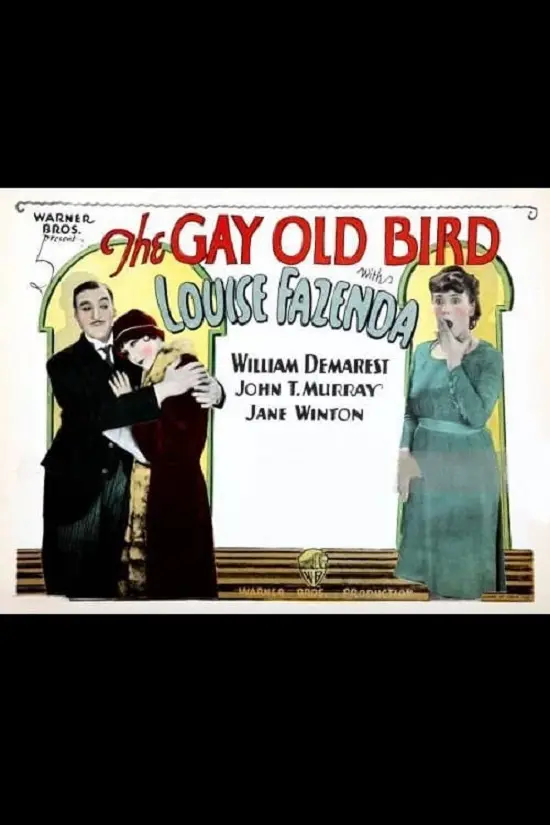
A definitive 7.8/10 rating for a film that redefined the boundaries of cult cinema. The Gay Old Bird remains a cornerstone of transgressive art.
Is The Gay Old Bird a hidden treasure of the silent era? Short answer: yes, but only if you value raw physical performance over narrative complexity.
This film is for enthusiasts of 1920s slapstick and character actors like William Demarest; it is not for those who demand a high-stakes, logically sound plot. It is a relic of a time when the gag was king and the story was merely the delivery vehicle.
1) This film works because it leans into the manic energy of Louise Fazenda, whose ability to transition from a lowly maid to a high-society fraud is a masterclass in physical comedy.
2) This film fails because the second act relies too heavily on repetitive misunderstandings that feel dated even by 1927 standards.
3) You should watch it if you want to see the early, unpolished brilliance of William Demarest and Edgar Kennedy before they became household names in the sound era.
If you are a student of cinema history, tracking down a copy of The Gay Old Bird is a rewarding exercise. While it doesn't possess the poetic grace of a Chaplin feature or the architectural precision of a Keaton stunt, it offers a gritty, loud (even in silence), and chaotic look at the late-period silent farce. It captures a specific American cultural moment where the 'nouveau riche' and their servants were in a constant state of friction.
The premise of a maid stepping into her mistress's shoes is as old as the hills, yet writers Edward Clark and C. Graham Baker infuse it with a frantic desperation. Unlike the more polished social critiques seen in The Common Law, this film treats class as a costume. When the lady of the house is sidelined, the maid doesn't just put on a dress; she puts on a performance that is perpetually on the verge of collapse.
One specific scene involving a formal dinner service highlights this perfectly. The maid, played with wide-eyed terror by Louise Fazenda, attempts to direct the other servants while simultaneously being treated as an equal by the guests. The physical comedy of her trying to hide her domestic instincts—reaching for a dropped napkin or correcting a table setting—creates a sustained tension that is genuinely funny.
It’s a bit of a mess, but a fun one. The film doesn't care about your logic. It only cares about the next pratfall.
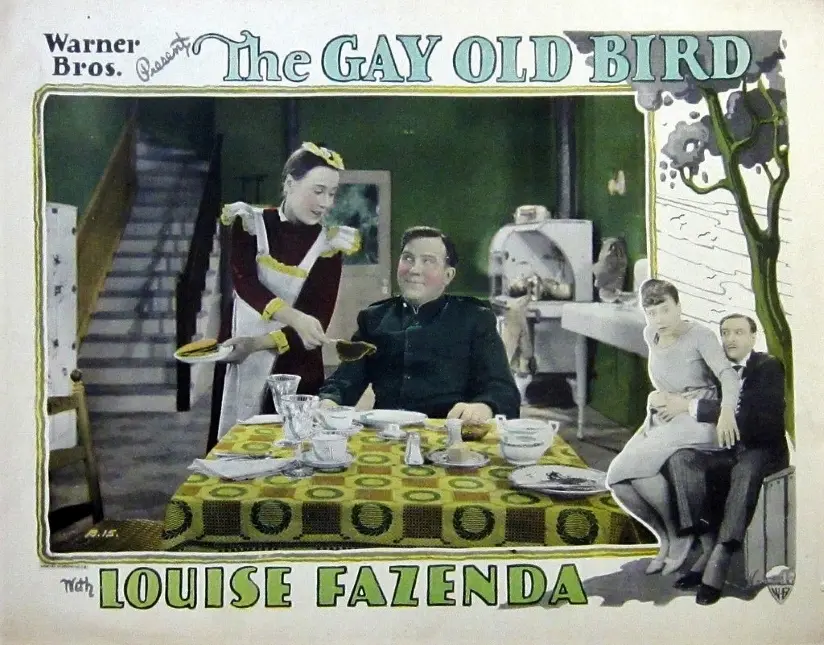
Louise Fazenda is the undisputed engine of this film. By 1927, she was a veteran of the Mack Sennett school of comedy, and it shows. Her face is a rubber mask of anxiety. In The Gay Old Bird, she avoids the trap of being a mere caricature. There is a palpable sense of stakes; if she is caught, she loses her livelihood. This adds a layer of 'cringe comedy' that feels surprisingly modern.
Contrast her performance with the stoic supporting cast. While the 'high society' characters are played straight, Fazenda is a whirlwind of kinetic motion. Her interaction with John T. Murray provides a necessary foil, as his character’s oblivious nature allows her ruse to continue far longer than it should. It’s a dynamic that mirrors the absurdity of films like Social Hypocrites, where the upper class is depicted as easily fooled by their own vanity.
No discussion of this film is complete without mentioning Edgar Kennedy. Known for his 'slow burn' technique, Kennedy brings a simmering frustration to the screen that balances Fazenda's high-energy antics. Every time the plot threatens to spin out of control, the camera cuts to Kennedy’s exasperated expression, grounding the film in a relatable human emotion: annoyance.
The pacing is relentless. From the moment the mistress is 'incapacitated,' the film moves at a breakneck speed. This was the era of Trolley Troubles and other high-speed shorts, and that rhythmic influence is visible here. However, the film occasionally suffers from 'gag fatigue.' There are only so many times a character can almost be recognized before the audience starts checking their watch.
Visually, the film is standard for the late 20s, but the use of depth in the mansion sets is noteworthy. The director uses the foreground and background to show the maid’s dual reality. In the foreground, she is the poised lady; in the background, we see the chaos she has left behind in the kitchen. This visual layering tells the story better than any intertitle could.
The lighting is bright and flat, characteristic of the 'comedy lighting' of the era, which ensures that every facial twitch and gesture is visible. While it lacks the moody atmosphere of a drama, it suits the punchy, irreverent tone of the script. The film is brutally simple in its execution. It works. But it’s flawed.
The chemistry between the ensemble cast is palpable. You can tell these actors were used to working in the fast-paced studio system. The film also serves as a fascinating time capsule of 1920s interior design and fashion, even if it’s played for laughs. Most importantly, it is genuinely funny in its most absurd moments, such as the maid attempting to play a musical instrument she’s never touched before.
The film’s title hasn't aged particularly well, and some of the social dynamics feel incredibly regressive. The 'incapacitation' of the lady of the house is treated as a mere plot device with little concern for her character, making her feel more like a prop than a person. Additionally, the resolution feels rushed, as if the production ran out of film and had to wrap everything up in a single scene.
The Gay Old Bird is not a masterpiece, but it is a vibrant, loud, and energetic piece of entertainment. It represents the peak of silent comedy technique just before the industry was upended by sound. Louise Fazenda carries the film on her shoulders, proving that she was every bit as capable as her male contemporaries. While the plot is thin, the execution is thick with personality. It’s a chaotic slice of 1927 that deserves a look from anyone who appreciates the art of the gag. It’s flawed, fast, and ultimately fun.
IMDb 6.6
1930
Community
Log in to comment.