DbcultAccessing Vault...
6.7/10
Senior Film Conservator
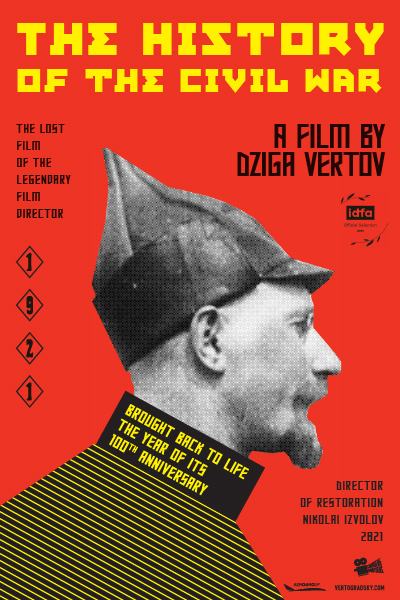
A definitive 6.7/10 rating for a film that redefined the boundaries of cult cinema. Istoriya grazhdanskoy voyny remains a cornerstone of transgressive art.
The first thing that strikes you is the smell the film itself can’t record yet somehow transmits: cordite, wet wool, horse sweat, the copper tang of freshly opened arteries. Istoriya grazhdanskoy voyny is not a tidy ledger of campaigns but a wound that keeps reopening under the projector lamp. Shot between 1918 and 1921 by camera units attached to the Red Army, the negative was spliced together decades later by Nikolai Izvolov under the spectral supervision of Dziga Vertov’s theoretical ghost. The result is 78 minutes of convulsive street-to-street chronicle, a document that refuses the polished arc of triumph and instead delivers the war’s staccato heartbeat—one barricade, one river crossing, one execution at a time.
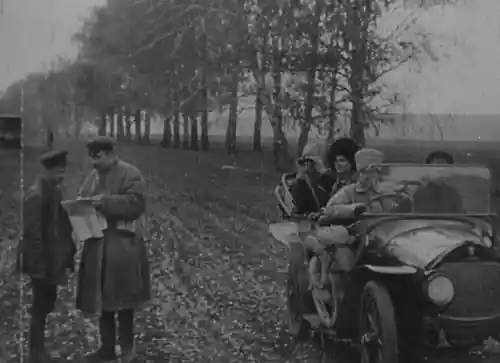
Forget smooth expository intertitles; Vertov’s acolytes hurl fragmented slogans like grenades—white letters on black, sometimes upside-down, occasionally backwards—mirroring the chaos of frontline communication. The camera jerks, tilts, pirouettes atop moving trains; footage shot on freezing mornings flickers into overexposed noon sieges without warning. Rather than seduce, the editing assaults: a Cossack sabre arcs toward the lens, cut; a grainy close-up of a child’s frost-bitten toes, cut; a long shot of Putilov workers hoisting a red flag over Petrograd’s Winter Palace, the flag itself so saturated it seems to drip arterial scarlet onto the white marble. The war is not explained; it is inflicted.
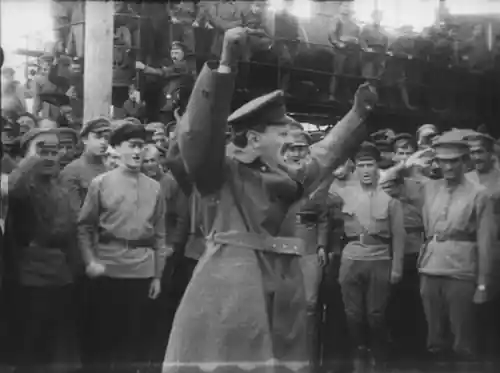
Close your eyes during reel three and you might swear you heard a bullet sigh. Izvolov’s restoration allows micro-facial tremors to surface: a Red commissar biting his chapped lip as he signs a requisition order, a White prisoner momentarily locking eyes with the camera before the firing squad’s smoke obliterates him. These glitches of individuality rupture the propaganda template, reminding us that ideology chews through singular throats. Yet the film needs its icons: the silhouette of a female machine-gunner atop an armored train became Soviet currency, the visual equivalent of the word proletariat set in sans-serif steel.
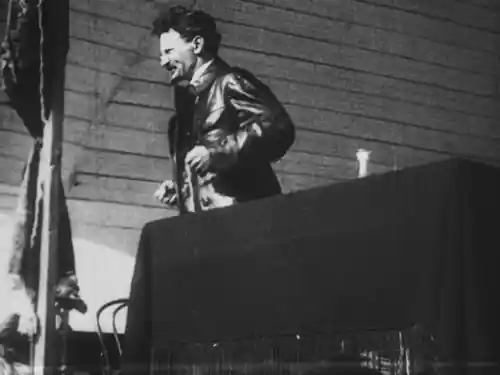
There never was an official soundtrack; every contemporary screening relies on live improvisation. I first saw it in a damp Kyiv attic where a post-punk trio scored the mayhem with prepared guitar, typewriter percussion, and the wet click of a Polaroid camera. The absence of synchronized audio turns each viewer into an accomplice—you become the Foley artist of your own dread, filling in the hoofbeats, the distant artillery, the moan of a city learning to pronounce its new name again and again. Silence becomes a negative space into which history rushes like icy water.
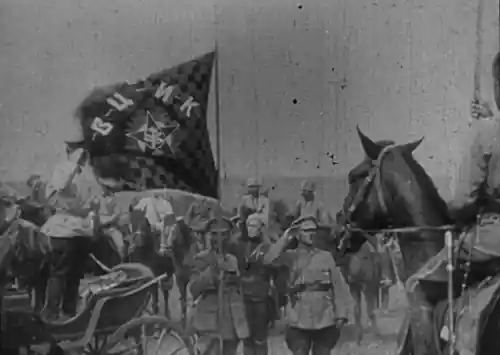
Place Istoriya grazhdanskoy voyny beside Vertov’s own Anniversary of the Revolution and you witness a dialectic: the earlier film parades the Bolshevik myth in crisp, almost celebratory cadence, while the civil-war footage wallows in the muck required to mint that myth. Contrast it with the Zionist construct of Eretz Yisrael Hameshukhreret and you see two utopias emerging from opposite ends of the imperial wreckage, each weaponizing the same medium. Even Robert Reinert’s hallucinatory Nerven shares the tremor of a world tilting off its axis, though its expressionist interiors feel almost decadent compared to the open-air abattoir of Russia.
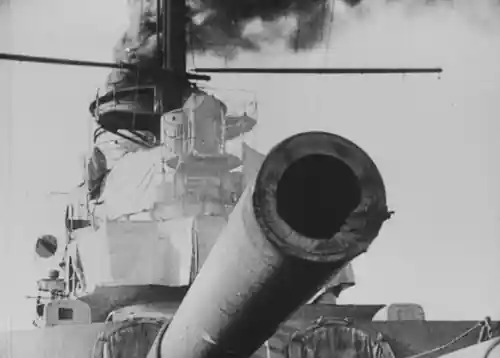
One sequence haunts me: a ramshackle courtroom in a seized railway station. A White officer stands trial; the camera is positioned behind the judges, so we occupy the tribunal’s gaze. Mid-sentence, the lens tilts down to catch the condemned man’s fingers drumming a Cossack waltz on his thigh—an autonomic plea for grace. Did the cinematographer intervene? Did he hand over the verdict? The footage offers no exit, implicating us in the judgment seat. Here the film anticipates later debates about camera-as-weapon; every crank of the handle is a round chambered.
Amid the testosterone of cavalry charges, women keep erupting: an ammunition courier sprinting across broken cobbles, hair unbraided like a battle standard; nurses stitching a commissar’s cheek while humming a folk tune that bleeds into the scream of shellfire. These glimpses refuse the later Stalinist icon of the maternal stoic; they are raw, sweaty, terrified, necessary. Vertov’s future宣言 about filming life as it is starts here, in the shaky breath of a girl who has just learned to fire a Mosin-Nagant yet still clips her lover’s photo inside the stock.
Izvolov’s 1999 reconstruction scanned the original 35 mm at 4K, then weathered it digitally to mimic the patina of civil-war nitrate. Some cinephiles call this vandalism; I call it honest. To present the footage as pristine would betray its lived abrasions. Scratches become shrapnel scars, missing frames the lacunae where history coughed up blood. Yet one wonders: does the digital gloss cauterize the wound, turn agony into heritage? The answer flickers differently in every screening, like the Zapruder film or concentration-camp liberation reels. Representation is a hall of angled mirrors; none give you the exit wound.
Because the film reminds you that every revolution live-streams its own dismemberment. Because the grainy ghosts of 1919 look startlingly like pixelated ghosts of 2024. Because as you scroll past algorithm-filtered bomb blasts on social media, Vertov’s handheld chaos feels like prophecy rather than archaeology. Watching Istoriya grazhdanskoy voyny is not nostalgic; it is prophylactic. It vaccinates the eye against the anesthesia of ubiquitous images. After the final frame—an iris shot closing on a burned-out village well—you walk out seeing the world’s pixels as potential gunpowder.
Run it off a DCP but project onto a textured wall; let the bumps become Ukrainian mud, Siberian permafrost. Dim the house lights to 15 lux—enough to notice your neighbor clenching their jaw. Encourage musicians to respond, not accompany; let them sample the projector’s own mechanical whirr, weave that drone into the throb of war. And schedule a brief blackout halfway through, a two-minute window where the audience sits in total darkness while a metronome ticks at 72 bpm—the average resting pulse of a nineteen-year-old rifleman. When the film slams back, the re-entry bruises.
Istoriya grazhdanskoy voyny will not comfort you with the narcotic of heroic narrative; it will grab your collar, rub your face in the ashes of a country devouring itself to birth a future that never arrived. Yet within that savage honesty lies a perverse hope: if we can still feel the sting of celluloid shot a century ago, perhaps memory itself hasn’t flat-lined. Approach it not as a relic under museum glass but as a live round. Handle with trembling hands, and for heaven’s sake, do not look away.
IMDb 5.8
1932
Community
Log in to comment.