DbcultAccessing Vault...
Cult Review
Senior Film Conservator
The vast, untamed expanse of the American West has long served as an inexhaustible wellspring for cinematic narratives, a crucible where human ambition, nascent romance, and territorial imperatives clash with an almost elemental force. In this grand tradition, Cyclone Jones emerges not merely as another horse opera, but as a surprisingly nuanced exploration of the societal fissures that defined a rapidly industrializing frontier. It’s a film that, despite its vintage, resonates with timeless themes of prejudice, property, and the arduous pursuit of love amidst profound discord.
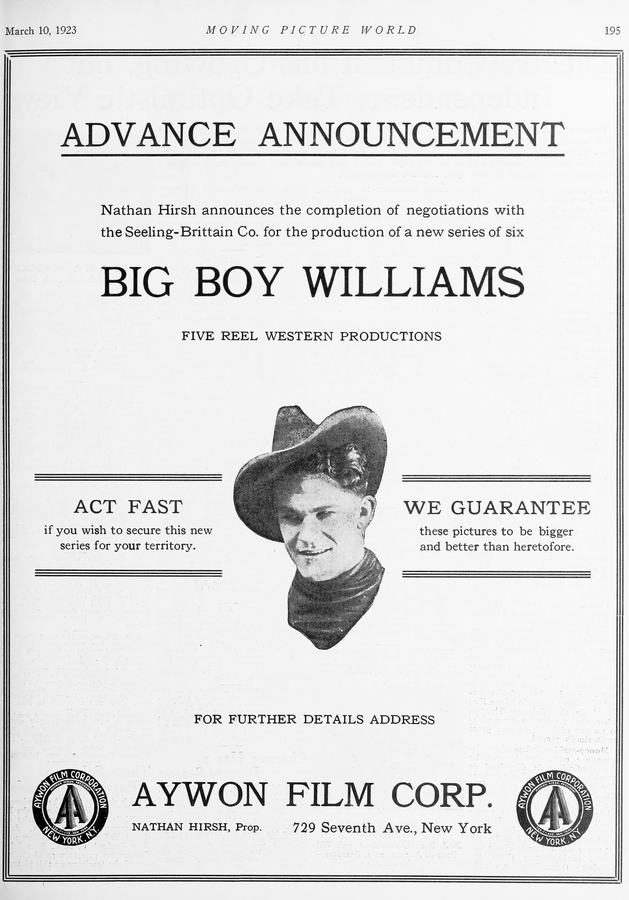
At its heart, the story posits a classic Western dilemma: the clash between two competing visions for the land. On one side stand the entrenched cattle ranchers, epitomized by figures like J.P. McKee, Guinn 'Big Boy' Williams, Fred Burns, and Bill Patton, who view the open range as their exclusive domain, a verdant canvas for their herds. Their perspective is one of tradition, of established order, and perhaps, of a burgeoning sense of entitlement. On the other, the recent arrival of Sylvia Billings and her sheep-rancher father represents a disruptive force, a challenge to the existing economic and social hierarchy. The film masterfully portrays this tension, not just as a simple good-versus-evil binary, but as a conflict born from deeply held beliefs about land use and survival.
Our protagonist, the eponymous Cyclone Jones, brought to life with a compelling earnestness by Frank Alexander, embodies the dilemma of a man caught between loyalty and affection. He is a cowboy, presumably aligned with the cattle culture by trade, yet his heart is irrevocably captured by Sylvia Billings, portrayed with a delicate strength by Kathleen Collins. This immediate, powerful connection forms the emotional core of the film, elevating it beyond a mere action-adventure. Cyclone's journey is not just about winning the girl; it's about navigating a treacherous social landscape where his personal happiness is inextricably linked to the resolution of a deeply entrenched community conflict.
Alexander imbues Cyclone with a quiet determination, a man who, while perhaps not overtly rebellious, possesses an innate sense of justice that compels him to stand against the tide of popular sentiment. His pursuit of Sylvia is not a simple romantic quest; it becomes an act of defiance against the prevailing prejudice. He must contend with the visceral hostility directed at Sylvia's father, whose sheep are seen as a blight upon the land, ravaging grazing grounds and leaving them barren for cattle. This perception, whether entirely accurate or fueled by fear and economic anxiety, forms the formidable wall Cyclone must breach. His struggle mirrors the broader societal conflicts of the era, where new ways of life often met with fierce resistance from those clinging to the old.
The narrative scaffolding provided by writers Jack Natteford and Donald I. Buchanan is particularly noteworthy. They don't shy away from the harsh realities of frontier life, nor do they reduce the complex 'sheepman vs. cattleman' dynamic to a simplistic morality play. Instead, they craft a scenario where economic necessity, cultural identity, and raw human emotion collide. The cattle ranchers, while acting as antagonists, are driven by a understandable, if misguided, desire to protect their livelihoods. This refusal to paint them as cartoonish villains adds layers of depth to the conflict, making the stakes feel genuinely high and the resolution, when it comes, hard-won.
Natteford and Buchanan excel at establishing the immediate threat posed by the cattlemen's hostility. It’s not just a verbal disagreement; it’s an existential threat to Sylvia’s family, who face expulsion and ruin. This constant pressure elevates Cyclone's romantic quest into something far more significant: a fight for dignity, for acceptance, and for the right to coexist. The writers understand that in the untamed West, such conflicts often escalated quickly, demanding courage and conviction from those who dared to challenge the status quo. The dialogue, or rather, the visual storytelling in this era of cinema, conveys the weight of these societal pressures with remarkable clarity.
While ostensibly a Western romance, Cyclone Jones delves into profound themes that transcend its genre trappings. The prejudice directed at the 'sheepmen' echoes broader historical patterns of xenophobia and economic discrimination. The film subtly interrogates the idea of who truly 'owns' the land, and by extension, who has the right to thrive upon it. Is it those who arrived first, or those who bring a different, perhaps more efficient, method of utilizing its resources? This question, central to many frontier narratives, is explored here with a focus on the personal toll it takes.
The film invites us to consider the destructive nature of unchecked hostility and the difficulty of bridging divides when fear and self-interest dominate. It's a story that, much like The Narrow Trail, explores the challenging paths individuals must forge when confronted with societal resistance. Cyclone's determination to pursue Sylvia despite the opposition could be seen as a metaphorical 'narrow trail' he must walk, fraught with peril but leading to a desired destination. The destructive potential of such conflicts also brings to mind the raw, visceral tension seen in films like The Scuttlers, where personal and communal rivalries often boil over into overt aggression.
The supporting cast, featuring the aforementioned J.P. McKee, Guinn 'Big Boy' Williams, Fred Burns, and Bill Patton, collectively paints a vivid picture of the cattlemen's formidable front. Their performances, often through stern glances and imposing physical presence more than extensive dialogue, effectively convey the group's unified opposition. Williams, in particular, with his imposing stature, frequently embodies the physical threat inherent in these range disputes. These actors are crucial in establishing the credibility of the threat against Sylvia and her father, making Cyclone's task seem genuinely daunting.
Their collective portrayal highlights the mob mentality that can take hold when economic anxieties are stoked. The 'sheepmen' are dehumanized, reduced to an invasive species rather than fellow settlers. This is a common trope in Westerns, but in Cyclone Jones, it feels particularly poignant because it directly impacts the romantic arc. The antagonists aren't just faceless villains; they represent a deeply ingrained societal bias that Cyclone must actively dismantle or circumvent. This struggle against an entrenched system, rather than just individual bad actors, gives the film a weightier, more resonant quality.
While specific directorial credits are not provided in the prompt, the execution of the film's visual narrative is paramount, especially for a feature from this era. The cinematography, assumedly utilizing the vast landscapes to full effect, would have played a crucial role in conveying both the beauty and the harshness of the West. Wide shots of the open range would emphasize the scale of the conflict over land, while tighter frames would draw the audience into the personal drama unfolding between Cyclone and Sylvia. The visual language would have been key to portraying the cattlemen's territorial claims and the sheepmen's vulnerability.
The pacing of the film, as crafted by the director, would dictate how the tension builds and how the romantic interlude is woven into the larger conflict. A good Western, especially one focused on such a potent social issue, needs to balance moments of quiet character development with bursts of action and confrontation. The efficacy of the director's vision lies in making the audience feel the heat of the sun, the dust of the trail, and the simmering anger of the ranchers, all while rooting for Cyclone's seemingly impossible quest. The raw energy and directness of the conflict might remind viewers of the untamed spirit present in films like The Volcano, where elemental forces, both natural and human, are unleashed.
Examining Cyclone Jones within the wider tapestry of Western cinema reveals its significance. It’s a film that predates many of the genre’s more celebrated works, yet it tackles themes that would become foundational. The conflict over land, the outsider status of certain groups, and the redemptive power of love are all enduring motifs. One might draw parallels between Cyclone's moral quandary and the complex choices faced by characters in films like A Boy and the Law, where personal ethics collide with societal norms or legal strictures. Cyclone, in his own way, seeks a form of justice that transcends the prevailing prejudices.
The film's exploration of a burgeoning romance amidst a backdrop of severe societal conflict can also be seen as an early precursor to later, more elaborate Western love stories. The immediate attraction between Cyclone and Sylvia, despite their disparate backgrounds and the immense obstacles, is a powerful engine for the narrative. This kind of against-all-odds connection, often sparked Out of a Clear Sky, is a romantic ideal that resonates across genres and eras. The film avoids easy answers, presenting a world where genuine affection must fight tooth and nail against deeply ingrained animosities.
Ultimately, Cyclone Jones stands as a testament to the enduring power of classic Western storytelling. It combines thrilling action with a poignant romantic narrative, all set against a backdrop of significant social and economic upheaval. The performances by Frank Alexander and Kathleen Collins anchor the emotional journey, making the audience invest deeply in their fate. The writers, Jack Natteford and Donald I. Buchanan, crafted a story that, while specific to its time and place, speaks to universal human experiences: the struggle for acceptance, the fight for one's beliefs, and the transformative power of love.
It’s a film that reminds us that the West was not just a stage for heroes and villains, but a complex tapestry of conflicting interests, where ordinary people were forced to make extraordinary choices. Cyclone Jones, the cowboy who dares to love across the divide, becomes a symbol of hope in a landscape often defined by harsh realities. His story, therefore, remains a compelling watch for anyone interested in the foundational narratives of American cinema and the timeless appeal of a love that conquers all, even the most entrenched of range wars.

IMDb 6.4
1936
Community
Log in to comment.