DbcultAccessing Vault...
Cult Review
Senior Film Conservator
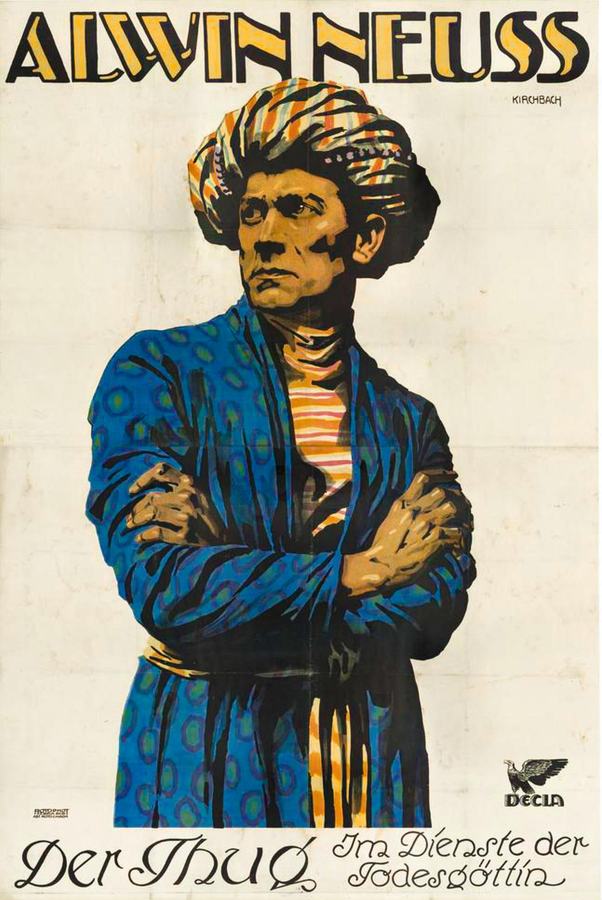
Stepping into the spectral embrace of 'Der Thug. Im Dienste der Todesgöttin' is akin to unearthing a forgotten, unsettling dream. Karl Heiland's masterful, albeit harrowing, vision from the nascent days of cinema remains a potent testament to the power of suggestion, atmosphere, and the unspoken horrors lurking beneath humanity’s veneer. This isn't merely a film; it's an archaeological excavation of the soul, peeling back layers of colonial hubris, spiritual fanaticism, and the insidious erosion of individual will. The very title, 'The Thug. In the Service of the Goddess of Death,' is a direct challenge, a gauntlet thrown, promising a journey into the darkest recesses of human depravity and devotion.
The narrative, meticulously crafted by Heiland, begins with the seemingly innocuous expedition of Arthur von Falkenhorst, portrayed with a compelling blend of intellectual curiosity and tragic naiveté by Leo Connard. Falkenhorst, a European ethnographer, ventures into an unnamed colonial outpost, driven by an academic zeal to document indigenous cultures. His initial encounters, however, quickly devolve from scholarly observation to a terrifying entanglement with the 'Children of Kali Ma,' a clandestine cult venerating a primordial goddess of death. The film skillfully uses this premise to explore the inherent dangers of cultural appropriation and the fragility of Western rationalism when confronted by ancient, visceral belief systems. Unlike the more straightforward adventure narratives of its contemporaries, 'Der Thug' delves into a psychological labyrinth, where the true horror lies not in jump scares, but in the gradual, agonizing disintegration of a man's moral compass.
The cult itself, led by the utterly magnetic and terrifying High Priest, Devan (Joe Konradi), is less a band of caricatured villains and more a chillingly plausible entity. Konradi's performance as Devan is a masterclass in silent film acting, conveying immense power through subtle gestures, piercing gazes, and an aura of unshakeable conviction. He is not merely evil; he is a force of nature, a charismatic zealot who genuinely believes in the divine mandate of his murderous rituals. His methods of indoctrination are insidious, a slow, methodical breaking down of Falkenhorst's will, culminating in the ethnographer’s transformation into 'The Thug' – an unwilling participant in the cult's ritualistic strangulations. This transformation is the film's beating heart, a horrifying exploration of how easily an individual can be bent, broken, and repurposed by an all-consuming ideology. The film doesn't shy away from the visceral discomfort of this metamorphosis, presenting it with a raw, unflinching gaze that must have been profoundly shocking for audiences of its era.
Leo Connard, as Arthur von Falkenhorst, anchors the film with a performance of profound emotional depth. We witness his initial intellectual arrogance give way to disbelief, then terror, and finally, a soul-crushing despair as he is forced to commit unspeakable acts. Connard’s eyes, even in the stark black and white of the silent screen, convey a world of internal conflict, a man battling for his very soul against overwhelming odds. His physical portrayal of 'The Thug' is equally compelling – the rigid posture, the haunted movements, the palpable sense of a body no longer his own, but an instrument of a dark goddess. It’s a performance that resonates with the tragic weight of a classical hero brought low by forces beyond his control, echoing the fatalistic dread found in works like Bánk bán, though through a distinctly psychological lens.
Joe Konradi's Devan, as mentioned, is a tour de force. He embodies a chilling blend of spiritual authority and predatory cunning. His presence dominates every scene he inhabits, not through theatrical bombast, but through an unnerving stillness and intensity. The subtle shifts in his facial expressions, from benevolent spiritual guide to ruthless executioner, are masterfully executed, making him one of the most memorable antagonists in early cinema. His cult leader is far more nuanced than a simple villain, presenting a complex figure whose actions, however abhorrent, stem from a deeply held (and deeply warped) belief system.
The supporting cast further enriches the tapestry of dread. Alwin Neuß, as Inspector Schmidt, embodies the bureaucratic indifference that often allows evil to flourish. His character is a stark commentary on colonial administration, more concerned with maintaining appearances and avoiding complications than with investigating the unsettling whispers emanating from the shadows. Neuß portrays Schmidt with a detached weariness, a man perhaps too long in the tropics, too jaded to perceive the true horror unfolding under his nose. His inaction is as damning as any overt villainy, drawing parallels to the systemic failures depicted in social realism dramas like The Jungle, albeit through a more allegorical lens.
Willy Kaiser-Heyl, as Kaelan, the enigmatic local informant, adds another layer of moral ambiguity. His loyalties are constantly shifting, his motivations shrouded in mystery, making him a fascinating and unpredictable element in Falkenhorst's desperate struggle. Kaelan represents the precarious position of those caught between colonial powers and ancient traditions, navigating a treacherous landscape where survival often dictates allegiance. Karl Heiland himself, in a minor but crucial role, perhaps as a fellow captive or a wise elder offering cryptic warnings, adds a poignant touch, further grounding the film in its grim reality.
Heiland's direction is nothing short of visionary for its time. He masterfully utilizes the nascent techniques of silent cinema to build an atmosphere of pervasive dread. The cinematography employs stark contrasts of light and shadow, creating an almost Expressionistic visual language that mirrors Falkenhorst's fractured psyche. The cult's rituals are depicted with a chilling blend of exoticism and stark brutality, relying heavily on symbolic imagery and the power of suggestion rather than overt gore. This approach makes the horror far more psychological and enduring, allowing the audience’s imagination to fill in the terrifying blanks. The use of close-ups on Connard’s anguished face and Konradi’s menacing eyes is particularly effective, drawing the viewer into their internal struggles and ideological clashes.
The pacing is deliberate, a slow burn that ratchets up the tension with agonizing precision. Heiland understands that true terror often stems from the inevitable, the inescapable march towards a horrifying fate. This measured approach allows the audience to fully grasp the insidious nature of the cult's influence and Falkenhorst's gradual descent. The editing, too, is remarkably sophisticated, employing cross-cutting to build suspense during key ritual scenes and to juxtapose the serene colonial facade with the unspeakable acts occurring beneath it. The film's use of intricate set designs for the cult's hidden temples, with their ominous idols and flickering torchlight, further immerses the viewer in this alien, terrifying world. One might find thematic echoes of its intricate plotting and sense of impending doom in films like The Danger Signal, though 'Der Thug' pushes the boundaries of psychological horror far further.
'Der Thug. Im Dienste der Todesgöttin' stands as a groundbreaking work that dared to explore themes far ahead of its time. It’s a chilling meditation on the nature of belief, the corrupting influence of power, and the inherent dangers of fanaticism. The film's exploration of colonialism's darker underbelly, where European 'progress' often blinded its proponents to the horrors they either ignored or inadvertently fostered, remains remarkably resonant. The psychological torment inflicted upon Falkenhorst transcends its silent film origins, speaking to universal anxieties about identity, free will, and the human capacity for both immense cruelty and desperate resilience.
Its influence, though perhaps understated in mainstream film history, can be felt in the nascent horror genre, laying groundwork for later explorations of cults and psychological manipulation. While it may not share the grand scale of historical epics like Charles IV or the romantic sweep of The Trail of the Lonesome Pine, its intimate horror leaves an indelible mark. Its audacious themes and unflinching portrayal of moral decay set it apart, making it a precursor to the more explicit psychological thrillers and horror films that would emerge in later decades. One might even see faint echoes of its dark underworld machinations in crime dramas like Zatansteins Bande, albeit filtered through a profoundly spiritual and ritualistic lens.
The film’s climax, a desperate, last-ditch effort by Falkenhorst to expose the cult, is fraught with tension and a profound sense of tragic inevitability. It's a testament to the human spirit's enduring fight for freedom, even when faced with overwhelming odds and the specter of ultimate sacrifice. The resolution, far from offering simplistic answers, leaves the audience with haunting questions about the nature of good and evil, the fragility of civilization, and the enduring power of ancient, primal fears. This ambiguity is one of its greatest strengths, ensuring that the film lingers in the mind long after the final frame fades to black. Much like the complex moral quandaries in Cross Currents, 'Der Thug' refuses easy categorization, demanding introspection and challenging viewers to confront uncomfortable truths.
In an era often remembered for lighthearted comedies or grand melodramas, 'Der Thug. Im Dienste der Todesgöttin' stands as a stark, uncompromising work that pushed the boundaries of what cinema could achieve. It's a powerful reminder that the silent era was anything but silent in its thematic depth and emotional resonance. For those willing to delve into its dark, captivating world, it offers a profoundly unsettling yet ultimately rewarding experience, cementing its place as an unsung masterpiece of early German cinema. Its bold vision, compelling performances, and masterful direction coalesce into a film that is both a historical artifact and a timeless exploration of the human condition under duress. It is a film that, much like the elusive 'pearl' in The Pearl of the Antilles, holds a dark, captivating beauty, hidden beneath layers of time and obscurity, waiting to be rediscovered and appreciated for its profound artistic merit.
IMDb —
1919
Community
Log in to comment.