DbcultAccessing Vault...
Cult Review
Senior Film Conservator
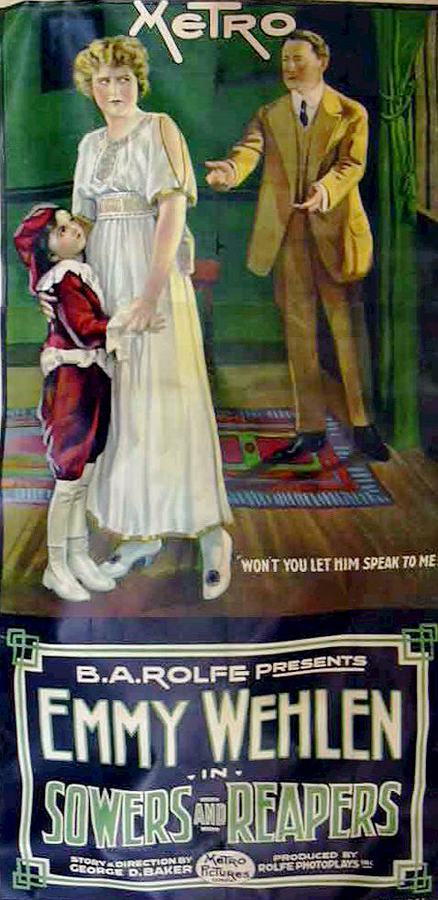
George D. Baker’s Sowers and Reapers (1917) is a furnace of silk and soot, a melodrama that understands wealth as both costume and crematorium. The film begins inside a mill where looms clack like iron lungs: Annie Leigh—petite, soot-lashed, luminous in the grease-smoke—threads bobbins while the heir-apparent Earle Courtney, all white collar and cavalry posture, prowls the aisles under the pretext of inspecting his father’s holdings. Baker shoots their first meeting through a lattice of leather belts, so that desire literally flickers between moving machinery. It is as if the factory itself conspires to weave them together, then to strangle them with the same thread.
Enter Major James Courtney—played by Frank Currier with walrus moustache and the pitiless glare of a man who has never been refused anything louder than a whisper. The Major’s ideology is simple: land, blood, and ledger-books sanctify his line; a “factory girl” is industrial spillage. When Earle elopes with Annie, the old man does not roar; instead he smiles, thin as a paper-cut, and sets in motion one of silent cinema’s most baroque erasures. The marriage ledger is stolen from the parish clerk, the ink still damp; a forged annulment—signed in the son’s hand but penned by the father—is mailed to Annie; Earle himself is drugged, abducted, and shanghaied onto a coastal tramp steamer. Baker intercuts these crimes with shots of a candle guttering beside a copy of Meditations on Empire, a sly visual footnote that equates patrician ruthlessness with Roman stoicism.
Months telescope. A factory conflagration—staged with dazzling red tinting—becomes the Major’s alibi: Annie, he claims, perished in the blaze. The grief-stricken heir returns to inherit not only the Courtney acreage but also a new bride: Ethel Ainsworth, whose dowry of railroad bonds can plug the family’s speculative hemorrhage in Chihuahua copper. Meanwhile Annie, belly rounding under a charity-seamstress coat, boards a night train to the city. Baker lets the camera linger on her reflection in the window: two Annies, one solid, one phantom—an augury that identity itself can be duplicated, sold, re-cut.
The metropolis is a vertical avalanche of electric signage. Baker’s panoramic shots—rare for 1917—reveal streetcars like lit arteries, while inside a Salvation Army hospital Annie delivers a son who arrives, ironically, at the very hour newspapers trumpet “Courtney–Ainsworth Nuptials.” The juxtaposition is surgical: a christening font and a champagne fountain share the same frame via superimposition, the ink of one bleeding into the fizz of the other. Annie’s first act as mother is to bite back her own scream so as not to wake neighboring infants; her second is to name the child Earle, a quiet act of reclamation.
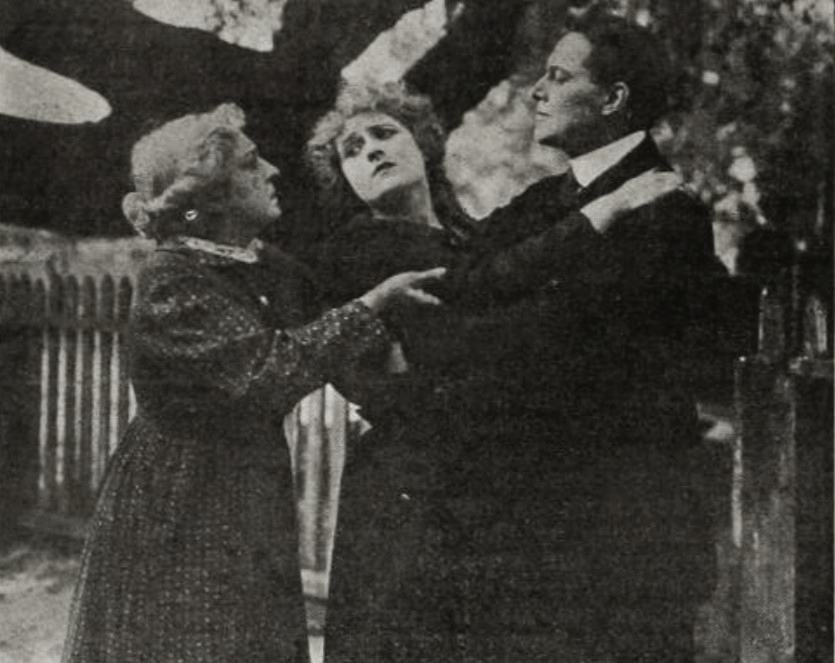
What follows is a montage of ascension worthy of Saturnino Farandola’s globetrotting exuberance. Annie stumbles into a film studio, the Atlas Moving Picture Corp., while delivering laundry. A director, struck by the maritime blue of her irises, offers her five dollars to faint convincingly in a one-reeler about a poisoned seamstress. She faints, but also improvises: her hand clutches a crucifix that was never in the script, her eyes flick toward heaven, then toward the camera—an ontological rupture that makes the audience complicit. Word spreads; within eighteen months she is “Aurora Leigh,” serial-queen, her name pulsing on every marquee along the Rialto.
Baker is shrewd about cinema’s duplicity. He shows Annie learning to sign autographs while a projectionist in the background threads her latest picture; the celluloid ribbon is both her skin and her mask. When Mexican revolutionaries appropriate the Courtney mines, the Major’s empire implodes. Annie—now earning two thousand a week—purchases the mortgage to the ancestral estate with the nonchalance of buying a hat. Revenge, however, must be cinematic. She commissions a feature titled The Ashes of Innocence, scripting every betrayal she endured. George Christie, who plays Earle, here plays “himself” inside the film-within-film, a hall-of-mirrors that anticipates El signo de la tribu’s meta-commentary by nearly a decade.
The private premiere occurs in the same ballroom where Annie once served canapés in a maid’s cap. Crystal chandeliers flicker; the orchestra warms; the Major, now cadaverous, watches his crimes projected at twenty feet. Baker unleashes a barrage of double exposures: the celluloid Earle kissing a celluloid Ethel dissolves into the real Annie, alone in a hospital ward reading the wedding announcement. When the lights rise, the Major crawls—literally crawls—to Annie’s velvet rail, his white gloves grey with dust. “I sowed, you reaped,” he whispers, a line that delivers the film’s biblical title home like a hammer. Annie does not forgive; she simply rises, her gown a moonlit spill, and exits, leaving the old man prostrate between rows of gold chairs.
Yet canonical wedlock remains tangled. Earle, married to Ethel under duress, is bound by ecclesiastical red tape Baker depicts via intertitles stamped with Gothic typeface: “What therefore God hath joined, let no man rend asunder—except the artist, the anarchist, the adulteress.” Enter Paul Roubais, a Parisian painter with a shock of hair like black fire, who seduces Ethel with promises of Montmartre garrets and syphilitic absinthe. Their elopement is staged in a speeding Packard, the canvas of Roubais’s unfinished portrait of Ethel flapping from the rumble seat like a surrender flag. Only after their ship steams past the Statue of Liberty does the law release Earle, who rushes—not to church—but to the Atlas back-lot where Annie is shooting a finale. Baker gives us one of silent cinema’s most ecstatic reunions: amid cardboard battlements, fake snow, and a hundred extras frozen like statuary, the lovers meet. Earle calls her “Mrs. Courtney” for the first time since the abduction; Annie, eyes shining with klieg-light, replies, “That name is no costume. It’s skin.” Iris in.
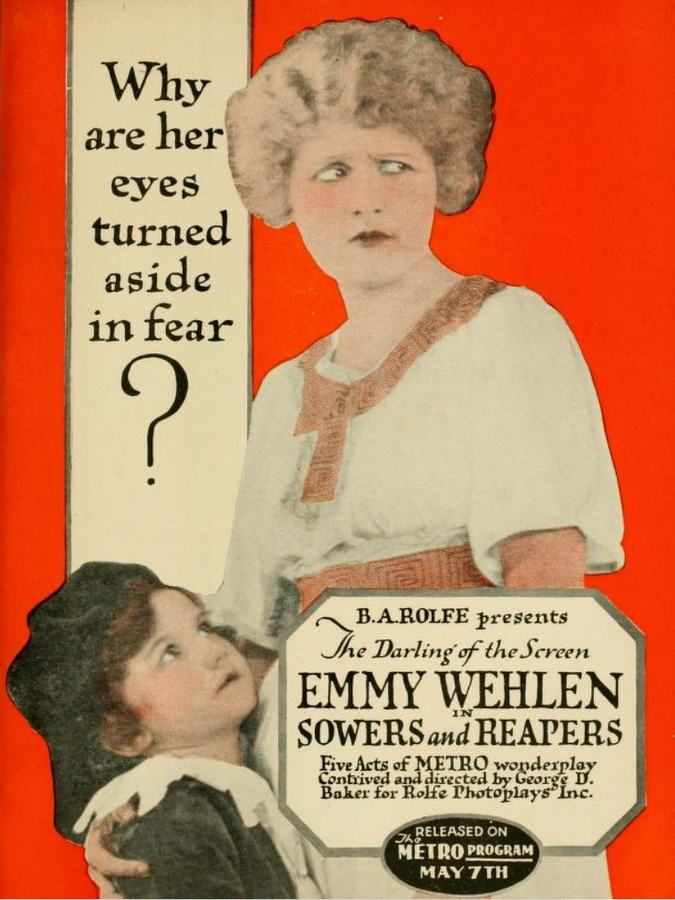
Peggy Parr’s Annie is a masterclass in graduated vulnerability. Early factory scenes show her shoulders curved inward, a woman trying to occupy less space; by the time she commands a soundstage, her spine is a Corinthian column. Watch her eyes in the hospital sequence: they register not shock but calculation, as if grief itself can be monetized. George Christie has the harder task—making Earle’s passivity sympathetic. He achieves it through physical hesitation: every time the Major commands, Earle’s left hand twitches, a private Morse code of resistance. Emmy Wehlen’s Ethel is no vamp but a gilt bird who discovers flight; her final smile, glimpsed through the Packard’s rear window, is ambiguous—ecstasy or panic, we cannot decide.
Baker’s visual grammar borrows from In the Land of the Head Hunters’ mythic tableaux: the Courtney estate is framed through gnarled oaks that resemble ent-like sentinels; interiors are chiaroscuro cauldrons where candlelight carves faces from darkness. The tinting strategy is deliberate—amber for mill interiors (the color of money), cerulean for city nights (the color of anonymity), scarlet for every moment of erasure or revelation. Most striking is the use of vertical space: Annie’s ascent is charted via repeated shots of staircases, each flight steeper, until the final camera tilt reveals the rafters of the studio itself, a steel heaven built by immigrants.
Where Sweet Alyssum hymns the restorative power of rural sanctity, Sowers and Reapers insists that land is only collateral, memory the true deed. Its treatment of institutional bigamy anticipates Gold and the Woman, yet Baker refuses the moral absolutism of later melodramas; his villains are architects of their own mausoleums, his heroines both mourners and masons. Compared to the ethnographic reveries of Gypsy Love, the film is staunchly metropolitant—yet its heart beats to the same anarchic drum: the belief that identity is cargo to be stolen, re-labeled, restowed.
Like so many Independent Moving Pictures of the late Teens, Sowers and Reapers exists only in fragments: a 35 mm nitrate reel containing the factory fire and the film-within-film climax was discovered in a Slovenian monastery in 1998; the rest is reconstructed via stills, continuity scripts, and a 1923 cue sheet for small-house orchestras. Even so, its influence lingers. The vertiginous back-lot finale prefigures the sound-stage apocalypse of One Million Dollars; its self-reflexive storytelling anticipates the Pirandellian labyrinths of Das lebende Rätsel.
For the cine-archaeologist, the film offers a Rosetta Stone of early star economics: Annie’s contractual climb—from five dollars a day to two thousand a week—mirrors the inflationary explosion that turned actors into brands. For the feminist historian, it is a cautionary tale of how the apparatus of cinema could both exploit and emancipate, turning a woman’s violated past into a marketable spectacle without, miraculously, re-violating her agency.
To watch Sowers and Reapers is to witness capital devouring its young, only to discover the young have grown steel teeth. It is a narrative of erasure that ends in restitution, of patriarchal certitude undone by the very medium—cinema—that the patriarch dismisses as frivolity. Baker’s film may flicker, may fragment, but its after-image is indelible: a reminder that every frame is a seed, every spectator a reaper, every story we tell both sowing and scythe.
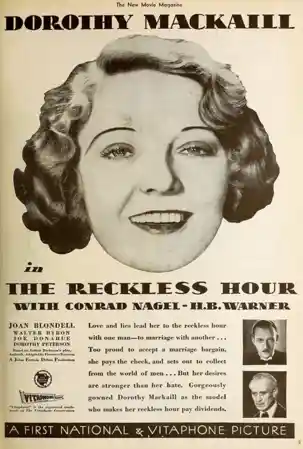
IMDb 6.2
1931
Community
Log in to comment.