DbcultAccessing Vault...
7.1/10
Senior Film Conservator
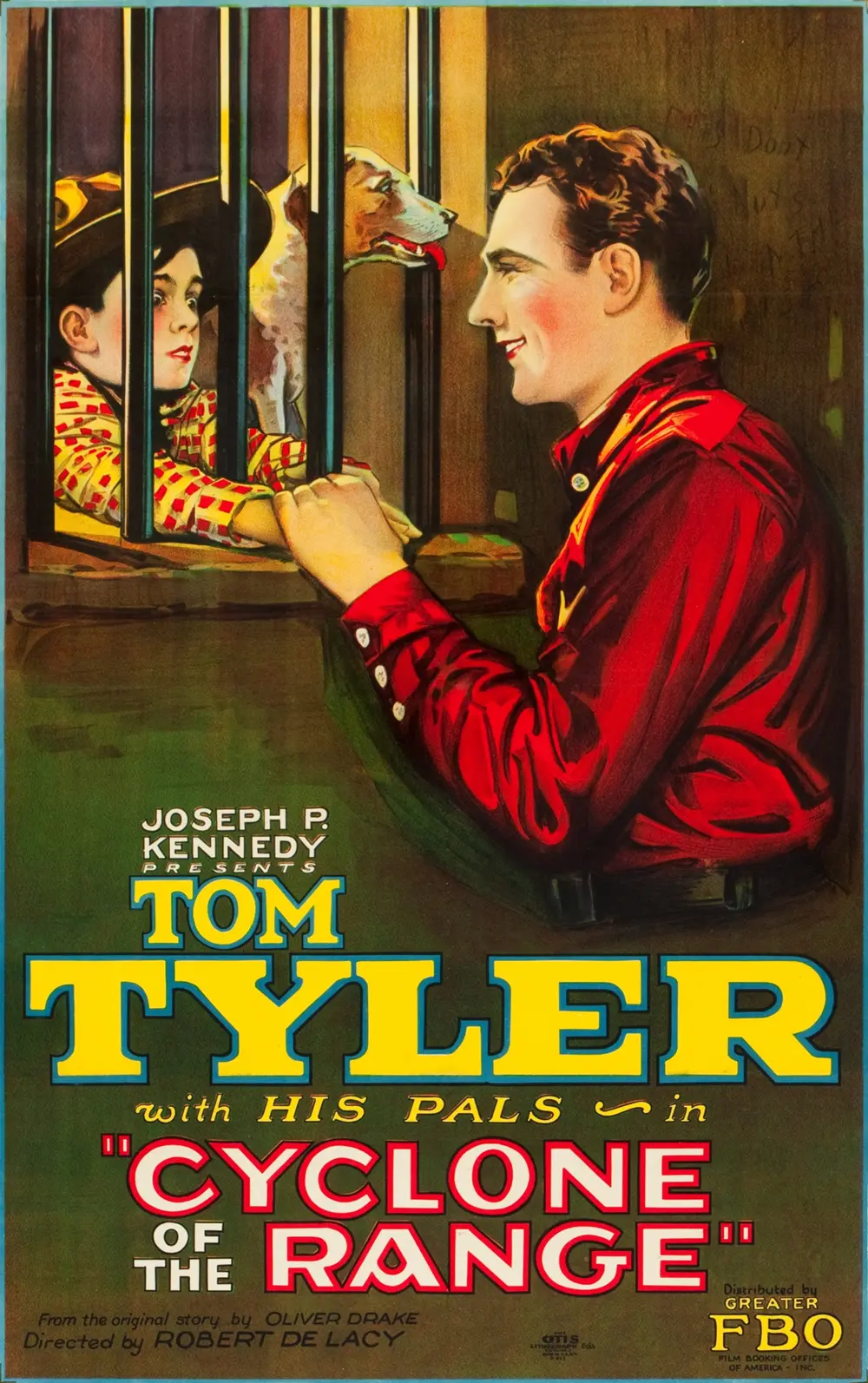
A definitive 7.1/10 rating for a film that redefined the boundaries of cult cinema. Cyclone of the Range remains a cornerstone of transgressive art.
Is Cyclone of the Range worth watching today? Short answer: yes, but with significant caveats. This 1927 silent western offers a fascinating, if sometimes rudimentary, glimpse into early genre filmmaking, making it a compelling watch for dedicated enthusiasts and film historians, provided they temper expectations for modern cinematic sensibilities.
This film is absolutely for anyone with a deep appreciation for silent cinema, the foundational tropes of the Western, or those curious about the early career of Tom Tyler and the surprisingly effective 'acting' of Beans the Dog. It is decidedly NOT for viewers seeking modern pacing, complex character arcs, or high-fidelity visual spectacle, as its charms are firmly rooted in its historical context.
This film works because... it distills the essence of the classic Western into its purest form: a lone hero, a clear villain, a damsel in distress, and a quest for justice, all delivered with an earnest, unpretentious charm that feels both authentic to its era and surprisingly enduring.
This film fails because... its narrative simplicity often borders on predictability, and its technical limitations, while understandable for the era, can make sustained engagement challenging for contemporary audiences accustomed to more sophisticated storytelling and production values.
You should watch it if... you’re prepared to meet it on its own terms, understanding it as a historical artifact that nevertheless possesses a raw, foundational appeal, especially in its portrayal of frontier grit and straightforward morality.
To properly appreciate Cyclone of the Range, one must first understand its place in cinematic history. Released in 1927, this film hails from the twilight years of the silent era, a period when the Western genre was already a well-established, if still evolving, staple of the silver screen. Directed by Oliver Drake and starring the prolific silent cowboy Tom Tyler, it embodies many of the conventions that would define the genre for decades to come, offering a window into the foundational myths of the American frontier.
The plot, as straightforward as a dusty trail, centers on Tom Mackay (Tom Tyler), a man haunted by personal tragedy. His brother’s murder ignites a vengeful fire, driving him to seek justice against the unknown outlaw. This quest leads him to the Butler ranch, where he takes on a job, ostensibly as a cowboy, but with an ulterior motive. This dual purpose—seeking employment while hunting a killer—provides a subtle layer of intrigue, even if the film doesn't delve deeply into the moral complexities of such a pursuit.
It’s on the ranch that Mackay’s path diverges, or rather, expands. He encounters Mollie Butler (Elsie Tarron), the rancher’s daughter, and a romantic spark ignites. This burgeoning affection, however, immediately pits him against Dakin (Harry Woods), the ranch foreman, who harbors his own designs on Mollie and, by extension, the ranch. This classic love triangle, overlaid with the revenge plot, forms the narrative backbone, creating predictable but satisfying conflicts.
Tom Tyler, as Tom Mackay, is the quintessential silent western hero: stoic, strong, and morally unshakeable. Tyler’s performance relies heavily on his imposing physique and a gaze that conveys determination, sorrow, and simmering anger without uttering a single word. In an era where exaggerated gestures were common, Tyler’s relative restraint is noteworthy. He communicates through subtle shifts in his posture and the intensity of his eyes, particularly when confronting Dakin or contemplating his brother's fate. For instance, a scene where he silently observes Mollie from afar, his expression a mix of longing and duty, speaks volumes about the internal conflict he faces.
Elsie Tarron, as Mollie, fulfills the role of the spirited yet vulnerable leading lady. Her character, while not deeply explored, serves as the emotional anchor for Mackay and the object of Dakin's sinister desires. Tarron’s performance, typical of the period, involves expressive facial reactions and broad gestures to convey fear, affection, or distress. Her moments of peril, particularly when threatened by Dakin, are effective in generating audience sympathy and highlighting the hero's protective instincts.
Harry Woods, as the villainous foreman Dakin, is perhaps the most outwardly theatrical performer. He embodies the sneering, conniving antagonist with relish. Woods's portrayal is a masterclass in silent film villainy, relying on exaggerated scowls, menacing glares, and aggressive posturing to establish his sinister intent. His every appearance signals trouble, making him an effective, if one-dimensional, foil to Tyler's heroic Mackay. A particular scene where Dakin attempts to corner Mollie in the barn, his shadow looming large, is a classic example of his menacing presence.
One of the most surprising and genuinely charming elements of Cyclone of the Range is the presence and contribution of Beans the Dog. Beans is not merely a prop; he is an active participant in the narrative, often providing moments of levity, companionship, and even crucial assistance to Tom Mackay. His loyalty is unwavering, and his 'performance' often feels more authentic and engaging than some of the human theatrics.
In one memorable sequence, Beans barks a warning, alerting Mackay to an approaching danger, or later, helps track a villain. It's an unconventional observation, but while many silent films suffer from stilted human performances, Cyclone of the Range finds an unexpected emotional anchor not in its human leads, but in the unwavering loyalty and expressive presence of Beans. His actions are clear, his motivations pure, and his impact on the story undeniable. He’s arguably the most compelling character, injecting unexpected life into the proceedings.
Oliver Drake's direction is competent and functional, serving the story without often elevating it to an art form. He understands the mechanics of the Western, delivering clear action sequences and straightforward narrative progression. The camera work, while not groundbreaking, effectively captures the vastness of the range. Wide shots emphasize the isolation and rugged beauty of the landscape, reminding viewers of the formidable environment in which these dramas unfold.
The cinematography, though limited by the technology of the era, occasionally achieves striking visual moments. The dusty trails, the silhouette of cowboys against a setting sun, and the starkness of the unvarnished Western landscape are all captured with a raw authenticity. There’s a particular shot of horses galloping across an open plain that, despite its age, still conveys a sense of exhilarating freedom and the untamed spirit of the frontier. However, the film rarely pushes beyond these conventional shots, preferring clarity over visual experimentation.
It's here that one of my debatable opinions comes into play: Oliver Drake’s direction, while functional, rarely transcends the utilitarian. It serves the story, but seldom elevates it, making 'Cyclone of the Range' a competent narrative delivery system rather than a visually or emotionally resonant experience that lingers long after the credits roll. The film is a solid example of early Western filmmaking, but not a particularly innovative one.
The pacing of Cyclone of the Range is characteristic of silent films – a steady build-up punctuated by bursts of action. The narrative relies heavily on intertitles to convey dialogue and exposition, which can feel jarring to modern audiences. However, within its own context, the rhythm works. The quieter moments establish character relationships and motivations, while the chase scenes and fistfights provide the necessary thrills.
The tone is earnest and moralistic, firmly planting the story in the realm of clear-cut good versus evil. There are no shades of gray here; heroes are virtuous, villains are dastardly. This black-and-white morality, while characteristic of its era, ultimately prevents it from achieving any genuine dramatic depth. The film never challenges its audience or its characters with complex dilemmas, opting instead for a reassuringly straightforward narrative where justice is always served and true love prevails.
At its heart, Cyclone of the Range explores timeless Western themes. Justice, in its most primal form, drives Tom Mackay’s every action. His quest for vengeance is a personal one, but it also taps into the broader frontier ideal of self-reliance and taking the law into one's own hands when formal systems are absent or ineffective.
Loyalty is another strong undercurrent, particularly highlighted by Beans the Dog, but also by Mollie's steadfastness and Mackay's commitment to his brother's memory. The burgeoning romance between Tom and Mollie, while somewhat secondary to the revenge plot, adds a layer of hope and the promise of a future beyond violence. These themes, while presented simply, are the bedrock of countless Westerns and give the film a universal resonance.
For silent film aficionados, absolutely. For Western genre historians, it's a valuable artifact. Casual viewers might find its pacing and silent film conventions challenging.
It’s a straightforward narrative, well-executed for its time. The action sequences are engaging, and the performances, particularly from Tom Tyler and Beans the Dog, are notable.
However, its simplicity means it lacks the depth of later Westerns. The dialogue-free format requires patience. It works. But it’s flawed.
Cyclone of the Range is a fascinating relic, a testament to the enduring power of the Western genre even in its nascent cinematic form. It’s not a film that will revolutionize your understanding of cinema, nor will it likely convert skeptics of silent movies. What it does offer, however, is an earnest, unpretentious ride through classic frontier narratives. Tom Tyler embodies the stoic hero with conviction, and the narrative, while simple, is effective in delivering its tale of justice and romance.
Its greatest strength lies in its unvarnished authenticity, capturing a period of filmmaking and a genre that was still finding its voice. For those willing to adjust their viewing lens to the standards of 1927, there's genuine enjoyment to be found, particularly in the clear-cut morality and the unexpected charm of its canine co-star. It's a foundational piece, not a groundbreaking one, but it holds its own as a sturdy example of the silent Western.
If you're looking for a foundational Western that embraces its genre's core tenets without apology, and you have a soft spot for silent-era charm, then Cyclone of the Range is worth digging up. It's a reminder of where it all began, a quiet but resolute whisper from the past, resonating with the timeless appeal of a cowboy, his dog, and a quest for what's right on the open range. It may not be a cinematic Paradise Lost, but it’s a solid piece of its time, far more engaging than a forgotten curio like Cleaning Up or the overly sentimental Not So Long Ago.
IMDb 6.2
1923
Community
Log in to comment.