DbcultAccessing Vault...
6/10
Senior Film Conservator
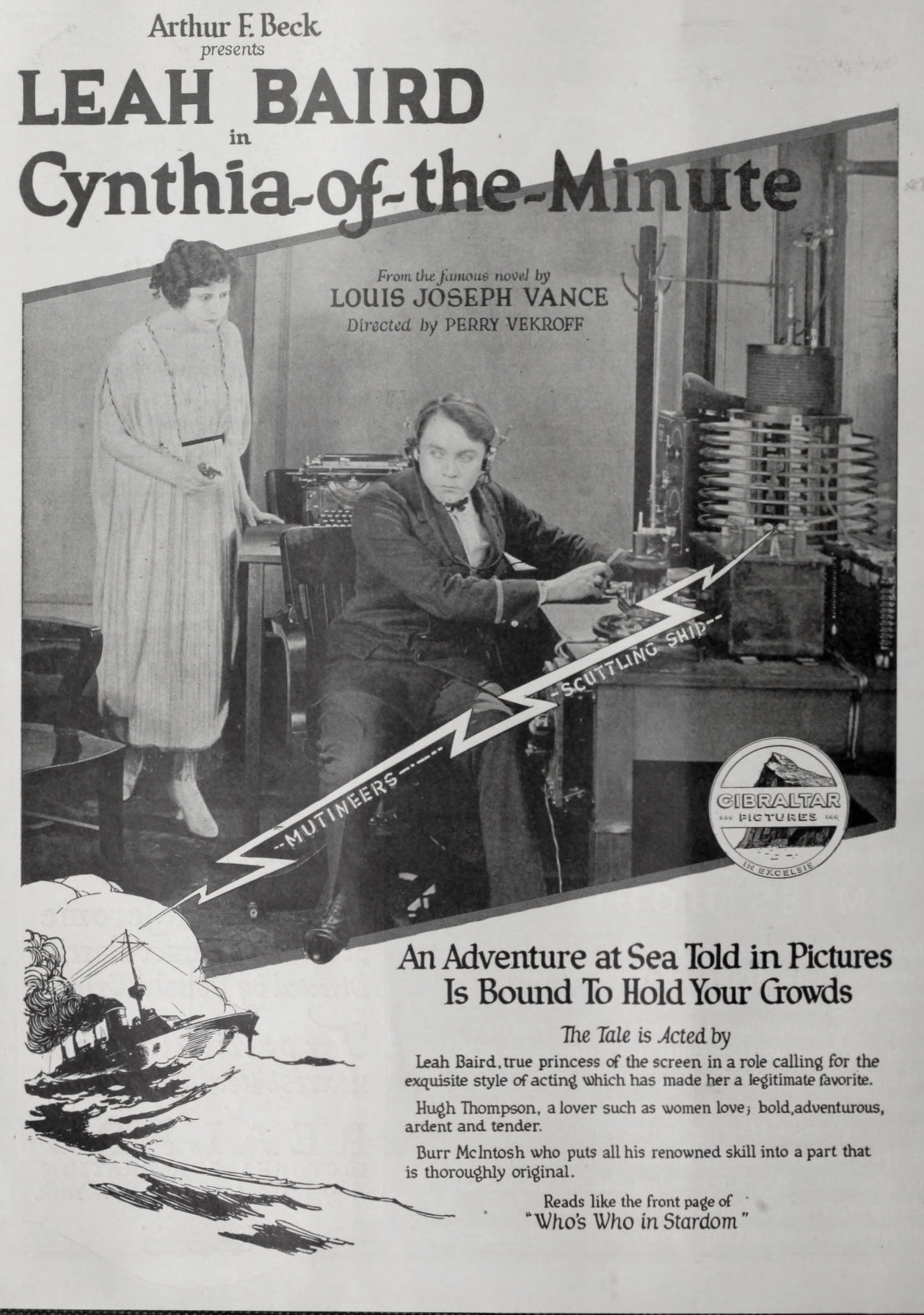
A definitive 6/10 rating for a film that redefined the boundaries of cult cinema. Cynthia of the Minute remains a cornerstone of transgressive art.
In the shimmering, often overlooked tapestry of early 20th-century cinema, certain films emerge not just as historical artifacts but as compelling narratives that resonate with timeless themes of courage, ingenuity, and the indomitable human spirit. Among these, Cynthia of the Minute stands as a testament to the silent era's capacity for intricate storytelling and thrilling spectacle. Directed with a keen eye for dramatic tension, this film, penned by a collaborative force including Louis Joseph Vance, Leah Baird, and Katherine Hilliker, unfurls a tale brimming with unexpected twists and a heroine whose intelligence proves as formidable as any physical prowess.
The narrative commences with Cynthia, an English émigré, navigating the bustling, sometimes unforgiving streets of New York City, a landscape of towering ambition and stark anonymity. Her quest for employment, a familiar plight for many in the nascent urban sprawl, sets the stage for a series of encounters that will irrevocably alter her destiny. It is here that she crosses paths with Bruce Crittenden and George Rhode, two figures who, perhaps unwittingly, become catalysts in her extraordinary journey. Their introduction to Madame Savarin, a woman of considerable means seeking a companion for a sea voyage, provides Cynthia with a seemingly innocuous escape from her terrestrial struggles. This initial setup, a blend of chance and circumstance, is a classic trope of adventure narratives, yet it is executed with a subtlety that belies the impending melodrama.
The transition from landlocked uncertainty to the boundless expanse of the ocean marks a pivotal shift in the film's atmosphere. The luxurious confines of the ship, initially a sanctuary, gradually morph into a stage for unfolding treachery. Cynthia's discovery that Bruce Crittenden, her earlier acquaintance, is none other than the ship's purser, adds a layer of romantic intrigue to the burgeoning plot. This serendipitous reunion hints at a deeper connection, a bond that will be tested and forged in the crucible of imminent danger. However, it is Cynthia's unique skill, a legacy from her esteemed father – a celebrated wireless expert who imparted to her the intricate art of reading code – that truly ignites the film's central conflict. This detail is not merely a plot device; it's a profound statement on the value of intellectual prowess, particularly for a female protagonist in an era often characterized by more passive roles for women in cinema.
The quiet hum of the wireless room, a symbol of modernity and communication, becomes the conduit for a sinister plot. Cynthia, with her acute understanding of coded messages, inadvertently intercepts a clandestine scheme to sink the vessel and abscond with Madame Savarin's invaluable jewels. This revelation transforms her from a mere companion into an unwitting guardian, burdened with a secret that threatens not only her own life but the lives of everyone on board. The tension escalates with masterful pacing, building towards the inevitable explosion of violence. The crew's mutiny, a chaotic eruption of greed and desperation, plunges the ship into a maelstrom. Here, the film expertly balances individual heroism against collective madness. George Rhode and Bruce Crittenden, previously established as distinct characters, unite in a desperate fight against the rebellious crew, their actions echoing the primal struggle for survival. Yet, it is Cynthia who, with remarkable composure, sounds the alarm, her quick thinking a crucial counterpoint to the physical altercations unfolding around her.
The climax of Cynthia of the Minute is a breathtaking sequence of events that firmly establishes Cynthia as a heroine of formidable resolve. As Bruce Crittenden valiantly attempts to foil the jewel thieves, he is tragically cast overboard into the churning sea. This moment, fraught with peril, demands an immediate and decisive response. Cynthia, without hesitation, demonstrates an extraordinary blend of courage and presence of mind. Strapping the precious jewels, the very object of the mutiny, to her back, she plunges into the frigid depths, not for the material wealth, but for the life of the man who has come to represent hope and companionship. This act of self-sacrificing bravery elevates the film beyond a simple adventure story, imbuing it with a profound emotional core. Her aquatic rescue of Bruce, a testament to her unwavering spirit, is a powerful visual metaphor for a woman taking charge of her destiny and actively saving her male counterpart, a subversion of traditional gender roles that was both progressive and compelling for its era.
The subsequent rescue by a government patrol boat provides a much-needed reprieve, a return to order after the chaotic descent into lawlessness. The journey back to New York is not merely a physical return but a symbolic one, bringing Cynthia and Bruce full circle to the city where their paths first intertwined. The film culminates in their marriage, a romantic resolution that feels earned, a natural outgrowth of shared adversity and mutual admiration. This ending, while perhaps conventional for the time, is deeply satisfying because it celebrates not just love, but a partnership founded on respect for intelligence, bravery, and resilience.
The success of Cynthia of the Minute owes much to its talented cast, who, without the benefit of spoken dialogue, conveyed a rich spectrum of emotions and intentions through gesture, facial expression, and physical presence. Leah Baird, who also contributed to the screenplay, delivers a truly magnetic performance as Cynthia. Her portrayal is a masterclass in silent acting, capturing Cynthia's initial vulnerability, her burgeoning intelligence, and ultimately, her fierce courage. Baird imbues Cynthia with a quiet strength that makes her transformation into a proactive heroine entirely believable and deeply inspiring. Her eyes, often the most expressive tool in a silent actor's arsenal, convey a depth of thought and determination that elevates the character beyond a mere damsel in distress.
Alexander Gaden, as Bruce Crittenden, provides a strong, honorable counterpart to Cynthia. His performance as the purser, caught between duty and the unfolding chaos, is nuanced. He projects a sense of steadfast reliability that makes his eventual rescue by Cynthia all the more impactful, challenging the traditional male hero archetype with grace. Burr McIntosh, William Welsh, and the rest of the ensemble, including Ashton Newton, John Webb Dillion, Wallace Widdicombe, Mathilde Brundage, Hugh Thompson, and Ruby Hoffman, each contribute to the film's vibrant tapestry. Their collective efforts in portraying the various crew members, villains, and supporting figures ensure that the world of Cynthia of the Minute feels populated and authentic, even within the stylized conventions of silent cinema. The antagonists, in particular, convey a palpable sense of menace, creating a credible threat that amplifies Cynthia's heroism.
The directorial choices in Cynthia of the Minute are particularly noteworthy. The film demonstrates a sophisticated understanding of how to build suspense visually. The use of close-ups to emphasize Cynthia's decoding efforts, the wide shots to convey the vastness of the ocean and the isolation of the ship, and the dynamic editing during the mutiny sequence all contribute to a gripping cinematic experience. The pacing is expertly managed, allowing moments of quiet tension to breathe before erupting into thrilling action. For instance, the scene where Cynthia first overhears the coded plot is handled with a delicate touch, emphasizing her intellectual engagement rather than overt physical action, a refreshing approach.
The screenplay, a collaborative effort, is remarkably tight and efficient. Louis Joseph Vance, Leah Baird, and Katherine Hilliker crafted a story that, despite its adventurous scope, remains grounded in character motivation. Cynthia's wireless expertise is not just a convenient plot device; it's intricately woven into her character's backstory, making her abilities feel earned and authentic. This attention to detail in character development and plot construction is a hallmark of well-crafted silent cinema, demonstrating that compelling narratives didn't require sound to be impactful. The writers understood the power of visual storytelling, using intertitles judiciously to clarify plot points without interrupting the flow of the action. This careful balance ensures that the audience remains fully immersed in Cynthia's perilous journey.
When considering Cynthia of the Minute within the broader context of silent film, it finds its place among a lineage of adventure and suspense thrillers that captivated audiences. Its portrayal of a resourceful female protagonist, particularly one who uses her intellect rather than just physical strength, draws interesting parallels to other films of the era. One might consider it alongside the daring spirit of characters in features like A Woman's Daring, where female agency is similarly central to the narrative drive. While specific plot points differ, the underlying theme of a woman overcoming immense obstacles through sheer will and intelligence is a powerful common thread. Similarly, the dramatic stakes and exotic setting might evoke comparisons with films like The World for Sale, which also explored grand adventures and perilous quests, albeit with different thematic focuses.
The film also showcases the burgeoning sophistication of action sequences in silent cinema. The mutiny and subsequent rescue are choreographed with an energy that belies the technical limitations of the time, demonstrating how filmmakers were continually pushing the boundaries of visual spectacle. This commitment to dynamic storytelling is something one can see evolving across the decade, from early chase sequences to more complex set pieces. For instance, the ingenuity in the action and the clear delineation between heroes and villains, while stylistically distinct, shares a narrative clarity with films like Boy Scouts to the Rescue, which also emphasized courageous acts and a clear moral compass, albeit for a younger audience and with a different scope.
Moreover, the romantic entanglement between Cynthia and Bruce, forged in the crucible of shared danger, is a classic cinematic motif. This kind of relationship, where characters are bonded through extraordinary circumstances, can be seen in various forms throughout cinema history. The resolution, a triumphant marriage, while a common trope, feels particularly earned here due to the genuine peril and the active role Cynthia plays in her own and Bruce's salvation. It’s a love story where heroism isn't confined by gender, making it resonate with a more modern sensibility even today.
Cynthia of the Minute is more than just a relic from a bygone cinematic era; it is a vibrant, engaging piece of storytelling that continues to captivate. Its narrative, rich with suspense and romance, is propelled by a compelling heroine whose intellect and bravery are truly inspiring. Leah Baird's performance is a standout, embodying a proto-feminist spirit that was perhaps ahead of its time, showcasing a woman who is not just an object of affection or a victim, but an active participant in her own destiny and the salvation of others. The film's technical execution, from its thoughtful direction to its well-structured screenplay, demonstrates the sophisticated artistry that silent filmmakers achieved.
For those with an appreciation for the foundational works of cinema, or simply for a thrilling adventure story, Cynthia of the Minute offers a rewarding viewing experience. It reminds us that compelling drama, heroic acts, and enduring love transcend the need for spoken words, finding expression instead in the universal language of human emotion and action. It stands as a powerful argument for the enduring legacy and artistic merit of the silent film era, a vibrant testament to the power of visual narrative. Its meticulous plot, engaging characters, and thrilling sequences ensure its place as a gem worthy of rediscovery and appreciation by contemporary audiences, proving that true cinematic artistry is indeed timeless. This is a film that doesn't just entertain; it inspires, showcasing the potential for ordinary individuals to rise to extraordinary challenges.

IMDb 5.2
1920
Community
Log in to comment.