DbcultAccessing Vault...
6.6/10
Senior Film Conservator
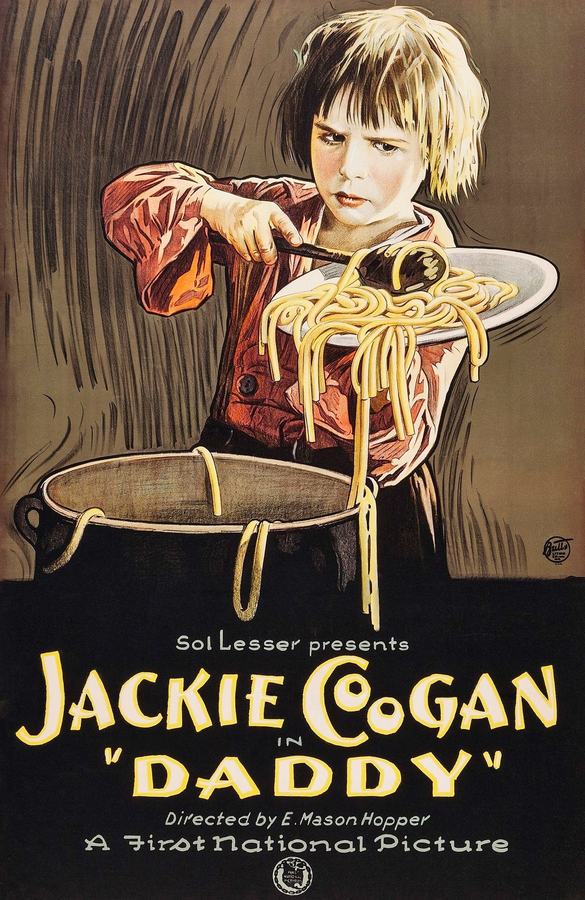
A definitive 6.6/10 rating for a film that redefined the boundaries of cult cinema. Daddy remains a cornerstone of transgressive art.
When one thinks of the silent era’s capacity to convey emotional depth without a single spoken word, Daddy stands as a luminous exemplar. Directed by a yet‑unsung visionary, the film weaves a tapestry of familial fracture, socioeconomic decline, and the restorative power of music. Its narrative architecture is as intricate as a Baroque fugue, each motif—jealousy, poverty, hope—interlocking with uncanny precision.
The opening act thrusts the audience into the domestic sphere of Paul Savelli (Cesare Gravina), a virtuoso whose fame is eclipsed by a personal calamity: the departure of his wife, driven by baseless suspicion. This inciting incident is not merely a plot device; it functions as a crucible, forging the film’s central theme of misplaced jealousy. The wife’s abandonment, taking the infant Jackie (Jackie Coogan) to the Holdens—a pair of weather‑worn farmers portrayed with tender gravitas by Anna Townsend and George Kuwa—sets the stage for a generational saga that oscillates between rural austerity and urban desperation.
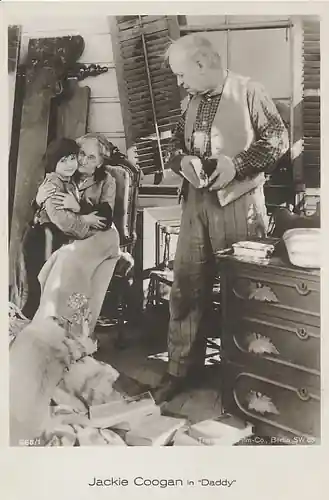
The Holdens’ subsequent financial collapse mirrors the broader post‑World War I economic turbulence that plagued many American families. Their farm, once a bastion of self‑sufficiency, becomes a pawn in a ruthless auction, underscoring the fragility of agrarian livelihoods. This descent into poverty is rendered with a stark visual palette: high‑contrast shadows that cling to the crumbling barn, interspersed with the occasional glint of sunlight—a visual metaphor for the fleeting hope that persists.
Jackie’s flight to the metropolis is a narrative pivot that introduces a second, equally compelling thread: the fallen musician (Willard Louis). Once celebrated, this figure now subsists on the peripheries of the city’s cultural underbelly, his violin gathering dust as he trades melodies for menial labor. Their unlikely camaraderie becomes a study in intergenerational mentorship, echoing the film’s recurring motif of artistic lineage.
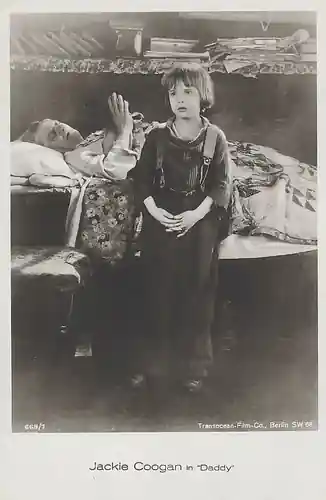
Parallel to Jackie’s city escapade, Savelli’s own father (Arthur Edmund Carewe) returns from an exhaustive world tour, his return a symbolic homecoming of the old guard. The elder Savelli’s presence is a narrative fulcrum—his seasoned perspective bridges the gap between the estranged father and his son, while also providing a conduit for the re‑introduction of the legendary musician whose teachings once shaped both families.
From a technical standpoint, the film employs a masterful use of chiaroscuro, a technique reminiscent of German Expressionism, to delineate the emotional terrain. The rural sequences are bathed in soft, diffused light, evoking nostalgia, whereas the city scenes are punctuated by harsh, angular lighting that underscores Jackie’s alienation. The camera often lingers on close‑ups of Jackie’s expressive face, allowing Coogan’s prodigious talent to convey a spectrum of emotions—from bewildered innocence to steely resolve—without the crutch of intertitles.
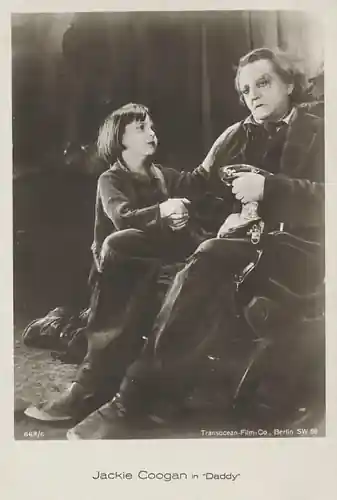
The musical score, though unseen, reverberates through the mise‑en‑scene. Whenever a violin is brought to the foreground, the audience can almost hear the resonant strings, a clever auditory illusion that amplifies the film’s title metaphor: the ‘Daddy’ who is both a paternal figure and a maestro.
Jackie Coogan delivers a performance that is nothing short of mesmerizing; his ability to inhabit a character torn between two worlds is a testament to his innate screen presence. Cesare Gravina’s portrayal of Savelli is layered with restrained anguish; his eyes, often fixed on the horizon, betray a yearning for redemption that words could never articulate.
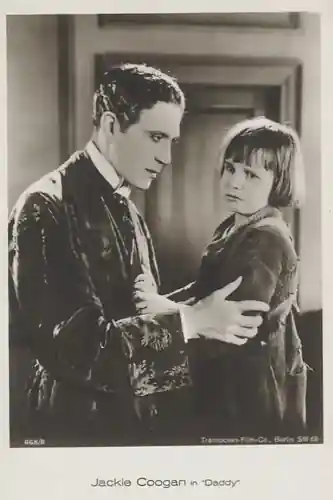
The supporting cast—particularly Anna Townsend as the matriarch of the Holdens—imbues the narrative with a grounded humanity. Their chemistry with Coogan creates a familial tableau that feels both authentic and timeless. The cameo by George Kuwa adds a subtle cultural texture, reminding viewers of the era’s burgeoning multicultural influences.
When juxtaposed with other silent dramas such as Az ördög or the rugged frontier narrative of The Man from Painted Post, Daddy distinguishes itself through its intimate focus on domestic turmoil rather than external conflict. While Man of Might glorifies physical prowess, Daddy champions emotional resilience, making it a more nuanced study of human frailty.
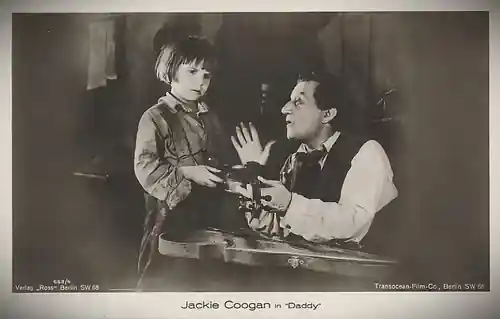
The film’s denouement is both cathartic and thematically resonant. The revelation—prompted by a weather‑worn portrait of Jackie’s mother—that Jackie is Savelli’s biological son reframes the entire saga. This moment, rendered in a slow, deliberate dissolve, underscores the film’s belief in the inevitability of truth and the restorative capacity of love.
The final tableau, wherein Savelli and Jackie repurchase the Holdens’ farm, is a visual ode to reclamation. The camera pulls back to reveal the reclaimed land bathed in the amber glow of sunset, a color palette that mirrors the film’s recurring orange motif (#C2410C). It is a promise that the cycles of loss can be broken, and that art—embodied by the violin’s lingering echo—can bridge fractured generations.
From an academic perspective, Daddy offers fertile ground for discussions on early 20th‑century gender dynamics, the representation of rural poverty, and the mythologizing of the musician‑hero archetype. Its narrative structure anticipates later melodramas of the 1930s, while its visual language foreshadows the expressive techniques employed by auteurs such as Carl Theodor Dreyer.
Moreover, the film’s intertextual nods to works like Too Wise Wives—particularly in its critique of marital mistrust—invite a comparative analysis that enriches our understanding of silent‑era storytelling.
In sum, Daddy is a masterclass in silent storytelling, marrying a richly layered script with evocative cinematography and performances that transcend the limitations of the medium. Its exploration of jealousy, abandonment, and eventual reconciliation resonates as profoundly today as it did a century ago. For scholars, cinephiles, and casual viewers alike, the film stands as a testament to the enduring power of visual narrative.
IMDb 6.2
1919
Community
Log in to comment.