DbcultAccessing Vault...
Cult Review
Senior Film Conservator
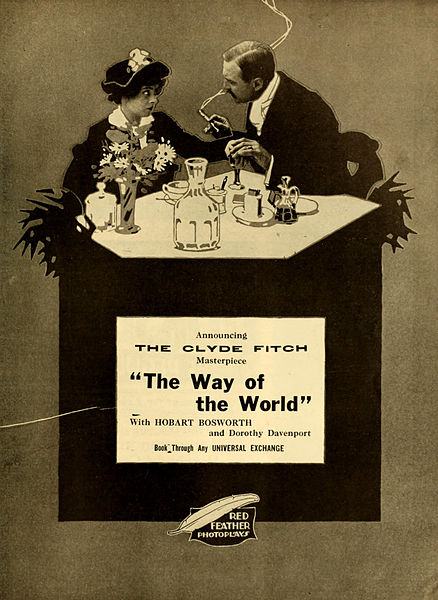
Stepping back into the nascent years of cinematic storytelling, one encounters a fascinating tapestry of human drama, societal critique, and moral quandaries. Among these early gems, "The Way of the World" emerges as a particularly potent exploration of the destructive forces unleashed when personal ambition collides with romantic entanglement and political machination. This isn't merely a quaint relic from the past; it's a profound, if at times melodramatic, examination of the human condition, revealing timeless truths about power, betrayal, and the relentless pursuit of one's desires, often at the expense of others.
The film, penned by the perceptive minds of Clyde Fitch and F. McGrew Willis, delves into a world where public image is paramount, and the whisper of scandal can shatter even the most robust careers. It meticulously constructs a narrative web, ensnaring its protagonists in a series of unfortunate choices and manipulative designs, ultimately leading to a climax charged with both violence and a surprising, almost redemptive, act of sacrifice. The intricate plot, while perhaps demanding a certain patience from a modern audience accustomed to rapid-fire narratives, rewards the discerning viewer with a rich character study and a stark commentary on the fragility of reputation.
At the heart of this intricate drama are characters who, despite their early 20th-century sensibilities, resonate with universal human frailties. Walter Croydon, initially presented as a promising young attorney, embodies the archetype of the ambitious politician. His ascent to the governorship is meticulously orchestrated by Peter Sturton, a seasoned political "machine" head whose influence extends far beyond mere endorsements. Croydon, however, possesses a critical flaw: a certain naiveté regarding the cutthroat nature of both politics and personal relationships. His initial romantic misstep with Beatrice Farley, fueled by a moment of inebriation, sets off a chain reaction that he struggles to comprehend, let alone control. He is a man who believes in the inherent goodness of people, a dangerous conviction in a world teeming with cynical operators.
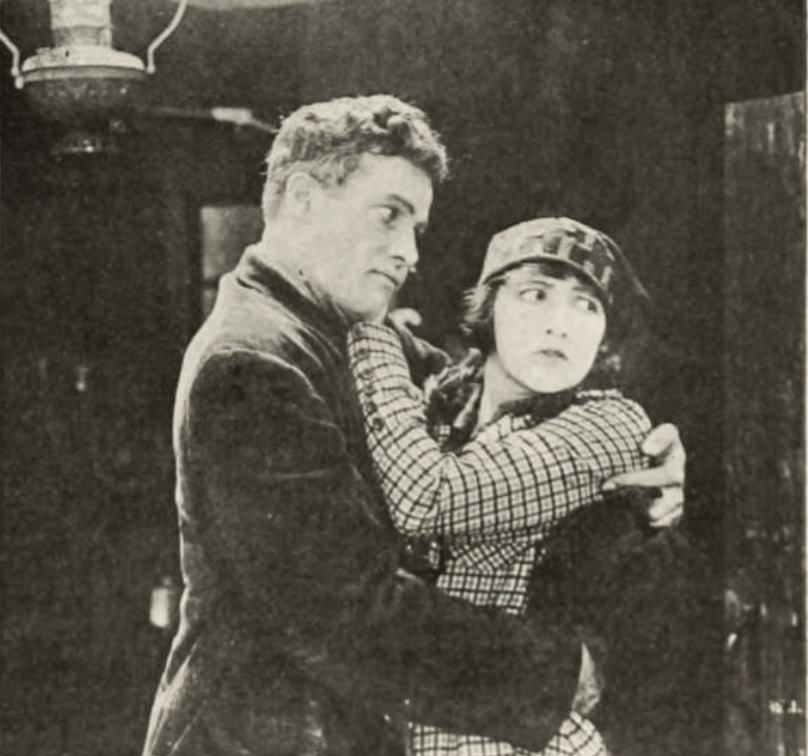
Beatrice Farley, the object of both Croydon's and Nevill's affections, is a figure of considerable complexity. Far from being a mere damsel in distress, Beatrice displays an initial independence, refusing to be rushed into an engagement after Croydon’s lapse in judgment. Her journey to Europe, a quest for clarity and perhaps a balm for her wounded pride, inadvertently plunges her into a far more perilous emotional landscape. Her vulnerability to John Nevill's charm, coupled with his calculated deception, paints a picture of a woman caught between genuine affection and manipulative allure. Later, as the Governor's wife, she maintains an almost stoic belief in the innocence of her friendship with Nevill, a testament to her unsuspicious nature, but also a tragic misjudgment of Nevill's true intentions. Her eventual terror and desperate act underscore the immense pressure placed upon women in that era to maintain an unblemished public image.
John Nevill stands as the film's most compelling, and arguably most tragic, antagonist. A man about town, trapped in an unhappy marriage, he is a figure of dissolute charm and profound self-interest. His infatuation with Beatrice quickly curdles into a destructive obsession when she spurns him after discovering his marital status. Nevill's subsequent descent into drink and his calculated return to America, coinciding with Croydon's gubernatorial re-election campaign, reveal a mind consumed by bitterness and a desire for revenge. He becomes a master manipulator, exploiting Sturton's political rivalry and the pervasive power of gossip to systematically dismantle Croydon's life and reputation. His final act, a sudden, almost inexplicable pivot to self-sacrifice, offers a glimmer of the good he once possessed, or perhaps merely a final, grand gesture of control over the narrative.
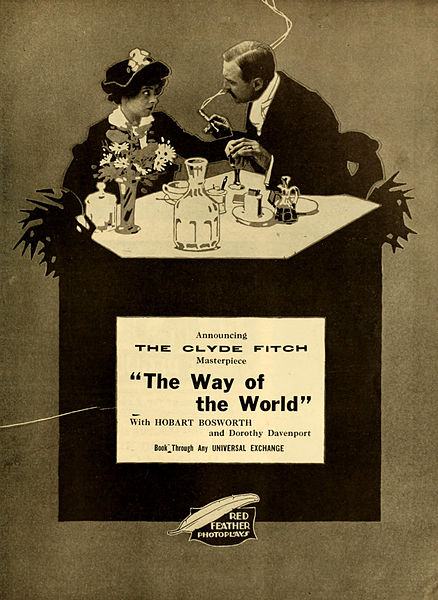
And then there is Peter Sturton, the political architect. He is the pragmatic, ruthless force who initially champions Croydon but later, due to a "falling-out," becomes his most formidable opponent. Sturton embodies the cold, calculating heart of political maneuvering, understanding that public perception is a weapon as potent as any policy. His willingness to use Nevill's scandalous insinuations to undermine Croydon's re-election bid highlights the amoral underbelly of power politics, where personal integrity is often sacrificed at the altar of victory. Sturton is not driven by passion or revenge in the same way Nevill is; rather, he is driven by strategic advantage, a chillingly efficient operator in the game of power.
"The Way of the World" masterfully explores several enduring themes, chief among them the corrosive nature of ambition and political corruption. Sturton's machinations, alongside Nevill's more personal vendetta, paint a bleak picture of a political landscape where character assassination is a legitimate campaign tactic. Croydon's initial ascent is predicated on Sturton's support, and his subsequent vulnerability stems from Sturton's opposition. This dynamic is not unlike the power struggles seen in films such as Unto the Darkness, where hidden agendas often dictate public outcomes, or even the more visceral betrayals found in stories like The Pit, which explores the depths to which individuals will sink for gain.
The film also serves as a poignant commentary on love, deception, and the bitter sting of betrayal. Beatrice's initial love for Croydon is tested by his drunken indiscretion, leading her to seek solace elsewhere, only to fall prey to Nevill's calculated charm. Nevill's deception, concealing his marriage, is a profound act of betrayal that sets the stage for all subsequent tragedy. The narrative powerfully illustrates how easily trust can be shattered and how difficult it is to rebuild, particularly when external forces relentlessly conspire to sow discord. The emotional turmoil Beatrice experiences, caught between her husband's unfounded accusations and Nevill's predatory demands, evokes the raw vulnerability seen in characters navigating similar societal pressures and personal betrayals in films like Odette or The Straight Road, where women often bore the brunt of moral judgment.
Furthermore, "The Way of the World" lays bare the devastating power of societal judgment and the fragility of reputation. The whispers that begin as "idle gossip" are deliberately amplified by Sturton and Nevill, culminating in a newspaper article that subtly but devastatingly questions the paternity of the Croydens' child. This public slander, timed to coincide with the child's christening, is a masterclass in psychological warfare. It demonstrates how easily a carefully constructed public image can be demolished by insinuation and rumor, regardless of truth. Croydon's initial dismissal of the gossip, followed by his drunken, public denunciation of Beatrice, showcases the destructive impact of fear and suspicion when combined with manipulative external forces. This theme of reputation under siege, and the social ostracism that follows, finds echoes in many early dramas, highlighting a persistent anxiety about public perception.
Finally, the film grapples with the complex notions of redemption and sacrifice. Nevill, a character who has meticulously engineered the downfall of others, performs an astonishing volte-face in his final moments. By claiming suicide and handing Croydon the exonerating note, he not only clears Beatrice's name but also provides Croydon with the means to salvage his political career. This act, while born of a twisted love and perhaps a desire for a final, dramatic flourish, nonetheless serves a redemptive purpose, albeit one achieved through a manipulative lie. It forces the audience to ponder whether true redemption can arise from such morally ambiguous origins, and whether sacrifice, even when self-serving, can still yield a positive outcome for others. It’s a complex ethical knot that elevates the narrative beyond simple good-versus-evil.
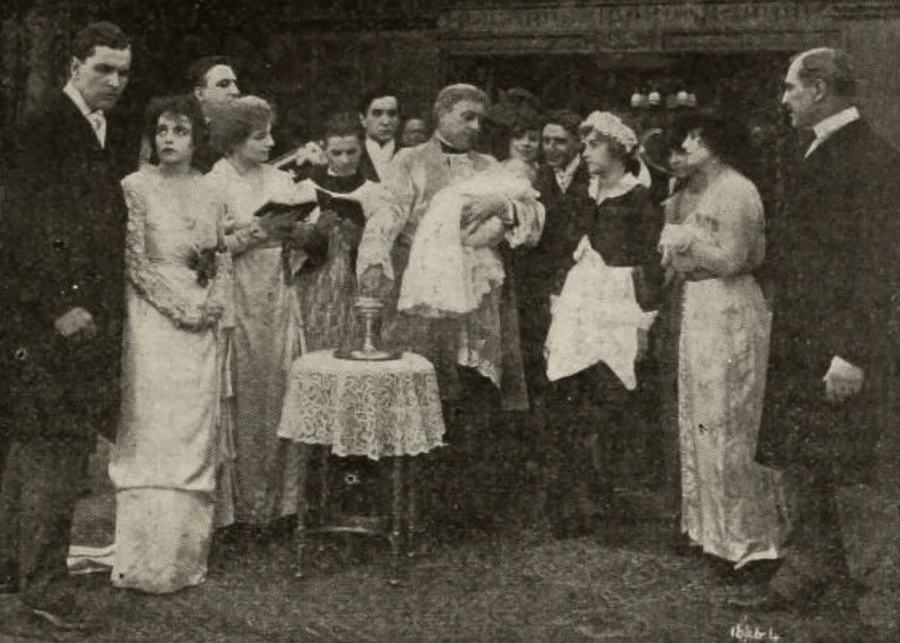
The narrative pacing of "The Way of the World," typical of films from its era, allows for a methodical build-up of tension. Each revelation, each act of betrayal, slowly tightens the noose around the characters, particularly Beatrice. The film’s dramatic climax, centered around the christening and Croydon's drunken accusation, is a powerful scene that encapsulates the raw emotional turmoil and public humiliation at play. The subsequent confrontation between Beatrice and Nevill, leading to his death, is rendered with a visceral intensity, demonstrating the ultimate cost of his relentless pursuit.
While specific performance details for the actors are not extensively documented in the plot synopsis, one can infer the dramatic weight carried by Dorothy Davenport as Beatrice, and Hobart Bosworth as Nevill. Their roles demand a range of emotional expression, from Beatrice’s initial defiance and subsequent heartbreak to Nevill’s charming deceit and eventual tormented obsession. The success of such a narrative hinges on the audience's ability to empathize with Beatrice's plight and to simultaneously despise and perhaps pity Nevill's self-destructive path. Emory Johnson as Croydon would have had the difficult task of portraying a man both ambitious and vulnerable, falling prey to external manipulation and internal weakness.
The film's exploration of societal norms, particularly concerning women's roles and reputation, remains strikingly relevant. Beatrice's terror at her husband's accusation and her desperate need for Nevill to clear her name highlight the precarious position of women in a patriarchal society, where a whisper of scandal could irrevocably tarnish one's standing. This societal pressure, where a woman's honor was often more valuable than her life, is a recurring motif in early 20th-century cinema, resonating with other dramas of the period that explored similar themes of moral judgment and female agency under duress, such as The Commuters or even the more lighthearted The Fates and Flora Fourflush, which, despite its comedic tone, still touched upon social expectations.
Ultimately, "The Way of the World" is more than just a historical artifact; it is a compelling morality play. It serves as a stark reminder that the pursuit of power often necessitates moral compromises, that love can be tragically blind, and that even in death, manipulation can cast a long shadow. The film's conclusion, with Croydon begging forgiveness and Beatrice granting it amidst Nevill's dying confession, is deeply ambiguous. It's a "happy ending" built on a final lie, leaving the audience to ponder the true cost of political survival and the compromises made in "the way of the world." The film invites us to reflect on the enduring human tendencies towards ambition, jealousy, and the complex, often contradictory, nature of our moral choices. Its intricate narrative and exploration of timeless themes ensure its place as a significant, albeit challenging, piece of cinematic history.
This cinematic journey through the murky waters of ambition, deceit, and redemption offers a window into the social and moral fabric of its time, while simultaneously holding up a mirror to the timeless struggles of the human heart. It’s a testament to the power of early filmmaking to weave complex narratives that continue to provoke thought and discussion, long after the reels have stopped spinning.
IMDb —
1928
Community
Log in to comment.