DbcultAccessing Vault...
6.6/10
Senior Film Conservator
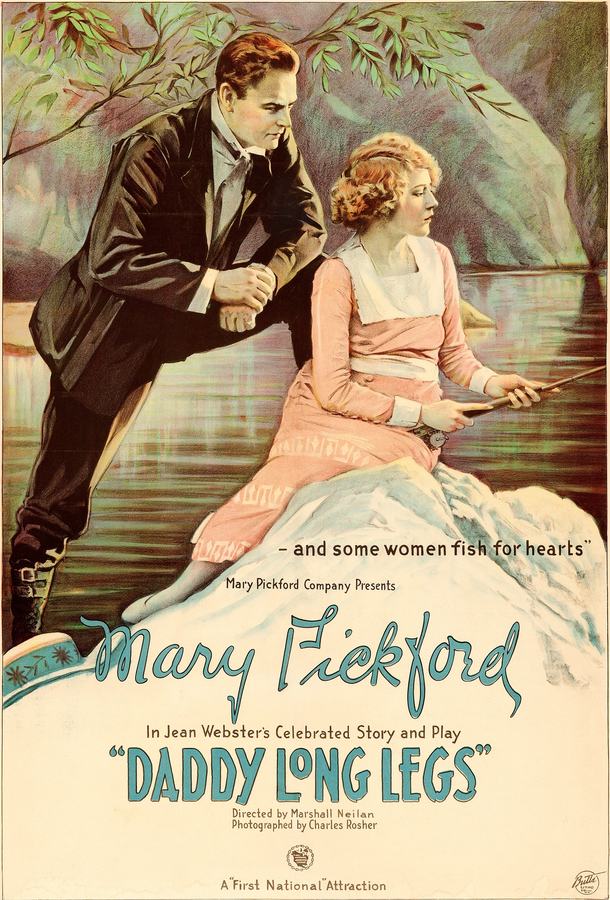
A definitive 6.6/10 rating for a film that redefined the boundaries of cult cinema. Daddy-Long-Legs remains a cornerstone of transgressive art.
Mary Pickford's luminous performance as Jerusha Abbott remains a masterclass in silent-era physicality—watch how her posture evolves from the opening scenes of institutional submission, shoulders curved inward like protective shells, to the radiant verticality of her collegiate self. Her hands tell parallel stories: initially clenched into utilitarian fists while scrubbing floors at the orphanage, they later flutter with the articulate grace of a cellist during philosophy lectures. This isn't mere acting; it's anatomical poetry. The film's genius lies not in the contrivance of Jervis Pendleton's dual role (played with delicious ambiguity by Mahlon Hamilton), but in how director Marshall Neilan visualizes Judy's psychological liberation through academic achievement. Notice the textbooks stacked like fortresses around her dormitory bed—not props, but monuments to her cognitive emancipation.
"Neilan transforms Webster's epistolary novel into a tactile feast—quill pens scratching across vellum become percussion instruments, ink stains bloom like midnight flowers, and each posted letter physically traverses landscapes through montage, making thought itself a migratory creature."
Contemporary audiences might dismiss Daddy-Long-Legs as sentimental fluff, but look closer at Judy's economics lecture scene. As male students debate "feminine financial dependence" with patronizing smiles, Pickford's reaction shots—a subtle tightening around the eyes, a controlled exhale—communicate proto-feminist fury years before suffrage victories. The film critiques philanthropy's power dynamics: Jervis' Adirondack lodge, with its cathedral ceilings and stuffed game heads, becomes a gilded prison where Judy finally understands her education was never charity, but curated grooming. Compare this to the transactional horror in The Vanity Pool, where wealth explicitly purchases affection. Here, the currency is more insidious—intellectual access traded for emotional ownership.
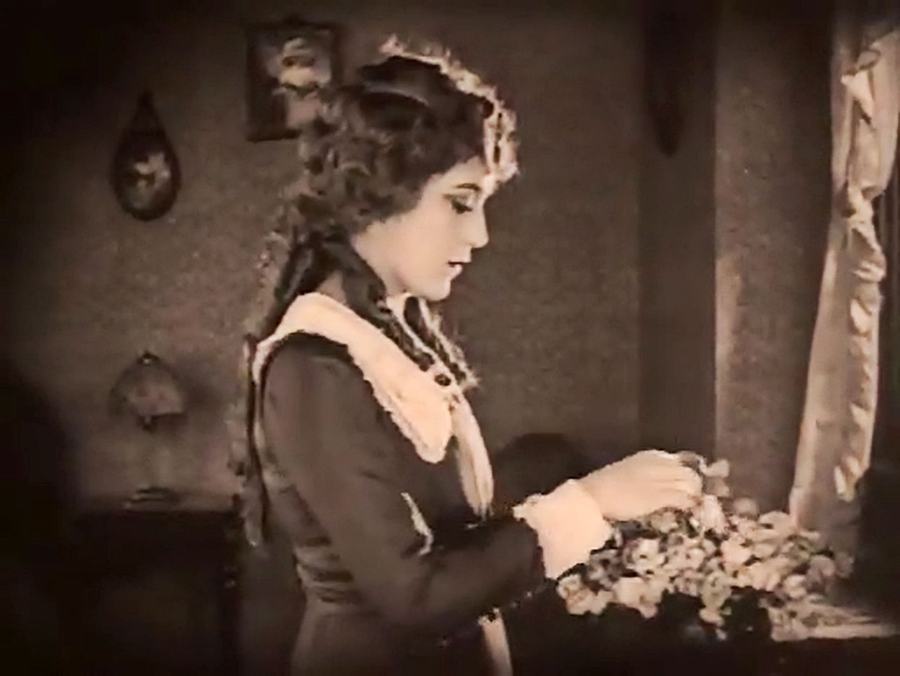
Cinematographer Henry Cronjager employs a fascinating visual dichotomy: Judy's world blooms in soft-focus diffusions, while Jervis inhabits razor-sharp planes of darkness and light—literally fragmenting his identity through venetian blind shadows during the reveal scene. This duality extends to the film's structure, where Judy's letters (rendered as delicate title cards with handwritten fonts) contrast with Jervis' voyeuristic campus visits. Neilan stages these surveillance sequences with chilling objectivity: static shots framed through carriage windows or behind hedgerows, transforming bucolic college greens into panopticons. The most disturbing moment isn't romantic, but pedagogical—when Jervis corrects Judy's French pronunciation during their first meeting, his smile doesn't soften the linguistic colonization.
This film's DNA surfaces in unexpected places: the anonymous patronage trope resurfaces darkly in De lefvande dödas klubb with gothic consequences. Pickford's physical comedy during the orphanage chaos—especially her balletic escape from laundry duty—finds echo seven years later in Strike's factory sequences. More intriguingly, the Vermont cabin confrontation where Judy shreds her benefactor's check predates Nora Helmer's door slam by decades, transforming financial rejection into feminist declaration.
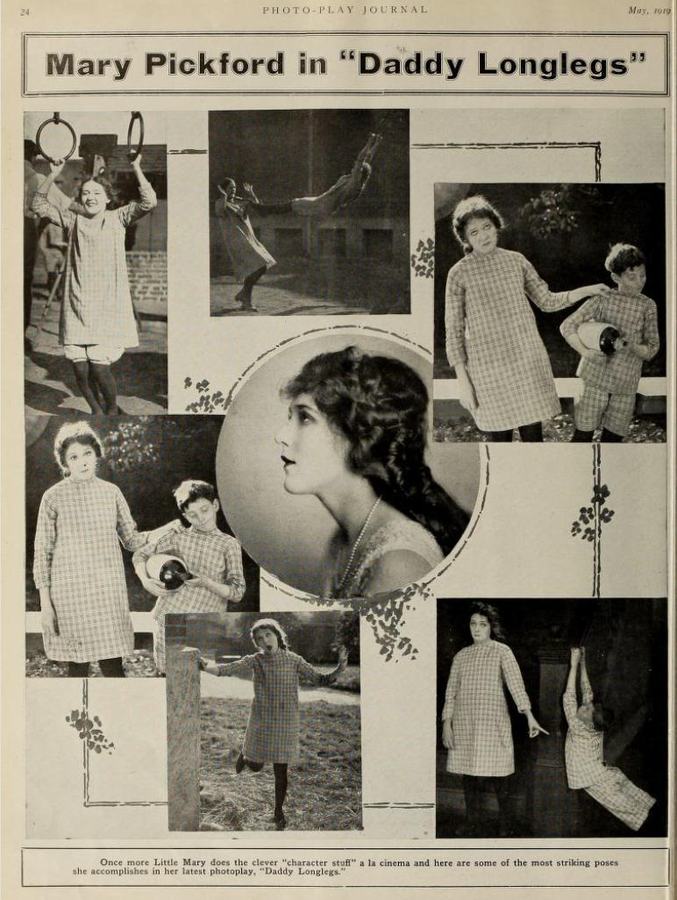
Neilan weaponizes the silent format: Judy's scream when recognizing Jervis' silhouette contains zero decibels yet shatters the narrative. The absence of spoken dialogue amplifies textual power dynamics—Judy's handwritten pages versus Jervis' typed responses, his stationery thick as banknotes. Watch how education manifests visually: Judy's dorm transforms from barren cell to botanical explosion of sketches and poetry fragments, her mind colonizing physical space.
Unlike the cynical society portraits in The Primrose Path, the film critiques privilege through Judy's alienation. Her scholarship gown hangs with mortifying obviousness among heirloom lace, a costuming choice screaming class consciousness. Faculty members float through scenes like academic specters, delivering lectures on "feminine refinement" while Judy subversively excels in economics and biology. The most revolutionary moment involves no dialogue: Judy deliberately smudging ink on her dean's spotless glove during a signing ceremony—a tiny act of anarchic defiance against institutional sterility.

"Pickford's genius emerges in negative space—the half-second pause before accepting Jervis' marriage proposal, her eyes flickering to the window where freedom still hovers. This isn't acquiescence; it's strategic occupation of the only territory available to educated women in 1919."
Cronjager's landscapes function as emotional cartography: the orphanage's jagged stone walls give way to the collegiate campus' curated nature, which finally surrenders to Vermont's untamed wilderness where truth erupts. Notice how weather externalizes psychology: Judy's arrival at college coincides with torrential rain (purification), while the revelation scene unfolds in harsh, exposing sunlight. Most remarkably, the film maps internal transformation through sartorial shifts: Judy's orphanage uniform (stiff as cardboard), her self-made college dresses (vibrant but slightly askew), and finally the benefactor-funded wardrobe (impeccable yet imprisoning). The gown she wears during Jervis' proposal resembles armor—starched linen and whalebone shielding her heart.
Neilan pioneers a visual language for written communication: letters materialize as translucent overlays across landscapes, words drifting like smoke over Judy's shoulder as she composes. This technique achieves profound intimacy—we don't just read her thoughts, we inhabit their spatial relationship to her world. The film's core tension stems from asymmetrical observation: Judy writes to a phantom while Jervis watches her like a specimen. Cinematographically, this plays out through contrasting lenses—subjective POV shots when Jervis observes Judy, versus solitary wide shots when Judy addresses her unseen patron. The power imbalance becomes optical before it's narrative.
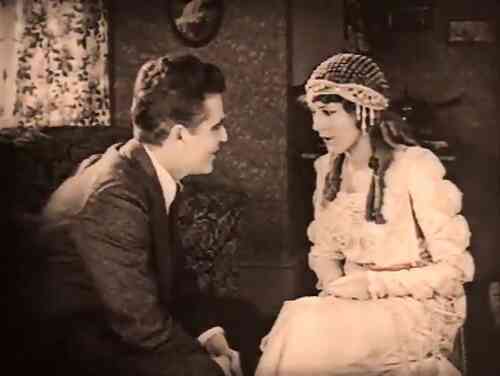
Beyond Pickford's legend, examine supporting players like Percy Haswell as the orphanage matron—her cruelty manifested through tiny violations of personal space, fingers constantly adjusting collars or yanking braids under the guise of discipline. Mahlon Hamilton's Jervis performs wealth through stillness; watch how his hands remain immobile during conversations while others gesture nervously. This physical containment makes his later outburst ("I bought your mind!") volcanic. Among Judy's classmates, Thelma Burns as Sallie McBride steals scenes with anarchic physical comedy—her parody of classical statues during art history class remains a silent-era slapstick masterpiece.
Modern viewers must wrestle with the ending's emotional coercion. When Judy chooses Jervis despite his deception, is it genuine affection or Stockholm syndrome dressed in chiffon? The film invites this discomfort—note how the final embrace plays against a background of his hunting trophies, their glassy eyes witnessing her capture. Unlike the spiritual resolution in After Death, this conclusion offers no transcendence, only pragmatic compromise. Judy gains financial security and intellectual partnership, but the cost is ontological: she forever remains the created thing, Pygmalion's Galatea with a diploma. Pickford's smile fades a fraction too soon before the iris closes—perhaps the most quietly devastating moment in her filmography.
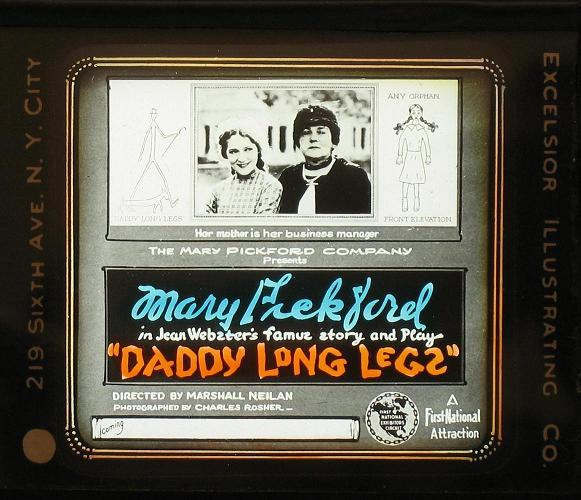
Recent 4K scans reveal astonishing details: the texture of Judy's orphanage uniform (coarse wool that visibly scratches her neck), the embossed lettering on Jervis' stationery, even the subtle tremor in Pickford's hand when signing her first letter "Your orphan." These minutiae transform the viewing experience from historical curiosity to visceral encounter. Particularly revelatory is the Vermont sequence—originally thought to be day-for-night, restoration shows Cronjager used experimental cyan-tinted film stock to create twilight's exact cobalt melancholy. Such discoveries reaffirm Daddy-Long-Legs as technical landmark, not just sentimental relic.
More than a century later, the film endures not for its fairy-tale contrivances, but for its unflinching examination of knowledge's price—and the bittersweet reality that education liberates the mind long before society frees the body.
IMDb —
1926
Community
Log in to comment.