DbcultAccessing Vault...
Cult Review
Senior Film Conservator
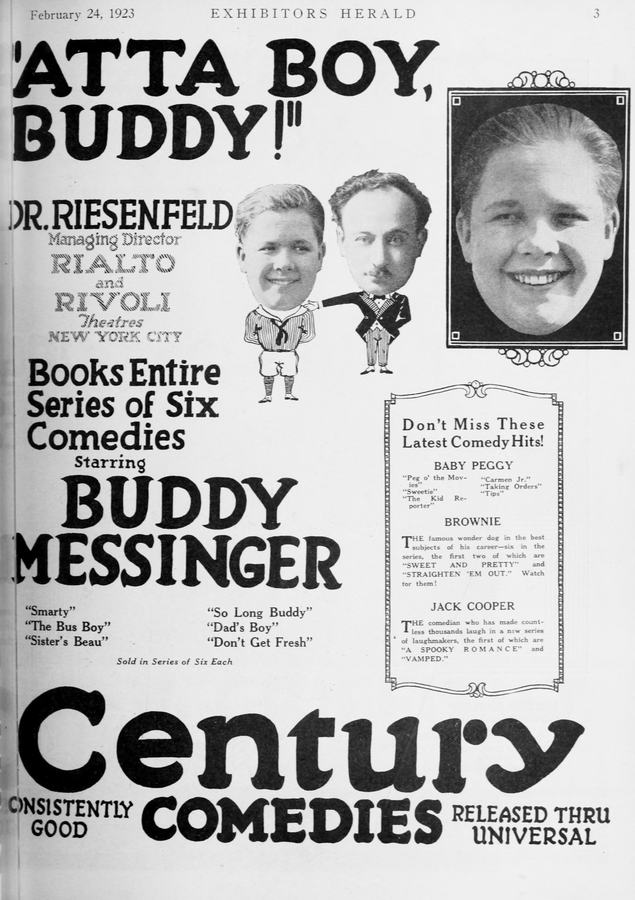
There's a peculiar charm to the domestic comedies of the silent era, a way they distilled universal human experiences into a pure, unadulterated visual language. Among these, Harry Edwards's 'Dad's Boy' emerges not just as a relic of its time, but as a surprisingly incisive, albeit lighthearted, examination of family dynamics, particularly the fierce, often inconvenient, protective instincts of a child. It's a film that, despite its age, resonates with an enduring warmth and an undeniable understanding of the intricate emotional dance within a single-parent household. The narrative, deceptively simple, pivots on the character of Buddy, played with an infectious, unbridled energy by Buddy Messinger, whose youthful exuberance serves as both a source of comedic chaos and the beating heart of the story. His widowed mother, portrayed with a nuanced blend of weariness and enduring hope by Merta Sterling, finds herself navigating the choppy waters of potential remarriage, only to discover that her most formidable obstacle isn't societal judgment or personal doubt, but the unwavering, and often mischievous, disapproval of her own son.
At the core of 'Dad's Boy' is the utterly captivating performance of Buddy Messinger. He's not merely a child actor delivering lines or following cues; he embodies the very spirit of youthful rebellion tempered by profound affection. Buddy's mischief isn't born of malice, but from a deeply ingrained desire to preserve the sanctity of his mother's world—a world he perceives as perfect in its current, suitor-free state. This is a common trope, certainly, but Messinger imbues it with a distinctive authenticity. His wide-eyed innocence, juxtaposed with a cunning strategic mind, makes for genuinely hilarious sequences. Whether he's sabotaging a romantic dinner with a well-aimed projectile or orchestrating a grand, elaborate prank, his actions consistently drive the plot forward, often with unforeseen and delightful consequences. It’s a performance that recalls the unbridled physical comedy of early cinema, yet carries an emotional weight that anchors the humor. You can almost see echoes of other early film children who, like Buddy, often served as moral compasses or agents of change, sometimes more effectively than their adult counterparts.
Merta Sterling, as the widowed mother, delivers a performance that is both understated and profoundly moving. She carries the burden of her character's predicament with a quiet dignity, her expressions conveying a spectrum of emotions from exasperation with Buddy's antics to a yearning for companionship, and ultimately, a fierce, unwavering love for her son. Her portrayal is crucial in grounding the film's more farcical elements. Without her believability, Buddy's actions might seem overly cruel; instead, we understand her predicament and sympathize with her delicate balance between seeking personal happiness and nurturing her child. Sterling masterfully navigates the subtle nuances of a woman caught between her own desires and the perceived needs of her son, a theme that remains remarkably relevant even today. It's a testament to the power of silent acting, where every gesture, every flicker of the eye, must convey volumes. Her struggle is palpable, yet her resilience shines through, making her character deeply relatable.
The two suitors, played by Tiny Ward and Eddie Barry, are expertly crafted caricatures, designed specifically to elicit Buddy’s disapproval and the audience’s amusement. Ward’s suitor is often the more physically imposing, perhaps a bit clumsy, a perfect target for Buddy’s more elaborate traps. Barry’s character, on the other hand, might represent a different kind of unsuitability—perhaps overly smooth or disingenuous, an affront to Buddy’s honest, if mischievous, sensibilities. Their performances are broad, as was typical of the era’s comedic supporting roles, yet they serve their purpose admirably, acting as perfect foils to Buddy’s schemes and Sterling’s quiet despair. They are not villains in the traditional sense, but rather obstacles, personifications of the perceived threat to Buddy’s established order. Their flustered reactions to Buddy’s escalating pranks are a consistent source of laughter, showcasing the comedic timing inherent in Harry Edwards's writing and direction. These characters, while secondary, are indispensable to the narrative, providing the necessary friction for Buddy's protective instincts to ignite. One might compare their exaggerated reactions to the often over-the-top characterizations found in contemporary comedies like Get-Rich-Quick Wallingford, where character types are often clearly defined for maximum comedic effect.
Harry Edwards, as the writer, demonstrates a keen understanding of comedic pacing and character development, even within the confines of a relatively short silent film. The plot, while straightforward, is executed with a delightful inventiveness. Edwards understands that the humor doesn't just come from the pranks themselves, but from the escalating tension and the characters' reactions. There’s a psychological underpinning to Buddy’s actions; he’s not merely a destructive force, but a child operating from a place of profound, if misguided, love. This nuanced approach elevates 'Dad's Boy' beyond simple slapstick, imbuing it with a genuine heart. The narrative arc, from initial introduction of the suitors to Buddy's triumphant, if temporary, expulsion of them, feels organic and satisfying. Edwards’s ability to weave together moments of pure physical comedy with subtle emotional beats is a hallmark of his craft, showcasing why these early domestic comedies, though often overlooked, were so effective in their time. The precision in his writing, ensuring each gag serves both a comedic and a narrative purpose, is reminiscent of the tightly constructed comedic scenarios found in shorts like No Darn Yeast, where every element contributes to the overall humorous effect.
'Dad's Boy' offers more than just superficial laughs; it delves into universal themes of family, guardianship, and the often-fraught path to finding new companionship after loss. The film subtly critiques the societal pressures on widows to remarry, suggesting that a child's happiness and comfort, particularly in a period of adjustment, might sometimes outweigh the immediate desires of the parent. Buddy’s actions, while extreme, force his mother to confront the true nature of her suitors, revealing their superficiality or unsuitability in ways she might not have perceived on her own. It’s a poignant commentary on the innocent, yet profound, wisdom children sometimes possess, a kind of unvarnished truth that adults, clouded by societal expectations or romantic ideals, might miss. This exploration of domestic life, the challenges and joys within, gives the film a depth that transcends its comedic genre. It speaks to the enduring power of familial bonds and the sometimes-unconventional ways love manifests itself. Unlike the grand, sweeping narratives of films like The Common Cause, which explored societal upheaval, 'Dad's Boy' finds its profound resonance in the intimate, everyday struggles of a small family unit.
The brilliance of silent cinema lies in its reliance on visual storytelling, and 'Dad's Boy' is a splendid example of this art form. The narrative unfolds with crystal clarity through exaggerated expressions, precise body language, and cleverly staged sequences. The film uses its limited resources—primarily the actors' physicality and the set design of a typical home—to maximum effect. The pacing is brisk, keeping the audience engaged without needing spoken dialogue to convey crucial plot points or emotional shifts. The intertitles are used sparingly, yet effectively, providing necessary exposition or witty commentary without interrupting the visual flow. This mastery of non-verbal communication is what makes silent films like 'Dad's Boy' so accessible even today, bridging the gap of time and cultural shifts. The visual gags are meticulously choreographed, from Buddy’s stealthy movements to the suitors’ comical reactions, demonstrating a sophisticated understanding of physical comedy. It’s a reminder that truly effective storytelling doesn’t always require words; sometimes, a well-timed glance or a perfectly executed pratfall can convey more meaning and emotion than pages of dialogue. This cinematic efficiency is a hallmark of the era, distinguishing it from more verbose narratives seen in later talkies.
In an era that also produced melodramas of grand scale and complex narratives, 'Dad's Boy' stands out for its intimate focus and unwavering commitment to character-driven comedy. While films like Secret Service or The Master Hand delved into suspense and intrigue, 'Dad's Boy' found its strength in the everyday, in the relatable struggles of a family unit. It’s a film that, despite its simplicity, leaves a lasting impression. The performances are memorable, particularly Buddy Messinger's, whose portrayal of the titular 'Dad's Boy' is both endearing and hilariously disruptive. The film’s message, that true love and companionship should complement, not compromise, the existing bonds of family, remains timeless. It’s a heartwarming reminder that sometimes, the most profound truths are revealed through the most innocent of eyes. For anyone interested in the foundational elements of comedic filmmaking or the nuanced portrayal of family life in early cinema, 'Dad's Boy' is an absolute must-see. It’s a testament to the fact that a compelling story, well-told, transcends its technological limitations and continues to entertain and resonate with audiences across generations. Its charm is undeniable, its humor infectious, and its heart, unequivocally in the right place, making it a delightful cinematic experience that endures far beyond its initial release. The ingenuity in its plot, where a child's perspective holds sway over adult decisions, offers a refreshing take on the domestic comedy genre, proving that sometimes, the smallest characters can wield the greatest influence. It's a joyful, witty piece that encapsulates the spirit of its time while speaking to universal human experiences, securing its place as a truly cherished, if often unsung, gem of the silent screen.
IMDb —
1926
Community
Log in to comment.