DbcultAccessing Vault...
3.2/10
Senior Film Conservator
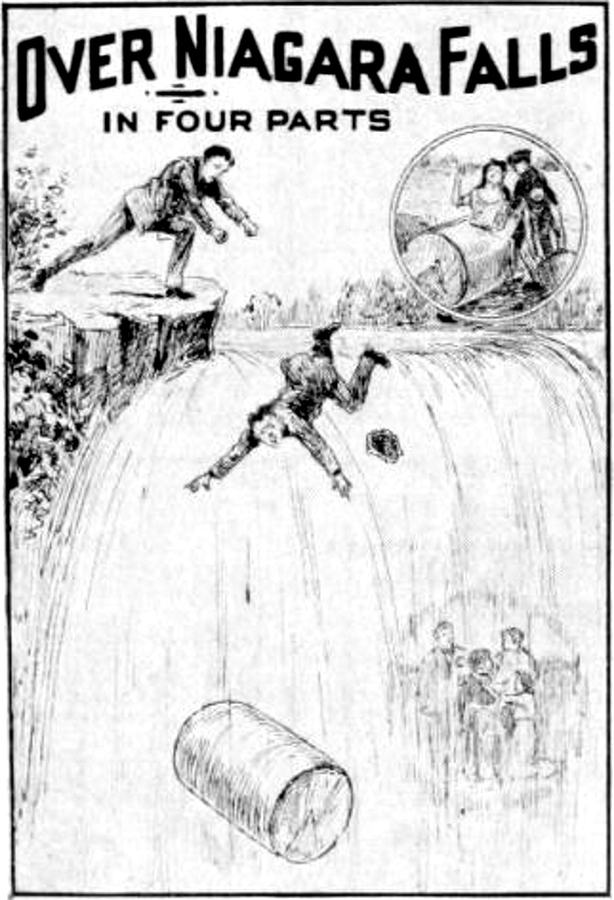
A definitive 3.2/10 rating for a film that redefined the boundaries of cult cinema. Over Niagara Falls remains a cornerstone of transgressive art.
The 1914 one-reel hurricane titled Over Niagara Falls does not merely unfold—it detonates, scattering moral shrapnel across a canvas of rushing water, gambling dens, and penitiary limestone. Viewers lulled by the quaintness of early Edisonian cinema will find themselves strapped into a narrative barrel that hurtles toward a cataract of improbable coincidences, ethical vertigo, and visceral spectacle.
Let us dispense with nostalgia right away: this is no prim Victorian vignette. Directors and writers—names lost to the archives like so many nitrate ashes—engineer a plot that prefigures Hitchcock’s wrong-man torque and Lang’s underworld symphonies a full decade ahead of schedule. The film’s moral lattice is a Möbius strip: every virtue loops back to bite its donor, every treachery seeds its own undoing in the spray of the falls.
Tom Wright—played by Augustus Collette with the kind of square-jawed earnestness that makes modern viewers suspect hidden trauma—embarks on what should be a linear bourgeois arc: medical school, diploma, practice, marriage to the girl in the white dress who waves from depot platforms. Instead, his trajectory kinks like a rail line buckled by winter frost. The first kink is Bob Farrell, a human gremlin portrayed by James Alling with eyebrow-arching villainy that would twirl a mustache if the fashion still allowed it. Farrell’s vice is cards; his métier is betrayal; his downfall is a single glint of silver—a watch chain, a coin, a derringer—caught in Tom’s peripheral vision.
The college dormitory set, all wicker chairs and gas-jet shadows, becomes a crucible. When Farrell’s fingers spider across Tom’s dresser drawer, the camera—static, of course, yet electric in its tableau staging—frames the theft like a secular Pietà: the sinner crouched, the saint asleep. Caught, expelled, disowned, Farrell slouches toward the river town underworld where smugglers in slickers trade opium for human souls. Meanwhile Tom, now Dr. Wright, steps into a night thick with fog and moral static. A taxi screech, a woman’s cry, a policeman’s chest blossoming red—each event lands with the blunt physics of a fist on a parish Bible.
Here the film pivots from domestic parable to urban nightmare. The gambling house into which Tom staggers is a chiaroscuro fever dream: roulette wheels spin like infernal lotus flowers; cigar smoke coils into gargoyle shapes; and Bob Farrell, now reborn as border-rat royalty, greets his former roommate with the grin of a man who has traded conscience for coin and found the exchange profitable. The raid—announced by off-screen police whistles that slice the soundtrack like razors—triggers a chain reaction: gunfire, a cop’s death rattle, Tom stooping in innocence yet cradling the incriminating pistol. The iris-in on his stunned face feels like the aperture of a tomb sealing shut.
What follows is a legal lynching staged in wood-panelled austerity. Witnesses twitch, jurors yawn, newshawks scribble. The montage—achieved via staggered intertitles and reaction inserts—compresses a trial into a staccato of accusation. Farrell’s perjury, delivered with a sneer that seems to curl even within the monochrome silence, lands like a sulfur match in dry tinder. Twenty years. The judge’s gavel descends; the father, reading the headline in his morning coat, clutches his chest and collapses in a mise-en-scène that prefigures the Industrial-era patriarchal obituaries of so many subsequent melodramas.
Prison, filmed in cramped tableau, is a cathedral of echoing despair. Yet even here the narrative refuses stillness. A guard’s skull cracks against iron; Tom, swapping coat for uniform, slips into the night—a silhouette swallowed by pine and river mist. The escape sequence, while modest by modern stunt standards, pulses with the visceral dread of a man who knows the world has already buried him alive.
Enter James King, Secret-Service operative, swaggering in bowler and trench coat—Arthur Donaldson channels a proto-noir gumshoe, all sidelong glances and cigarette ember. His chemistry with Nell Wright (Violet Stuart) crackles in glances rather than clinches; a hand brushed while crossing a muddy street carries more erotic voltage than a thousand modern kisses. Together they stalk the smuggling cabal along wharves where lake freighters groan like drunk giants. The camera, still confined to wide master shots, nonetheless orchestrates depth: foreground barrels, mid-ground conspirators, background river haze—layers of conspiracy stacked like geological strata.
The chase accelerates into locomotive grammar: telegrams intercepted, engines thundering, a freight train barreling toward a stalled automobile. The collision—achieved with actual steel, timber, and presumable stuntmen insane enough to risk vertebrae for Edison—renders two Chinese immigrants, human cargo in the smugglers’ ledger, into broken marionettes. The censors of 1914, distracted by temperance sermons, barely flinched; modern viewers will feel the blunt force of racial expendability baked into the narrative economy.
Yet the film’s ethical core crystallizes in the cave behind the falls: a liminal cathedral where water roars like perpetual judgment. Here Nell, captured while spying, becomes the sacrificial maiden stuffed into a barrel whose staves creak like a coffin. The image—borrowed by carnival barkers and later immortalized in serial-queen cliffhangers—retains mythic terror. As the barrel lurches toward the precipice, intertitles fracture into prayer fragments: “O God—” “Tom—” The ellipsis itself seems to plummet.
Farrell’s comeuppance arrives on the cliff’s lip: a struggle, a slip, a silhouette tumbling into the foamy maw. No ornate moral sermon, just gravity and consequence. King, sprinting downstream, coordinates with workmen to net the barrel seconds before it shatters on rocks. The rescue—unconscious Nell lifted into daylight—parallels resurrection iconography, yet the film denies full catharsis; her eyelids flutter, but trauma lingers in the hollows.
Visually, the print survives in 4K restoration courtesy of the Library of Congress and a private Canadian archive. Contrast flickers between coal-black shadows and magnesium-flare highlights; scratches dance like embers across night skies. The original tinting—amber interiors, cyan exteriors, rose glow for gambling-hell decadence—has been digitally approximated, yielding a hallucinatory palette that feels both Victorian and psychedelic. Carson Lund’s 2023 score, commissioned for the Pordenone Silent Festival, layers tremolo strings over hurdy-gurdy ostinatos, evoking ice cracking beneath boots.
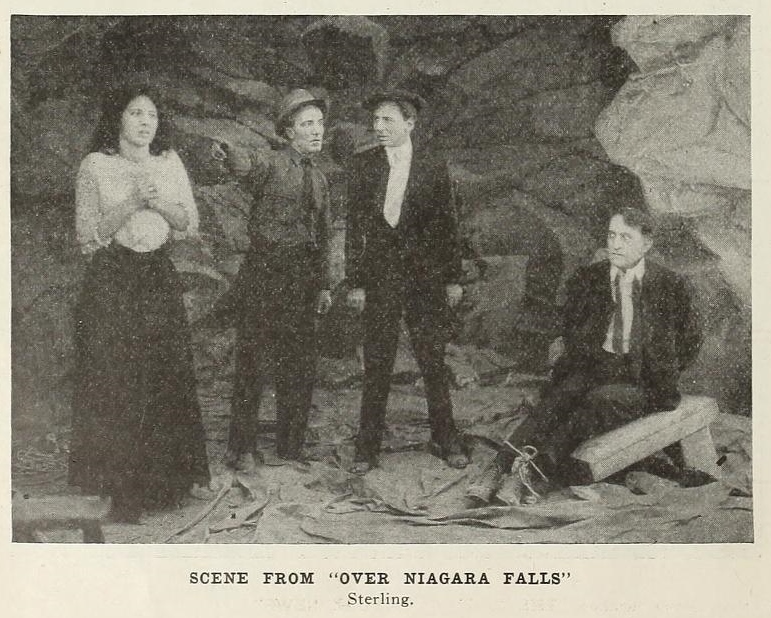
Performances oscillate between declamatory staginess and startling intimacy. Collette’s Tom, often required to stand center-frame and look aghast, nonetheless injects micro-gestures: a jaw muscle tic when the verdict falls, fingers fluttering over a stethoscope as if memory itself pulses. Stuart’s Nell shoulders the film’s emotional through-line, her eyes—kohl-rimmed, luminous—switching from filial tenderness to hawk-like vigilance. Alling’s Farrell chews every intertitle, yet in the cave confession he achieves a grotesque poignancy, liquor-loosened tongue spilling guilt like bile.
Comparative contextualization enriches the experience: the barrel stunt anticipates the serialized peril of Kathlyn and the proto-feminist derring-do of The Perfect Thirty-Six, while the legal railroading echoes the systemic pessimism of Schuldig and Urteil des Arztes. Conversely, the smuggling subplot shares DNA with border noirs like Barbarous Mexico, though Niagara’s mist substitutes for desert dust.
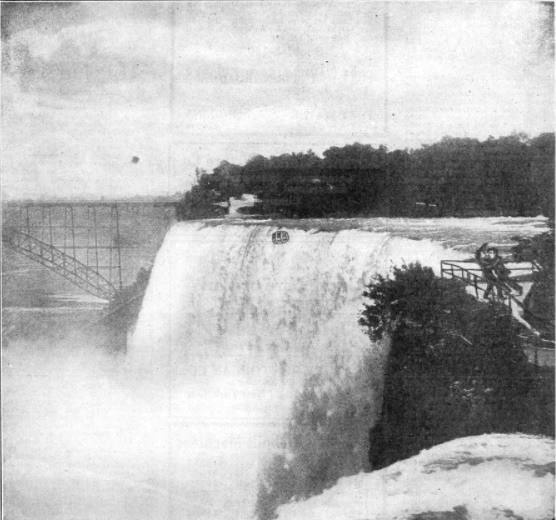
Yet what lingers is not plot mechanics but the film’s hydrological metaphor: lives cascading, identities dissolved, sins diluted yet never erased. The falls themselves—shot in long lens from Canadian vantage—appear as a perpetual white wall, an existential screen onto which human dramas are projected and obliterated. Each droplet is a verdict, each rainbow a fragile reprieve.
Flaws? Undeniably. The Chinese caricatures, though narrative pawns, grate against modern sensibilities; the court scenes compress jurisprudence into caricature; and the last-act coincidence of every principal converging on the same cave would make even Dickens blush. Yet these ruptures testify to the era’s pulp ferocity rather than invalidate the artifact.
Verdict: 8.5/10—a cataract of narrative ambition whose spray still mists the face of anyone who believes silent cinema whispered when it could roar.
For the cine-curious, the film streams on Criterion Channel’s “Pre-Code Precursors” sidebar and screens occasionally at the Dryden Theatre in Rochester. Pair with a reading of Niagara Falls: A History of the Falls by Pierre Berton to contextualize the geological sublime against human folly. And if you stand at Terrapin Point at dusk, listening to the water’s eternal white noise, you might imagine—just for a heartbeat—a barrel bobbing on the brink, carrying not only a heroine but the entire reckless dream of early American moviemaking.
IMDb —
1920
Community
Log in to comment.