DbcultAccessing Vault...
6.1/10
Senior Film Conservator
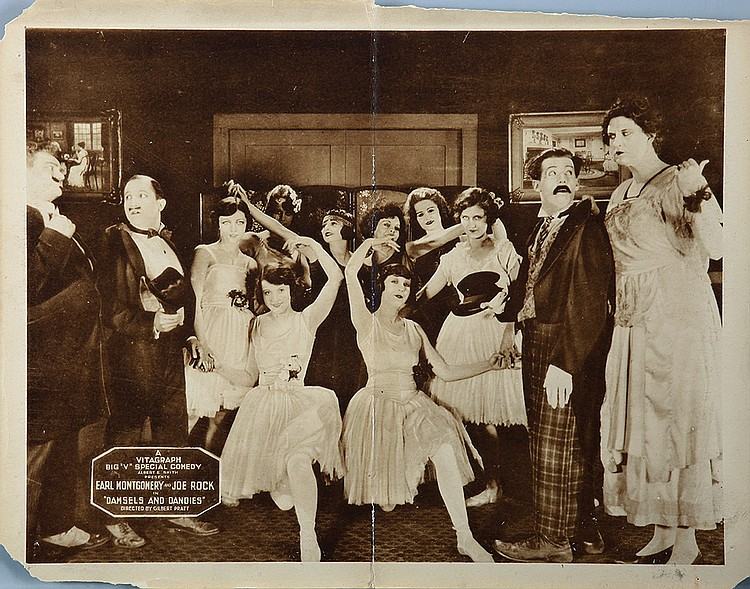
A definitive 6.1/10 rating for a film that redefined the boundaries of cult cinema. Damsels and Dandies remains a cornerstone of transgressive art.
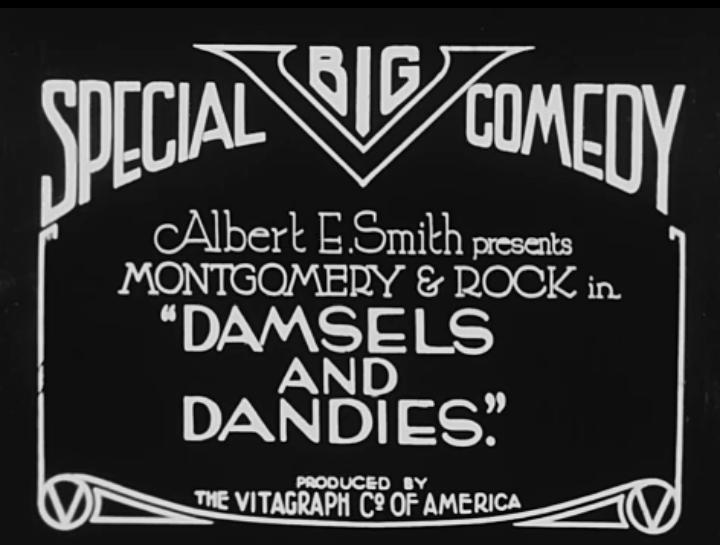
In the annals of early cinema, where the moving image was still finding its voice and the grammar of storytelling was being frantically scribbled, certain films stand out not just for their technical novelty but for their sheer, unadulterated joy. 'Damsels and Dandies,' a delightful confection from the era of flickering frames and exaggerated gestures, is precisely one such creation. Released at a time when slapstick reigned supreme and narrative economy was an art form in itself, this picture, penned by the comedic minds of Joe Rock and Earl Montgomery, offers a fascinating glimpse into the nascent stages of screen comedy. It's a film that, despite its apparent simplicity, manages to weave a tapestry of escalating absurdity, demonstrating a keen understanding of physical humor and the audience's appetite for good-natured chaos.
The premise, as charmingly straightforward as a silent film title card, introduces us to two 'playful young ladies' and two 'idle sons.' This quartet, almost archetypal in their designations, sets the stage for a classic comedic confrontation between youthful exuberance and societal decorum. The idle sons, embodied by the spirited Joe Rock and Earl Montgomery themselves, are not merely passive observers but active agents of disruption, their initial flirtation quickly morphing into an obsessive, almost farcical, pursuit. This relentless badgering, a hallmark of many early comedies, sees them literally forcing their way into a dancing academy, much to the consternation of its stern, unyielding master. This initial conflict—the irresistible force of youthful desire meeting the immovable object of institutional order—is the foundational humor upon which the entire narrative is built.
What truly elevates 'Damsels and Dandies' beyond mere chase comedy is the introduction of a remarkably inventive, if utterly preposterous, spying contraption. One of the dandies, struck by a flash of comedic brilliance, concocts a periscope from two pieces of mirror and a long pipe. This ingenious device, a testament to the resourcefulness of mischief-makers, allows them to clandestinely observe the goings-on within the academy. It's a moment that brilliantly combines physical comedy with a touch of Rube Goldberg-esque invention, a nod to the era's fascination with mechanical contrivances and their potential for both utility and hilarity. The visual gag of two grown men peering through a makeshift periscope, their faces contorted in expressions of eager anticipation, is pure comedic gold, relying on the audience's shared understanding of voyeuristic delight and the inherent absurdity of the situation.
Their particular interest, the 'dance of the seven veils,' serves as a focal point for their illicit observations. This specific choice of dance is itself a subtle commentary, hinting at the era's fascination with exoticism and the allure of the forbidden. The film, without uttering a single word, conveys the tantalizing nature of the performance and the heightened excitement of the peeping Toms. However, as is often the case in such comedic scenarios, their clandestine operation is short-lived. The eagle-eyed dancing master, a figure of authority whose stern demeanor is perfectly played by Max Asher, spots the tell-tale periscope. The ensuing confrontation is a masterclass in silent film pacing, rapidly escalating from discovery to pursuit. Monte, one of the daring duo, makes a swift, if undignified, escape, leaving his compatriot, Joe, to face the music. The moment where the dancing master replaces the periscope, lurking beside an unsuspecting Joe, is a beautifully orchestrated piece of physical comedy, building tension through stillness before exploding into frantic action.
Joe's subsequent evasion of the dancing master showcases the agile physicality that was a prerequisite for silent film comedians. It’s a dance of dodges and near-misses, a kinetic ballet of comedic escape. But the true genius of 'Damsels and Dandies' lies in its refusal to let the protagonists learn their lesson. Instead of retreating, the two dandies double down on their audaciousness, plotting an even more elaborate re-entry. This time, their chosen disguise is nothing short of brilliant in its absurdity: they assume the identities, or rather, the metallic exteriors, of two suits of armor being delivered to the academy. This particular gag is a stroke of comedic genius, transforming inanimate objects into mobile, albeit clanking, agents of chaos. The visual of two men lumbering about in full plate armor, attempting to blend into a dance academy, is inherently hilarious, relying on the incongruity of the situation and the sheer audacity of the deception.
The introduction of the suits of armor marks a significant escalation in the film's comedic trajectory, propelling it into a realm of pure, unadulterated farce. The 'queer things' that follow 'rapidly on top of one another' are precisely what audiences of the era craved: a cascade of unexpected events, misunderstandings, and physical gags. This segment of the film likely involves a series of mishaps, perhaps the suits of armor bumping into things, startling people, or even attempting to participate in the dancing lessons with their metallic clunkiness. The humor here is derived from the inherent limitations of the disguise and the inevitable unraveling of their elaborate charade. It's a testament to the writing of Joe Rock and Earl Montgomery that they understood the power of visual escalation, constantly pushing the boundaries of plausibility for maximum comedic effect. One might draw a parallel here to the inventive, almost architectural slapstick seen in films like The Pipe of Peace, where elaborate contraptions and disguises often lead to a similar unraveling of order.
The cast of 'Damsels and Dandies' plays a pivotal role in bringing this comedic vision to life. Blanche Payson, whose presence often graced early comedies, would undoubtedly have brought a vibrant energy to her role as one of the 'playful young ladies.' Her ability to convey character through expression and gesture, without the aid of dialogue, was essential in grounding the more outlandish comedic elements. Joe Rock and Earl Montgomery, not only the film's writers but also key performers, demonstrate a remarkable synergy. Their collaboration as a comedic duo is evident in the timing and execution of the gags, particularly in the dynamic between Monte's quick escape and Joe's more awkward predicament. Max Asher, as the formidable dancing master, provides the perfect foil—his sternness amplifying the absurdity of the dandies' antics. Owen Evans, another staple of the era, would have contributed to the ensemble's overall comedic impact, ensuring a lively and engaging performance from all involved.
The enduring appeal of films like 'Damsels and Dandies' lies in their universal language of physical comedy. Long before sophisticated dialogue and intricate plot twists became the norm, these early films communicated directly to the gut, eliciting laughter through pratfalls, chases, and ingenious visual gags. The film’s final sequence, with the two dandies 'running as the picture fades,' is a classic silent comedy denouement, leaving the audience with a lingering image of frantic energy and unresolved, yet satisfyingly chaotic, escape. It’s a moment that perfectly encapsulates the spirit of the era: a world where consequences are often simply another excuse for a good chase, and laughter is the ultimate victory.
Examining 'Damsels and Dandies' today offers more than just a nostalgic trip; it provides a valuable lesson in the foundations of cinematic humor. The film’s focus on visual storytelling, character exaggeration, and the rapid escalation of absurd situations laid much of the groundwork for subsequent generations of comedians. The periscope gag, for instance, isn't just funny in itself; it's an early example of how everyday objects can be repurposed for comedic effect, a technique that would be perfected by masters like Buster Keaton and Charlie Chaplin. The persistent, almost obsessive, nature of the dandies' pursuit of the young ladies and their entry into the academy can be seen as a precursor to countless rom-coms and farces where characters go to extraordinary lengths for love or amusement. The sheer audacity of their methods, from spying to disguises, reflects a playful subversion of societal norms that continues to resonate.
The film also highlights the crucial role of the antagonist in silent comedy. Max Asher's dancing master isn't just an obstacle; he's a catalyst for much of the film's action and humor. His exasperation, his pursuit, and his ultimate bewilderment are as central to the comedic rhythm as the protagonists' antics. This dynamic between the disruptive force and the attempting restorer of order is a timeless comedic formula. Comparisons to other films of the era reveal common threads. The theme of characters using ingenious, often ridiculous, means to gain access or spy on others is a recurring motif. One might think of the intricate plotting, albeit for more serious ends, in films like The Mysterious Mr. Tiller, where surveillance and deception are key, though without the same comedic intent. The sheer physical comedy and the chase sequences, a staple of early cinema, find echoes in many contemporary productions, demonstrating the enduring power of these foundational elements.
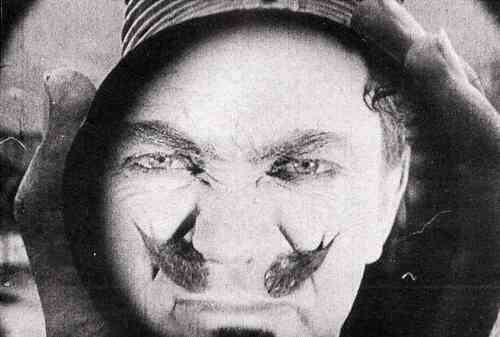
Furthermore, 'Damsels and Dandies' serves as a reminder of the collaborative spirit of early filmmaking. With Joe Rock and Earl Montgomery not only writing but also starring, the film benefits from a cohesive vision that seamlessly blends conception and execution. This level of creative control, often seen in the work of early film pioneers, allowed for a direct translation of comedic ideas to the screen. The sheer volume of output from this period, with filmmakers constantly experimenting and refining their craft, meant that audiences were treated to a continuous stream of innovative gags and storytelling techniques. While films like Rip Van Winkle explored more fantastical narratives, 'Damsels and Dandies' remained firmly rooted in the accessible, relatable humor of everyday (albeit exaggerated) life.
Beyond its immediate comedic value, 'Damsels and Dandies' also offers a fascinating cultural artifact, a window into the amusements and social dynamics of its time. The concept of 'idle sons' and 'playful young ladies' speaks to a particular societal structure, where leisure time and social interactions were perhaps more formalized, yet ripe for playful subversion. The dancing academy itself, a place of refinement and instruction, becomes the perfect canvas for anarchy, highlighting the clash between aspiration and spontaneous fun. The 'dance of the seven veils,' a reference to a biblical story interpreted through an early 20th-century lens of exoticism, further underscores the cultural currents influencing popular entertainment. It's a film that, in its lightheartedness, inadvertently captures elements of its contemporary world, much like how Australia Calls or The Pride of the Firm might reflect their specific national or industrial contexts.
The film's reliance on physical comedy, its rapid-fire gags, and its escalating sense of preposterousness are all hallmarks of a genre that was rapidly evolving. It's easy to overlook the sheer skill involved in these performances, where every gesture, every facial expression, and every movement had to convey meaning and elicit a reaction without the benefit of spoken words. The transition from the periscope gag to the suits of armor disguise demonstrates a narrative progression that, while simple, is remarkably effective in maintaining comedic momentum. This type of inventive plotting, where one absurd situation naturally gives way to an even more absurd one, is a testament to the creative energy of the era. The relentless pursuit, the ingenious (if flawed) solutions, and the ultimate chaotic escape are all elements that define the quintessential silent comedy experience.
In its entirety, 'Damsels and Dandies' is far more than just a historical curiosity; it is a vibrant, engaging piece of cinematic art that continues to charm and amuse. Its straightforward plot, amplified by inventive gags and energetic performances from Blanche Payson, Joe Rock, Max Asher, Earl Montgomery, and Owen Evans, serves as a delightful reminder of silent cinema's enduring power. The film's ability to build humor through escalating absurdity, from a simple periscope to full suits of armor, speaks volumes about the creative ingenuity of its makers. It’s a work that, while lacking the grand philosophical depth of a Lebenswogen or the dramatic intensity of a Wrath of Love, offers something equally valuable: pure, unadulterated escapism and the timeless joy of a well-executed prank. For anyone seeking to understand the roots of cinematic comedy, or simply in need of a good chuckle, 'Damsels and Dandies' remains an essential, effervescent watch, a testament to the fact that sometimes, the simplest gags are indeed the funniest.
The film concludes with the protagonists in full flight, a classic comedic resolution that leaves the audience with a smile and a sense of satisfying chaos. It doesn't offer neat resolutions or profound character arcs, but rather a joyous celebration of mischief and the indomitable spirit of fun. This unpretentious approach is precisely what makes 'Damsels and Dandies' such a resonant piece, demonstrating that even in the earliest days of film, the primary goal was to entertain, to transport, and most importantly, to make people laugh. Its legacy is etched not in grand statements but in the simple, effective mechanics of its gags, proving that the language of laughter transcends time and technological advancements. It's a reminder that sometimes, all you need is a couple of mirrors, a long pipe, and a couple of suits of armor to create cinematic magic.
IMDb 6.1
1930
Community
Log in to comment.