DbcultAccessing Vault...
2.7/10
Senior Film Conservator
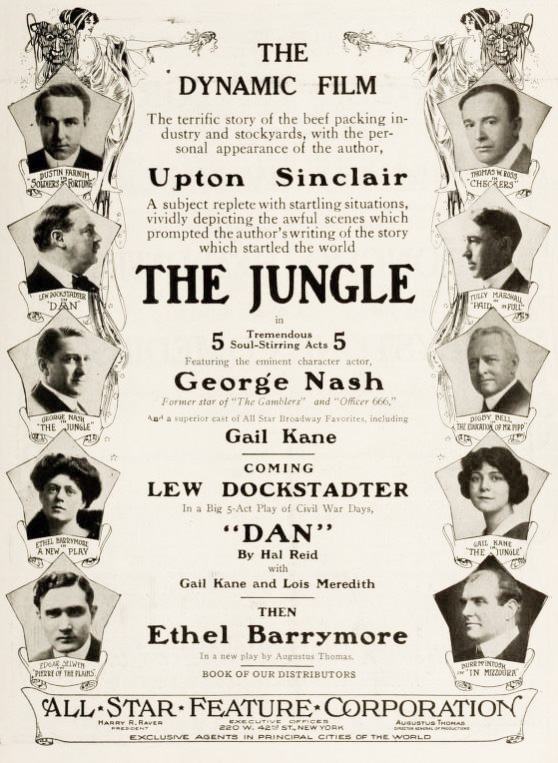
A definitive 2.7/10 rating for a film that redefined the boundaries of cult cinema. Dan remains a cornerstone of transgressive art.
Spoilers swarm like cicadas—impossible to silence, pointless to shoo.
The first time I encountered Dan I expected a moth-eaten curio, something to catalog between Fantômas' Parisian mayhem and Helen’s locomotive derring-do. Instead, Hal Reid’s 1914 one-reel hurricane clubbed me with a moral vertigo that lingered for days. Silent it may be, yet the film howls—an anguished aria about the price of personhood in a republic that never quite decided who gets to be people.
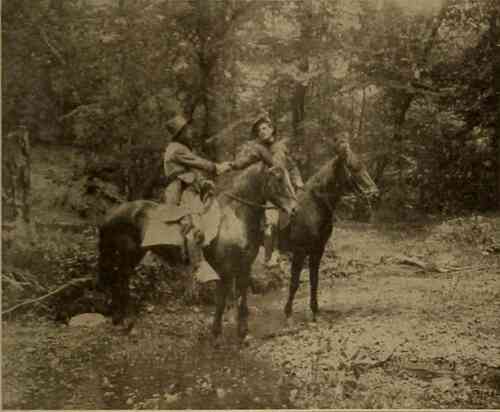
Consider the opening tableau: a Steadicam of the imagination glides past Corinthian columns, past banisters burnished by generations of unpaid wrists, until it finds Dan—played by Hal Reid himself—standing in the doorway like a Greek kouros carved from mahogany. His gaze is fixed not on the camera but on Raoul, the heir, as though the young master were a moving sun. The framing is symmetrical, almost OCD in its equilibrium, yet the symmetry feels perverse: the slave centered, the master orbiting. Already the film whispers its subversion: the story’s moral fulcrum will not be the white boys in blue or gray but the Black man who has no uniform, only the livery of servitude.
Reid’s script, adapted from his own stage melodrama, refuses the comfort of chronological distance. We are not permitted to dismiss the plantation as a diorama. The intertitles—hand-lettered, jittering—address us in second person: “You who watch, would you recognize the face of loyalty?” Such direct apostrophe feels startlingly modern, a proto-Brechtian poke that predates Brecht by a decade. Each card arrives with a shiver of sea-blue ink, as though the Atlantic itself were bleeding between the frames.
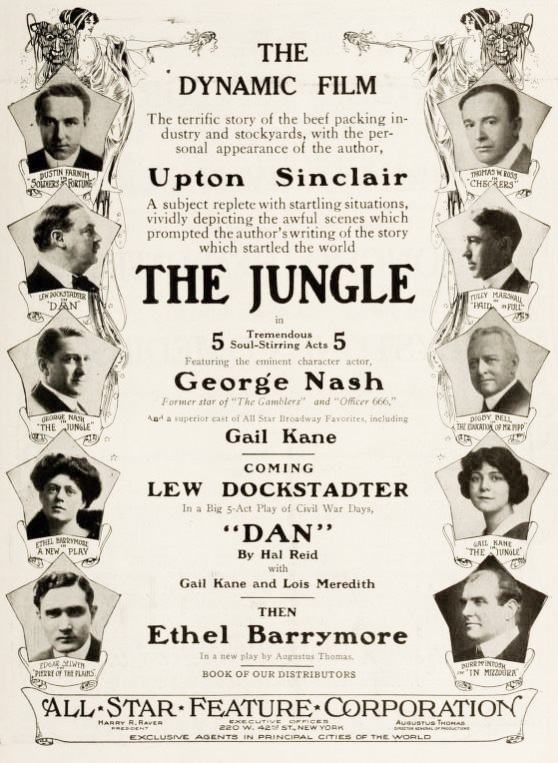
Mid-film, when Dan flings pulverized cayenne into the eyes of Union guards, the gesture detonates like a hand grenade of the absurd. The red cloud blooms against monochrome stock, tinting the frame a hallucinatory coral. Critics often chide early cinema for its reliance on coincidence; here coincidence becomes insurrection. The pepper is not seasoning but semiotics: a spice that burns the gaze of power, a condiment that dissolves the boundary between property and protagonist. For one delirious instant, the plantation’s most loyal chattel weaponizes flavor, and the viewer’s throat constricts—not from imagined heat but from the realization that every act of resistance in this universe must be improvised from household debris.
Contrast this with Der Eid des Stephan Huller II, where honor is sealed by parchment and ancestral oath; in Dan honor is what happens when a man owned by another chooses to weaponize groceries. The moral asymmetry is so vertiginous it threatens to tilt the film out of the projector gate.
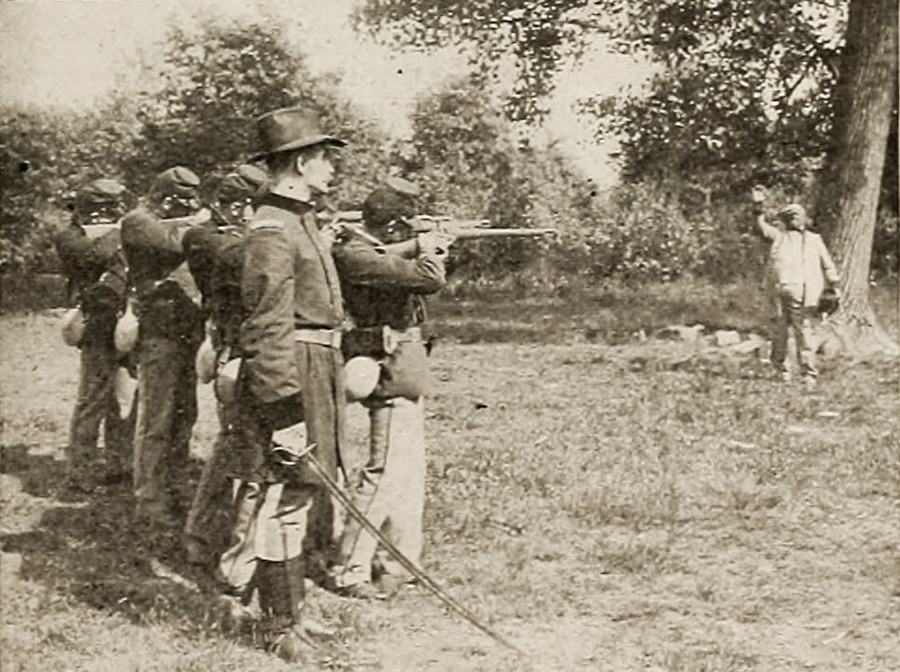
Nothing prepares you for the closing swap. Reid stages it in chiaroscuro: a lantern throws half of Raoul’s face into umber darkness while Dan’s profile remains fully lit. The two men mirror each other, an agonized diptych. “Black me up,” Raoul whispers via intertitle, though we read Dan’s lips forming the words—another destabilizing flourish. The cork is crushed, the grease smeared, the ruse accomplished. When the scaffold door drops, the camera does not cut away; instead it lingers on boots twitching above air, the trousers too short, the ankles too slender—visual cues that alert us the wrong body swings. Yet within the diegesis no white character perceives the difference. The Union firing squad, the Confederate spies, even Stonewall Jackson—none notice that the corpse’s wrists bear scar tissue from shackles rather than riding reins. The film indicts not merely Southerners or Northerners but an entire ocular regime that sees blackness as fungible, interchangeable, disposable.
Historically, such a substitution is preposterous; photographically, it is unassailable. Reid understands that cinema traffics in surfaces, and surfaces can lie. The moment reverberates across later masquerades—from Den sorte Varieté’s cabaret blackface to the racial switcheroos of The Conspiracy. Yet none carry the sacrificial voltage of Dan’s self-erasure. He does not merely impersonate; he annihilates the possibility of his own future ghost.
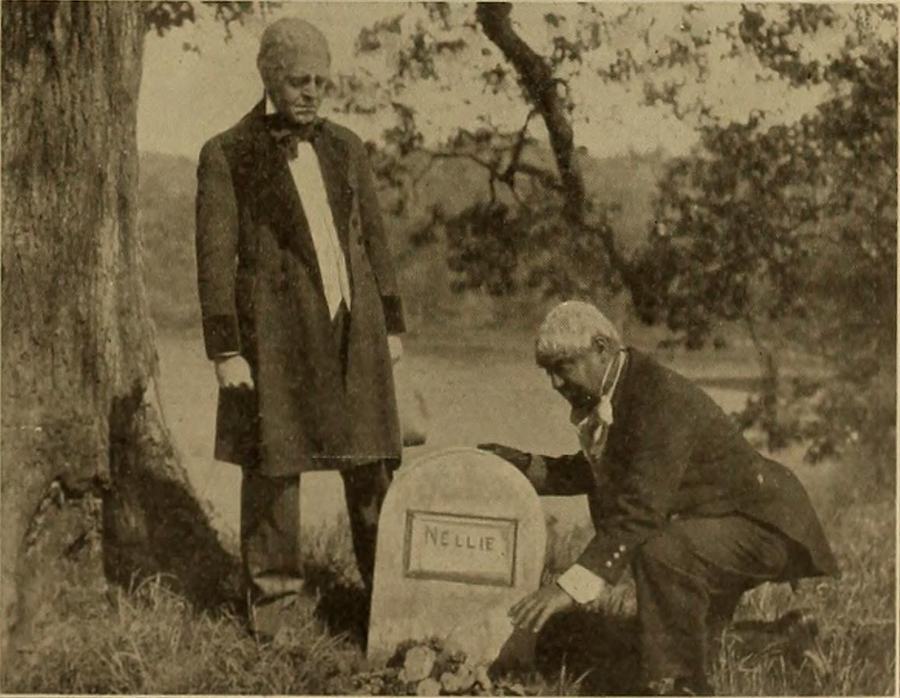
Hal Reid’s Dan is a marvel of calibrated stillness. When ordered to smile, the grin arrives a half-second late, as though couriered from a distant depot; the lag tells us everything about consent. Beatrice Clevenger’s Grace trembles on the cusp of sainthood and stereotype, but her eyes—huge, wet, unblinking—harbor a Whitmanesque multitudes. In the scene where she clasps Dan’s hand, the gesture is not sisterly relief but fiduciary: she is repaying a debt she cannot articulate. Gail Kane’s Elsie, the nominal Northern conscience, is shot in yellow gel light whenever she espouses abolition, a halo so ostentatious it nearly collapses into parody. Yet Kane undercuts the radiance with a twitch of the lower lip, a micro-expression that confesses doubt. Even the Union uniform, tailored in sea-blue wool, cannot camouflage the terror of a woman who realizes she has married into a mausoleum.
Jack Pratt’s Jonas Watts deserves special damnation. With cheekbones sharp enough to slice the celluloid, Pratt plays the overseer-turned-Fed as a bureaucrat of sadism. Watch him inventory Grace’s hairpins after her capture—each pin catalogued like war contraband—an act that anticipates the meticulous cruelty of Parisian Apaches a year later.
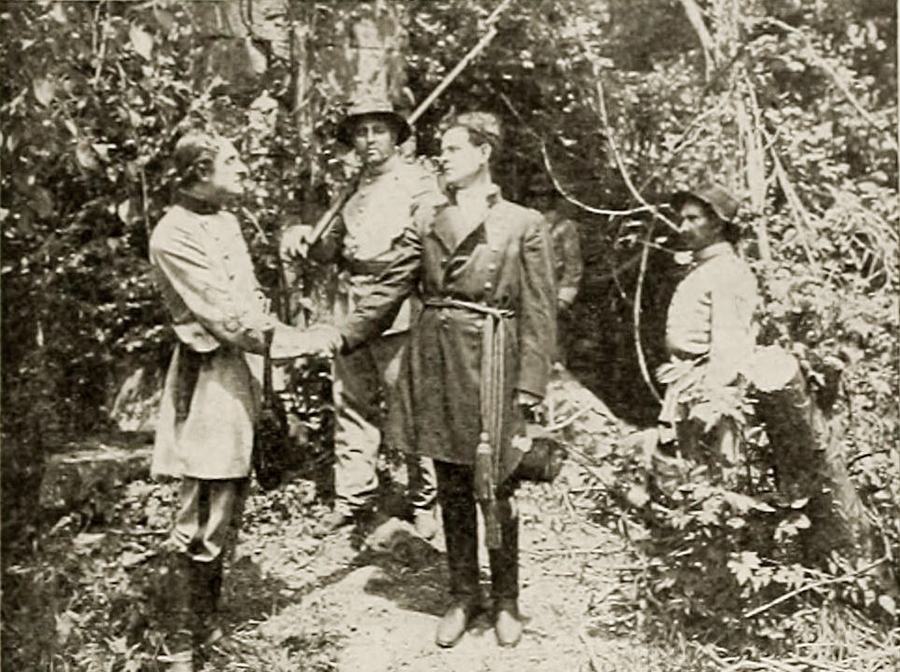
Cinematographer W.D. Fischter employs a palette that smells. Interiors ooze amber, as though the rooms were varnished with molasses; exteriors bloom with nicotine-stained skies. When Union troops torch a cotton shed, the smoke curls across the lens like ectoplasm, an image that prefigures the expressionist nightmares of The Isle of the Dead. The war is never grand; it is a backyard squabble lit by barn-fire. Reid refuses wide shots of battlefields, preferring tight close-ups of boots squelching in mud, a visual strategy that shrinks epic history to pocket-size horror.
The film’s temporal rhythm is a seesaw. Cross-cutting between Northern parlors and Southern prisons, Reid alternates scenes of courtship and captivity so rapidly that love letters arrive interleaved with death warrants. The montage culminates in a stroboscopic sequence where Elsie’s wedding veil is intercut with the noose that will soon necklace Dan—white lace vs. hemp, both fabrics of binding. The juxtaposition is so morally obscene it circles back to poetry.
Though originally accompanied by improvised house pianists, the surviving print screened at Pordenone featured a new score—gut-string banjo, bones, and a single contrabass bowed with a gourd resonator. The timbres scrape the ear canal; when Dan ascends the scaffold, the banjo pivots to a minor modal drone that feels older than America, perhaps older than sorrow itself. The absence of snare drums undercuts military cliché; instead we hear the creak of rope against beam, Foley-ed so close it reverberates in the sternum.
In A Daughter of Australia, the sacrificial body is feminized, swaddled in expiation; in Dan the body is racialized, strung up like a scarecrow to frighten history into repeating itself. Where The Pride of the Firm trades in social mobility, Dan traffics in immobility—the ultimate lack of upward or outward movement being the six feet of rope that convert verticality into eternity.
Studios have flirted with remakes since 1919, yet each treatment softens the swap. A 1926 scenario posits Dan surviving via last-minute pardon; a 1941 radio version has Raoul confessing, thus restoring narrative equilibrium. All fail to grasp that the film’s power derives from the irreversible: once blackness becomes a mask that can be doffed only by death, the nation’s racial algebra is forever unsolvable. The atrocity is not that Dan dies; it is that the republic needs his corpse as mortar to rebuild itself.
I have watched Dan four times—once on a 35 mm print that stank of vinegar syndrome, once on a DCP so pristine it felt pornographic. Each viewing leaves me raw, as though my own identity were a shirt stripped from my back and held up for inspection. The film does not ask, “What would you do?” but rather, “Who would you be when the only choices are complicity or crucifixion?” In that interrogation lies its timeless, sulfurous brilliance. It is a relic that refuses the museum, a wound that keeps reopening, a confession that implicates every spectator who mistakes progress for absolution.
—Reviewed by a ghost who may once have been your neighbor

IMDb 6
1936
Community
Log in to comment.