DbcultAccessing Vault...
Cult Review
Senior Film Conservator
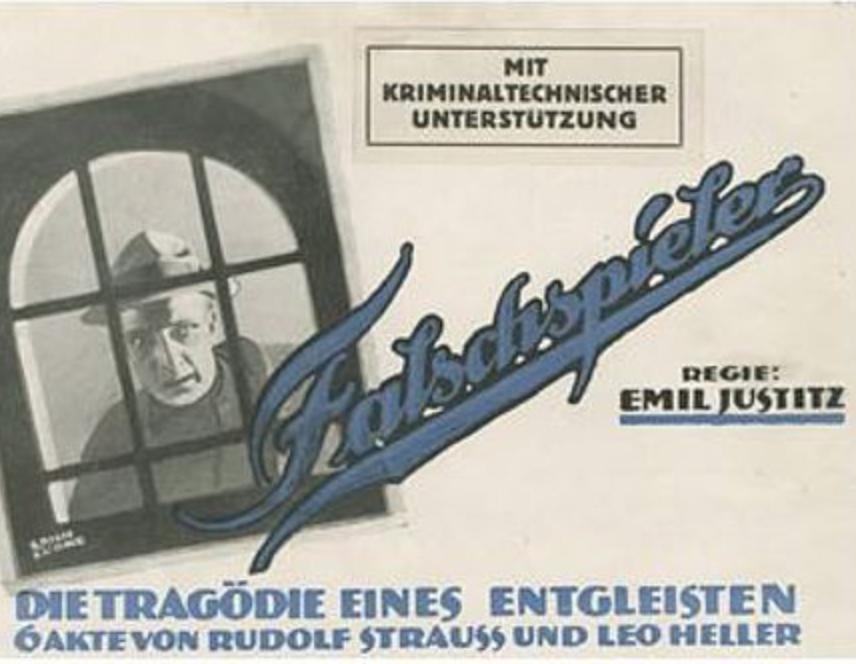
The year 1919 stands as a jagged threshold in cinematic history, a moment where the remnants of Victorian morality collided violently with the burgeoning nihilism of the twentieth century. Within this crucible, Der Falschspieler (The Card Sharper) serves as a haunting, flickering testament to the fragility of the human social contract.
Directed with a keen eye for the chiaroscuro of the soul, this film transcends its generic label as a 'crime drama.' It is, instead, an atmospheric immersion into the psychology of the con. The screenplay, penned by Rudolf Strauß and Leo Heller, avoids the simplistic moralizing common in contemporary American imports like The Chorus Lady. Where Hollywood sought to redeem its sinners, the German masters of this era were more interested in the texture of the sin itself.
The narrative structure mirrors the mechanics of a card game—slow reveals, strategic bluffs, and a constant, underlying tension that threatens to erupt into violence. The 'Falschspieler' is not just a man with an ace up his sleeve; he is the personification of a world that has lost its compass. This thematic depth reminds one of the hallucinatory depths found in The Spirit of the Poppy, though here the addiction is not to opium, but to the thrill of the illicit gain and the manipulation of the gullible.
The ensemble gathered for Der Falschspieler is a veritable who's who of early German expressionistic and commercial cinema. Anita Berber, the high priestess of Weimar decadence, provides a performance that is less acting and more a visceral manifestation of the era's anxieties. Her movements carry a jagged, electric quality that stands in stark contrast to the more traditional histrionics of her peers. To watch Berber is to watch the very spirit of the 1920s being born in a burst of scandalous energy.
Then there is Hans Albers. Long before he became the smiling face of German populism, Albers possessed a raw, almost predatory charisma. In this film, he occupies the frame with a looming presence that suggests a hidden volatility. His interactions with the rest of the cast—including the stalwart Marian Alma and the nuanced Elisit Mörtstedt—create a friction that propels the plot forward even when the pacing slows to observe the minute details of a poker hand.
"In the silence of the theater, the shuffling of cards becomes a deafening roar of impending doom."
The cinematography in Der Falschspieler utilizes the limited technology of 1919 to create a sense of claustrophobia. The gambling dens are rendered as cavernous voids where light only hits the green baize of the tables and the desperate eyes of the players. This visual strategy is far more sophisticated than the bright, flat lighting seen in The Wonder Man or the domestic simplicity of Little Women. Here, the shadows are characters in their own right, hiding the 'false' movements that define the film's title.
The use of close-ups is particularly effective. We are forced to scrutinize faces for the slightest twitch of a muscle, the smallest betrayal of intent. It is a cinema of observation, demanding that the audience become co-conspirators in the game. This focus on the minute details of human treachery provides a fascinating counterpoint to the grand, sweeping tragedies of the time, such as Abel Gance's J'accuse!. While Gance was concerned with the macro-trauma of war, Der Falschspieler is concerned with the micro-trauma of the individual soul's corruption.
To understand Der Falschspieler, one must understand the Berlin of 1919. The city was a pressure cooker of revolutionary fervor and reactionary despair. The film captures this through its depiction of social stratification. We see the crumbling remnants of the old guard trying to maintain their dignity while being bled dry by the new, unscrupulous 'players' of the post-war economy. It is a world where the 'fifth wheel' of society—the disenfranchised and the desperate—are constantly being crushed by the machinery of greed, a theme explored with less cynicism in The Fifth Wheel.
The card table serves as a perfect microcosm for the global stage. Much like the shifting borders and broken treaties of the era, the rules of the game in the film are subject to the whims of whoever holds the most power (or the best hidden cards). There is a profound sense of 'Vanitas' here—a reminder that all the winnings of the world are fleeting and ultimately hollow.
When compared to the exoticism of The White Pearl or the romanticized struggles in The Pretty Sister of Jose, Der Falschspieler feels startlingly modern. It rejects the 'pretty' in favor of the 'perfidious.' It lacks the earnestness of True Blue or the sentimentalism of Mrs. Wiggs of the Cabbage Patch. Instead, it aligns itself with the darker, more experimental currents of European art.
Even the historical epics of the time, like the Russian documentary Velikiye dni Rossiiskoi revolutsii, deal with the collapse of old orders, but Der Falschspieler does so through the lens of a smoky room rather than a battlefield. It suggests that the real revolution is happening in the hearts of men who have decided that the old rules no longer apply.
The film’s conclusion is a masterclass in ambiguity. There is no grand moral lesson, no uplifting message for the masses. Instead, we are left with a lingering sense of unease. The card sharper may be caught, or he may simply move on to the next town, the next mark, the next game. This lack of closure is what makes the film so enduringly fascinating. It acknowledges that the 'cheat' is a permanent fixture of the human condition.
In the pantheon of silent cinema, Der Falschspieler deserves a seat at the high-stakes table. It is a film of immense craft and even greater cynicism. It captures a moment in time when the world was holding its breath, waiting for the next card to be dealt, knowing full well that the house always wins in the end. For those who appreciate cinema as a mirror to the darker facets of humanity, this is essential viewing. It is a sharp, jagged piece of glass that still reflects the shadows of our own modern deceptions.
Der Falschspieler is a monumental achievement in early German cinema. It bridges the gap between the theatrical past and the cinematic future. With standout performances from Berber and Albers, and a script that cuts like a razor, it remains a potent reminder of the power of the silent image to convey the most complex of human failings.
IMDb 5.2
1929
Community
Log in to comment.