DbcultAccessing Vault...
5.6/10
Senior Film Conservator
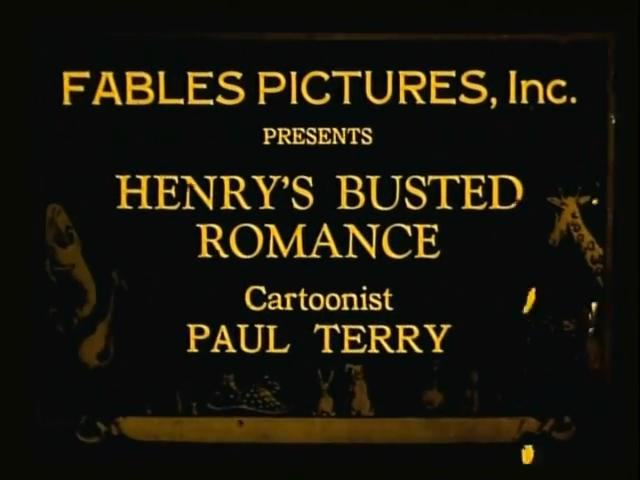
A definitive 5.6/10 rating for a film that redefined the boundaries of cult cinema. The Fable of Henry's Busted Romance remains a cornerstone of transgressive art.
To revisit the early archives of Paul Terry is to step into a flickering portal of unadulterated creativity, where the laws of physics are secondary to the whims of the animator's pen. The Fable of Henry's Busted Romance stands as a testament to this era, a time when the medium of animation was shedding its chrysalis of novelty to embrace more complex narrative structures. Unlike the gothic undertones found in The Haunted Castle, Terry’s work here is grounded in a recognizable, albeit stylized, urban loneliness. We are introduced to Henry, a feline protagonist whose emotional interiority is conveyed through slumped shoulders and longing gazes—a masterclass in minimalist characterization that predates the sophisticated emotional arcs of modern cinema.
The film’s opening sequence is a rhythmic display of pairing. We see the animal kingdom in a state of romantic equilibrium. It is a stark juxtaposition to Henry’s solitary stroll. This thematic setup reminds one of the socio-economic struggles depicted in No Money, No Fun, where the lack of resources (or in Henry's case, companionship) creates a barrier to societal participation. Henry is not merely a cat; he is a surrogate for the post-war Everyman, searching for a spark of divinity in a world of black-and-white industrialism.
The pivot point of the narrative occurs when Henry encounters a fortune teller. This inclusion of the occult is a fascinating trope of the 1920s, reflecting a societal obsession with fate and the unknown, much like the darker explorations in The Temptations of Satan. The psychic’s prophecy serves as the 'inciting incident' that transforms Henry from a passive observer of life into an active, albeit clumsy, participant. The animation here becomes more fluid, capturing the frantic energy of a man—or cat—possessed by a newfound destiny. It’s a sequence that mirrors the desperate optimism found in A Wife on Trial, where characters are driven by the hope of a better, more romanticized future.
When Henry finally reaches the opera house, the visual language shifts. The stage becomes a sacred space, a luminous altar where Mlle. Fifi performs. The way Terry handles the light and shadow in this sequence is surprisingly sophisticated for its time. The use of negative space creates a sense of grandeur, making the opera house feel like a cathedral of art. It’s a stark contrast to the gritty realism of La España trágica o Tierra de sangre, opting instead for a dreamlike, almost vaudevillian aesthetic.
The chase sequence on stage is where the 'busted' nature of the romance truly manifests. Henry’s intrusion is both a comedic slapstick routine and a poignant commentary on the distance between the fan and the idol. The physical comedy is sharp, utilizing the rubber-hose style that would later become a staple of the industry. This frantic movement is reminiscent of the high-stakes energy in Balling the Junk, where the rhythm of the action dictates the emotional beat of the scene. Henry is not just running; he is striving for a connection that feels perpetually out of reach.
As the narrative threads tighten, we see Henry evolve from a bumbling suitor into a genuine hero. The intervention of the thief introduces a traditional conflict that Terry resolves with surprising narrative efficiency. This transition from comedy to melodrama is a hallmark of early 20th-century storytelling, similar to the tonal shifts in The Jucklins. Henry’s bravery isn't born from a sense of duty, but from the raw, unadulterated desire to protect the object of his affection. It’s a moment of redemption that elevates the film beyond a mere series of gags.
From a technical standpoint, the collaboration between Paul Terry and the burgeoning animation industry of the time cannot be overstated. The frame-by-frame hand-drawn elements possess a warmth that modern digital interpolation simply cannot replicate. Each line feels deliberate, each movement a choice. While it may lack the epic scale of Alexander den Store, its intimacy is its greatest strength. The film functions as a microcosm of the human experience, filtered through the lens of a lonely cat.
Comparing this to other works of the period, such as An Eskimotion Picture, one notices a distinct focus on character psychology in Terry’s work. Henry is more than a caricature; he is a vessel for the audience's own vulnerabilities. Even the secondary characters, like the thief or the theater-goers, are rendered with enough personality to make the world feel lived-in. This attention to detail is what separates a great fable from a forgettable short. It has the satirical edge found in Democracy: The Vision Restored, yet it maintains a whimsical heart that keeps the viewer engaged.
The conclusion of the film, while satisfying the tropes of the era, leaves a lingering sense of the ephemeral. Like the doomed attraction in The Moth and the Flame, Henry’s romance is a fragile thing, predicated on a series of fortunate events and a psychic's whim. Yet, there is a profound beauty in his persistence. He represents the 'little brother' archetype—not unlike the protagonist in A Little Brother of the Rich—who navigates a world of grandeur with nothing but his own sincerity.
In the grander scheme of film history, The Fable of Henry's Busted Romance serves as a crucial bridge. It connects the raw experimentation of early shorts to the structured storytelling that would eventually define the golden age of animation. It’s a film that demands to be seen not just as a relic, but as a vibrant piece of art that still speaks to the universal desire for connection. Whether Henry’s romance is truly 'busted' or merely 'complicated' is left to the viewer's interpretation, but his journey remains one of the most charming odysseys of the silent screen.
One cannot help but wonder how this narrative would have played out in a live-action setting, perhaps with the gravitas of Jim Corwey ist tot or the mystical allure of The Duke's Talisman. Yet, the animation provides a level of abstraction that allows the themes to resonate more broadly. We don't see a cat; we see ourselves. We see the 'hoodoo' of bad luck that plagues us, much like in Hattie's Hoodoo, and we cheer when Henry finally breaks the cycle. It is a masterwork of brevity and brilliance.
IMDb —
1919
Community
Log in to comment.