DbcultAccessing Vault...
Cult Review
Senior Film Conservator
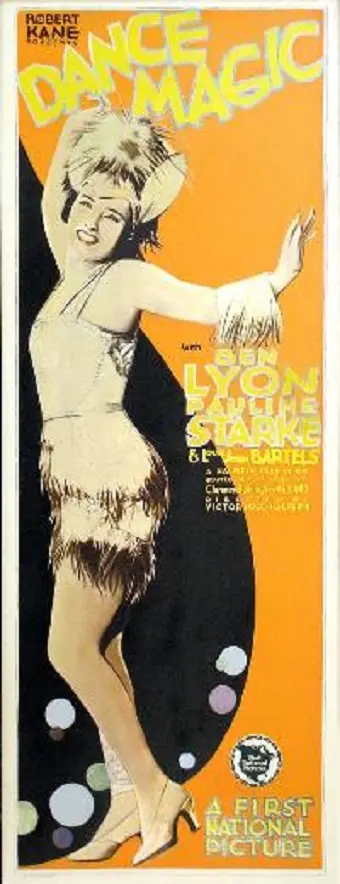
Is this film worth watching today? Short answer: yes, but only if you are a dedicated student of silent-era social dramas and can tolerate the heavy-handed moralizing of the 1920s.
This film is for the cinephile who finds beauty in the grain of archival footage and the expressive physicality of early 20th-century acting. It is absolutely not for those who require fast-paced action or a narrative free from the tropes of the 'fallen woman' genre.
1) This film works because: Pauline Starke delivers a performance that transcends the script's limitations, using her eyes to convey a hunger for life that the title cards can’t quite capture.
2) This film fails because: The pacing in the second act crawls to a halt, weighed down by repetitive scenes of moral hand-wringing that feel archaic even by 1927 standards.
3) You should watch it if: You want to see a bridge between the Victorian melodrama of the previous decade and the burgeoning jazz-age rebellion that would soon define cinema.
Dance Magic operates on a binary that was very real to audiences in 1927. On one side, we have the rural farmhouse—a place of shadows, hard wooden chairs, and the constant threat of divine judgment.
On the other, we have the New York stage, represented by fluid movements and artificial light. The direction by the often-overlooked crew captures this dichotomy with surprising sharpness.
Consider the scene where Johala is first caught dancing in the barn. The way the light cuts through the slats in the wood creates a cage-like effect. It’s a simple visual metaphor, but it’s executed with a precision that makes her eventual escape feel like a genuine jailbreak.
This film shares a thematic DNA with Not So Long Ago, which also dealt with the friction of changing times. However, Dance Magic is far more interested in the physical cost of that change.
In the silent era, an actor’s face was their entire toolkit. Pauline Starke understood this better than most of her contemporaries. While some actors of the period leaned into grotesque pantomime, Starke remains remarkably grounded.
There is a specific moment when she first arrives in New York and looks up at the skyscrapers. It’s a cliché today, but Starke plays it with a mix of terror and predatory ambition. She isn't just a victim of circumstance; she is a woman realizing she can conquer this environment.
Ben Lyon provides a solid, if somewhat uninspired, counterpoint. His role is largely to facilitate Johala’s transition into the modern world. He lacks the magnetic intensity that Starke brings to every frame, making their romance feel more like a plot necessity than a burning passion.
The supporting cast, including Isobel Elsom and Judith Vosselli, fill out the urban landscape with the necessary cynicism. They represent the world that Johala thinks she wants, but their performances hint at the emptiness behind the glitter.
The cinematography in Dance Magic is its secret weapon. The use of soft focus during the dance sequences creates a dreamlike quality that contrasts sharply with the high-contrast, jagged lighting of the Chandler household.
The pacing, however, is where the film stumbles. The writers, including Adelaide Heilbron, seem trapped between wanting to tell a fast-paced urban adventure and a slow-burn character study. The result is a film that feels longer than its runtime.
One surprising observation is how the film treats the concept of 'sin.' Unlike many films of the era that would punish a woman for her ambition, Dance Magic offers a more nuanced take. It suggests that the real sin isn't the dancing, but the repression of the spirit.
This nuance is what separates it from more simplistic fare like The Apple-Tree Girl. It’s a gutsy stance for a 1927 production to take, and it’s why the film still carries weight today.
If you are looking for a historical document that captures the anxiety of the 1920s, then yes, it is worth watching. It provides a window into a time when the world was rapidly modernizing and the old guard was terrified of what was coming next.
However, if you are looking for pure entertainment, you might find the moralizing subplots tedious. The film is a product of its time, for better and for worse. It works. But it’s flawed.
Pros:
- Stunning lead performance by Pauline Starke.
- Sophisticated lighting and cinematography.
- A surprisingly progressive take on artistic expression.
Cons:
- Excessive use of title cards in the second half.
- Some supporting characters feel like cardboard cutouts.
- The ending feels slightly rushed compared to the slow buildup.
To understand Dance Magic, you have to understand the era of the Flapper. This wasn't just a fashion choice; it was a political statement. Johala Chandler is a prototype for this movement.
The film acts as a bridge between the innocence of the early silent era and the more cynical Pre-Code era that was just around the corner. It lacks the bite of a 1932 drama, but it has more teeth than a 1915 short.
Comparing it to Infatuation, you can see how much the language of cinema had evolved in just a few years. The camera is more mobile, the editing is tighter, and the acting is less theatrical.
Dance Magic is a fascinating relic. It isn't a perfect film, but it is a brave one. It takes a stand against the stifling influence of religious extremism and celebrates the individual's right to create.
While the pacing might test the patience of a modern audience, the central performance by Pauline Starke is a masterclass in silent storytelling. She carries the film on her shoulders, turning a standard melodrama into something that feels deeply personal.
It is a rhythmic, albeit occasionally clunky, journey through the heart of the 1920s. If you can look past the dust of nearly a century, you will find a story that still has a pulse. It is a quiet triumph of spirit over structure.
IMDb —
1920
Community
Log in to comment.