DbcultAccessing Vault...
Cult Review
Senior Film Conservator
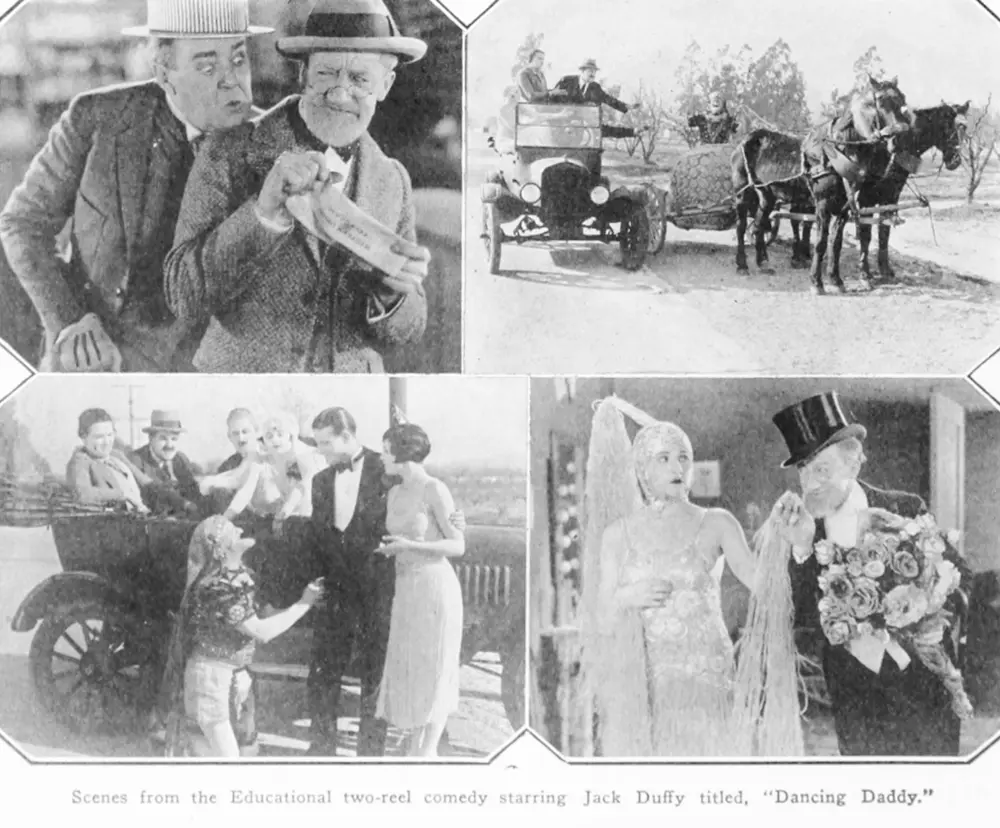
Is 'Dancing Daddy' worth watching today? Short answer: yes, but with significant caveats that demand a certain type of viewer. This film is an intriguing, if often problematic, relic best suited for ardent silent film enthusiasts and those fascinated by early cinematic comedic conventions, but it will likely alienate modern audiences seeking polished narratives or progressive themes.
It’s a historical document as much as it is entertainment, offering a window into 1920s humor and societal anxieties. For the right audience, it’s a delightful, if at times cringeworthy, romp. For others, it’s a chore.
The premise of 'Dancing Daddy' is pure, unadulterated farce, born from a rather antiquated sense of paternal duty and social anxiety. We are introduced to a well-to-do town squire, whose tranquil life is shattered by news of his son’s impending nuptials to a chorus girl. The very idea sends him into a panic.
Convinced this union would be a catastrophic blight on the family name, he journeys to the city with a singular, audacious goal: to sabotage the engagement. His chosen method? To woo and marry the chorus girl himself, thereby 'rescuing' his son from what he perceives as a dire mismatch. It's a plan so ludicrous it could only exist in the realm of silent comedy.
Upon arrival, the squire, played with a delightful blend of earnestness and frantic energy, quickly ingratiates himself with the unsuspecting chorus girl. He's surprisingly effective, securing her promise of marriage with relative ease. The relief, however, is short-lived.
In a twist that defines the film's comedic core, the squire discovers his son is already married to someone else. This revelation, coming after his own successful courtship, plunges him into a deep, hilarious quagmire. He’s now betrothed to the very woman he sought to save his son from, and she, along with her conniving brother, isn't about to let him off the hook easily.
The rest of the film is a breathless exercise in escalating panic and desperate attempts at escape. The squire finds himself caught between his misguided chivalry and the very real consequences of his impulsive actions. It’s a classic setup for a comedy of errors, relying heavily on mistaken identities, frantic chases, and the inherent absurdity of the situation.
This film works because of its relentless energy and a surprisingly committed lead performance that sells even the most outlandish scenarios. It fails because its comedic sensibilities are deeply rooted in a bygone era, often feeling dated and, at times, genuinely uncomfortable. You should watch it if you have a keen interest in the evolution of cinematic comedy and appreciate the physical humor of the silent era.
The heart of any silent film lies in its performances, and 'Dancing Daddy' is no exception. With dialogue replaced by exaggerated gestures and expressive faces, the cast bears the heavy burden of conveying plot and emotion. Gene Morgan, as the frantic squire, is undeniably the film's anchor, delivering a performance that is both exhausting and endearing.
Morgan’s physicality is paramount. His wide-eyed panic, his frantic hand-wringing, and his desperate sprints through various urban locales are the comedic engine of the film. There’s a particular scene where he attempts to feign illness to avoid his newfound fiancée that showcases his talent for physical comedy. His contorted expressions and exaggerated gasps for air are genuinely funny, even if the premise itself is thin.
Natalie Joyce, as the chorus girl, embodies the 'vamp' archetype of the era with gusto. Her performance is less about nuance and more about overt seduction and calculated manipulation. She nails the sly glances and confident posturing expected of such a character, though her portrayal occasionally veers into caricature rather than genuine comedic timing.
It’s a performance designed to be a foil to Morgan’s bumbling squire, and in that, it succeeds. However, one could argue that her character, and the film's depiction of her, leans too heavily on established tropes without offering much in the way of subversion or fresh perspective. The reliance on the 'vamp' feels less like satire and more like lazy characterization, which can be a difficult pill for modern viewers to swallow.
Vera Steadman and Jack Duffy, in their supporting roles, mostly serve to propel the plot forward or add to the general chaos. Steadman, as the son’s actual wife, has limited screen time but her presence is the catalyst for the squire’s ultimate dilemma. Duffy, as the chorus girl's brother, is a delightfully slimy opportunist, adding another layer of antagonist to the squire's woes. Their interactions, though brief, solidify the sense of a man trapped by his own good intentions.
The direction in 'Dancing Daddy', attributed to Gene Morgan, is characteristic of early silent comedies: fast-paced, reliant on broad physical humor, and often eschewing deep character development for immediate gags. Morgan clearly understood the need for constant motion to keep the audience engaged, especially given the simple plot.
The film rarely pauses, moving from one comedic predicament to the next with a briskness that prevents too much scrutiny of the plot’s logical inconsistencies. There are several well-staged chase sequences, typical of the era, that demonstrate a competent understanding of comedic timing through editing. For instance, the scene where the squire attempts to elude the chorus girl and her brother through a crowded public space is a masterclass in silent film choreography, with bodies narrowly missing each other and props being inadvertently utilized for comedic effect.
Cinematographically, 'Dancing Daddy' is serviceable, if not groundbreaking. The photography is clear, capturing the urban landscape of the 1920s with a certain functional charm. There are no grand sweeping shots or innovative camera movements to speak of. Instead, the focus is on clarity and ensuring the audience can follow the action, which is paramount in a visually driven medium.
Lighting is largely practical, though there are subtle distinctions. The scenes featuring the chorus girl often utilize slightly softer, more glamorous lighting to emphasize her allure, contrasting with the more straightforward, almost harsh lighting of the squire’s moments of panic. It’s a subtle touch, but it helps define the characters visually.
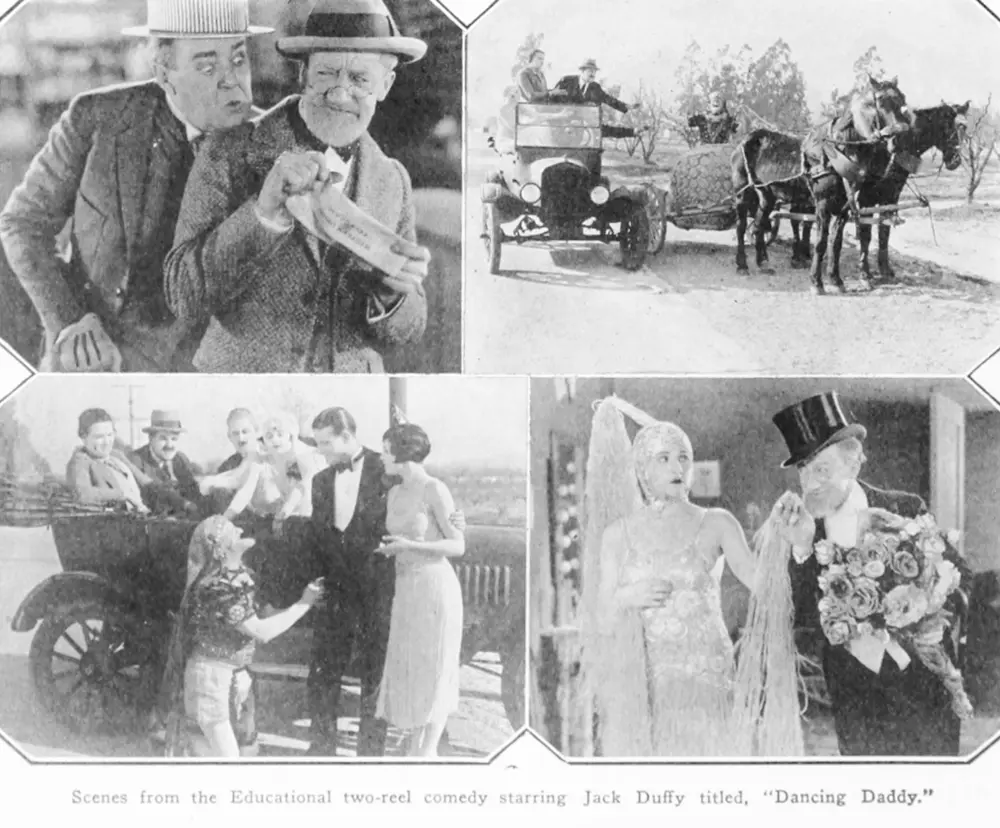
The film’s visual language is very much a product of its time. It’s not attempting to be artful in the way some later silent films would become; its primary goal is to tell a comedic story effectively within the technical limitations and aesthetic conventions of the period.
The pacing of 'Dancing Daddy' is undeniably its strongest asset in maintaining audience engagement. From the moment the squire hears the dreadful news, the film shifts into a high gear and rarely lets up. The setup is quick, the misunderstanding is swift, and the ensuing chaos is almost immediate. This rapid-fire approach ensures that even when the jokes don't quite land, the sheer momentum carries the viewer forward.
There's an almost breathless quality to the squire's journey, his frantic efforts to rectify his self-imposed predicament mirroring the film's own hurried rhythm. This kinetic energy is crucial for a film whose narrative depth is intentionally shallow, prioritizing laughs over introspection. One specific example of this relentless pacing is the montage of the squire's attempts to escape, each one failing more spectacularly than the last, cut together with a dizzying speed that enhances the comedic desperation.
However, this breakneck speed also contributes to one of the film's weaknesses: a lack of emotional resonance. While we sympathize with the squire’s predicament, there’s little opportunity for the audience to truly connect with any character on a deeper level. Everyone is a caricature, serving a comedic purpose rather than existing as fully fleshed-out individuals. This is a common trait of pure farces, but it means the film relies solely on its gags to succeed.
The tone is overwhelmingly lighthearted, almost to a fault. Even when the squire is in what should be a truly dire situation – facing a forced marriage, possible blackmail – the film maintains a jovial, slapstick tone. There’s no genuine threat, no real sense of danger, which can make the stakes feel low. This is both a strength, in that it commits fully to its comedic intent, and a weakness, as it prevents any real dramatic tension from developing.
It works. But it’s flawed. The film's relentless pursuit of laughs, while admirable, sometimes sacrifices depth for speed.
While 'Dancing Daddy' is primarily a vehicle for slapstick and situational comedy, it inadvertently offers a fascinating glimpse into the social anxieties and gender dynamics of the 1920s. The central conflict—a respectable man’s fear of his son marrying a chorus girl—speaks volumes about class distinctions and the perceived moral dangers of urban entertainment.
The chorus girl, often portrayed as a 'vamp' or a gold-digger in films of this era, represents a threat to traditional values and family honor. Her agency, while framed as manipulative, is also a subtle commentary on women navigating a changing world where economic independence was becoming more attainable, even if through less conventional means.
The film also satirizes, perhaps unintentionally, the patriarchal impulse to control one's offspring's romantic choices. The squire’s grand, self-sacrificing gesture to marry the girl himself is both absurd and, in a twisted way, a reflection of a father’s desire to 'fix' his son’s life, regardless of the personal cost or the son’s actual wishes. It's an interesting, if somewhat uncomfortable, mirror of societal expectations.
However, the film’s treatment of these themes is undeniably dated. The humor often relies on stereotypes that have not aged well. The portrayal of the chorus girl, while energetic, lacks the complexity or subversive edge that might make it palatable to a contemporary audience. Her character is largely defined by her perceived avarice, which feels simplistic and, frankly, a bit misogynistic by today’s standards.
For those interested in the historical context of cinema, these elements are valuable for study. For casual viewers, they might be off-putting. The film doesn't challenge these stereotypes; it leans into them for comedic effect, which is a significant hurdle for modern appreciation.
For silent film aficionados, early cinema historians, or those with a specific interest in 1920s American culture and comedy, 'Dancing Daddy' is absolutely worth watching. It offers a clear example of the era's comedic style and the societal anxieties it played upon.
However, for a general audience accustomed to modern narrative conventions, nuanced characters, and less problematic humor, 'Dancing Daddy' will likely feel slow, predictable, and occasionally uncomfortable. Its dated themes and broad performances require a significant amount of historical context and charitable viewing to truly appreciate.
It’s a niche appeal, certainly. If you enjoy films like The Love Brokers or Whirligigs for their historical value and energetic performances, then 'Dancing Daddy' fits right into that category. If you’re looking for something that transcends its era, you might be disappointed. It's a curiosity, not a timeless classic.
'Dancing Daddy' is a curious artifact from the silent era, brimming with the kind of frantic energy and broad physical comedy that defined early Hollywood. Gene Morgan’s performance is a tour de force of exasperated panic, single-handedly carrying much of the film’s comedic weight. Its relentless pacing keeps the narrative moving, ensuring that even when the gags don't quite land, the momentum prevents boredom.
However, the film’s charm is significantly hampered by its dated humor and reliance on stereotypes that feel out of step with modern sensibilities. The portrayal of the 'vampish' chorus girl, while historically accurate for the period, now comes across as simplistic and, for some, problematic. It's a film that demands a specific kind of viewer – one who can appreciate its historical context and forgive its antiquated flaws.
While it won't resonate with everyone, 'Dancing Daddy' remains a valuable piece of cinematic history, offering insights into the comedic tastes and social anxieties of the Roaring Twenties. It’s not a timeless classic that transcends its era, but rather a fascinating time capsule. Approach it with an open mind and a historian's curiosity, and you might find some genuine, albeit fleeting, amusement.
IMDb —
1917
Community
Log in to comment.