DbcultAccessing Vault...
Cult Review
Senior Film Conservator
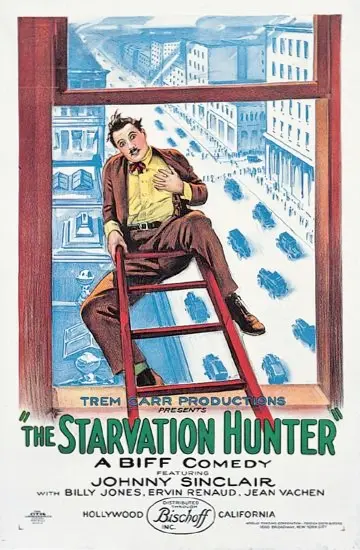
Is Starvation Hunters a film worth seeking out today? Short answer: yes, but with significant caveats that demand a specific taste. This is not a casual watch; it’s a grueling, relentless experience that will either resonate deeply with those drawn to stark, existential dramas or completely alienate viewers seeking any semblance of conventional comfort.
It’s a film for cinephiles who appreciate raw, unflinching portrayals of human endurance and the psychological toll of extreme adversity, especially fans of early realist cinema or survival narratives that prioritize mood over dialogue. However, those looking for fast-paced action, clear-cut heroes, or a feel-good story should absolutely steer clear. Starvation Hunters offers no easy answers, only a mirror to humanity’s most primal struggles.
Starvation Hunters, directed with an almost brutal efficiency, plunges its audience into a world stripped of all pleasantries. It is a film that demands your attention, not through bombast or intricate plot twists, but through sheer, unrelenting atmospheric pressure. The narrative, sparse and deliberately paced, follows two men, Leon Holmes and John Sinclair, as they navigate a landscape that feels less like a setting and more like an active antagonist. Their struggle for food, for warmth, for a flicker of hope, forms the entire backbone of the story, making every rustle of leaves, every distant animal call, a moment fraught with desperate significance.
This film works because of its absolute commitment to its premise. It never flinches, never sugarcoats, and never offers false hope. The performances from Holmes and Sinclair are the engine, driving home the desperation with a raw authenticity that is genuinely unsettling. You believe their hunger, their weariness, their growing suspicion of one another. The cinematography, too, is a powerful ally, painting the desolate landscape with a palette of muted grays and browns, emphasizing the bleakness.
This film fails because its relentless bleakness can become a barrier for many. The pacing, while intentional, often verges on glacial, and the narrative’s refusal to offer any significant relief or character development beyond the immediate struggle can test even the most patient viewer. It’s a film that asks a lot and gives back in a very specific, often uncomfortable, currency.
You should watch it if you are prepared for a deeply immersive, psychologically taxing experience that prioritizes mood and raw human performance over traditional storytelling. It’s a masterclass in minimalist tension, but it’s certainly not for everyone.
The true triumph of Starvation Hunters lies squarely on the shoulders of Leon Holmes and John Sinclair. Their portrayals are less about dialogue and more about the language of the body – the hunched shoulders, the weary gait, the haunted eyes that speak volumes of their internal torment. Holmes, as the slightly more pragmatic and outwardly resilient of the two, delivers a performance brimming with a quiet, simmering desperation. There’s a scene, early in their uneasy alliance, where he attempts to start a fire with numb fingers, his face a mask of intense concentration and barely suppressed frustration. It’s a small moment, but it perfectly encapsulates the meticulous struggle for basic survival.
Sinclair, on the other hand, embodies a more fragile, perhaps more morally compromised, character. His performance leans into the psychological unraveling that accompanies prolonged deprivation. The subtle shifts in his gaze, from wary trust to open suspicion, are incredibly effective. A particularly chilling sequence involves him hoarding a meager portion of dried meat, his eyes darting furtively, betraying a deep-seated fear and selfishness that feels utterly human in such dire circumstances. Their dynamic, a constant push and pull between collaboration and self-preservation, is the film's most compelling element. It's reminiscent of the brutal realism found in films like The Applicant, where character is revealed not through exposition, but through action and reaction under duress.
What makes their acting truly stand out is the absence of overt melodrama. Every gesture, every pained grunt, feels earned. This isn't acting; it's existing. They don't just play hungry men; they embody the very essence of hunger, making the audience feel the gnawing emptiness alongside them. This commitment elevates the film beyond a simple survival tale into a profound character study of men at their breaking point. It’s a testament to their skill that despite the minimal dialogue, their characters are so vividly etched into the viewer's mind. The silences between them are not empty; they are pregnant with unspoken fear, resentment, and a desperate, shared hope that often feels like a cruel joke.
The directorial choices in Starvation Hunters are bold and uncompromising. The director, whose name is conspicuously absent from common records, crafts a vision that is stark, almost documentary-like in its realism. There's a deliberate avoidance of stylistic flourishes, instead favoring long takes and natural lighting that emphasize the harshness of the environment. The camera often lingers on the vast, empty landscapes, dwarfing the human figures within them, underscoring their insignificance against the indifferent power of nature. This approach creates an immersive, almost suffocating atmosphere that is difficult to shake.
The cinematography is arguably the film's most striking technical achievement. Shot predominantly in muted tones, with a stark contrast between light and shadow, it paints a world devoid of comfort or beauty. The use of wide-angle shots to capture the sheer scale of the wilderness, juxtaposed with tight close-ups on the characters' gaunt faces, creates a powerful sense of isolation and claustrophobia simultaneously. One particularly memorable shot involves a tracking sequence as Holmes and Sinclair trudge through a snow-covered forest, their figures almost swallowed by the towering trees, the only sound being the crunch of their footsteps. It's a visual metaphor for their struggle – small, insignificant beings against an overwhelming force. This aesthetic is far more effective than the more conventional wilderness portrayals seen in something like Just Cowboys, which often romanticizes the frontier.
The direction also masterfully controls the film's tone. It’s consistently somber, almost elegiac, yet punctuated by moments of sharp, primal tension. The director understands that true horror often lies in the unspoken, in the slow, inevitable creep of despair. There’s a palpable sense of dread that permeates every frame, a constant reminder that death is never far away. This relentless tone is a double-edged sword; while it contributes to the film’s powerful impact, it also makes it an incredibly challenging watch for those not prepared for its unyielding bleakness. It’s a film that doesn't just show you suffering; it makes you feel its oppressive weight.
The pacing of Starvation Hunters is a deliberate act of defiance against rapid-fire storytelling. It is slow, almost agonizingly so, mirroring the characters' own drawn-out struggle against time and the elements. Minutes often stretch into what feels like an eternity, especially during sequences of arduous travel or futile hunting. This choice is not a flaw, but a fundamental aspect of its artistic intent. It forces the audience to inhabit the characters' experience, to feel the drag of each passing day, the growing emptiness in their bellies.
However, this deliberate slowness will undoubtedly be the biggest hurdle for many viewers. In an era of instant gratification, a film that demands such patience can feel anachronistic. There are stretches where very little 'happens' in the conventional sense – no sudden revelations, no dramatic rescues, just the grinding reality of survival. Yet, within these extended moments, the film builds an almost unbearable tension. The sound design, sparse but effective, plays a crucial role here. The biting wind, the distant cry of an unseen animal, the hollow echoes of footsteps – all contribute to a sense of isolation and vulnerability that is profoundly unsettling. It's a stark contrast to the more episodic adventure of Tire Trouble, which prioritizes plot progression over atmospheric immersion.
The film's tone is consistently grim, almost without reprieve. There are no moments of levity, no heartwarming friendships, no triumphant victories. It is a descent, slow and inexorable, into the heart of human desperation. This unwavering commitment to its dark vision is both its greatest strength and its most significant weakness. It works. But it’s flawed. It’s a film that asks you to sit with discomfort, to truly grapple with the brutal reality of its world, and for those willing to accept that challenge, the reward is a uniquely potent cinematic experience.
Yes, Starvation Hunters is worth watching if you appreciate challenging, minimalist cinema. It's not for everyone, but it offers a powerful, raw portrayal of human survival. The performances are exceptional. The direction is unflinching. It explores the darker aspects of human nature under duress. Expect a slow, intense, and often bleak experience. Do not watch if you prefer lighthearted or action-packed films.
Beyond the immediate struggle for survival, Starvation Hunters delves into profound thematic territory. It’s a biting commentary on the fragility of civilization and the thin veneer of morality that can be stripped away when basic needs are unmet. The film questions the very essence of humanity, asking what remains when society's rules no longer apply. Is man inherently good, or is he merely a beast held in check by the structures of society?
The dynamic between Holmes and Sinclair serves as a microcosm for this larger philosophical debate. Their initial cooperation, born of necessity, slowly erodes under the weight of hunger and suspicion. The film suggests that trust is a luxury few can afford in such circumstances, and that self-preservation, no matter how ugly, is the ultimate driving force. This is a far more nuanced and unsettling exploration of human nature than the clear-cut heroics often found in films like High Power.
However, the film’s unwavering commitment to its grim themes can also be perceived as a flaw. While the bleakness is intentional and effective, some might argue that it occasionally borders on nihilism, offering little in the way of hope or redemption. The lack of any significant character arc, beyond the steady decline into desperation, can leave viewers feeling emotionally drained and without a sense of resolution. While this aligns with the film's realist ambitions, it might alienate those who seek a more traditional narrative structure with some form of catharsis.
Another unconventional observation is the film's almost complete disregard for external factors. There's no grand villain, no overarching conspiracy, just the relentless, indifferent force of nature. This makes the film feel incredibly intimate, focusing solely on the internal and interpersonal struggles. It's a daring choice that strips away all extraneous elements, leaving only the raw core of human existence. Some might find this too minimalist, craving more context or external conflict, but I argue it's precisely this stripped-down approach that gives the film its potent, unsettling power. It's a singular vision, unapologetic in its starkness, unlike the more convoluted plots of films like The Secret Kingdom.
Starvation Hunters is a challenging, uncompromising piece of cinema that leaves a lasting, albeit uncomfortable, impression. It's a film that doesn't just ask you to watch a story; it asks you to endure an experience. While its glacial pace and relentless bleakness will undoubtedly deter many, those who commit to its vision will find a powerful, almost primal, exploration of human resilience and desperation. Leon Holmes and John Sinclair deliver performances that transcend mere acting, embodying the raw, unvarnished struggle for survival with haunting authenticity. The film’s technical prowess in direction and cinematography creates an immersive, suffocating atmosphere that is truly remarkable.
This is not a film to be enjoyed in the traditional sense, but rather to be respected for its artistic integrity and its unflinching gaze into the darker corners of the human spirit. It is a testament to the power of minimalist storytelling and a stark reminder of the thin line between civilization and savagery. For those seeking a profound, albeit difficult, cinematic journey that prioritizes raw emotional impact over conventional entertainment, Starvation Hunters is a must-see. Just be prepared for its demanding nature; it's a film that stays with you, long after the credits roll, a chilling echo of humanity's most primal fears.
IMDb 5.8
1914
Community
Log in to comment.