DbcultAccessing Vault...
Cult Review
Senior Film Conservator
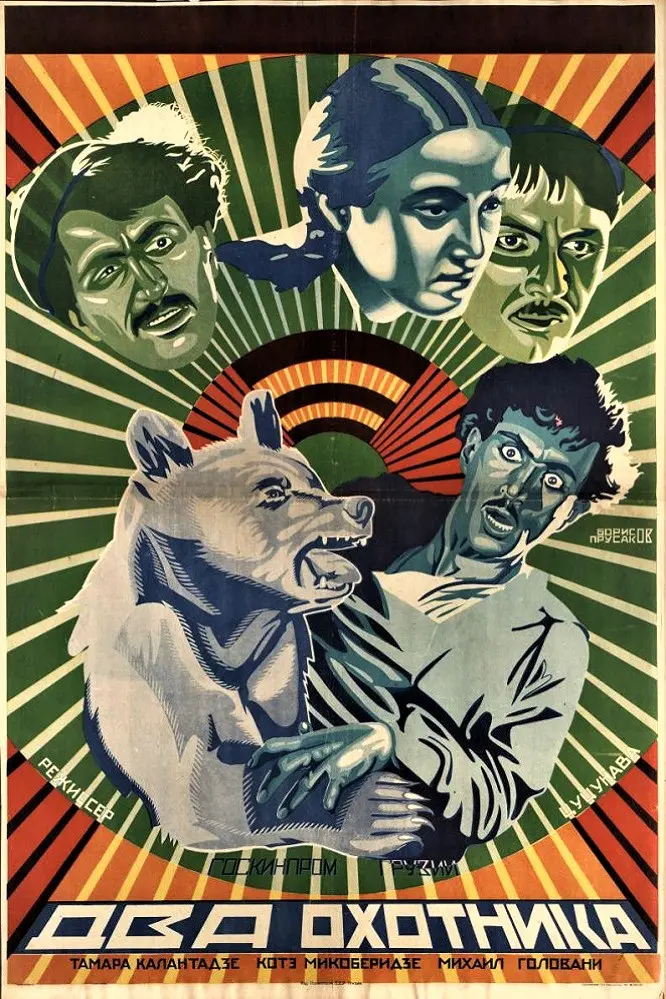
Is this film worth your time in the modern era? Short answer: yes, but only if you have the stomach for a bleak, unvarnished look at the human shadow. This isn't a film for those seeking an uplifting adventure or a fast-paced thriller.
Ori monadire is a film for the patient viewer, the historian, and the lover of psychological horror who understands that the most terrifying monsters aren't bears in the woods, but the choices we make when no one is looking. It is decidedly NOT for anyone who hates the slow, deliberate pacing of silent-era melodrama.
1) This film works because it refuses to turn Turiko into a mustache-twirling villain, choosing instead to portray him as a man broken by a single moment of frozen inaction.
2) This film fails because its secondary characters, particularly Magdana, are treated more as symbols of conflict than as fully realized human beings with their own agency.
3) You should watch it if you want to see how early Georgian cinema utilized landscape and silence to create a sense of inevitable doom that rivals modern psychological thrillers.
Yes. It is worth watching because it captures a raw, visceral emotion that many modern films over-complicate with dialogue. In the silent era, an actor's eyes had to do the heavy lifting, and here, they carry the weight of a mountain.
The film offers a window into 1927 Georgia, but its themes of jealousy and regret are universal. It is a compact, punishing experience that lingers in the mind long after the final frame fades to black. It works. But it is flawed.
Aleksandre Tsutsunava doesn't waste time with pleasantries. From the opening sequences, the atmosphere is thick with a competitive heat that feels dangerous. The rivalry between Turiko and Mgelia isn't just about Magdana; it’s about the fundamental human need to be 'the one' who survives and thrives.
The hunting scene is the film's pivot point. While modern audiences might find the bear effects primitive, the framing of Turiko’s face is where the real horror lies. We see the gears turning. We see the moment he realizes that if he does nothing, his problem disappears. It’s a chilling depiction of the 'sin of omission.'
Unlike the more fantastical elements seen in The Lure, Ori monadire remains grounded in a harsh, physical reality. There are no sirens or magic here—only the cold indifference of the forest and the heat of a guilty conscience. The cinematography uses the verticality of the Georgian mountains to make the characters feel small and their moral failures feel monumental.
Mikheil Gelovani delivers a performance that transitions from sturdy confidence to a fragmented, twitching mess. His descent into madness isn't a sudden flip of a switch; it’s a slow erosion. You can see the dark circles under his eyes getting darker with every scene after the hunt. He stops looking at people. He looks through them.
The way the film handles the suicide is particularly striking. In an era where many endings were forced into a 'moral of the story' box, this feels like a genuine psychological collapse. There is no redemption arc. There is only the logical conclusion of a mind that can no longer live with its own reflection.
Compare this to the satirical bite of El apóstol, and you see the breadth of 1920s cinema. While others were using the medium for political critique or surrealism, Tsutsunava was interested in the rot of the individual soul. It’s a claustrophobic experience despite the wide-open settings.
The pacing is perhaps the film’s greatest hurdle for a contemporary audience. The first act spends a significant amount of time establishing the village dynamics. While some might call it slow, I call it necessary. You need to feel the weight of the community to understand why Turiko’s guilt is so isolating. He isn't just hiding from himself; he’s hiding from a world that expects him to be a hero.
The use of natural light is impressive for 1927. The shadows in the forest aren't just dark spots on the film; they feel like physical barriers. When Mgelia is attacked, the camera doesn't shy away from the chaos, but it keeps returning to Turiko’s stillness. That contrast is the film's most powerful visual tool.
One could argue that the film leans too heavily on its central metaphor, but in the context of silent cinema, such heavy-handedness was often a virtue. It ensured the emotional beat was never missed. The final act, where the hallucinations begin, is handled with a restraint that makes the supernatural elements feel like a natural extension of Turiko's fractured psyche.
Pros:
- Visceral, emotional storytelling that transcends the lack of dialogue.
- Stunning use of Georgian mountain locations to mirror internal states.
- A brave, uncompromising ending that refuses to offer easy comfort.
Cons:
- The technical limitations of the 1920s might distract some modern viewers.
- Female characters are largely sidelined in favor of the fraternal conflict.
- The middle section drags slightly as it builds toward the inevitable climax.
The main theme of Ori monadire is the destructive power of guilt and the moral consequences of inaction. It explores how a single moment of cowardice can destroy a person's psyche more effectively than any external enemy. The film suggests that survival at the cost of one's integrity is a fate worse than death.
Ori monadire is a jagged, uncomfortable piece of art. It doesn't care if you like the characters. It only cares that you feel the cold wind of the mountains and the hot shame of Turiko's betrayal. It is a stark reminder that we are defined not by our intentions, but by our actions—or lack thereof—in moments of crisis.
While it may lack the polish of modern psychological thrillers, it possesses a raw honesty that many contemporary films lack. It is a foundational text for understanding the tragic tradition in Georgian cinema. Watch it for the history, but stay for the haunting realization that Turiko’s cowardice lives in all of us. It is a brutal, essential watch.
IMDb 5.1
1932
Community
Log in to comment.