DbcultAccessing Vault...
Cult Review
Senior Film Conservator
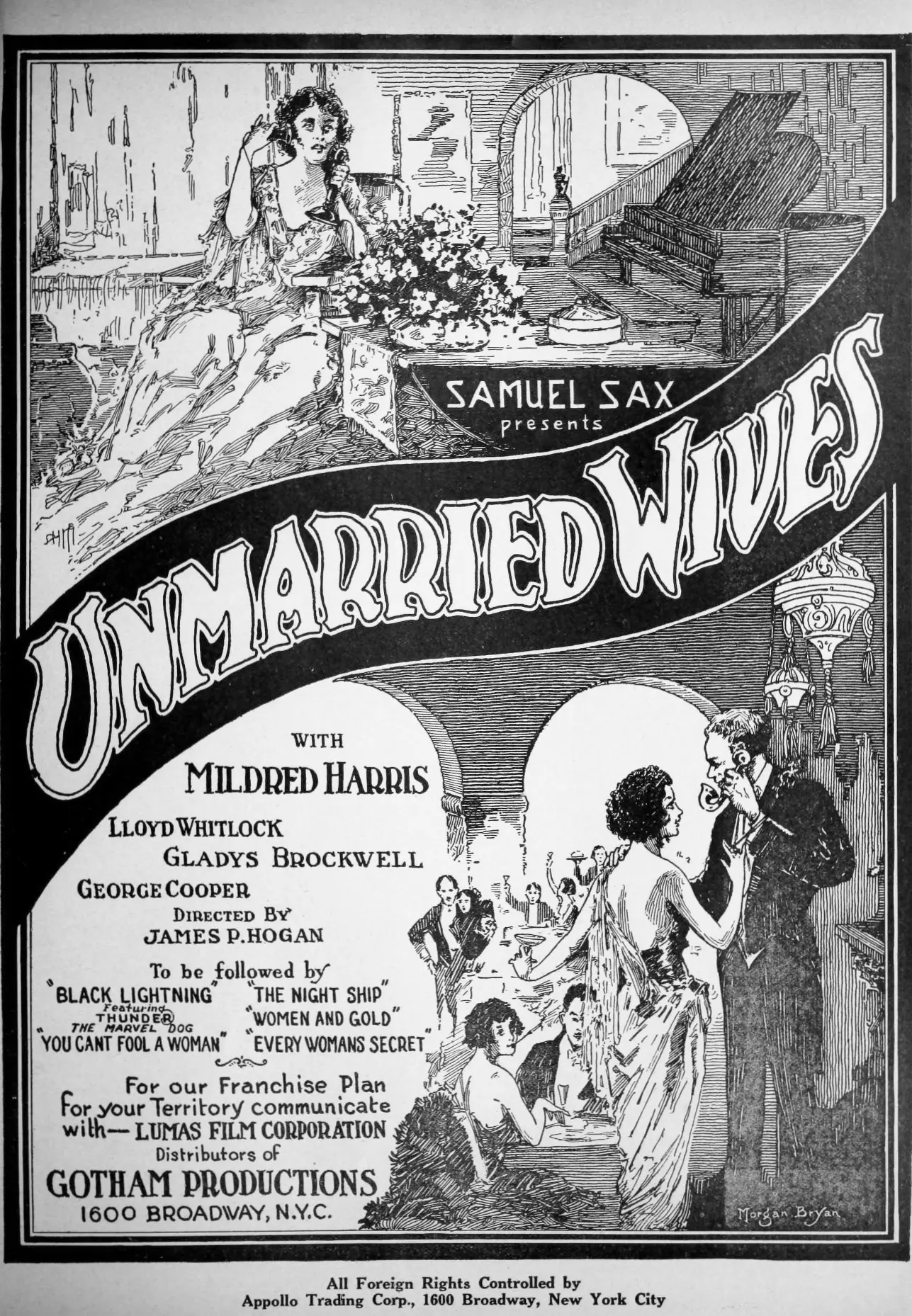
In the gilded age of Hollywood's golden era, a spate of films navigated the complex interplay between love, fame, and societal expectation. Among these, Unmarried Wives stands out as a particularly intriguing exemplar, weaving a tale that oscillates between the intoxicating allure of stardom and the redemptive power of true love.
The film centers on Maggie Casey, a talented ingénue catapulted to fame by her press agent's Machi the stellar Princess Sonya in a New York City revue. As Maggie basks in the spotlight, she finds herself increasingly entangled in a torrid affair with Tom Gregory, a charismatic figure whose marital status complicates the narrative.
The Gregorys' marriage becomes a focal point, particularly when Tom's wife becomes embroiled in a sordid publicity-kidnapping case. This plot twist injects a dose of intrigue, raising questions about the commodification of fame and the exploitation of individuals for publicity. The film deftly navigates these themes, offering a critique of the era's voyeuristic tendencies.
Maggie's trajectory is marked by a series of intense encounters, including a thwarted attack by a disgruntled theater manager and a dramatic rescue by her sweetheart, Joe, during a fire. These events serve to underscore the precarious nature of fame and the importance of genuine relationships in the face of adversity.
Upon closer inspection, Unmarried Wives reveals itself to be a nuanced exploration of love, loyalty, and redemption. The film's portrayal of the Gregorys' reconciliation, facilitated by Maggie's ultimate triumph, offers a hopeful vision of personal growth and forgiveness. This thematic resonance is reminiscent of other silent era films, such as Beasts of Paradise, which also navigated the complexities of love and societal expectation.
In terms of narrative structure, Unmarried Wives exhibits a certain kinship with Are You a Mason?, which similarly leveraged the tropes of romance and deception to explore themes of identity and morality. However, Unmarried Wives distinguishes itself through its pointed commentary on the commodification of fame and the exploitation of women in the entertainment industry.
From a technical standpoint, the film demonstrates a keen understanding of the visual language of cinema, employing a range of techniques to convey the glamour and excitement of the revue. The cinematography is noteworthy, capturing the opulence of the performances and the squalor of the publicity-kidnapping case.
In comparison to other films of the era, such as Those Who Pay and Höhenluft, Unmarried Wives exhibits a more pointed focus on the intersections of love, fame, and morality. While A Bird of Bagdad and The Dentist offer more fantastical and comedic takes on the era's themes, Unmarried Wives presents a more grounded, realistic exploration of its characters' experiences.
The performances in Unmarried Wives are equally impressive, with the cast delivering nuanced, convincing portrayals of their characters. Maggie Casey's rise to stardom is convincingly depicted, as is the complicated web of relationships that develops around her.
In the context of the silent era's cinematic output, Unmarried Wives occupies a distinctive niche, one that speaks to the era's preoccupations with love, fame, and morality. While films like Lilith and Ly and From Two to Six offer more introspective explorations of the human condition, Unmarried Wives presents a more extroverted, dramatic take on its themes.
Ultimately, Unmarried Wives offers a captivating glimpse into the world of early Hollywood, one that is marked by both the allure of fame and the complexity of human relationships. As a film, it invites comparison with other notable works of the era, including Weak Hearts and Wild Lions and Die Gespensteruhr, which similarly navigated the intricacies of love, morality, and societal expectation.
In conclusion, Unmarried Wives is a film that richly repays close attention, offering a nuanced exploration of love, fame, and redemption in the context of early Hollywood. Its thoughtful portrayal of complex themes and relationships makes it a compelling watch, one that invites reflection on the enduring power of cinema to captivate and inspire audiences.
IMDb 5.2
1932
Community
Log in to comment.