DbcultAccessing Vault...
5.4/10
Senior Film Conservator
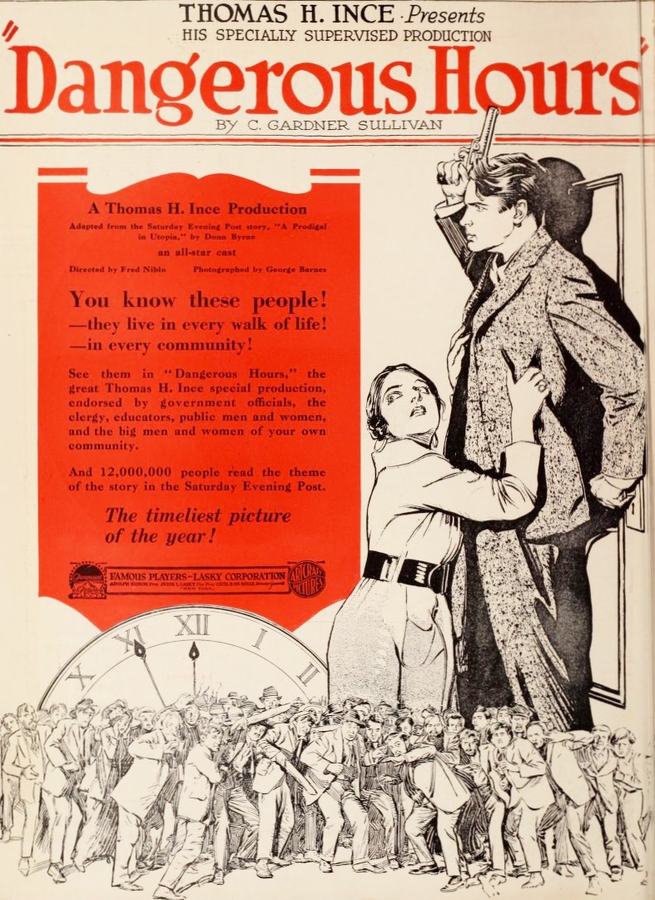
A definitive 5.4/10 rating for a film that redefined the boundaries of cult cinema. Dangerous Hours remains a cornerstone of transgressive art.
In the feverish climate of 1919, American cinema was not merely an entertainment medium; it was a front line in the battle for the national soul. Dangerous Hours stands as a towering, if polarizing, monument to this era of profound anxiety. Directed with a surprisingly modern sense of kinetic energy, it captures the 'Red Scare' not as a distant political theory, but as a domestic contagion. Unlike the more whimsical social explorations found in contemporary works like The Primrose Ring, this film plunges into the dark heart of industrial unrest with a grimace that still feels startlingly visceral today.
The screenplay, a collaboration between the prolific C. Gardner Sullivan and Brian Oswald Donn-Byrne, utilizes John King (played with a hauntingly earnest fragility by Lloyd Hughes) as a surrogate for the American Everyman. King is a man of books, a dreamer whose lack of real-world friction makes him the perfect vessel for the radicalism of Sophia (the electrifying Claire Du Brey). The film’s brilliance—and its danger—lies in how it depicts the seductive nature of these 'dangerous hours.' It doesn't present the agitators as mere caricatures initially; they are charismatic, articulating a vision of a world reborn from the ashes of old-world corruption.
As we watch King move through the dimly lit halls of clandestine meetings, the cinematography employs a chiaroscuro effect that mirrors his moral blurring. While a film like The Auction Block dealt with the commodification of beauty, Dangerous Hours deals with the commodification of anger. The industrial settings are not just backdrops; they are echoing chambers of discontent, rendered with a gritty realism that predates the Soviet montage movement's own obsession with the factory floor.
Claire Du Brey delivers a performance that is nothing short of revolutionary for the time. In an era often defined by histrionic gesturing, her Sophia is a masterclass in calculated intensity. She doesn't just play a villain; she plays a believer. When she stands alongside Jack Richardson and Gordon Mullen, there is a palpable sense of a collective, a hydra-headed threat to the status quo. On the opposing side, Barbara Castleton provides the necessary emotional anchor, representing the traditional values that the film ultimately seeks to vindicate. Her performance could have easily descended into saccharine melodrama, yet she maintains a dignity that makes her the logical ideological counterweight to Du Brey's firebrand.
The supporting cast, including veterans like Walt Whitman and Louis Morrison, populates the world with a sense of history. They represent the 'old guard'—the fathers and laborers whose world is being dismantled by the very youths they raised. This generational conflict adds a layer of Shakespearean tragedy to the proceedings, elevating the film beyond mere propaganda into the realm of social epic.
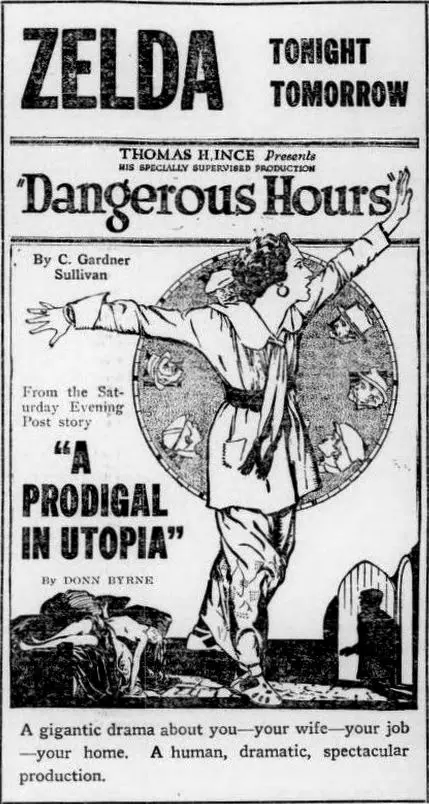
To understand the weight of Dangerous Hours, one must look at its contemporaries. While Under Suspicion played with themes of identity and doubt within a more conventional mystery framework, Dangerous Hours strips away the artifice of genre to confront the viewer with the raw nerves of the 1919 labor strikes. It shares a certain thematic DNA with the European sensibilities found in Die Gespensteruhr or the psychological depth of Molchi, grust... molchi, yet it remains uniquely American in its obsession with individual redemption and the sanctity of the hearth.
The film’s pacing is relentless. Unlike the slower, more deliberate character studies like A Heart in Pawn, Sullivan’s script drives the narrative toward a chaotic, explosive third act. The transition from intellectual debate to physical violence is handled with a terrifying fluidity. The riot sequences are staged with a scale that feels genuinely dangerous; you can almost smell the smoke and hear the shattering glass through the silence of the screen.
Critically, we must acknowledge that Dangerous Hours is a product of its time—a piece of sophisticated propaganda designed to quell the rising tide of labor organization. However, to dismiss it solely on those grounds would be a disservice to its technical and narrative achievements. The film explores the concept of 'the mob' with a psychological nuance that rivals the best work of Griffith. It examines how individual agency is surrendered to the collective will, a theme that resonates just as powerfully in our modern era of digital echo chambers as it did in the smoke-filled halls of 1919.
Critical Insight: While films like The Eternal Strife focused on the metaphysical battles of the human condition, Dangerous Hours tethers its conflict to the tangible: the factory gate, the printing press, and the American flag. It is a film that demands to be seen not as a relic, but as a warning of how easily idealism can be weaponized.
The lighting design in Dangerous Hours deserves a dissertation of its own. Notice the way Sophia is often framed in half-light, her face a mask of shadow and conviction. This visual metaphor for her hidden motives is contrasted with the bright, flat lighting of the King family home. The film uses light to define morality, a common trope of the silent era, but here it is executed with a surgical precision. The editing, too, is remarkably tight. The cross-cutting between the peaceful town and the gathering storm of the agitators creates a mounting sense of dread that is almost Hitchcockian in its execution.
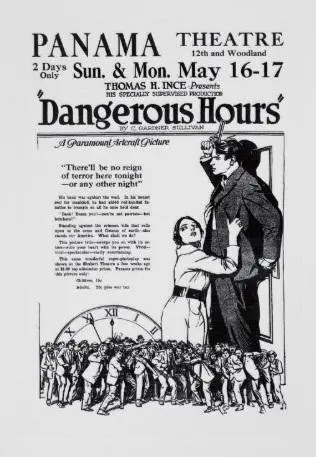
When compared to the lighthearted escapism of A Jazzed Honeymoon, the sheer weight of Dangerous Hours becomes even more apparent. It is a film that refuses to let the audience off the hook. Even the moments of respite feel tainted by the impending conflict. The use of intertitles is sparse but effective, allowing the visual storytelling to carry the emotional burden of the plot. This is pure cinema—a language of images that transcends the need for spoken dialogue.
In the broader context of film history, Dangerous Hours paved the way for later political thrillers. Its influence can be seen in the way cinema handles the 'outsider' who threatens the status quo. It shares a certain grim outlook with The Cavell Case, though it swaps wartime espionage for domestic subversion. The film's conclusion, while satisfying the censorship requirements of the day, leaves a lingering sense of unease. Can the genie of radicalism ever truly be put back in the bottle? Lloyd Hughes’ final scenes suggest a man who has been forever changed by his journey into the underworld of ideology.
The film also serves as a fascinating companion piece to international works like Het proces Begeer or the Hungarian Mesék az írógépröl, showcasing how different cultures utilized the burgeoning medium of film to process their own internal anxieties. Dangerous Hours remains the most aggressive and polished American example of this trend.
To watch Dangerous Hours today is to witness the birth of the political thriller in its most primal form. It is a film of immense craft and questionable politics, a combination that makes for an absolutely essential viewing experience for any serious student of cinema. It doesn't ask for your agreement; it demands your attention. Like the protagonists in Held for Ransom, the audience is held captive by the tension of a world on the brink of collapse.
The performances of Hughes and Du Brey remain the high-water marks of their respective careers, providing a human face to the abstract forces of history. Whether you view it as a cautionary tale or a fascinating artifact of national paranoia, Dangerous Hours is a searing reminder of the power of the moving image to shape, reflect, and distort the reality of the human condition. It is a dark, orange-hued sunset on the innocence of the early 20th century, signaling the arrival of a much more complicated and dangerous world.
A cinematic relic that pulses with the anxieties of a bygone age, yet mirrors the ideological fractures of our own.
IMDb —
1936
Community
Log in to comment.