A definitive 5/10 rating for a film that redefined the boundaries of cult cinema. Daring Deeds remains a cornerstone of transgressive art.
Is Daring Deeds worth watching today? Short answer: yes, but with a significant asterisk. This 1920s silent film offers a fascinating glimpse into early aviation cinema and the foundational tropes of romantic adventure, yet it demands a certain level of patience and historical appreciation from its audience.
This film is unequivocally for film historians, enthusiasts of silent cinema, and those curious about the nascent days of Hollywood storytelling. It is emphatically not for viewers seeking fast-paced action, complex character arcs, or modern cinematic realism. Go in with the right expectations, and you might find its simple charm quite engaging.
The Core Appeal and Its Limitations
This film works because... it captures a pure, almost childlike wonder for aviation and adventure, presenting a clear-cut narrative of heroism and romance that was deeply satisfying to audiences of its era.
This film fails because... its simplistic characterizations and predictable plot offer little in the way of surprise or emotional depth for contemporary viewers, feeling more like a historical artifact than a compelling drama.
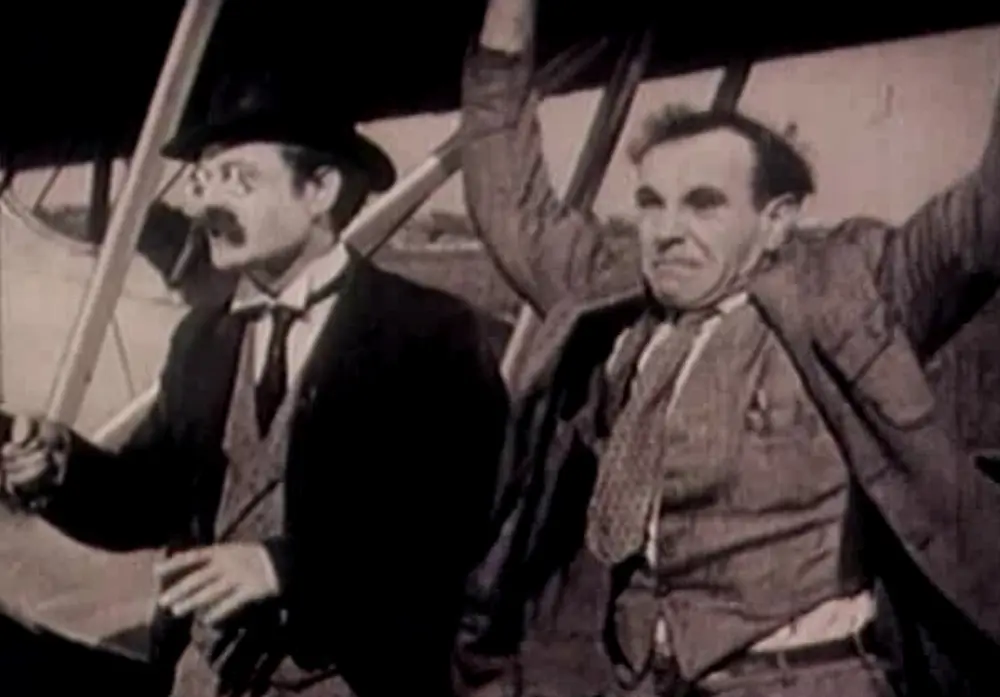
Scene from Daring Deeds
Cinematic perspective: Exploring the visual vocabulary of Daring Deeds (1927) through its definitive frames.
You should watch it if... you appreciate silent film as an art form, are interested in early aviation narratives, or want to understand the foundational elements of adventure-romance stories.
At its heart, Daring Deeds is a testament to the power of aspiration in the early 20th century, particularly the burgeoning fascination with flight. William Gordon, Jr. embodies the youthful, rebellious spirit of the age, eager to escape his father's shadow and forge his own destiny. His journey from familial discontent to heroic aviator is painted with broad strokes, a narrative style characteristic of the silent era where visual storytelling and clear moral lines often took precedence over psychological nuance.
The film’s central conflict, involving inventor John Courtney and his unscrupulous rival, serves primarily as a vehicle for William’s heroism and a convenient obstacle for his romance with Helen. It’s a classic setup: damsel in distress (or rather, her father's invention in distress), a dashing hero, and a clear villain. This simplicity, while a hallmark of its time, can feel almost quaint today, lacking the intricate plotting or moral ambiguities we’ve come to expect.
Performances: Silent Era Archetypes
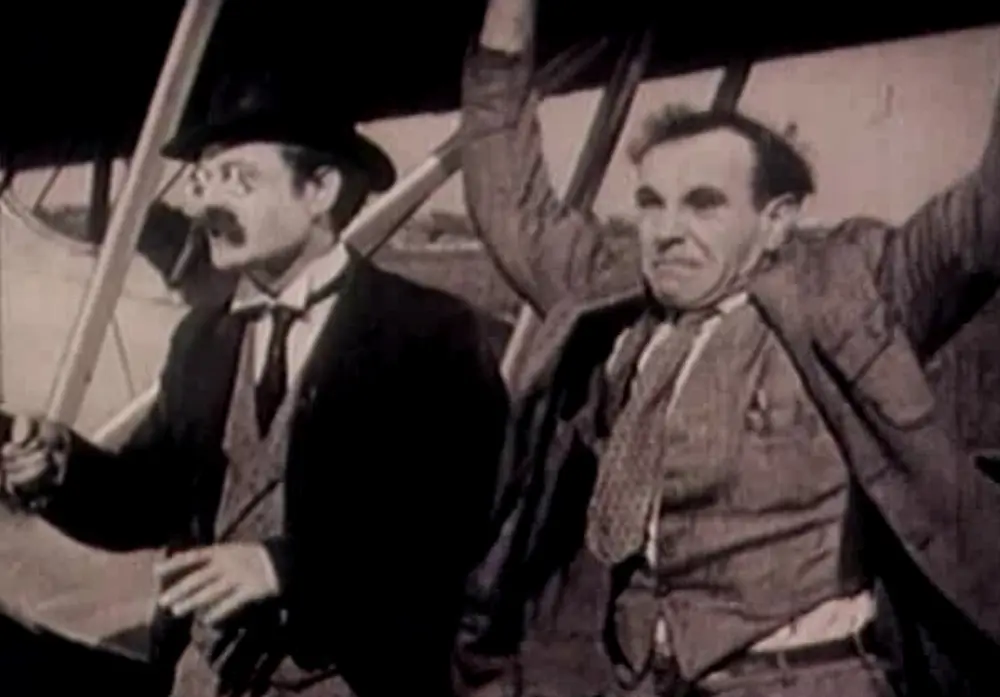
The acting in Daring Deeds, led by Earl Metcalfe as William Gordon, Jr., is firmly rooted in the expressive, often exaggerated style of silent cinema. Metcalfe’s portrayal of William is suitably earnest and valiant, relying on grand gestures and clear facial expressions to convey emotion. He projects the requisite heroic charm, but his performance, by modern standards, lacks subtlety.
Scene from Daring Deeds
Cinematic perspective: Exploring the visual vocabulary of Daring Deeds (1927) through its definitive frames.
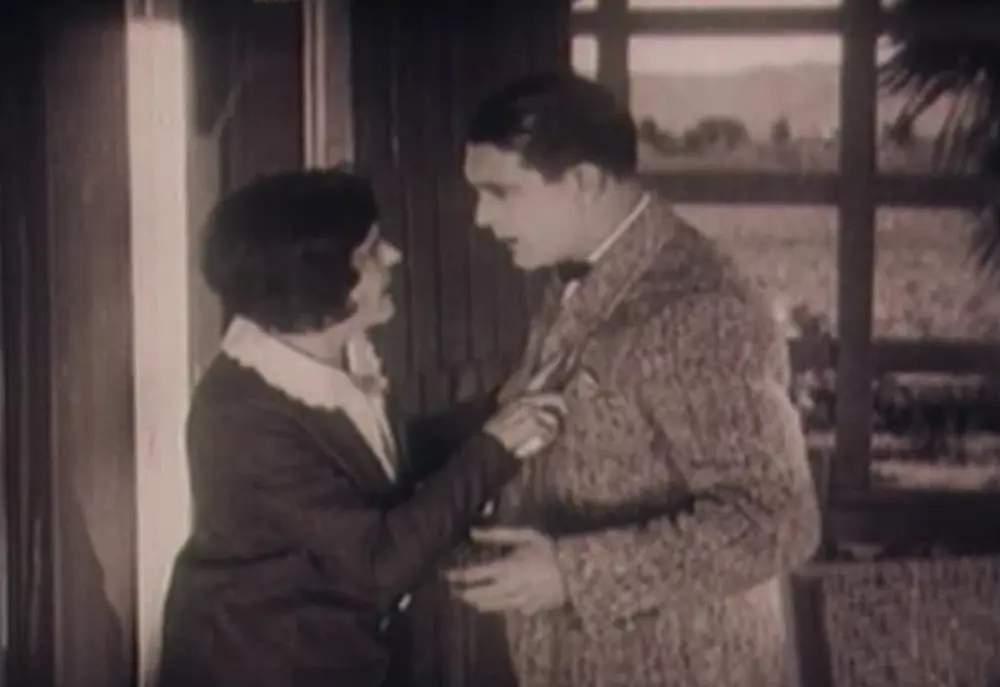
This isn't a criticism of Metcalfe’s talent, but rather an observation on the prevailing acting conventions. Actors like Molly Malone as Helen Courtney deliver performances that are equally direct. Her reactions are legible, her beauty undeniable, fitting the mold of the idealized romantic interest. There’s a certain charm in this straightforwardness, a clarity of intent that allows the audience to instantly grasp character motivations without the need for dialogue.
The supporting cast, including Lafe McKee as the inventor John Courtney, effectively fills their archetypal roles. McKee embodies the beleaguered but brilliant inventor with a sympathetic air, making his plight feel genuine enough to warrant William’s intervention. The villain, though unnamed in the provided plot, is undoubtedly presented with all the sneering bravado expected of a silent film antagonist. Their performances are less about deep emotional resonance and more about clear, functional storytelling, guiding the audience through the narrative beats with visual cues.
Direction, Cinematography, and Pacing
Directed by an uncredited hand (or perhaps a collective effort, as was sometimes the case in early productions), Daring Deeds benefits from the novelty of its subject matter. The direction focuses on clarity and spectacle, particularly during the aviation sequences. For a film of its time, depicting aerial combat and racing would have been a significant technical challenge and a huge draw for audiences.
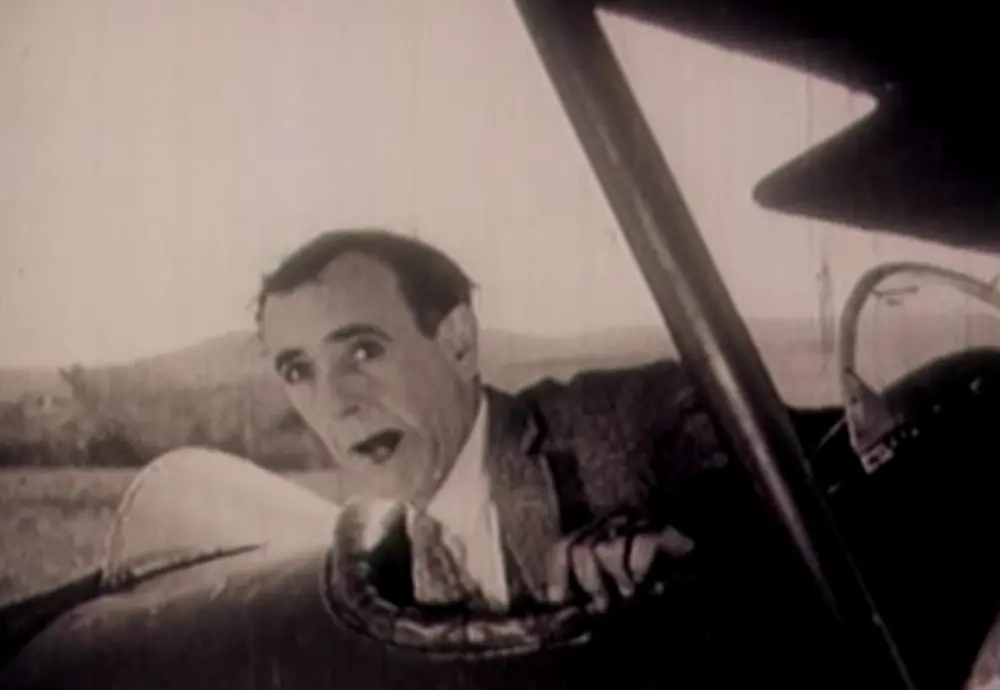
The cinematography, while not groundbreaking by today's standards, effectively captures the thrill of flight. One can imagine the awe inspired by seeing planes soar across the screen in 1924, a mere two decades after the Wright brothers' first flight. The camera work during the transcontinental race, though likely limited by the technology of the era, would have been the film's undeniable highlight. These scenes, even when occasionally hampered by visible wires or less-than-seamless transitions, are where the film truly earns its title.
Scene from Daring Deeds
Cinematic perspective: Exploring the visual vocabulary of Daring Deeds (1927) through its definitive frames.
Pacing is another aspect that requires a period adjustment. Silent films often possessed a rhythm distinct from modern cinema, sometimes feeling rushed in exposition and then lingering on emotional beats or action sequences. Daring Deeds follows this pattern, moving swiftly through William’s initial rebellion and subsequent meeting with the Courtneys, before building to the crescendo of the air race. The narrative is linear, purposeful, and generally avoids unnecessary detours, a pragmatic approach to keeping audiences engaged without spoken dialogue.
The tone is largely one of earnest adventure and wholesome romance. There's no dark cynicism here, no moral ambiguity to grapple with. It’s a world where good triumphs, villains are vanquished, and love conquers all, delivered with a sincerity that is almost disarming in its simplicity. This unwavering optimism, while potentially saccharine for some, is also one of the film’s most charming historical attributes.
Is This Film Worth Watching?
To truly appreciate Daring Deeds, one must approach it not as a contemporary cinematic experience, but as a window into a bygone era. It's a historical document as much as it is entertainment. The film’s strength lies in its ability to transport you to a time when aviation was still a marvel, and a simple story of courage and love was sufficient to enthrall audiences.
For those who have cultivated a taste for silent cinema, the film offers familiar pleasures: a clear narrative, expressive performances, and the inherent charm of early filmmaking techniques. It might not possess the artistic ambition of a Murnau or the comedic genius of a Chaplin, but it delivers on its promise of lighthearted adventure.
However, for the casual viewer unaccustomed to the unique language of silent film, the experience might prove challenging. The lack of spoken dialogue, the reliance on intertitles, and the often melodramatic acting style can be barriers. It works. But it’s flawed. The plot, while functional, offers no real surprises, and the character development is minimal. If you're looking for a deep, character-driven drama, you'd be better served by a film like The Chorus Girl's Romance, which delves into more complex emotional territory within the silent era context.
Pros and Cons
Pros:
Historical Significance: Excellent insight into early aviation cinema and adventure tropes.
Clear, Engaging Plot: Simple and easy to follow, a hallmark of effective silent storytelling.
Pioneering Aviation Scenes: The aerial sequences, though dated, were groundbreaking for their time and remain fascinating.
Charming Sincerity: The film possesses an earnest, optimistic tone that is quite appealing.
Cons:
Lack of Depth: Characters are archetypal, and the plot offers no real surprises or emotional complexity.
Dated Acting Style: Melodramatic performances may be off-putting to modern audiences.
Technical Limitations: Visual effects for flight, while innovative, can appear rudimentary today.
Pacing Challenges: Silent film pacing requires a specific appreciation and patience.
Key Takeaways
Best for: Silent film aficionados and those interested in early cinematic portrayals of aviation.
Not for: Viewers seeking modern pacing, complex narratives, or subtle character development.
Standout element: The sheer novelty and ambition of its aerial sequences for its time.
Biggest flaw: Its almost aggressively simplistic approach to character and conflict, which leaves little room for contemporary emotional engagement.
Verdict
Daring Deeds is not a film that will revolutionize your understanding of cinema, nor will it likely become a favorite for the casual viewer. What it offers, however, is a delightful, if somewhat quaint, journey back to the formative years of Hollywood. It’s a testament to the enduring appeal of a good-hearted hero, a damsel (or her father's invention) in peril, and the exhilarating promise of flight.
Its value lies less in its artistic profundity and more in its historical charm and its clear, unpretentious storytelling. For those willing to adjust their viewing lens to the conventions of the silent era, Daring Deeds delivers exactly what its title promises: a series of straightforward, well-intentioned acts of courage, wrapped in a simple romance. It’s a good film to study, a decent film to appreciate, but perhaps not a great film to simply enjoy without context. Give it a watch if you're a purist; otherwise, consider it a historical curiosity.