DbcultAccessing Vault...
5.9/10
Senior Film Conservator
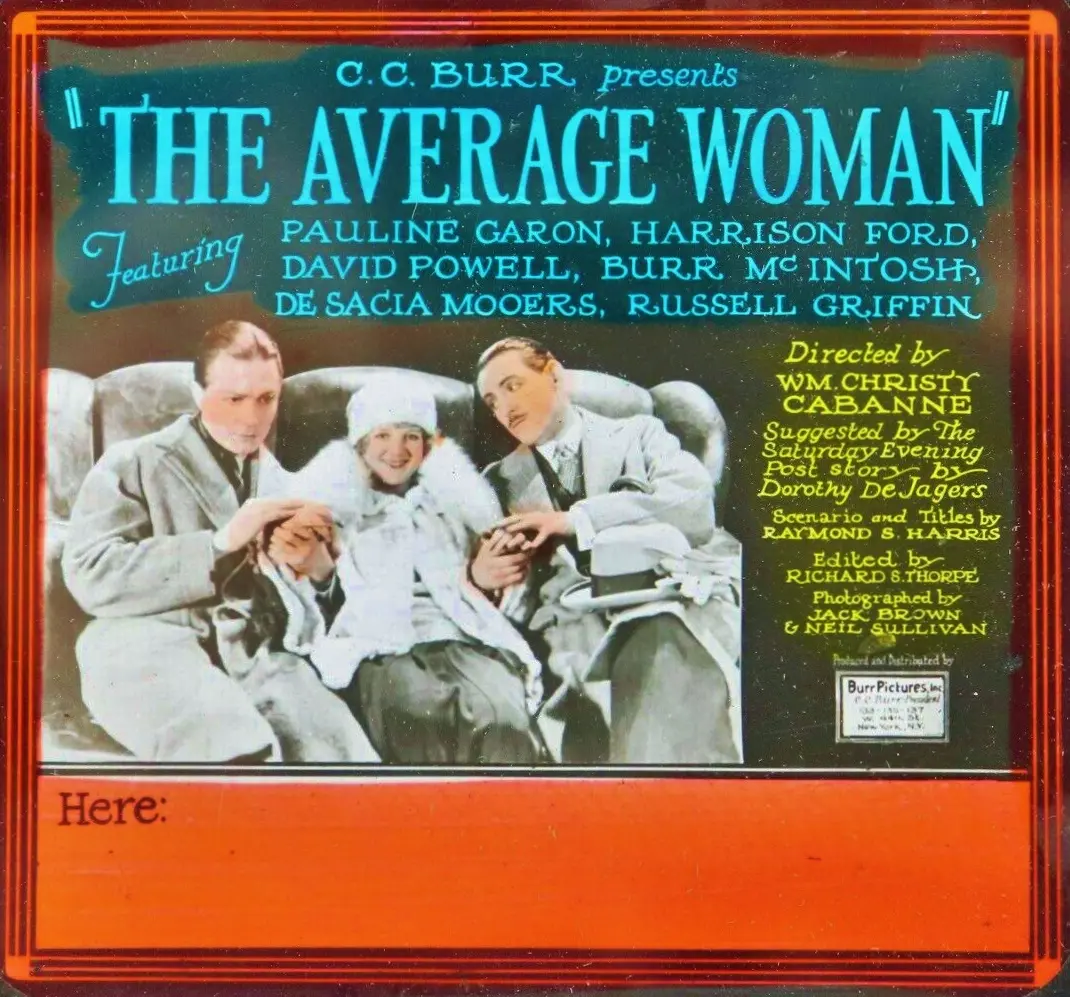
A definitive 5.9/10 rating for a film that redefined the boundaries of cult cinema. The Average Woman remains a cornerstone of transgressive art.
The 1920s was a decade characterized by a frantic desire to quantify existence, an age where the burgeoning fields of psychology and sociology began to seep into the popular consciousness. The Average Woman (1924), directed with a keen eye for social nuance, serves as a quintessential artifact of this zeitgeist. It is not merely a romance; it is a critique of the journalistic impulse to reduce the complexity of the individual to a manageable archetype. Jimmy Munroe, played with a restless energy by David Powell, represents the modern man’s folly—the belief that the 'average' is something that can be captured, pinned down, and dissected for the amusement of a reading public.
The film’s inciting incident takes place within the architectural stillness of a library, a setting that underscores the intellectual pretensions of Munroe’s project. Here, Sally Whipple (the luminous Pauline Garon) is first observed. Garon’s performance is a masterclass in silent-era subtlety; she manages to project a sense of being 'typical' while simultaneously radiating a singular charm that makes Munroe’s objective categorization impossible. The irony is thick: in trying to find a woman who represents everyone, Munroe finds the one woman who represents everything to him. This thematic pivot mirrors the narrative shift seen in A Flirt There Was, where social roles are interrogated through the lens of romantic pursuit.
As Munroe follows Sally, the film adopts a proto-verite style that feels surprisingly modern. We see the mundane rituals of her life—the errands, the interactions, the quiet moments of reflection. However, this is not a benign observation. There is an inherent voyeurism in Munroe’s methodology that the film subtly critiques. He is a man attempting to write a narrative about a life he hasn't yet earned the right to understand. This dynamic creates a tension that is far more sophisticated than the standard 'boy meets girl' trope found in contemporary works like Boots.
The introduction of Judge Whipple, portrayed with a stern, granite-like authority by Burr McIntosh, shifts the film into the realm of domestic tragedy. The Judge is the embodiment of the Old World—a man for whom reputation and the letter of the law are the only valid currencies. His immediate disdain for Munroe is not just personal; it is institutional. A reporter, by trade, is a disruptor of privacy, the very antithesis of the Judge’s controlled environment. The legalistic cruelty of arresting Munroe and limiting his access to Sally to once a week is a chilling reminder of the power dynamics inherent in the pre-Depression era family unit.
This segment of the film invites comparison to the rigid social hierarchies explored in The Discard. Where that film deals with the fallout of social rejection, The Average Woman focuses on the preemptive strikes of a father protecting a status quo that is already beginning to crumble. The Judge’s blindness to the true threat—the predatory Van Alten—is the film’s most poignant irony. He is so focused on the 'common' reporter that he fails to see the 'uncommon' villain lurking in his own social circle.
Coit Albertson’s portrayal of Van Alten provides the film with its necessary shadow. Van Alten is the dark mirror to Munroe; where Munroe seeks to understand the 'average woman' for a story, Van Alten seeks to possess a specific woman through coercion. The blackmail plot involving incriminating letters is a staple of the era's melodrama, yet here it feels particularly insidious because it targets the very thing the Judge holds dear: his legacy. The tension between the Judge’s public persona and his private vulnerabilities is exploited with surgical precision by Van Alten.
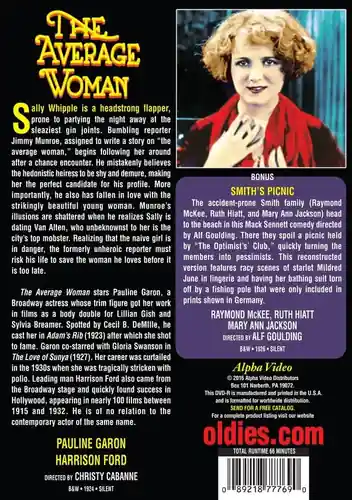
The cinematography during these sequences takes on a more expressionistic quality. The shadows grow longer, and the framing becomes more claustrophobic, reflecting Sally’s entrapment. It lacks the kinetic, open-air freedom of Bucking Broadway, opting instead for a stifling interiority. Sally’s predicament is a microcosm of the female experience in the 1920s: caught between the surveillance of a lover, the control of a father, and the predation of a suitor.
Technically, the film is a robust example of mid-20s craftsmanship. The editing by Ray Harris and the narrative structure provided by Dorothy De Jagers ensure that the pacing never falters, even as the plot thickens with legal and romantic complications. The use of intertitles is sparing but effective, allowing the visual storytelling to carry the emotional weight. While it may not possess the experimental fervor of Dzhymmi Hihhins, it demonstrates a sophisticated understanding of classical Hollywood narrative flow.
The film also benefits from a diverse supporting cast. William H. Tooker and Harrison Ford (the silent era star, not the modern icon) provide a grounded reality to the film’s more heightened moments. There is a sense of a lived-in world here, a community that exists beyond the immediate concerns of the protagonists. This world-building is reminiscent of the ensemble work in Why Smith Left Home, where the chaos of the periphery informs the central conflict.
In the final act, the film successfully deconstructs its own premise. As Jimmy fights to save Sally from Van Alten’s machinations, he realizes that his article was a fool’s errand. There is no such thing as an average woman when one is confronted with the extraordinary resilience of an individual fighting for her autonomy. The resolution of the blackmail plot is not merely a plot convenience; it is a moment of catharsis where the truth—messy, un-average, and deeply personal—finally triumphs over the curated images maintained by the Judge and the journalist.
The climax offers a stark contrast to the more lighthearted resolutions of Jumping Beans or the purely adventurous spirit of The Blue Streak. Instead, The Average Woman settles for something more substantial. It suggests that while the law and the press may try to define us, the human heart remains an elusive, unquantifiable variable.
Ultimately, The Average Woman stands as a vital piece of cinematic history that deserves a modern reappraisal. It navigates the treacherous waters of 1920s gender politics with a surprising amount of grace and a healthy dose of skepticism toward the institutions of the time. Whether it is the critique of yellow journalism, the exploration of patriarchal overreach, or the classic battle against a mustache-twirling villain, the film delivers on multiple levels. It is a work that, much like the protagonist’s subject, refuses to be neatly categorized. It is a romance, a thriller, and a social commentary all rolled into one elegantly produced package. For those who appreciate the nuanced storytelling of the silent era, this film is an essential viewing, providing a window into a past that is perhaps not as 'average' as we might assume.
IMDb 4.5
1932
Community
Log in to comment.