DbcultAccessing Vault...
Cult Review
Senior Film Conservator
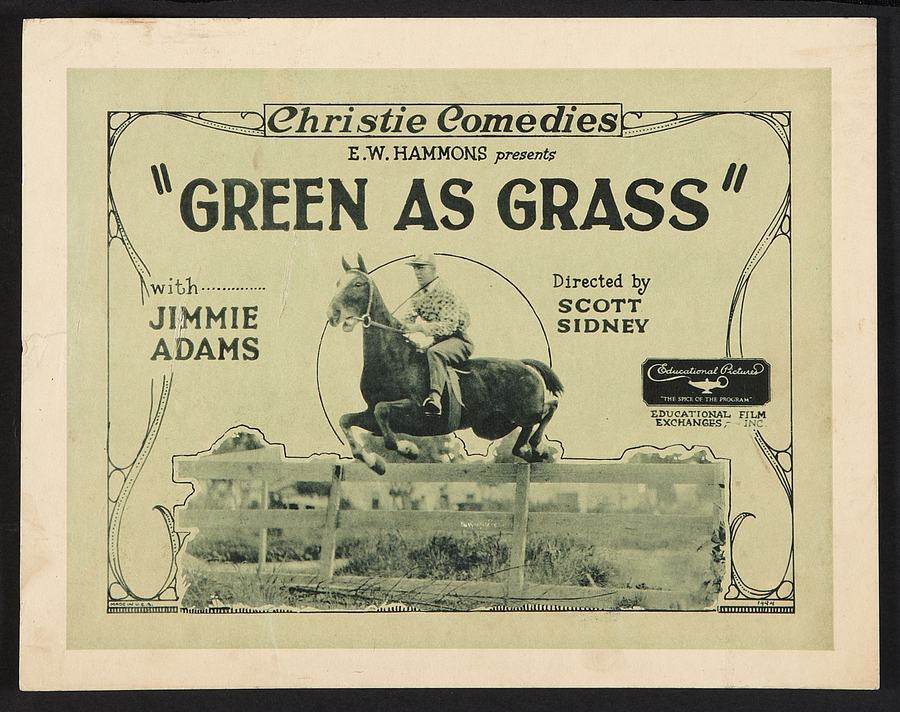
The year 1921 was a crucible for the evolution of visual comedy, a time when the grammar of the gag was being written in the sweat of performers like Jimmie Adams. In Green as Grass, we find a quintessential example of the 'resourceful loser' trope that dominated the era. Unlike the grander, more operatic comedies of the time, this film leans heavily into a singular, bizarre gimmick that propels its narrative with the force of a runaway locomotive. The premise—a horse that only finds its speed when terrified by the sudden blossoming of an umbrella—is the kind of high-concept simplicity that allowed silent directors to focus on the visceral impact of the physical stunt.
When we look back at films like Fool Days, we see a similar fascination with the chaotic intersection of man and beast, but Green as Grass elevates the horse, Chilblains, to a position of co-protagonist. Chilblains isn't just a prop; he is a comedic foil whose deadpan equine exhaustion provides a perfect contrast to Jimmie’s manic desperation. The steeplechase itself is not merely a backdrop for the plot; it is the plot, a grueling sequence of hurdles that serves as a metaphor for the socio-economic barriers Jimmie must leap to achieve his romantic and financial salvation.
Jimmie Adams, often overshadowed by the giants like Keaton or Lloyd, displays a remarkable agility in this piece. His performance is a study in frantic optimism. As he enters the race to win $3,000, we see a character who is intrinsically 'green'—naive, perhaps, but fueled by a sincerity that makes the audience root for his success. This is a far cry from the more cynical characters found in later noir-adjacent silents like The Rope's End. Here, the stakes are high, but the atmosphere remains buoyant, even as the threat of failure looms over every jump.
The supporting cast, including Charlotte Merriam as the 'pretty girl,' provides the necessary emotional anchor for the farce. While Merriam’s role is functionally a prize to be won, her presence on the sidelines adds a layer of genuine tension to the race. We aren't just watching a man try to ride a horse; we are watching a man try to justify his existence in the eyes of his community. This thematic resonance is what separates a mere collection of gags from a cohesive film. In comparison to the romantic melodrama of The Girl of My Heart, Green as Grass treats love as a motivator for madness rather than a subject for somber reflection.
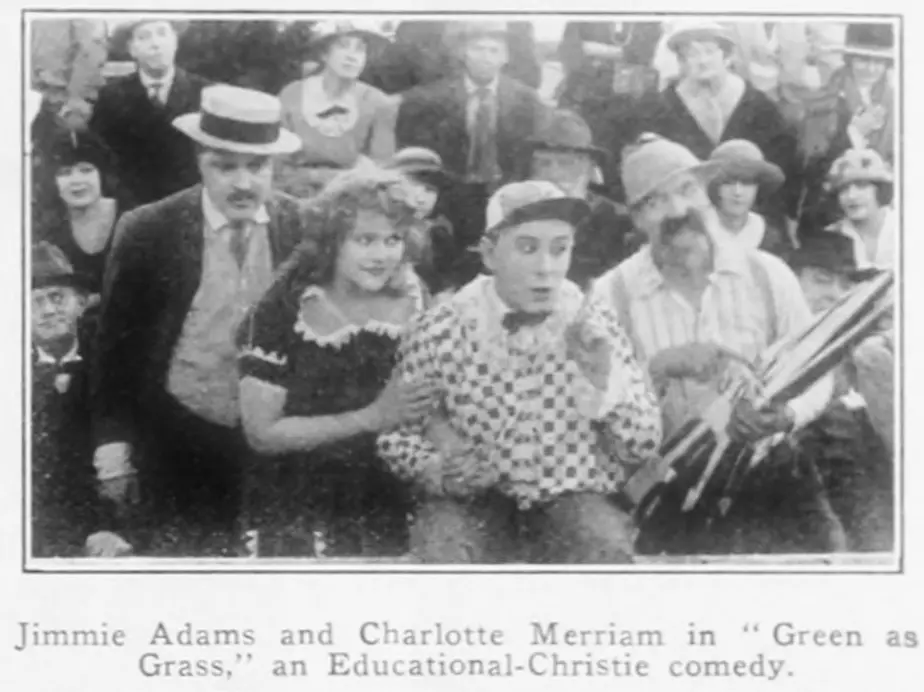
Prop comedy in the 1920s was an art of precision. In this film, the umbrella is utilized with a rhythmic consistency that borders on the musical. Every time the umbrella pops open, the shift in the horse's velocity creates a visual 'beat' that the director, or perhaps the writer Walter Graham, uses to reset the tension. This Pavlovian gimmick is brilliant because it is inherently cinematic; it requires no intertitles to explain. The audience sees the umbrella, they see the horse’s wide-eyed terror, and they feel the surge of speed.
This reliance on visual shorthand is a hallmark of the era, seen in other works like Ambrose and the Bathing Girls, where the environment itself becomes an antagonist. However, in Green as Grass, the umbrella is a tool of empowerment. It is Jimmie’s secret weapon, his 'cheat code' for a system that is rigged against him. There is a subversive joy in watching a broken-down nag outpace blue-blooded stallions through the sheer power of a domestic accessory.
To truly appreciate the niche Green as Grass occupies, one must contrast it with the more sprawling productions of the time. While Desfile histórico del centenario sought to capture the breadth of history, this film is content to capture the breadth of a single muddy field. It is a grassroots comedy, focused on the immediate and the tactile. It lacks the exoticism of Maciste turista, yet it possesses a relatable charm that those larger-than-life spectacles often miss. Jimmie is not a hero of myth; he is a man who probably owes his rent, a figure we recognize in our own mirrors.
The film also avoids the heavy-handed moralizing often found in dramas like The Child Thou Gavest Me or the sociopolitical weight of A tanítónö. Instead, it offers a pure, unadulterated escape into the logic of the absurd. Even when compared to the mystery-laden The Peddler of Lies, this film’s transparency is its greatest strength. You know exactly what Jimmie wants, and you know exactly how he plans to get it. The pleasure is all in the execution.
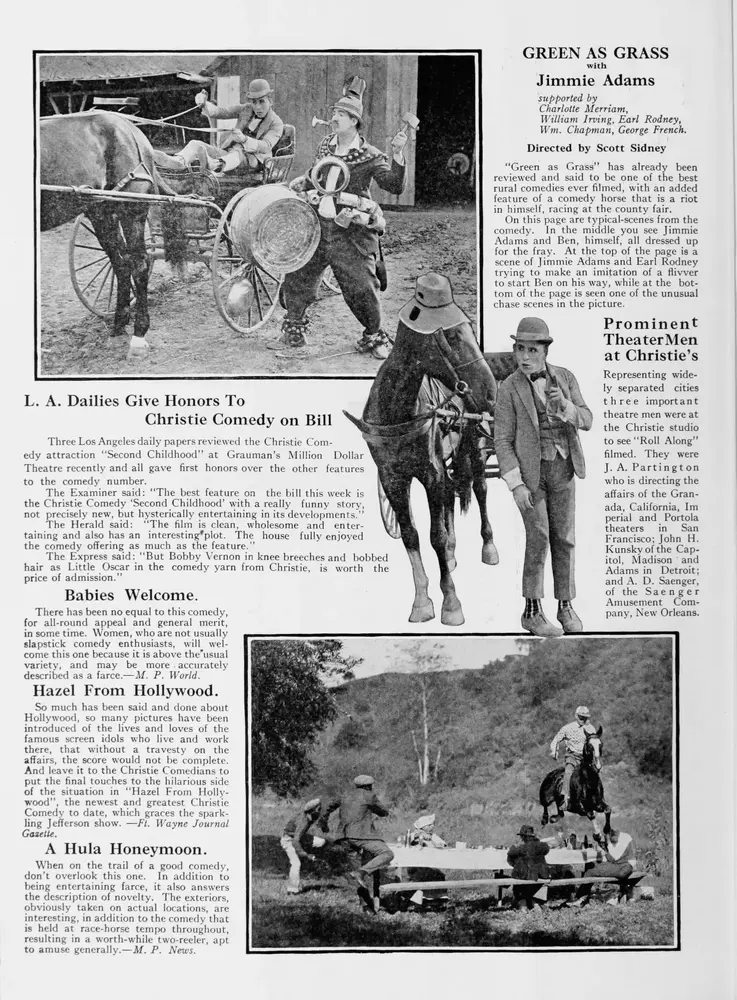
Walter Graham’s writing for this short is a testament to the efficiency of silent-era storytelling. Every scene is calibrated to lead toward the climax of the steeplechase. There is no 'fat' on this narrative. We see the setup—the poverty, the girl, the horse—and then we are thrust into the action. The pacing is relentless, reminiscent of the energy found in Her Bargain Day, where the ticking clock of a single day drives the protagonist’s choices.
The cinematography during the race is surprisingly sophisticated for a 1921 comedy. The camera tracks the movement of the horses with a fluidity that captures the genuine danger of the sport. Steeplechasing is a perilous activity, and the film doesn't shy away from the mud and the tumbles. This realism grounds the umbrella gag, making the comedy pop because the world it inhabits feels tangible. It’s a technique also utilized in the adventure-focused Jack Chanty, where the environment is as much a character as the actors.
While Green as Grass might not be the first title mentioned in a film history seminar, its influence on the 'underdog sports comedy' cannot be overstated. It predates the more polished racing films of the 30s and 40s but contains the DNA of every 'misfit' story that followed. It shares a certain thematic kinship with A Prince There Was, dealing with the transformation of status through a singular, pivotal event.
In the end, the film is a triumph of imagination over budget. It doesn't need the epic scale of L'affaire du courrier de Lyon or the historical gravity of Schwert und Herd. It only needs a man, a horse, and an umbrella. For those looking to understand the pure, unvarnished joy of early cinema, Green as Grass is an essential watch. It reminds us that comedy is often found in the most unlikely of places—like the shivering flanks of a horse named Chilblains. Much like the protagonist in Alias Julius Caesar, Jimmie Adams proves that with enough audacity (and a well-timed prop), anyone can become a hero of their own making.
Review by the Cinephile Critic — 1921 Archive Series
IMDb —
1923
Community
Log in to comment.