DbcultAccessing Vault...
5.4/10
Senior Film Conservator
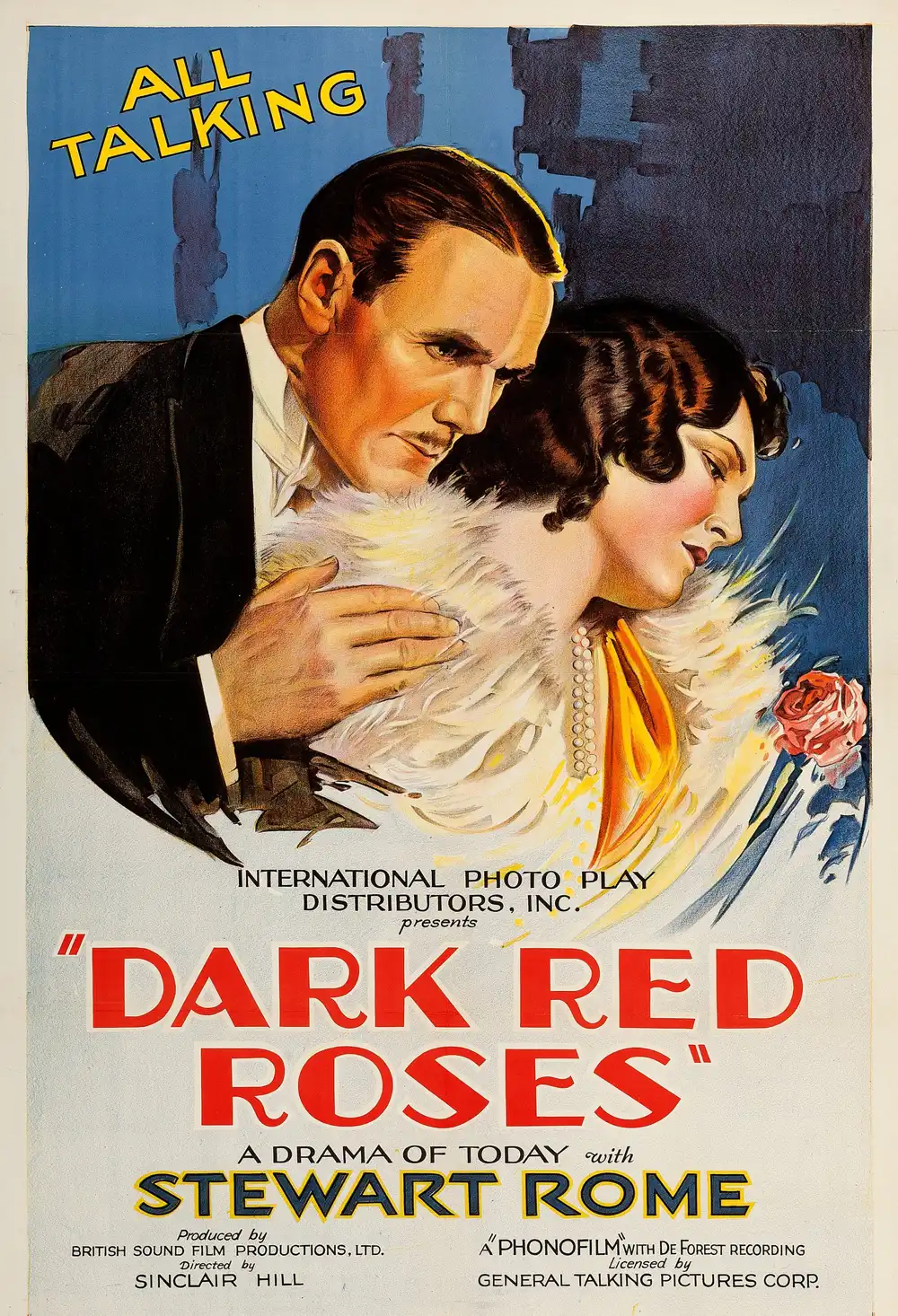
A definitive 5.4/10 rating for a film that redefined the boundaries of cult cinema. Dark Red Roses remains a cornerstone of transgressive art.
If you are looking for something to watch tonight and you don't mind the crackly sound of 1929, Dark Red Roses is a strange trip. It is mostly for people who like those old "Grand Guignol" stories where everyone is a bit too intense. If you hate slow movies where people talk like they are reciting a grocery list, you should probably skip it.
The whole thing is about a sculptor named David who thinks his wife, Freda, is having an affair with a pianist. David is played by Stewart Rome, and he has this very stiff way of moving. He looks like he is constantly trying to remember if he left the oven on back at the studio.
The pianist is Anton Dolin, who was a real-life ballet star. He plays the piano with so much flair it almost feels like he is daring the sculptor to be mad at him. His hands are basically the main characters of the movie, honestly.
There is this one scene where David is just watching the pianist’s hands move across the keys. The camera zooms in, and you can practically see the gears turning in David's head. It is not subtle at all. 🎹
The movie gets really weird when it just stops for a ballet sequence. It was choreographed by George Balanchine, which is a huge deal for dance nerds, but it feels like it dropped in from another planet. The dancers are wearing these fox masks that are actually kind of nightmare fuel.
I found myself wondering if the audience back then was confused by the shift in tone. One minute it is a jealous husband drama, and the next, there are people hopping around in animal costumes. It goes on for a long time. Maybe a bit too long.
The dialogue is that very specific early-talkie style where everyone pauses for three seconds between sentences. It makes the tension feel heavy, but also kind of accidental. Like they were waiting for the microphone to catch up with them.
I noticed a small detail in the sculptor's studio that I liked. There are all these half-finished clay busts in the background. They look like they are judging the characters. It gives the room a very crowded, claustrophobic feel even though the set is probably just a stage.
Stewart Rome does this thing with his eyes where he looks slightly to the left of the person he’s talking to. It makes him seem even more unhinged. You can tell he is really committed to being the brooding artist type.
The wife, played by Frances Doble, spends a lot of time looking worried in expensive-looking dresses. She has a scene with a rose—hence the title—that is meant to be symbolic, I guess. She stares at it so hard I thought she was trying to set it on fire with her mind.
It reminds me a bit of the vibe in Alias Jimmy Valentine, where the silence is just as loud as the talking. But this movie is much meaner in its heart. The ending isn't some happy resolution where everyone shakes hands.
Speaking of hands, the climax involves David trying to use his sculpting tools for something other than art. It is surprisingly grim for 1929. You don't see much, but the idea of it is enough to make you wiggle your own fingers just to make sure they are still there. ✂️
There is a character played by Una O'Connor who pops up as a servant. She is great, as always. She has this way of looking at the main characters like she knows they are all idiots. I wish the movie was about her, to be honest.
The film is a bit messy. The sound quality makes it hard to hear some of the whispers, and the pacing is all over the place. Sometimes it feels like they forgot to edit out the parts where people are just walking across a room.
But there is something about it that sticks. It’s a very uncomfortable watch. Not because it’s bad, but because the jealousy feels so oily and gross. David isn't a tragic hero; he's just a guy who can't handle his own brain.
If you have seen other stuff from this era like The Road to Ruin, you know how these moralistic tales usually go. But Dark Red Roses feels more like a horror movie hiding inside a society drama. It’s got a nasty streak that I didn’t expect.
One shot of a door closing lingers for about ten seconds too long. It starts to feel like the cameraman fell asleep. Or maybe they just really liked that door.
I wouldn't call it a masterpiece or anything. It’s more like a weird artifact you find at a garage sale. You’re not sure if you should keep it, but you can’t stop looking at it. It is definitely worth a watch if you want to see how early movies tried to be "edgy."
Just don't expect a lot of logic. People in 1929 movies seem to make decisions based on whatever is the most dramatic thing possible at that exact second. It’s exhausting, but kind of fun to watch from a distance. 🌹
IMDb 6.4
1931
Community
Log in to comment.