DbcultAccessing Vault...
5.7/10
Senior Film Conservator
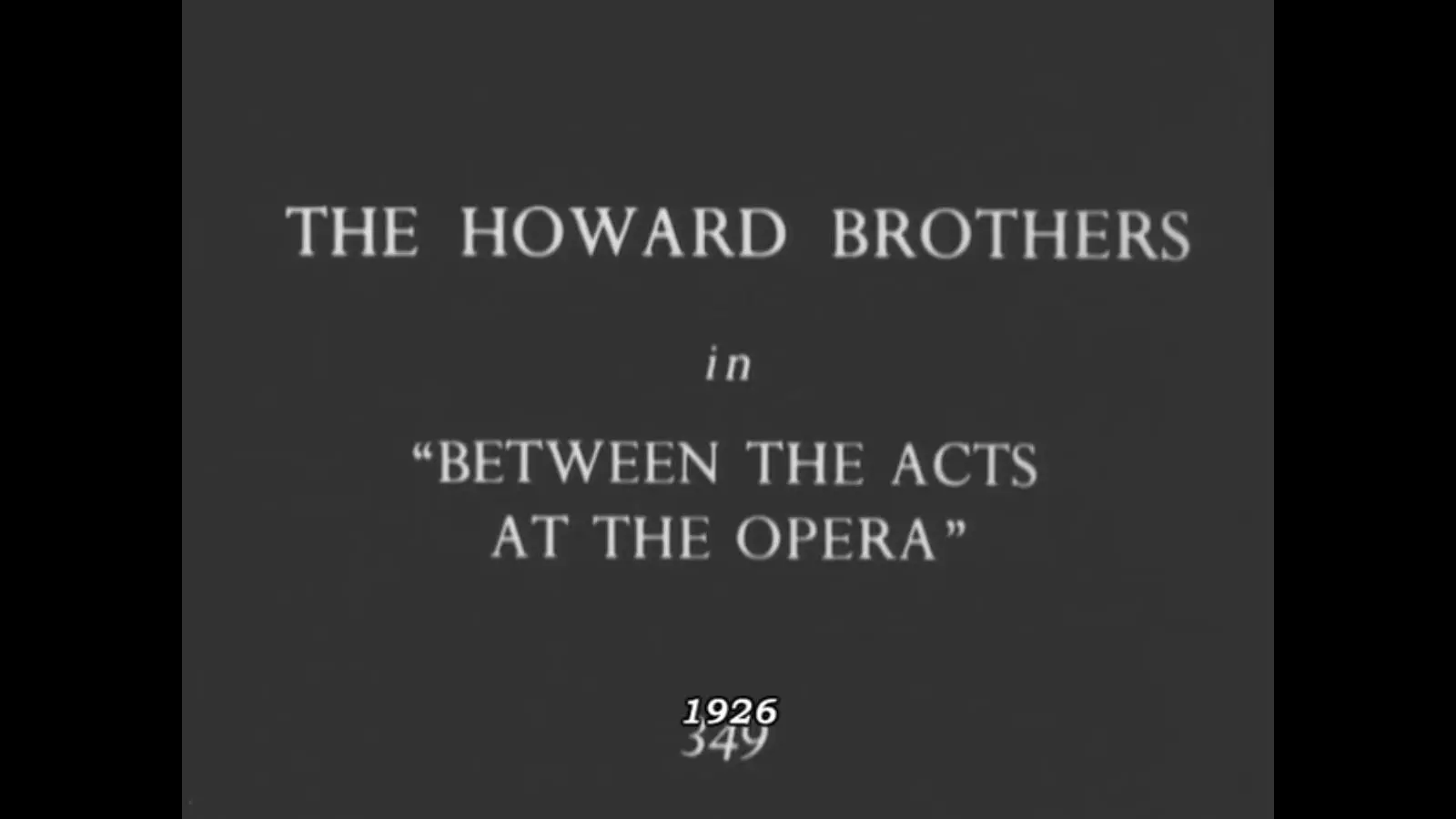
A definitive 5.7/10 rating for a film that redefined the boundaries of cult cinema. Between the Acts at the Opera remains a cornerstone of transgressive art.
Is Between the Acts at the Opera a necessary watch for the modern viewer? Short answer: yes, but only if you view it as a time capsule rather than a Friday night blockbuster.
This film is for historians, comedy nerds, and those obsessed with the birth of sound cinema; it is absolutely not for anyone who requires a fast-paced narrative or high-definition production values.
This film works because it captures a specific style of Jewish dialect comedy that was soon to be sanitized by the Hays Code and changing cultural norms.
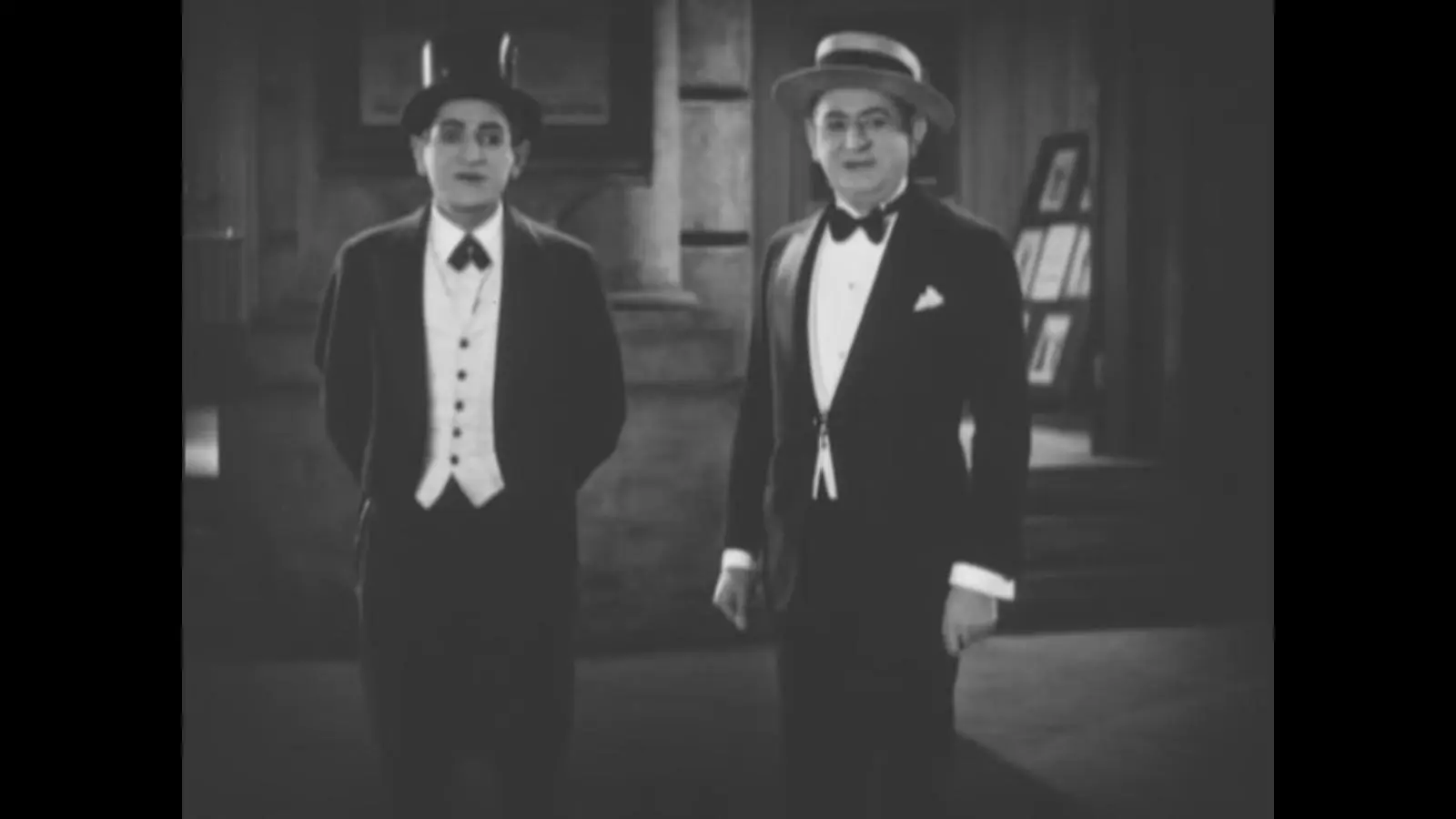
This film fails because the static camera and lack of cinematic language make it feel more like a security camera recording of a stage play than a piece of filmmaking.
You should watch it if you want to understand the DNA of 20th-century comedy duos, from Abbott and Costello to the Marx Brothers.
When Between the Acts at the Opera was released, the film industry was in a state of violent flux. The transition from silent films like The Mystery of No. 47 to the 'talkies' wasn't just a technical upgrade; it was an existential crisis for performers. The Howard Brothers were among the first to jump ship from the dying vaudeville circuits to the permanent, reproducible world of the Vitaphone short.
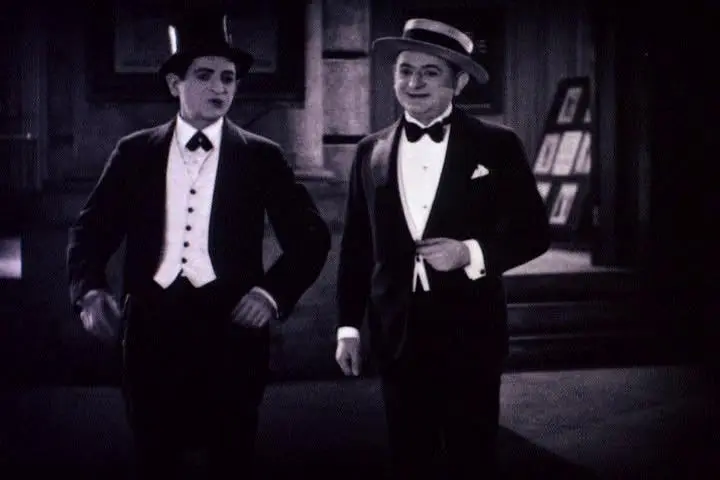
The film lacks the visual playfulness of Mighty Like a Moose, which utilized the camera to create gags. Instead, the camera here is a silent witness. It sits in the 'best seat in the house' and stays there. This rigidity is the film's greatest weakness as a movie, but its greatest strength as a historical document. We see the Howard Brothers exactly as a 1920s audience would have seen them at the Palace Theatre.
The routine itself—a parody of operatic grandeur—relies on the juxtaposition of high-brow culture and low-brow immigrant reality. When Willie Howard begins his mangled interpretation of French and Italian operatic tropes, he isn't just making fun of music; he is channeling the immigrant experience of the early 20th century. It’s a performance rooted in the tension of 'fitting in' while remaining distinctly 'other.'
The dynamic between Willie and Eugene Howard is a masterclass in the 'Straight Man vs. The Chaos Agent' trope. Eugene Howard, tall and dignified, provides the necessary friction. Without his rigid adherence to the 'proper' way of behaving at the opera, Willie’s antics would have no anchor. It’s a dynamic we see reflected in later films like The House of Toys, though in a much more dramatic context.
One specific moment that stands out is Willie’s use of his hands. His gestures are expansive, almost desperate, filling the empty space that the static camera fails to frame. He understands that in a sound short, his voice is the star, but his body must remain the conductor. His 'French' is a gibberish that sounds phonetically correct but remains linguistically vacant. It’s a brilliant bit of auditory slapstick.
The pacing is relentless. Unlike the slow builds found in The Border Legion, the Howard Brothers operate on the logic of the stage: if you aren't getting a laugh every ten seconds, you're dying. This creates a frantic energy that can be exhausting for a modern viewer, but it reveals the high stakes of 1920s live performance.
We must discuss the sound quality. The Vitaphone process recorded sound on a separate disc, which often led to synchronization issues. In this short, the sound is surprisingly crisp for the era, capturing the subtle inflections in Willie's voice. However, the lack of close-ups means we miss the micro-expressions that a modern comedian would rely on. It forces the performer to be 'big.'
Compare this to Shoe Palace Pinkus, which leans into the visual storytelling of the silent era. The Howard Brothers are almost allergic to visual storytelling. They are men of the word. They are men of the noise. The 'Opera' setting is merely a cardboard cutout, a thin excuse to let Willie riff on the absurdity of elite art forms.
The lighting is flat. The set is minimal. It works. But it’s flawed. The film doesn't try to be 'cinema' in the way we understand it today. It is a delivery mechanism for a routine. In that sense, it is the 1926 equivalent of a Netflix stand-up special, albeit one filmed with the technology of a steam engine.
Does the humor hold up? Surprisingly, yes. While some of the dialect work feels dated, the core of the comedy—the little man trying to navigate a big, pretentious world—is universal. If you enjoy the linguistic gymnastics of Groucho Marx, you will find the progenitor here.
Is it a good movie? No. It is a terrible 'movie' but a magnificent 'recording.' It lacks editing, camera movement, and visual metaphor. But as a piece of cultural history, it is invaluable. It captures the exact moment when the stage began to die and the screen began to talk.
Pros:
- Authentic preservation of a legendary vaudeville act.
- Clear audio for a 1920s sound-on-disc production.
- Short runtime makes it an easy historical lesson.
Cons:
- Zero visual variety.
- Dialect humor may be uncomfortable for some modern audiences.
- The 'Opera' parody requires a basic knowledge of 1920s social hierarchies to fully land.
Between the Acts at the Opera is a fascinating, if visually stagnant, relic. It isn't 'art' in the sense of The Star of Bethlehem, but it is a vital heartbeat of a lost world. Willie Howard is a firecracker of a performer, and seeing him in his prime is worth the price of admission alone. It is a loud, brash, and unpolished gem of early sound cinema. It’s not a masterpiece, but it’s a miracle that it exists at all.
IMDb —
1926
Community
Log in to comment.