DbcultAccessing Vault...
Cult Review
Senior Film Conservator
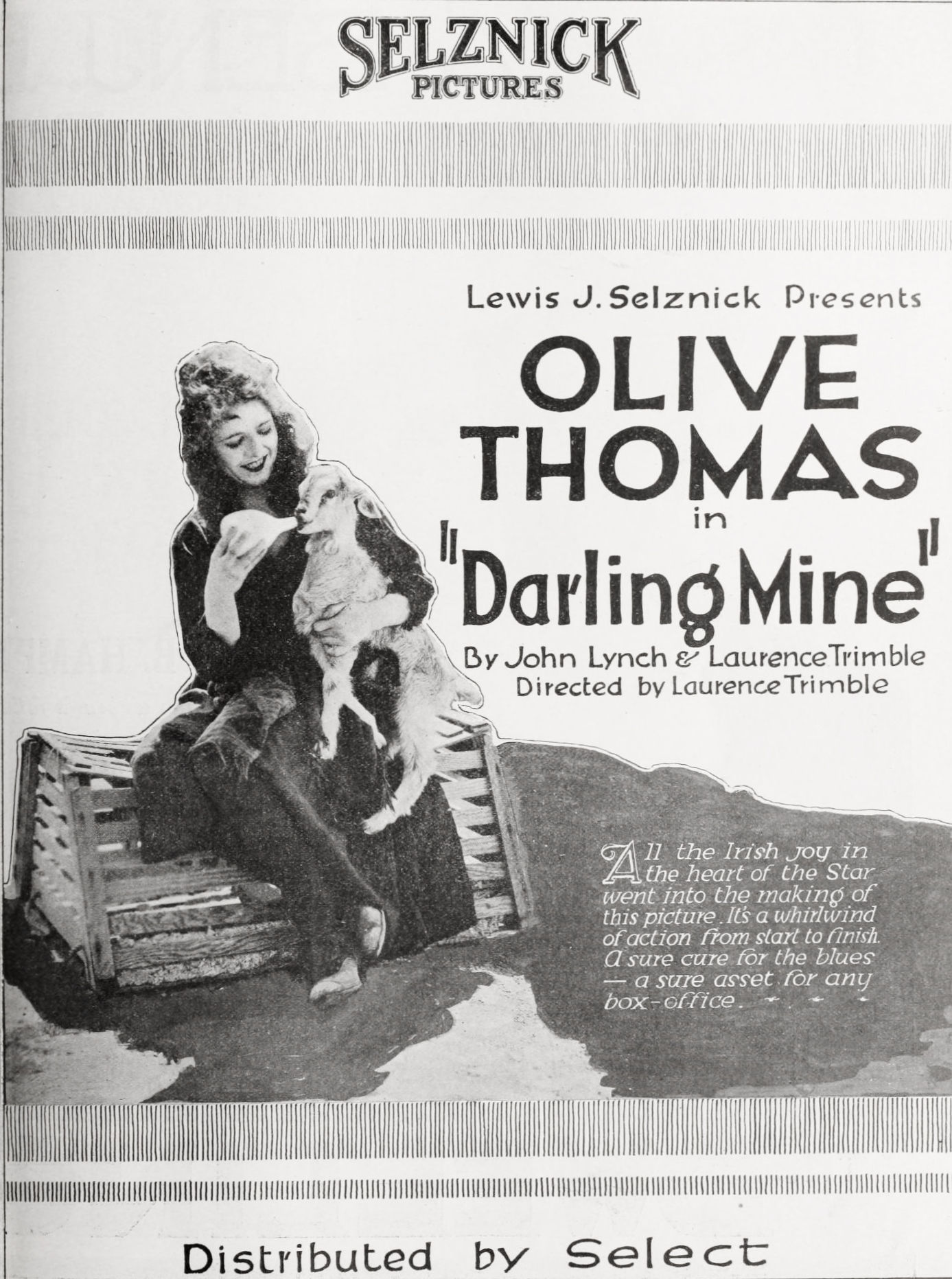
There are silents that merely mark time, and then there are those—like Darling Mine—that seem to inhale entire weather systems, exhaling them as shimmering nitrate daydreams. Laurence Trimble and John Lynch’s screenplay is a diaphanous construct: a fairy-tale postcard glued to a social-problem tract, yet somehow the seams never chafe. Instead, they glow, backlit by Olive Thomas’s otherworldly phosphorescence.
Visually, the picture is a study in chromatic contradiction. Early Irish sequences—actually New Jersey meadows filtered through amber gels—bleed saffron and sage, suggesting a homeland that exists only in memory’s rear-view mirror. Once Kitty descends into the East Side, cinematographer William Tuers pivots to bruised violets and nicotine browns; tenement walls yawn open like damp coffin lids, yet every frame is speckled with yellow punctuation marks: a taxicab, a silk ribbon, a gin-fizz glow. The tonal whiplash is deliberate; the film wants you to feel the gulp of disillusionment and then, stealthily, to re-enchant you.
Thomas’s Kitty is less a performance than a phenomenon, a kinetic contrail of curls and conspiratorial winks. In medium shots she glides, but in chilling close-ups—rare for 1919—her irises flare cobalt, betraying the calculating immigrant brain beneath the coltish façade. Note the scene where she sponges her aunt’s sweat-slicked brow: the camera hovers at lip-level, capturing every tremor of disgust and devotion. The moment is wordless yet voluble, a master-class in micro-acting that predates Humoresque’s vaunted naturalism by a full year.
Where many silents of the era shoehorn florid novelette prose between scenes, Darling Mine opts for staccato syncopation. Consider this card that flashes after Kitty’s first Broadway rehearsal:
"She learned to smile with her anklebones."
The line is nonsensical on paper, yet in context it crystallizes the absurd metric of showbiz validation: body parts as marketable epistles. The typography itself—a riot of circus-poster curlicues—practically tap-dances off the screen.
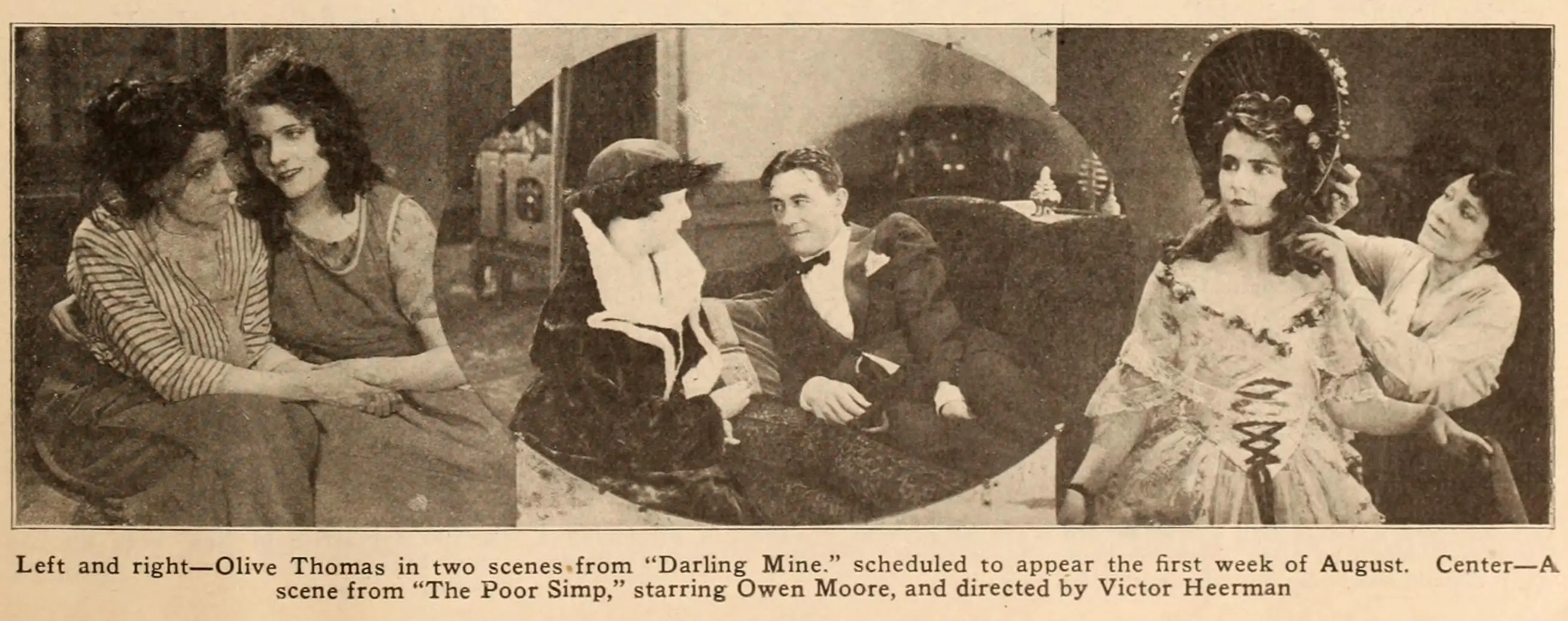
Anna Dodge’s Aunt Agnes could have been a repository of moth-eaten clichés: the dissolute relative, the cautionary ogress. Instead, Dodge, a veteran of vaudeville, limns her with self-mocking grandeur, a Lady Macbeth in a bathrobe. Her detoxification is achieved not through prayer but through labor: communal potato peeling, hallway whitewashing, stair-scrubbing filmed in real time. The montage feels proto-Soviet, an oddball nod to Eisenstein before Eisenstein.
Equally compelling is Betty Schade’s Vera Maxwell, whose heartbreak is sketched in economical shorthand: a wilted orchid behind the ear, a cigarette trembling like tuning-fork. Kitty’s intervention—smuggling Oscar into Vera’s dressing room inside a costume hamper—plays as farce, yet the payoff is naked vulnerability, two silhouettes kissing against a brick wall daubed with orange theatre bills.
Trimble and Lynch weave an implicit critique of capital. Kitty’s ascent from penniless immigrant to marquee name is never portrayed as meritocracy in motion; rather, it is a rigged roulette wheel whose croupier is Gordon Davis. The film insists we notice the hand that spins the wheel, even as it cheers the ball’s landing on red. When Davis finally strong-arms Roger—his own nephew—into proposing, the gesture lands less as benevolent patriarchy than as economic checkmate: without Kitty’s salary, the Davis theatrical empire wobbles. Marriage, therefore, functions as merger.
Repeatedly, the camera literalizes point-of-view as commodity. In a pivotal sequence, Kitty peers through a cracked dressing-room mirror fractured into seven shards; each fragment reflects a different angle of Roger courting a socialite. The visual grammar screams: observation is ownership, and the female gaze is always already splintered by patriarchal refraction. Compare this to the more static, museum-diorama staging of The Heart of a Painted Woman; the contrast is instructive.
The film clocks at 68 minutes, yet feels breathlessly novelesque. Transitions that would occupy reels in other features—Agnes’s full withdrawal from alcohol, Kitty’s rehearsal regimen—occur in brisk jump-cuts bridged by whip-pan cityscapes. The rhythm anticipates the modern montage, a kinetic shorthand that would be refined in later works like Out of the Shadow, but is here deployed with breezy confidence.
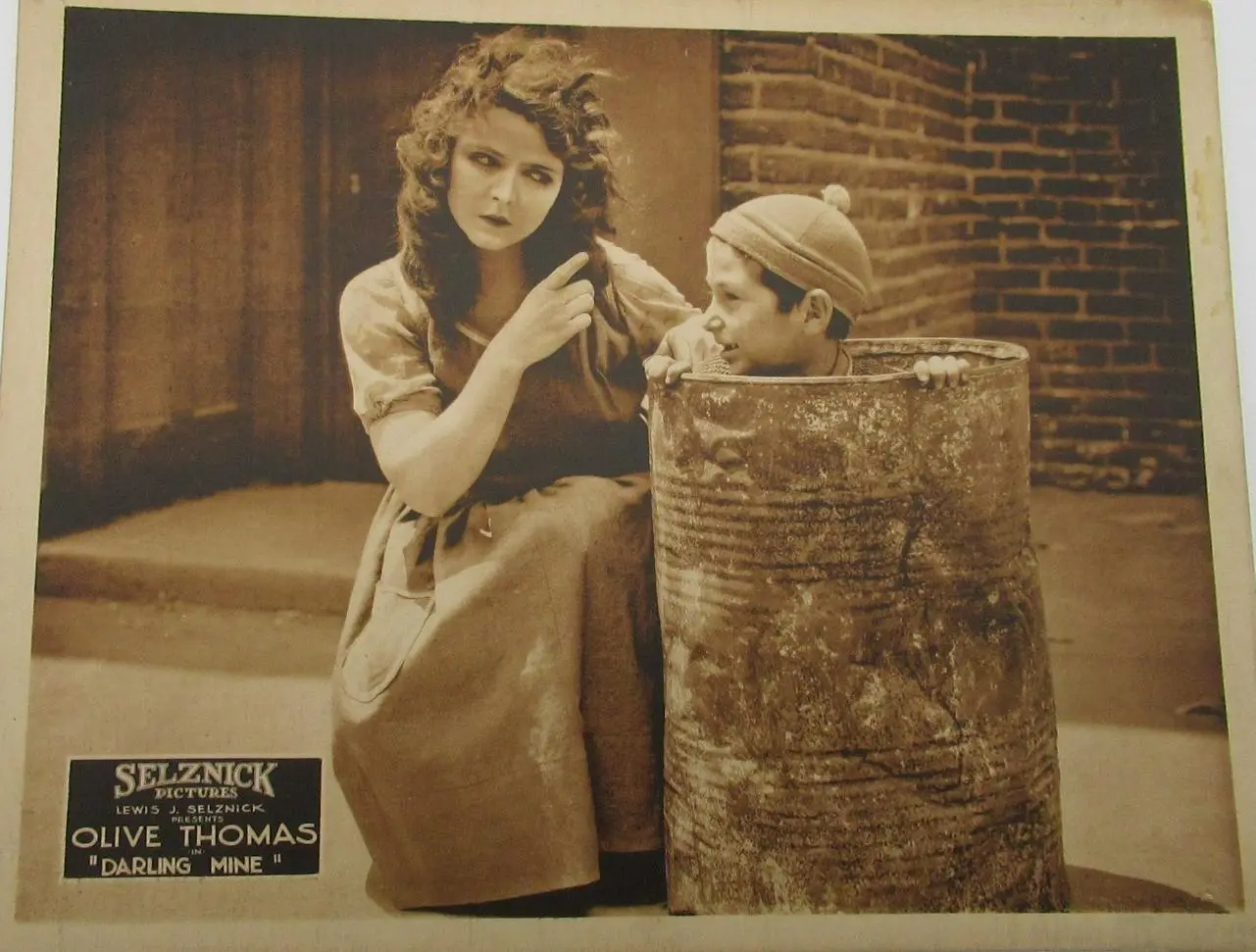
Original exhibitors received a cue sheet urging live violin during Kitty’s shipboard approach, shifting to muted cornet once she enters the tenement, climaxing with full orchestra at curtain call. Contemporary restorations (thanks to Turner’s 4K archival print) pair these instructions with a commissioned score by Monica Olive, whose leitmotif for Kitty is a lilting 7/8 jig that mutates into foxtrot once Broadway beckons. The effect is uncanny: you hear history shape-shifting inside your skull.
Place Darling Mine beside Little Miss Fortune and you notice both trumpet the immigrant-makeover fantasy, yet the former tempers triumph with the acrid whiff of solvent—success smells of turpentine and greasepaint, not ambrosia. Stack it against Which Woman? and you’ll find parallel themes of romantic arbitration, but whereas the latter treats women as variables in a math proof, Trimble’s film grants its heroine authorship of the algorithm.
On release, the movie pocketed $487,000 domestically—hefty for 1919—and spurred a minor fashion craze for "Kitty collars," lace bibs worn over gabardine blouses. Sadly, the Thomas tragedy months later (a fatal ingestion of mercury bichloride) cast a retrospective pall; prints vanished into vaults, and the picture was misfiled under "romantic pap" for decades. Only after the 2019 Bologna restoration did critics resuscitate its reputation.
Because every era nurses its own disillusionment, Darling Mine endures as a tonic hallucination: proof that tenements can morph into prosceniums, that bruised kin can be re-invented as chorus line, that love—messy, transactional, improbable—can still stick the landing under the proscenium arch of persistence. Olive Thomas, luminous and doomed, flickers like a match against the 20th century’s opening night; we are moths, grateful for the singe.
For further context, juxtapose this viewing with Public Be Damned’s media critique or Tarzan of the Apes’s colonial reveries to map how early cinema negotiated ambition and anxiety in the same breath.
IMDb 4.9
1930
Community
Log in to comment.