DbcultAccessing Vault...
Cult Review
Senior Film Conservator
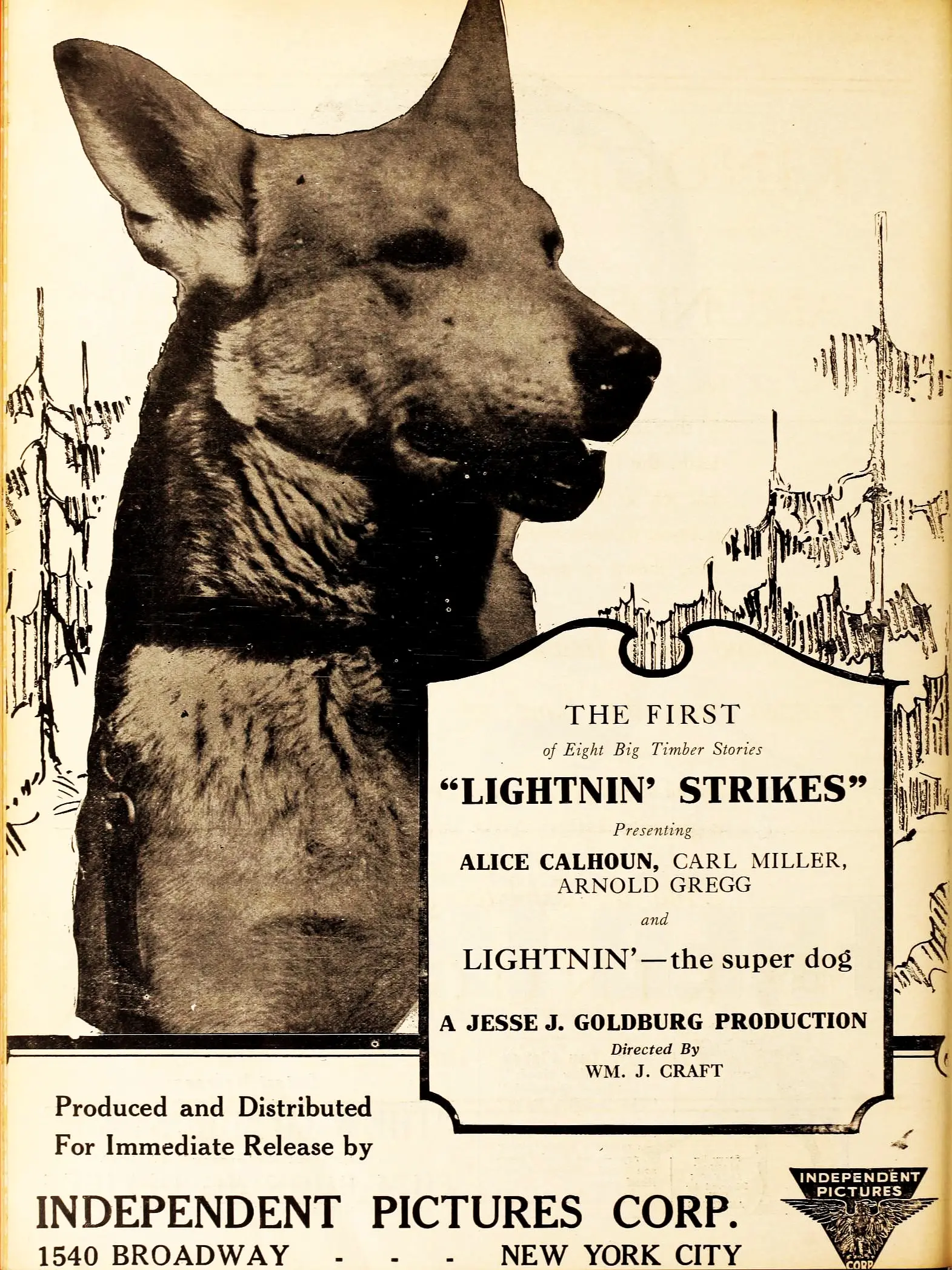
Short answer: Yes, but only if you have a tolerance for the slow, rhythmic pacing of the silent era. This film is a fascinating artifact for those who want to see the blueprint of the animal-hero genre, but it will likely frustrate anyone looking for a complex narrative or modern character development.
This film is for: Silent cinema enthusiasts, historians of the 'animal star' phenomenon, and viewers who enjoy the simple, moralistic storytelling of the 1920s. This film is NOT for: People who find silent films tedious, those who demand high-octane action, or viewers who can't stand the 'damsel in distress' tropes of early Hollywood.
1) This film works because: The physical performance of Lightning the Dog is genuinely impressive, showcasing a level of training and screen presence that rivals the early work of Rin Tin Tin.
2) This film fails because: The human characters, including those played by Alice Calhoun and Carl Miller, are thin and secondary to the dog, making the romantic subplots feel like filler.
3) You should watch it if: You want to see a piece of cinematic history that influenced decades of animal-led adventures, from Lassie to Benji.
Lightnin' Strikes is a decent watch for those interested in the evolution of animal stars in Hollywood. It provides a window into the 1920s filmmaking style, though its simplistic plot may feel dated to viewers accustomed to modern storytelling. If you can appreciate the technical achievement of directing an animal in 1923, there is much to admire here.
In 1923, the concept of the 'star dog' was reaching its zenith. While Rin Tin Tin was the undisputed king, Lightning was a formidable contender. His performance in this film is not just about doing tricks; it is about conveying emotion through the lens of a silent camera. There is a specific scene where Lightning watches his master from a distance, and the way the camera lingers on the dog’s eyes is surprisingly effective.
The dog is the most capable actor on screen. It’s a brutal observation, but it’s true. While Alice Calhoun delivers the standard wide-eyed expressions common in films like The Innocence of Lizette, Lightning feels more natural. He doesn't overact. He simply exists, and in doing so, he captures the audience's empathy in a way the humans cannot.
The directing choices emphasize this. The camera often drops to a lower angle to capture the dog’s perspective, a technique that was relatively sophisticated for its time. It’s not quite the avant-garde experimentation seen in Rumpelstiltskin, but it shows a clear understanding of how to frame an animal as a protagonist rather than a prop.
Alice Calhoun was a reliable star of the era, but here she is relegated to the background. Her role is largely to be rescued or to provide the emotional motivation for the male lead and the dog. It is a frustratingly limited use of her talents. Compared to her work in other dramas, her performance here feels like she is going through the motions.
The male lead, Carl Miller, is equally stiff. He lacks the charisma needed to stand alongside a powerhouse animal performer. When they are in a scene together, your eyes naturally gravitate toward the dog. This creates a strange imbalance in the film. The human drama feels like an interruption to the dog’s story. It’s a flaw that many animal films still struggle with today.
The pacing also suffers because of this. Every time the film shifts focus back to the human romance, the energy drops. It reminds me of the narrative stutters found in Love's Boomerang, where the central hook is often sidelined for unnecessary subplots. In Lightnin' Strikes, the dog is the hook, the line, and the sinker. Anything else is just noise.
Visually, the film is a product of its time—and that is not a slight. The outdoor locations are captured with a clarity that highlights the ruggedness of the setting. The use of natural light is particularly effective during the chase sequences. There is a raw, unpolished quality to the footage that adds a sense of realism to the dog's exploits.
However, the editing is where the film shows its age. The transitions between scenes are often abrupt, and the intertitles are sometimes too wordy, slowing down the momentum of the action. It lacks the fluid visual storytelling found in The Girl Who Came Back. Still, for a film that relies so heavily on physical action involving an animal, the technical execution is commendable.
"The dog isn't just a pet; he's the only character with a clear moral arc in the entire film."
Pros:
- Exceptional animal training on display.
- Beautifully shot outdoor sequences.
- A brisk runtime that doesn't overstay its welcome.
- Historical significance as a precursor to the hero-dog genre.
Cons:
- Predictable plot with zero surprises.
- Weak performances from the human cast.
- Some intertitles feel redundant and slow the pace.
- The 'damsel' tropes are incredibly dated and occasionally grating.
If you are a student of film history, yes. If you are a casual viewer looking for a Friday night movie, probably not. Lightnin' Strikes is a specialized taste. It belongs in the same conversation as Mountain Dew or The Legion of Death—films that serve as fascinating time capsules but don't necessarily offer a gripping experience for the modern palate.
That said, there is a certain honesty in its simplicity. It doesn't try to be anything other than a showcase for a talented dog. There is no pretension here. It is commercial filmmaking from 1923 at its most direct. It works. But it’s flawed.
Lightnin' Strikes is a 6/10. It is elevated by its canine star but held back by a script that refuses to give the humans anything interesting to do. Lightning the Dog carries the weight of the entire production on his furry shoulders, and for that alone, he deserves his place in the cinematic hall of fame. Watch it for the dog, stay for the history, but don't expect it to change your life. It’s a charming, if slightly dusty, relic of a bygone era.

IMDb 6.9
1917
Community
Log in to comment.