DbcultAccessing Vault...
Cult Review
Senior Film Conservator
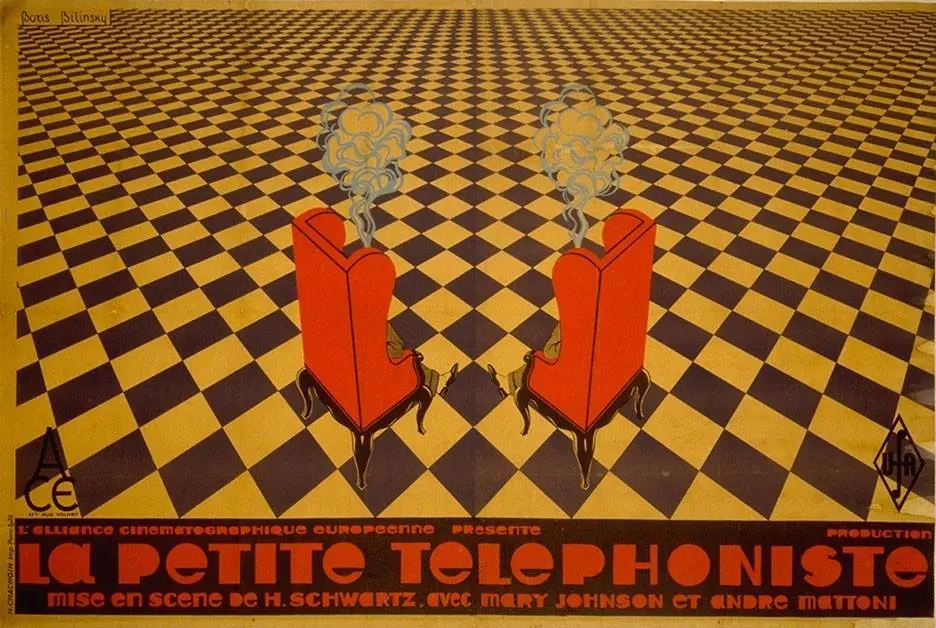
Is Das Fräulein vom Amt worth watching today? Short answer: yes, but with significant caveats. This is a film for the dedicated cinephile, the historian, and anyone fascinated by the foundational narratives of early cinema, particularly those exploring social shifts and the everyday lives of women in the burgeoning modern age. It is emphatically not for those seeking fast-paced plots, modern sensibilities, or a clear, easily digestible narrative, especially given the challenges of accessing and fully appreciating such an early silent film.
It demands patience and a willingness to engage with filmmaking as it was, not as it is. For the right audience, however, it offers a window into a bygone era, a chance to witness the craft of storytelling at its nascent stage, and a potential meditation on themes that, surprisingly, still echo a century later.
Early in our assessment, it’s crucial to lay out the fundamental strengths and weaknesses of Das Fräulein vom Amt.
This film works because it offers a compelling, albeit perhaps understated, exploration of a pivotal moment in social history: the rise of the female professional in an increasingly interconnected world. The premise itself, focusing on a telephone operator, is inherently rich with dramatic potential, touching on themes of anonymity, connection, and the unseen labor that powers society. It’s a testament to the power of a simple, character-driven concept, even when executed within the stylistic constraints of the silent era.
This film fails because, like many silent features of its time, it can feel inaccessible to modern viewers. The pacing, the reliance on intertitles, and the often-subtler performance styles require a particular kind of engagement. Without a fully preserved or widely accessible print, and a lack of detailed plot information, its full impact is diminished, leaving much to interpretation and historical imagination. It’s a film whose potential often outweighs its readily apparent, tangible impact.
You should watch it if you are a film student, a silent cinema enthusiast, or someone deeply interested in the social history of technology and gender roles. If you appreciate the art of early filmmaking and are willing to reconstruct some of its magic through contextual understanding, this film provides valuable insight. It’s an artifact, yes, but one that still speaks volumes.
The very title, Das Fräulein vom Amt, immediately conjures images of the early 20th century: a bustling telephone exchange, a labyrinth of wires, and the diligent, often anonymous, women who served as the linchpins of communication. While specific plot details remain elusive, the film's strength undoubtedly lies in its premise—a universal human story told through the then-revolutionary lens of telecommunication.
We can infer a narrative that likely centered on the daily life and internal world of a switchboard operator. This figure, often overlooked in grander historical narratives, was a silent witness to countless private dramas, romantic confessions, urgent business deals, and trivial conversations. The film, penned by Henrik Galeen and Adolf Lantz, would have had ample opportunity to explore the psychological toll and unique perspective gained from such a role.
Imagine the subtle tension as the operator connects a call between estranged lovers, or the quiet heartbreak as she overhears a devastating piece of news. These are the moments, likely portrayed with understated grace in the silent tradition, that would have given the film its emotional resonance. The narrative would have been less about overt action and more about the accumulation of small, human interactions, reflecting the mosaic of modern urban life.
The writers, particularly Galeen, known for his work on more atmospheric and even gothic films like The Golem and Nosferatu, likely infused the script with a certain underlying tension or melancholy. Even in a seemingly mundane setting, the potential for isolation, the weight of overheard secrets, and the yearning for personal connection could have been given a poignant, almost existential depth. This isn't just a story about a job; it's about a soul navigating the nascent information age.
The film, therefore, acts as a time capsule, not just of technology, but of the human experience within it. It’s a testament to the power of observation, of finding profound meaning in the ordinary, and of understanding the quiet heroism of those who keep the world connected, one wire at a time.
In the silent era, acting was an art of exaggerated gesture, expressive facial movements, and a profound understanding of body language. Without the benefit of spoken dialogue, actors like André Mattoni, Alexander Murski, Willy Kaiser-Heyl, and Karl Platen were tasked with conveying complex emotions and character motivations solely through their physical presence.
Mattoni, likely in a leading role, would have had to embody the quiet strength and perhaps inner turmoil of the central character. One can imagine a lingering close-up on his character's eyes as he processes a particularly difficult call, or a subtle slump of the shoulders after a long shift, conveying weariness without a single word. This nuanced portrayal would have been crucial for the film's emotional core.
Murski, Kaiser-Heyl, and Platen would have filled out the supporting cast, perhaps as colleagues, supervisors, or even as the voices on the other end of the line, appearing in brief, impactful vignettes. Their performances, even if secondary, would have been vital in establishing the bustling, impersonal atmosphere of the telephone exchange, or providing the dramatic counterpoint to the protagonist's internal world.
Consider the challenge: how do you convey the frustration of a dropped call, the tenderness of a secret message, or the bureaucratic indifference of a supervisor, all without sound? It requires a mastery of mime and a deep understanding of human psychology, translated into a visual language. A sharp, impatient gesture from Kaiser-Heyl or a sympathetic nod from Platen could have spoken volumes.
The effectiveness of these performances would have hinged on their ability to create distinct, memorable characters, even if only for a few moments on screen. In a film about connection, the human faces behind the wires were paramount, and the cast's ability to imbue these roles with authenticity would have been a defining factor in the film's success.
While the director of Das Fräulein vom Amt is not provided, the involvement of Henrik Galeen as a writer suggests a particular sensibility. Galeen, often associated with German Expressionism and its shadowy, psychological depths, might have infused this seemingly mundane setting with an unexpected atmosphere.
One could envision the telephone exchange set being designed with a certain angularity or oppressive scale, reflecting the dehumanizing aspects of early industrial work. The visual composition might have emphasized the isolation of the operator amidst the mechanical chaos, perhaps using deep shadows to highlight emotional states or to obscure the faces of callers, emphasizing their disembodied nature.
Even if not overtly expressionistic, Galeen's influence could have steered the film away from simple melodrama towards a more nuanced character study, imbued with a sense of quiet tension or existential weight. The 'amt' itself, a hub of communication, could have been depicted as a place of both connectivity and profound loneliness, a dichotomy that Galeen's writing often explored.
The pacing, typical of silent films, would likely have been deliberate, allowing scenes to unfold slowly, letting the audience absorb the visual information and the actors' expressions. This slower rhythm, far from being a flaw, would have encouraged deeper contemplation of the protagonist's inner life and the societal implications of their work. It’s a style that prioritizes mood and character over rapid plot progression.
The film's atmosphere, therefore, would have been a crucial element, shaping the audience's perception of the operator's world. Whether it leaned into a romanticized view of communication or a more stark, realistic portrayal, the directorial choices would have been paramount in defining its lasting impact.
Silent films communicated through a unique visual lexicon, and Das Fräulein vom Amt would have been no exception. The cinematography would have played a vital role in establishing the setting, conveying emotion, and guiding the viewer's eye. Imagine the stark contrast between the intricate machinery of the switchboard and the delicate hands of the operator, perhaps highlighted by careful lighting.
The set design for the telephone exchange itself would have been a character. Rows of intricate plugs, glowing lights, and the constant movement of operators would have created a dynamic backdrop. The film likely used close-ups to emphasize the intense concentration required for the job, or to capture the fleeting expressions of the protagonist as she listens to a particularly poignant conversation.
Pacing in silent cinema is often misconstrued as simply 'slow.' In reality, it was a carefully orchestrated rhythm, using the duration of shots, the speed of editing, and the placement of intertitles to control the audience's emotional and intellectual engagement. A frantic montage of connecting calls could convey the overwhelming nature of the work, while a long, static shot of the operator lost in thought could emphasize her isolation.
The use of intertitles, far from being a mere substitute for dialogue, would have been an integral part of the film's visual and narrative flow. They would have not only provided necessary exposition but also punctuated emotional beats, delivering key lines or internal monologues with dramatic weight. The interplay between visual storytelling and textual information was a delicate balance that defined silent film aesthetics.
This blend of visual storytelling, deliberate pacing, and strategic use of intertitles would have been critical in making the abstract concept of 'connection' tangible and emotionally resonant. The film's success would have rested on its ability to make the audience feel the hum of the wires, the urgency of the calls, and the quiet dignity of the woman behind the switchboard, all without a single spoken word.
For the casual viewer, Das Fräulein vom Amt presents a significant hurdle. Its age, the silent format, and the general lack of context for many modern audiences make it a challenging watch. It doesn't offer instant gratification or the familiar narrative beats of contemporary cinema.
However, for those with a genuine interest in film history or the societal shifts of the early 20th century, it is absolutely worth the effort. This film is a crucial piece of the cinematic puzzle, offering insight into how stories were told before sound, how technology was integrated into narrative, and how the changing roles of women were portrayed on screen. It is an exploration of a very specific, yet universally relatable, human experience.
The film's value lies not just in its historical significance, but in its potential to provoke thought about communication, privacy, and the nature of work. It asks us to consider the unseen labor that underpins our interconnected lives, a theme that remains remarkably relevant today in the age of digital information and often-invisible service providers.
It works. But it’s flawed. Its flaws are largely a product of its time and its current state of preservation. Yet, its core idea, its humanistic focus, and its place in film history elevate it beyond a mere curiosity. It's a film that rewards patience and intellectual curiosity, offering a quiet, profound glimpse into a world that laid the groundwork for our own.
Das Fräulein vom Amt stands as a fascinating, albeit elusive, artifact of early cinema. Its strength lies in its concept: a profound exploration of connection and isolation through the lens of a switchboard operator. While its silent format and historical distance present undeniable challenges for modern viewers, the film's thematic depth and its reflection of a pivotal moment in social history make it more than just a curiosity. It is a quiet call from the past, reminding us that the human desire for understanding and connection transcends technological eras. For the patient and the curious, it’s a journey worth taking, offering a unique perspective on the foundations of our interconnected world.
IMDb —
1933
Community
Log in to comment.