DbcultAccessing Vault...
6.3/10
Senior Film Conservator
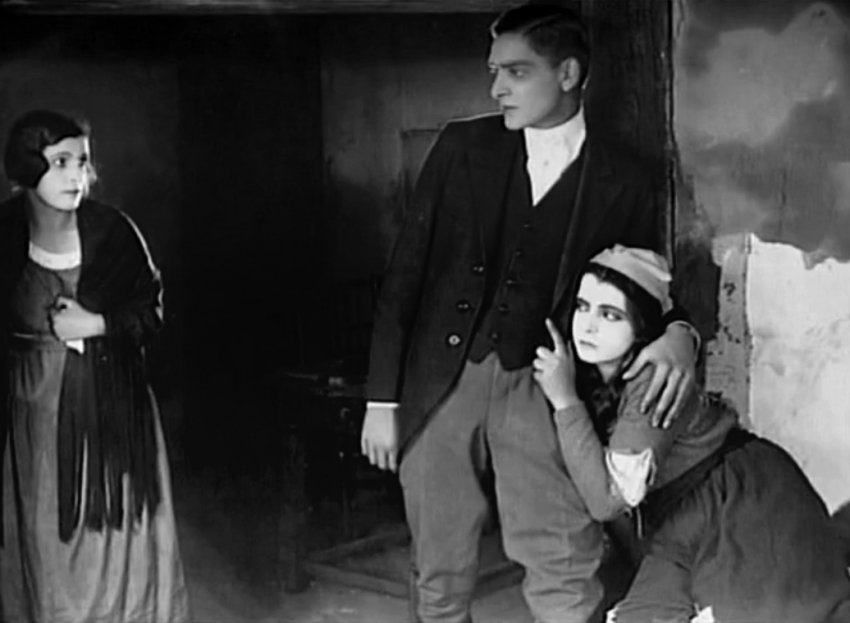
A definitive 6.3/10 rating for a film that redefined the boundaries of cult cinema. Marizza remains a cornerstone of transgressive art.
A cigarette ember punctures the Weimar night in the opening shot of Marizza, and from that first spark we sense celluloid is about to combust. Friedrich Weinmann’s camera glides along the reed-lined banks of a nameless river that smells of diesel and lilac, chasing the silhouette of a woman whose stride is equal parts fugitive and empress. She is Marizza, incarnated by the Bulgarian fire-starter Tzwetta Tzatschewa with the off-hand hauteur of someone who has already memorised every male gaze in the province and filed them under “ammunition.”
What follows feels less like a conventional narrative than a fever chart of post-war Central Europe: economies rotting, borders leaking, morals liquefying. The plot, slender on paper, metastasises into something feral thanks to the alchemy of Hans Janowitz’sscenario—he of Cabinet of Dr. Caligari notoriety—who here trades Expressionist angles for a fluid, almost documentary restlessness. Customs ledgers, border bribes, and contraband coffee beans become the mise-en-scène equivalent of loaded revolvers in a cowboy film; every stamp of bureaucratic ink ricochets through the story like a stray bullet.
Silent cinema traffics in archetypes, yet Tzatschewa refuses to ossify into the predictable vamp. Her Marizza laughs not to seduce but to audit: she is taking inventory of weak knees. Watch her in the farm-kitchen sequence where she kneads dough while a battalion of farmhands ogles; every slap of the dough against the wooden bowl lands like a judge’s gavel, sentencing them to lifelong infatuation. The actress’s micro-gestures—an eyebrow arch that lasts three quarters of a second, the way she blows a strand of hair away from her mouth as though dismissal itself were erotic—seed the film with a thousand reaction shots that editors today would splice into a music video.
Director Hans Heinrich von Twardowski (doubling as the customs officer who once loved and lost) shoots her like weather: cyclonic long shots where she’s a dot on the horizon swallowing the sky, then sudden, invasive close-ups so luminescent you expect the film grain to blister. The oscillation between those scales—meteorological and corporeal—renders Marizza not just a character but a climactic event other characters must survive.

Yelina’s smuggling ring operates like a proto-corporation: vertical integration of bribery, human resources staffed by femmes fatales, distribution channels coursing through marshes. When Marizza defects, Yelina dispatches envoys not with pistols but with ledgers—paperwork as weaponised nostalgia. “You can’t outrun what we’ve inked,” she rasps, and the line feels eerily predictive of today’s border regimes. The film’s second act pivots on the tension between agrarian toil and illicit capital; Mrs. Avricolos’s farm, with its sun-blistered sharecroppers, becomes a microcosm of a continent deciding whether honest labour can still compete with the adrenaline of contraband.
Albrecht Viktor Blum, playing the estate’s steward, embodies that crisis in a performance pitched between Prussian rigidity and sweaty-palmed desperation. His voice, though unheard, is implied: hands that wring a cap till it resembles roadkill, shoulders that square up to moral compromise like a wrestler to an unbreakable hold. In one extraordinary tableau he stands between pyramids of harvested wheat and a stack of forged permits, the mise-en-scène splitting the frame into two rival currencies—grain vs. paper, tradition vs. modernity. The shot lasts barely four seconds yet feels carved into the celluloid like a scar.
Weinmann’s cinematography deserves a dissertation. Day interiors are steeped in burnt honey, as though the very air were infused with illicit sugar, while night exhales a
Archival records indicate the Berlin premiere featured live accompaniment by a nine-piece ensemble pounding out a pastiche of Bartók and gypsy brass. Today’s restorations often slap on generic piano, which is like fitting a Rolls-Royce with scooter tyres. Seek the 2021 Munich Film Museum restoration—its score reinstates cimbalom, zurna, and a whispered female choir that hisses Yelina’s name like a curse. Under this aural canopy, every crunch of Marizza’s boot on river gravel feels like the countdown to detonation.
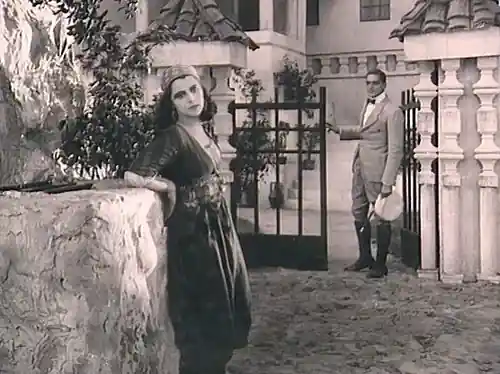
Twardowski’s own cameo as the border guard is a masterclass in self-effacing narcissism—he lets the camera love him, yet keeps enough distance to let us despise his complicity. Adele Sandrock, as Yelina, weaponises stillness; she sits like a spider in a web of ledgers, only her pupils moving, tracking potential betrayal. Watch the moment she realises Marizza has slipped her net: a single tear rolls, not down her cheek, but across the bridge of her nose, as though even grief must follow bureaucratic protocol.
The farmhands—played by a motley of bit-part actors rounded up from Munich beer halls—provide a Greek chorus of leers, sighs, and hat-twirling. Their collective desire feels carnivalesque, but von Twardowski refuses to lampoon them; instead he lets their synchronicity swell into a kind of pagan ritual. In one scene they form a semicircle around Marizza as she balances on a hay cart, the camera tilting up until the sky becomes a cathedral nave and she its profane Madonna.
Critics often trot out the “femme fatale” label as a short-hand for patriarchal dread. Marizza complicates that by granting its heroine operational intelligence over every frame. She doesn’t lure men to doom; she offers them a choice between doom and self-knowledge, then watches with Olympian amusement as they pick wrong. The film’s true transgression lies in showing how quickly social structures—church, farm, constabulary—reconfigure themselves around her magnetism, like iron filings aligning to a new geometry of power.
Compare this to the more conservative sexual politics of The Sentimental Lady (1922), where female desire is safely quarantined within marriage plots, or the punitive arc of White and Unmarried (1923). Marizza dangles the possibility that a woman might weaponise beauty without narrative retribution—an audacity that probably explains why Bavarian censors trimmed two entire reels for “endangering public order.”
For decades the only surviving element was a battered 9.5 mm Pathescope destined for children’s matinees, its intertitles in fractured Esperanto. Then, in 2018, a nitrate 35 mm turned up in a Slovenian monastery—complete with handwritten censor cuts that read like blackout poetry. The Munich Film Museum spearheaded a 4K restoration, resurrecting the original tinting references via chemist annotations on the negative edge. The resulting Blu-ray, region-locked but worth the import, reveals pores, sweat beads, even the glue holding Tzatschewa’s false eyelashes—details that transform star-gazing into time-travel.
Streamers peddle a 720p atrocity where the wheat blaze looks like mouldy marmalade. Avoid. Instead, trawl niche labels or archival torrents bearing the 2021 restoration tag. Pair with a projector, a bottle of Zweigelt, and neighbours tolerant of Balkan brass at midnight.
Trace the DNA and you’ll find Marizza’s fingerprints on everyone from Double Indemnity’s Phyllis Dietrichson to Basic Instinct’s Catherine Tramell. Yet few descendants retain the socio-economic bite—how smuggling and sharecropping are merely different floors of the same collapsing edifice. In that sense the film anticipates the frictional capitalism of Kultur (1923) and the bureaucratic satire of The War Extra (1922), but filters them through the prism of erotic energy, making politics visceral.
Marizza is not a relic; it’s a live wire. Ninety minutes of serrated beauty that indicts how desire and capital braid around women’s bodies, how borders are less lines on maps than scars on skin. Watch it for Tzatschewa’s incandescent defiance, for Weinmann’s chiaroscuro wheat, for Janowitz’s script that crackles like dry kindling. Watch it because every frame insists that escape is possible, but freedom—real freedom—comes with interest rates no one can afford.
IMDb 6.1
1923
Community
Log in to comment.