DbcultAccessing Vault...
Cult Review
Senior Film Conservator
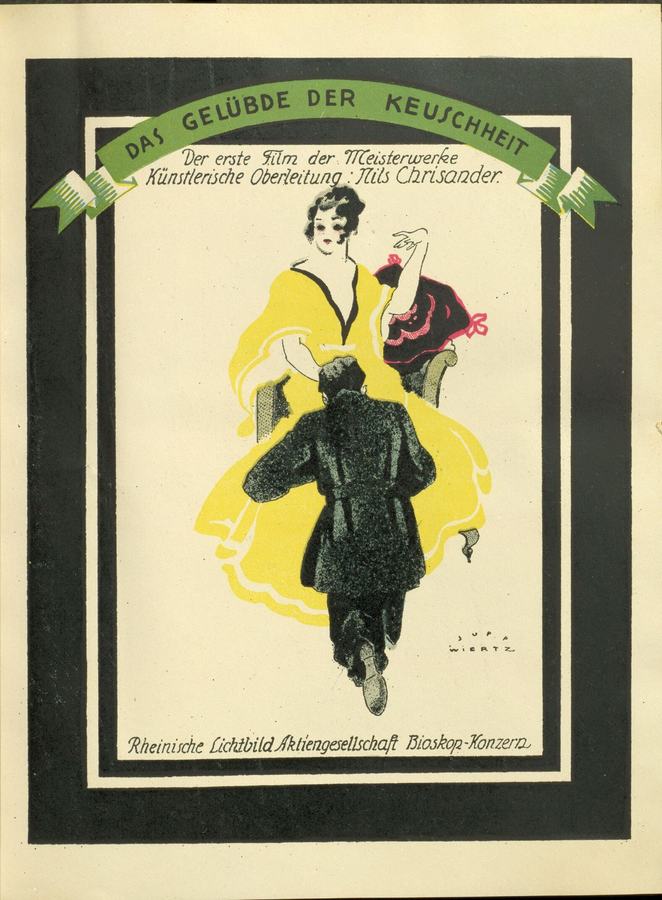
Stepping into the spectral embrace of "Das Gelübde der Keuschheit" is akin to unearthing a forgotten, exquisitely crafted locket, its intricate filigree concealing a universe of profound human emotion. This 1918 cinematic artifact, penned by the insightful duo Nils Olaf Chrisander and Reinhard Bruck, offers far more than a mere period drama; it presents a searing psychological portrait, a relentless exploration of duty’s cold grip versus love’s incandescent flame. From its opening frames, the film immerses the viewer in a world where personal conviction collides violently with the heart's undeniable yearnings, painting a canvas of sacred oaths and unyielding societal expectations. It's a testament to the silent era's unparalleled capacity for conveying complex internal landscapes through gesture, expression, and the sheer power of visual storytelling, a craft largely lost in today's dialogue-heavy productions.
At its core, the narrative revolves around Elara von Sternberg, portrayed with breathtaking nuance by Margit Madijan. Madijan imbues Elara with a fragile strength, a stoic resolve that barely conceals the tumultuous currents churning beneath her serene exterior. Her performance is a masterclass in silent acting, relying on subtle shifts in gaze, the delicate tremor of a hand, or the almost imperceptible tightening of her lips to convey an entire lexicon of unspoken anguish. Elara, haunted by the specter of a past family scandal—a mother's infidelity that shattered the Sternberg name—has embraced a lifetime vow of chastity. This isn't merely a religious decree but a deeply personal, almost penitential act, a desperate attempt to reclaim honor and inoculate herself against the perceived treachery of romantic entanglement. Her existence on the sprawling, yet emotionally barren, family estate is a meticulously ordered ritual of self-denial, a fortress against vulnerability, where every gesture is measured, every emotion rigorously suppressed.
The delicate balance of Elara's sequestered world is irrevocably disrupted by the arrival of Baron Klemens von Brandis, brought to life with an arresting blend of earnestness and charm by Olaf Fønss. Klemens, an engineer engaged in a vital irrigation project on the Sternberg lands, enters Elara's orbit completely unaware of the profound spiritual shackles she bears. Fønss masterfully crafts a character whose inherent goodness and genuine affection gradually chip away at Elara's defenses, not through aggressive pursuit, but through a quiet, persistent admiration. The chemistry between Madijan and Fønss is palpable, a silent symphony of longing and unspoken tenderness that transcends the screen. Their initial interactions, marked by a respectful distance, slowly give way to a mutual understanding, a burgeoning affection that feels both inevitable and exquisitely painful given Elara's predicament. This nuanced development of their relationship is one of the film's greatest strengths, allowing the audience to witness the slow erosion of a carefully constructed emotional wall.
The narrative deftly employs secondary characters to amplify Elara's internal conflict and the external pressures bearing down upon her. Sybil Smolova, as Elara's formidable Aunt Helga, embodies the rigid adherence to tradition and the unyielding societal expectations of the era. Her presence is a constant, almost physical, reminder of the sanctity of vows and the dire consequences of their transgression. Aunt Helga is not merely an antagonist but a tragic figure herself, a product of a world where duty often eclipsed individual happiness. Conversely, Alexander Areuss’s portrayal of Herr Richter, the scheming distant cousin, introduces a layer of venal opportunism. Richter's avarice and manipulative tactics serve as a stark counterpoint to the film's more ethereal themes, grounding the emotional drama in a very real, very human struggle for material gain. His machinations add a thrilling undercurrent of suspense, ensuring that Elara's trials are not solely internal but also manifest in tangible threats to her honor and legacy.
The cinematography, though constrained by the technological limitations of its time, is remarkably expressive. Director Nils Olaf Chrisander, alongside Reinhard Bruck, employs stark contrasts of light and shadow, framing Elara often within confining spaces or against vast, empty landscapes, visually reinforcing her emotional isolation. Close-ups on Madijan’s face are particularly potent, revealing the micro-expressions that communicate volumes of inner turmoil. The visual language speaks directly to the soul, bypassing the need for spoken dialogue, a hallmark of superior silent filmmaking. One might draw parallels to the psychological intensity found in films like The Bells, where the camera becomes an extension of the character's tormented mind, or even the dramatic staging of Macbeth in its cinematic adaptations, though without the overt theatricality.
Thematically, "Das Gelübde der Keuschheit" delves deep into the thorny questions of free will versus predestination, personal sacrifice versus societal expectation, and the enduring power of love in the face of insurmountable obstacles. Elara's vow is not merely a plot device; it is the very crucible in which her character is forged and tested. It represents a choice made in response to trauma, a defense mechanism that paradoxically becomes a prison. The film forces us to confront the moral complexities of such an oath, particularly when it conflicts with the most fundamental human desires for companionship and affection. Is a vow, however sacred, truly virtuous if it necessitates the extinguishing of one's own happiness? This is the agonizing question at the heart of Elara’s struggle, a dilemma that resonates across centuries.
The film’s climax is a masterstroke of emotional devastation. Elara's public rejection of Klemens, delivered with a forced froideur that barely conceals her inner turmoil, is a scene of profound pathos. It’s a moment where duty triumphs, but at an astronomical cost to the human spirit. The silent screams of her heart are almost audible, a testament to Madijan's extraordinary performance. Yet, the narrative, in a surprising turn, refuses to leave Elara utterly broken. Klemens, despite his own profound heartbreak, returns to expose Richter’s deceit, safeguarding Elara’s honor and estate. This act of selfless devotion, born not of expectation but of pure love, elevates Klemens from a mere suitor to a figure of enduring chivalry. It’s a resolution that defies easy categorization, neither a conventional happy ending nor a simple tragedy, but something far more nuanced and affecting.
One cannot help but consider "Das Gelübde der Keuschheit" in the broader context of silent cinema's exploration of female agency and societal constraints. Films like My Lady Incog. often presented women navigating tricky social landscapes, but rarely with such a stark, self-imposed limitation. The raw emotional honesty of Elara's plight distinguishes it, placing it alongside the powerful, if often melodramatic, narratives of women grappling with impossible choices. The film avoids the simplistic villainy or saccharine resolutions that sometimes plagued the era, opting instead for a portrayal of human resilience and the bittersweet nature of sacrifice. It’s a reminder that true strength isn't always found in rebellion, but sometimes in the quiet, agonizing adherence to a chosen path, however lonely.
The character arcs are meticulously drawn, particularly Elara’s. Her journey is not one of transformation in the traditional sense, but of deepening resolve and a redefinition of fulfillment. She doesn't break her vow, but through her suffering and Klemens's unwavering respect, she finds a different kind of purpose. Her ultimate dedication to philanthropy and community welfare is a powerful statement, suggesting that a life devoid of romantic love need not be devoid of meaning. This resonates with a certain stoicism, an acceptance of fate intertwined with active benevolence, reminiscent of some classical tragic figures who find nobility in their suffering. The writers, Chrisander and Bruck, deserve immense credit for crafting a narrative that respects its protagonist's complex choices without judgment.
Franz Baumann, Alexander Areuss, and Guido Schützendorf, along with Fritz Alten, Max Schiefer, Martha Rhema, and Uschi Elleot, provide robust support, ensuring the ensemble cast feels authentic and lived-in. While Madijan and Fønss command the emotional core, the surrounding performances flesh out the world, adding texture and credibility to the narrative. Areuss, in particular, manages to convey Richter's insidious nature without resorting to caricature, making his threat feel genuinely palpable. The collective effort contributes significantly to the film’s immersive quality, pulling the audience into its intricate web of relationships and moral dilemmas.
Examining the film through a contemporary lens, "Das Gelübde der Keuschheit" offers a fascinating glimpse into the moral zeitgeist of its time, while simultaneously posing questions that remain eternally relevant. The concept of a vow of chastity, particularly for women, might seem anachronistic to some modern viewers, yet the underlying themes of self-control, commitment, and the pursuit of a higher purpose continue to resonate. It challenges our modern sensibilities that often prioritize individual gratification above all else, inviting contemplation on the nature of sacrifice and the various forms fulfillment can take. It's a dialogue starter, a cinematic provocation that refuses easy answers.
The film’s pacing, characteristic of many silent dramas, allows for a deliberate unfolding of events and emotions. It invites patience from the viewer, rewarding it with a profound emotional payoff. There are no frantic cuts or rapid-fire dialogue; instead, the camera lingers, allowing expressions to register, emotions to build, and the weight of decisions to settle. This measured approach contributes to the film’s meditative quality, allowing the audience to truly inhabit Elara’s internal world. In an age of instant gratification, such deliberate storytelling feels refreshingly profound. It’s a stark contrast to the kinetic energy of something like Trooper 44, which might focus more on external action, or even the comedic timing of In and Out, highlighting the vast stylistic range even within early cinema.
Ultimately, "Das Gelübde der Keuschheit" stands as a powerful testament to the artistry and emotional depth achievable in silent cinema. It transcends its historical context to deliver a universal story of love, duty, and the often-agonizing choices that define a human life. It is a film that lingers long after the final frame, prompting introspection and a deeper appreciation for the silent language of the heart. The performances, particularly Madijan’s, are unforgettable, cementing her place as a truly gifted actress of her era. The writers' ability to craft such a compelling, morally complex narrative without relying on dialogue is nothing short of remarkable. It’s a cinematic experience that demands engagement and rewards it with genuine emotional resonance.
The film's ending, far from being a simple tragedy, is a declaration of profound personal integrity. Elara’s choice to uphold her vow, even at the cost of romantic happiness, is not presented as a defeat, but as a victory of spirit. She chooses a path of altruism and dedication, finding purpose in service to others, a quiet heroism that resonates deeply. Klemens’s departure, though heartbreaking, carries with it an understanding and respect that elevates their bond beyond mere romance. Their connection, though unconsummated, remains pure and powerful, a testament to the enduring nature of true affection even in separation. This nuanced conclusion avoids the pitfalls of melodrama, opting instead for a poignant realism that feels earned.
In an era where films like The Monster and the Girl might chase sensationalism, "Das Gelübde der Keuschheit" firmly roots itself in the human condition, exploring the quiet battles fought within the soul. It’s a contemplative piece, one that encourages reflection on the choices we make and the values we choose to uphold. The subtle emotional shifts, the unspoken desires, and the palpable tension create an atmosphere that is both intimate and grand. It truly exemplifies the power of early German cinema to blend profound philosophical inquiry with gripping personal drama. It’s an understated masterpiece that deserves rediscovery by modern audiences, a gem from the past that speaks volumes to the present.
The stylistic choices, from costume design to set decoration, all contribute to the film’s overall aesthetic and thematic coherence. Elara’s attire, often austere and demure, visually reinforces her commitment to her vow and her rejection of worldly vanity. The Sternberg estate itself, with its grand but somewhat desolate appearance, mirrors Elara’s internal state—a place of beauty and heritage, yet also of isolation. This meticulous attention to detail in visual storytelling is a hallmark of the period's best works. The interplay of light and shadow, particularly in scenes of introspection, evokes a sense of both vulnerability and inner resolve, making the visual narrative as compelling as the emotional one.
To watch "Das Gelübde der Keuschheit" is to engage with a piece of art that transcends its time. It is a powerful reminder of the enduring human struggle between personal desires and external obligations, between the heart's yearning and the mind's resolve. Its legacy lies not just in its historical significance as a silent film, but in its timeless ability to evoke empathy and provoke thought. It's a film that resonates with the quiet dignity of sacrifice, the profound beauty of unselfish love, and the enduring strength of the human spirit. For those who appreciate cinema that delves into the depths of character and emotion, this film is an essential, enriching experience. It asks us to consider what true freedom means, and whether it can ever be found within the confines of a self-imposed prison. A truly captivating and contemplative journey into the human psyche.
IMDb 6.8
1920
Community
Log in to comment.