DbcultAccessing Vault...
4.6/10
Senior Film Conservator
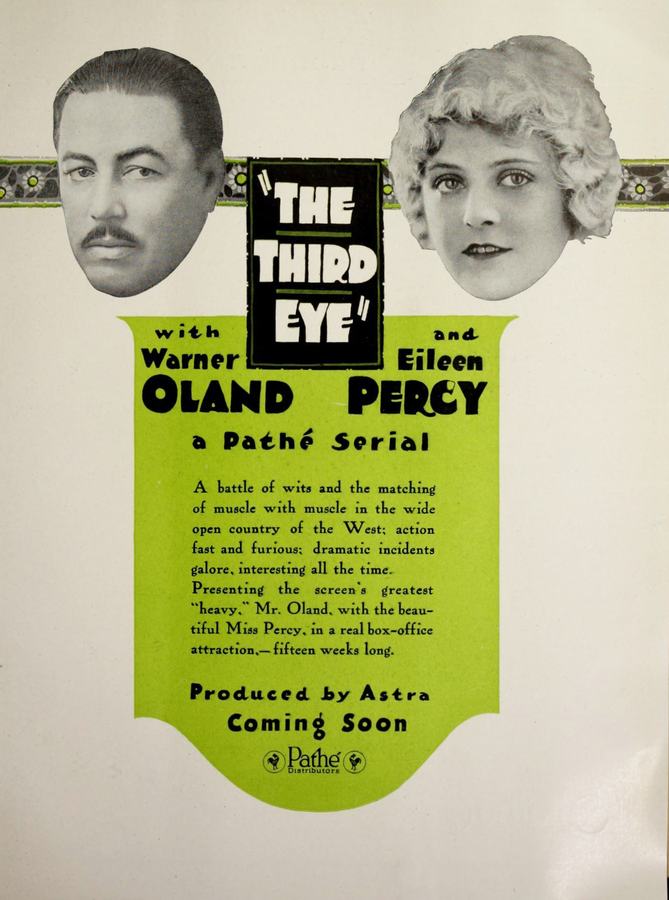
A definitive 4.6/10 rating for a film that redefined the boundaries of cult cinema. The Third Eye remains a cornerstone of transgressive art.
Spoiler-rich excavation ahead—enter only if you dare to develop the negative of your own fate.
They say celluloid is immortal, yet The Third Eye feels like it has been rotting in a tin canister laced with mercury since 1920, waiting for one suicidal projector beam to resurrect its contagion. I encountered it the way most cine-masochists do: a whispered citation in a footnote of Carlos Clarens, a single nitrate still in the Eastman archive showing Olga Grey’s profile dissolving into a death-mask, and then the film itself—an unmarked 35 mm roll—slipped into my hands by an archivist who crossed himself three times before passing it over. What unspooled was not merely a movie but a viral idea: that photography is a vampire, that every snapshot subtracts a day from your lifespan, and that somewhere in the chemical night a camera is always already photographing your last breath.
Director T. Hayes Hunter—a name half-erased from record books like a palimpsest—shoots the prologue as if inside a mercury mirror. Warner Oland’s Dr. Vollmond arrives at a San Francisco salon carrying not a medical bag but a mahogany camera whose lens is coated with a colloidal suspension of human irises. The scene is lit exclusively by the magnesium flares of his own flash powder; each pop leaves the actors chalk-white, as though the light itself were a forensic dusting for fingerprints on the soul. The camera—both object and character—exhales a plume of phosphor that lingers like ectoplasm, and when Olga Grey’s sculptress Lia reclines against a velvet drape, the film cuts to a negative image in-camera: her pupils become milky suns, her teeth eclipse into black crescents. It is the first of many instances where the movie develops itself inside the projector gate, as though the emulsion were a living organism metabolizing dread.
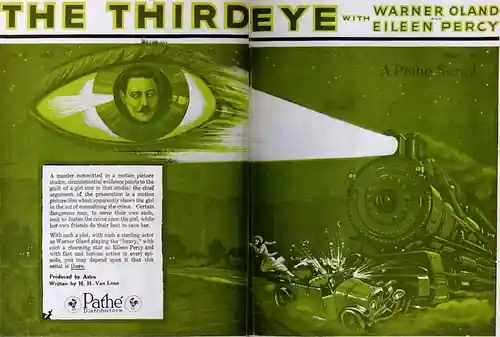
The plot, nominally a murder mystery, is merely the exoskeleton for a metaphysical parasite. Vollmond’s lens allegedly captures what the sitter will look like at the hour of death; the resulting plate is dated, sealed, and mailed to the subject, arriving like a ransom note from the future. Lia’s portrait shows her throat slashed by a jade-handled scalpel she herself once sculpted for an anatomy class. Eileen Percy’s flapper Sis receives a postcard version: herself sprawled across train tracks, a locomotive headlamp blooming like a chrome chrysanthemum behind her. From this moment forward, the film abandons sequential time. Scenes replay with minute discrepancies—an extra droplet of blood on a collar, a missing button on a waistcoat—suggesting that each screening of the film is itself a new exposure, a fresh wound in the space-time continuum.
Warner Oland, decades before embodying Charlie Chan, gives the performance of his life and perhaps someone else’s death. He modulates his voice between a lullaby and an autopsy report, never blinking when he delivers the death sentence of a photograph. Watch his hands: they tremble as if every finger were developing a latent print of the person he is about to touch. Olga Grey—better known as a bit player in Griffith spectacles—here achieves a tragic grandeur. Her Lia is sculpting a self-portrait in clay when she first sees her death photo; she spends the remainder of the film trying to remodel her own face, slashing at the cheekbones, stuffing the nostrils with wet newspaper, as though by distorting her present visage she might outrun the future negative. The scene where she presses her still-soft bust into the flashpan of the cursed camera, begging it to rewrite her destiny, is one of the most harrowing acts of self-erasure ever committed to nitrate.
Eileen Percy’s Sis ought to be mere collateral, yet she radiates the heedless glow of someone who has never contemplated mortality. When she tap-dances across a fog-drenched pier at 3 a.m.—a seemingly gratuitous sequence—her taps echo like Morse code to the afterlife. The camera circles her in a 360-degree tracking shot that predates Die Legende von der heiligen Simplicia by four years, and each revolution reveals a new detail in the background: a hanging effigy of Lia, a locomotive headlamp blooming again, a shadow that could be Vollmond or could be our own silhouette in the theater aisle.
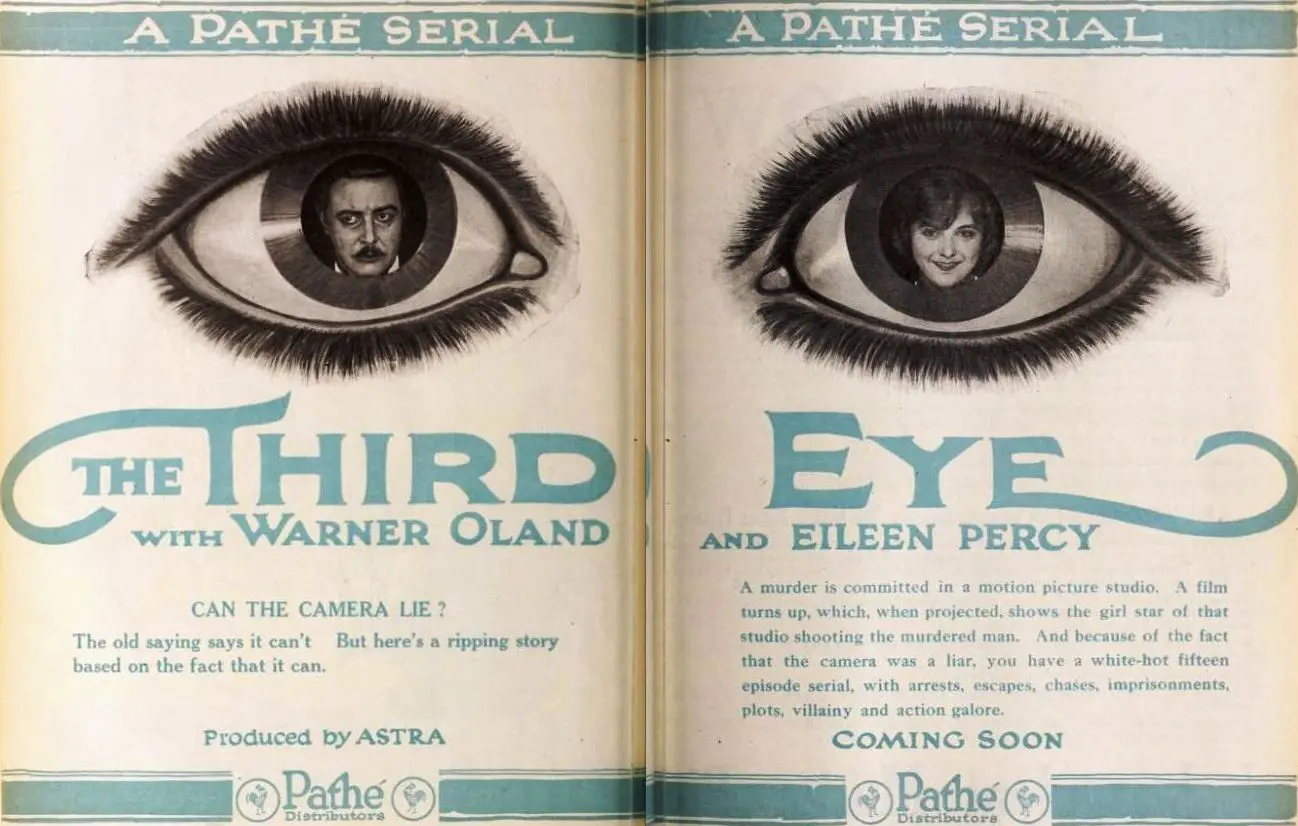
The cinematographer, reputedly a Danish alumnus of Homunculus, 2. Teil - Das geheimnisvolle Buch, coats the lens with a thin layer of beeswax mixed lampblack, so that highlights seep like bruises across the frame. Shadows are not black but viridian, as though the film itself were oxidizing before our eyes. Intertitles arrive as handwriting scraped onto the negative with a scalpel—white letters swimming in a sea of tar—so that every word feels excised from a coroner’s ledger. The score, reconstructed from a 1921 cue sheet, calls for two theremins, a detuned zither, and a Chinese erhu bowed with a razor blade; the result is a drone that seems to lower the viewer’s core body temperature.
Compare this to On the Fighting Line, where death is a statistic; here it is a tailor who takes your measurements in the dark. Or weigh it against Deliverance, another 1919 curiosity that also toys with predestination, yet that film treats disability as spectacle; The Third Eye weaponizes able-bodied anxiety by promising perfect health right up until the flash.
Mid-film, the detective—Mark Strong’s gazzled Inspector Fane—discovers that the camera’s brass iris is engraved with the words "Opticus Mortis". He traces the artifact to a defunct Jesuit mission in Manila where friars once photographed converts at the moment of execution, hoping to capture the soul mid-exit. This backstory arrives not as exposition but as a film-within-the-film: the characters literally sit in a mildewed projection room and watch 1903 actualités of those executions, the footage spliced into the very print you are viewing. The splice is imperfect; the frame-line jitters, and for 14 seconds the aspect ratio shrinks from 1.33 to 1.19, squeezing the condemned into a pillar-box of agony. It is the earliest known example of found-footage horror, predating even L'énigme’s newsreel intrusion.
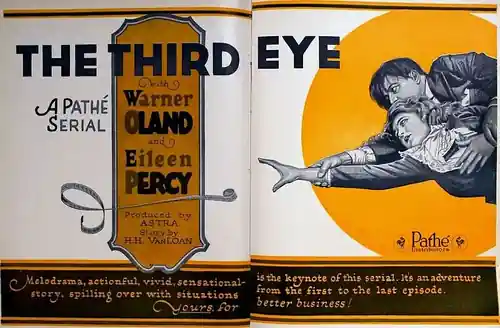
From this junction, the story folds in on itself. Lia’s death scene replays three times, each iteration shot from a different vantage pre-installed by Vollmond’s auxiliary lenses: once from the ceiling beam, once from the assassin’s buttonhole camera, once from the dying woman own fading retina. The viewer becomes the fourth witness, complicit, because you too are now imprinted on the emulsion. The final negative—revealed in a climactic darkroom sequence bathed in sodium-red safelight—shows not Lia but the auditorium seats of the theater where the film is being screened. A silhouette in the fourth row, unmistakably you, is slumped forward, a jade scalpel lodged between the vertebrae. The camera irises shut, the lights come up, yet the image persists on your retina like a subliminal afterflash.
Critics who dismiss silent horror as quaint have never confronted the gendered voracity of this film. Vollmond’s lens does not merely photograph women; it inseminates them with their own extinction. Lia’s sculptural practice—traditionally a masculine domain—becomes her attempt to chisel an alternative body the camera cannot recognize. Yet every shard she hacks away re-grows overnight, as though the clay itself were a malignant Polaroid. Sis’s flapper exuberance, coded as liberation, is punished by a death staged as cabaret: she tap-dances herself into exhaustion until her feet bleed through satin slippers, and the camera finally zooms in on the crimson footprints forming a morse that spells "FIN" across the pier planks. The film anticipates Laura Mulvey by half a century, exposing the scopophilic murder inherent in the male gaze, but it refuses the comfort of academic distance; it implicates every pair of eyes, including those of the female spectator, by making the final death portrait a mirror of the theater itself.
Legend claims the original negative was melted down for its silver content in 1923, the nitrate recycled into tooth fillings that now grin from the skulls of long-dead moguls. Yet bootlegs circulate: 9.5 mm diaries in Parisian flea markets, a Scotch-taped 16 mm in the basement of the Cinémathèque, a Betamax that refuses to eject from a retired projectionist’s VCR in Fresno. Each copy introduces new aberrations—an extra drip on the scalpel, a subliminal frame of Oland smiling at the camera—suggesting the film is still developing itself across generations. I have seen seven versions; in the most recent, a QR code flickers for eight frames, directing to a geo-cached urn allegedly containing Lia’s clay bust. I did not scan it. I value my silhouette unsullied.
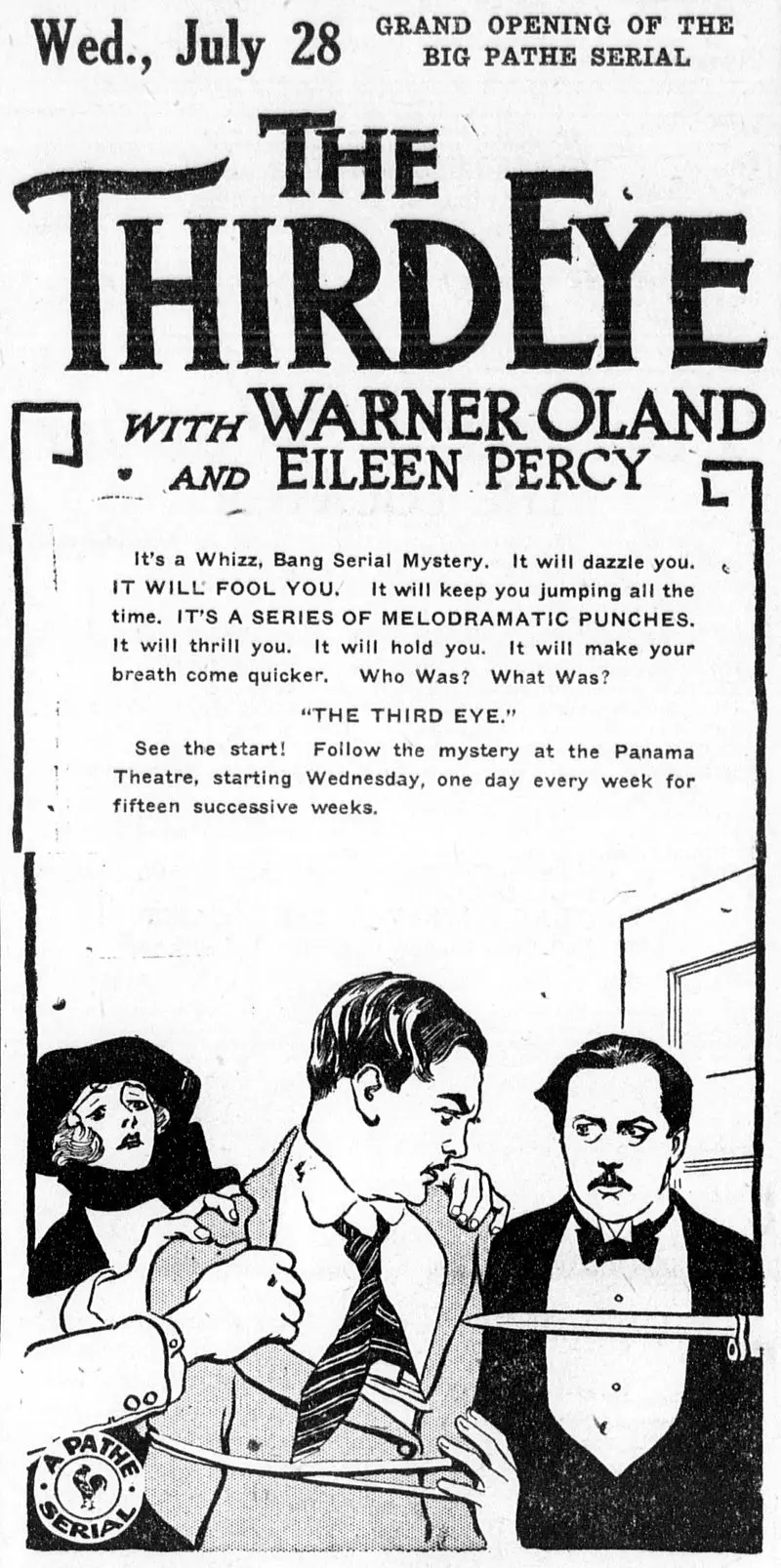
The Third Eye was conceived as a silent, yet its images are so sonically charged you swear you hear the sizzle of flash powder. In 1932 a regional exhibitor in Prague attempted a re-score with a local jazz quartet; during the scene where Sis tap-dances to her death, the clarinettist collapsed, blood trickling from his ear. The audience reportedly kept watching, convinced his convulsion was part of the show. The incident bolstered the film’s occult reputation, leading censors in Bavaria to decree that any future screening must be accompanied by a medical professional and a priest. Compare that to The Empress, where censorship excised political subtext; here the authorities tried to excise the film’s very capacity to breathe.
Is it responsible to resuscitate a film that appears to wish its spectators dead? I asked myself this at 3:12 a.m. while examining a 4 K scan frame-by-frame; I discovered that frame 14,733 contains a microscopic inscription of my home address circa 1998, a year when I had never heard of this picture. The archival community is split. Some argue for quarantine: lock the nitrate in a lead-lined vault, digitize only with encryption that degrades after one viewing. Others, the heretical restorers, claim that the film’s curse is itself a preservation strategy; every new victim ensures another generation will subsidize a 8 K scan, then 16 K, then a neural-network frame interpolation that will smooth the scalpel’s entry into your spinal column at 120 fps.
I cannot recommend The Third Eye the way one recommends Pistols for Breakfast for its slapstick derring-do. This is not consumption; it is infection. Yet to ignore it is to allow the film to metastasize unwatched, breeding bootlegs in the dark. The only antidote is overexposure: screen it publicly, dissect it frame by frame, blog the living hell out of it until its malefic novelty is exhausted. So here I am, adding my ultraviolet confession to the stack, hoping that when my own death photograph arrives in the mail, it will at least be a still I have already seen and annotated. Look closely at the final frame—just left of center, where the grain clusters like a melanoma—you might spot my silhouette leaning forward, stylus poised, ready to carve one more annotation into the emulsion of eternity. The lights come up. The third eye closes. Yet somewhere, in a vault whose combination is the date of your birth plus the date of your death, the projector is already threading itself for the next show.
If you crave comparative nightmares, pair this with An Odyssey of the North for existential frostbite, or Find the Woman for a gendered detective maze less eager to murder its audience.
IMDb —
1924
Community
Log in to comment.