DbcultAccessing Vault...
Cult Review
Senior Film Conservator
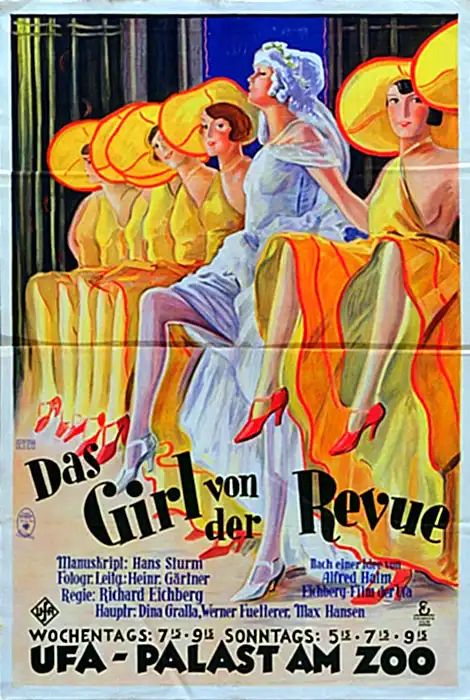
Okay, so Das Girl von der Revue, a 1928 German silent, is probably not for everyone. If you're someone who loves digging into the early days of cinema, especially the visual storytelling before sound took over, you'll find some real moments here. But if you're just looking for a casual Friday night watch, or if silent film just isn't your thing, you'll likely find it a bit of a slog. It’s a peculiar window into its time, full of charming anachronisms and some genuinely frustrating pacing.
Dina Gralla, as the titular 'girl,' certainly has a presence. Her character, a dancer navigating the world of the revue, is meant to be the heart of it all. Gralla often communicates with these wide, expressive eyes and a tilt of her head that’s very much of the era – almost theatrical in its broadness. Sometimes it works, especially when she’s trying to convey quiet longing or confusion. Other times, it feels a little too much, like she’s playing to the back row of a massive theater, which, of course, she was.
The film opens with a flurry of backstage activity, all feathers and frantic energy. The costume design for the revue numbers is exactly what you'd expect from the late 20s – a glorious, slightly over-the-top explosion of sparkle and fringe. One specific hat on an extra in the background during a dance number is just... a lot. It’s this massive, feathered contraption that seems to defy gravity, almost distracting from Gralla herself.
Pacing is an interesting beast here. There are moments where the film absolutely flies, particularly during the more energetic dance sequences or quick cuts between scenes of intrigue. Then, it just hits a wall. A longing glance between two characters might go on for a good ten seconds longer than it needs to. You almost expect an intertitle to pop up saying, "Yes, they're still looking at each other." It’s less about building tension and more about just… holding.
Werner Fuetterer plays the rich suitor, and he often just stands there, looking vaguely concerned. His emotional range seems to be "mildly perturbed" to "slightly less mildly perturbed." It makes it hard to invest in his side of the romance, especially when Gralla is putting in so much expressive effort. Their chemistry sometimes feels less like a simmering romance and more like two people politely waiting for their turn to react.
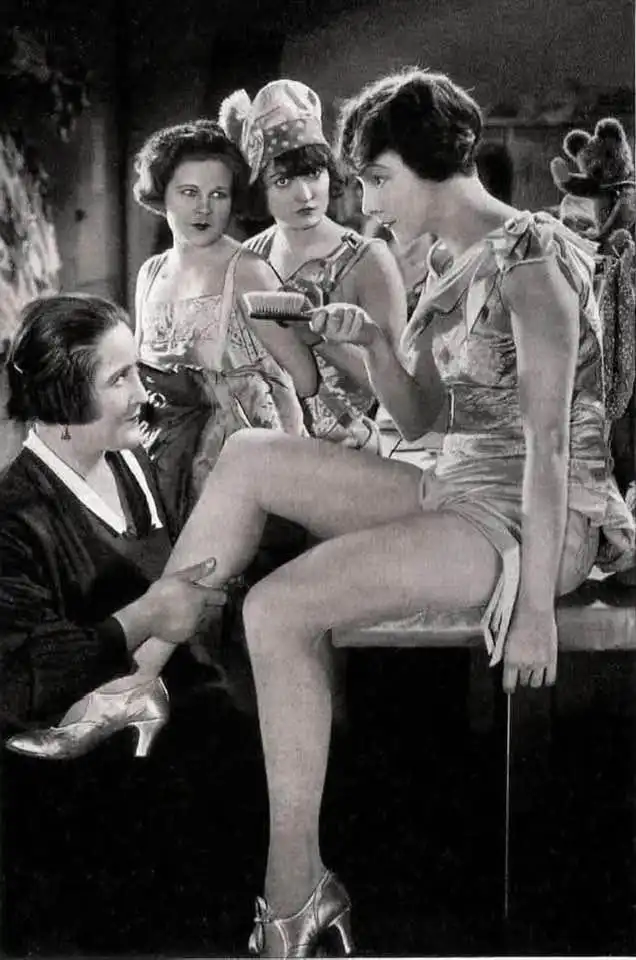
There's a scene early on where a character dramatically throws open a door, but the cut is so quick it feels less like an entrance and more like a jump scare. It’s jarring, and you wonder if it was a happy accident or a deliberate choice that just didn't quite land. You can almost feel the editor in the room trying to make an impact, maybe a little too hard.
The intertitles themselves are fairly standard, but occasionally they drop a line that feels a little too on-the-nose, almost like the film is trying to convince you a moment matters more than it actually does. "Her heart ached with a pain she could not name," for example, pops up during a scene where Gralla is simply looking out a window. It feels a bit clunky, almost like an afterthought to explain a relatively neutral expression.
The crowd scenes, especially in the theater, are fascinating. Lots of static faces, some clearly just told to "look interested" without much direction beyond that. It's a snapshot of an audience, but also a reminder of the limitations of crowd direction back then. You can spot the people who are clearly not professional extras, just regular folks trying to hold still.
A particular moment where a character tries to sneak away, and the camera just *holds* on their back for an uncomfortable amount of time. It's not building suspense; it's just... lingering. You can practically hear the director yelling "and... hold it... hold it!" It breaks the flow rather than adding to it, making you acutely aware of the filmmaking process.
For all its quirks, there’s an undeniable charm to Das Girl von der Revue. It’s not a masterpiece, and it certainly has its moments where you might check your watch, but it’s a genuine artifact. It shows you what silent German cinema was doing, the kind of stories they were telling, and how they were trying to tell them. It's less about a grand cinematic experience and more about a historical curiosity, a chance to see a specific style of performance and storytelling that largely vanished with the advent of sound. If that's your jam, you'll find something to appreciate, even in its imperfections.
IMDb 6
1926
Community
Log in to comment.