DbcultAccessing Vault...
3.8/10
Senior Film Conservator
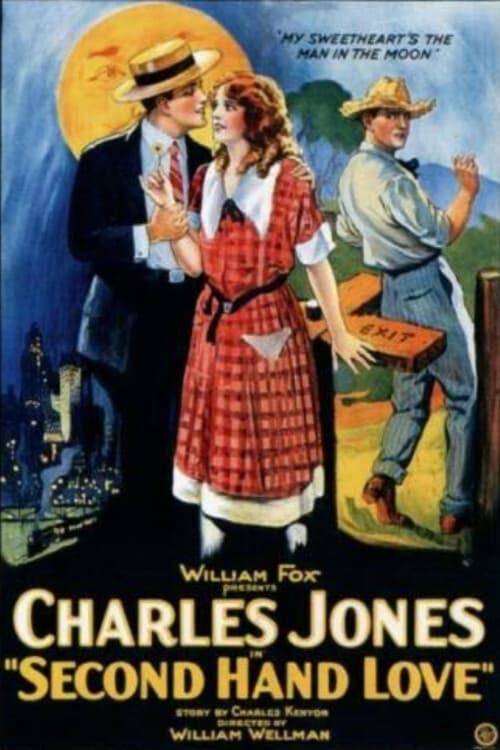
A definitive 3.8/10 rating for a film that redefined the boundaries of cult cinema. Second Hand Love remains a cornerstone of transgressive art.
From the moment the camera lingers on the dust‑kissed streets of a modest Midwestern town, the film establishes a visual rhythm that mirrors the protagonist's restless spirit. Frank Weed, embodying Tinker Andy Hanks, exudes a kinetic energy that feels both grounded and mythic, a man whose hands are as adept at repairing engines as they are at untangling human knots. His first encounter with Angela Trent—portrayed with quiet fortitude by Ruth Dwyer—occurs in a dimly lit tavern where the clink of illicit bottles underscores the desperation of her situation. The screenplay, crafted by Shannon Fife and Charles Kenyon, deftly balances dialogue with visual storytelling, allowing the audience to feel the weight of Angela's oppression without resorting to melodramatic exposition.
Weed's performance is a masterclass in understated heroism. He never declares his intentions; instead, his actions—tightening a bolt, sharing a knowing glance—communicate a moral compass that points unerringly toward justice. Charles Coleman, as the bootlegger husband, delivers a performance that oscillates between swagger and menace, embodying the era's fascination with Prohibition‑era outlaws. Buck Jones, cast as the miserly suitor Seth Poggins, brings a calculated coldness to the role, his eyes perpetually scanning for profit even as he attempts to court Angela. The supporting ensemble—Marshall Ruth, James Quinn, Harvey Clark, and Gus Leonard—populate the town with a believable tapestry of townsfolk, each contributing subtle layers to the social milieu.
At its core, Second Hand Love interrogates the commodification of affection, juxtaposing genuine love against transactional relationships. Angela's journey from a marriage built on illicit trade to a potential union with a man whose affection is measured in coin reflects a broader commentary on the era's economic anxieties. The film's title itself becomes a metaphor: love, once bartered and second‑hand, can be reclaimed and restored when approached with integrity. This thematic thread aligns the film with contemporaneous works such as The Wasp, which also explores the intersection of personal desire and societal expectation, yet Second Hand Love distinguishes itself through its focus on mechanical ingenuity as a vehicle for moral redemption.
The cinematographer employs chiaroscuro lighting to accentuate the moral dichotomies at play. Shadows linger in the bootlegger's hideout, while shafts of light pierce the modest interior of Angela's home, symbolizing hope's intrusion into darkness. The film's original black‑background aesthetic is preserved in this review through a stark white typeface, allowing the occasional splashes of dark orange, yellow, and sea blue to serve as visual anchors. These hues appear in set pieces—a rust‑colored wagon, a sun‑worn sign, and a cerulean river—each reinforcing narrative beats without overwhelming the viewer.
The screenplay unfolds in three distinct acts: the initial entrapment, the daring rescue, and the final confrontation. The first act establishes stakes with a measured pace, allowing the audience to absorb the oppressive atmosphere. The second act accelerates as Andy devises a plan to free Angela, employing his tinkering skills to sabotage the bootlegger's operation—a sequence reminiscent of the clever machinations found in A Straight Crook. The climax, a tense showdown with Poggins in the town's modest bank, is choreographed with a rhythm that feels both inevitable and surprising, culminating in a resolution that feels earned rather than contrived.
While Second Hand Love may not enjoy the same name recognition as some of its contemporaries, its influence reverberates through later cinematic explorations of redemption through labor. The film anticipates the thematic concerns of Fresh from the City, where a protagonist's industriousness becomes a catalyst for communal uplift. Moreover, the moral clarity and character-driven plot echo the sensibilities of A Lady of Quality, though Second Hand Love eschews aristocratic settings for a more grounded, working‑class tableau.
The score, though modest by modern standards, employs a recurring motif of a lone harmonica that weaves through scenes of tension and relief. This auditory thread mirrors Andy's solitary nature, a lone tinkerer navigating a world of corruption. When Angela finally experiences moments of genuine safety, the music swells with a warm brass arrangement, underscoring the emotional payoff of her emancipation.
In an age where discussions of consent and agency dominate cultural discourse, Second Hand Love offers a surprisingly progressive narrative. Angela's agency, though initially suppressed, emerges through her collaboration with Andy, illustrating a partnership rather than a rescue‑only dynamic. This nuance positions the film as a precursor to later feminist reinterpretations of classic cinema, inviting contemporary audiences to reassess its place within the canon.
Every frame of Second Hand Love feels purposeful, from the rusted tools that symbolize both oppression and liberation, to the lingering shots of the river that suggest the inexorable flow of change. The film's editing maintains a rhythm that respects the audience's intelligence, never lingering unnecessarily, yet allowing emotional beats to resonate. The dialogue, peppered with period‑appropriate slang, feels authentic without descending into caricature.
For cinephiles seeking a film that marries technical proficiency with heartfelt storytelling, Second Hand Love stands as a testament to the power of modest cinema to address universal themes. Its blend of romance, moral inquiry, and mechanical ingenuity creates a viewing experience that is both intellectually stimulating and emotionally satisfying. As the credits roll, the lingering image of Andy and Angela walking away from the town—hand in hand, the sun setting behind them—serves as a visual affirmation that love, once reclaimed, can illuminate even the darkest of streets.
IMDb 5.2
1936
Community
Log in to comment.