DbcultAccessing Vault...
Cult Review
Senior Film Conservator
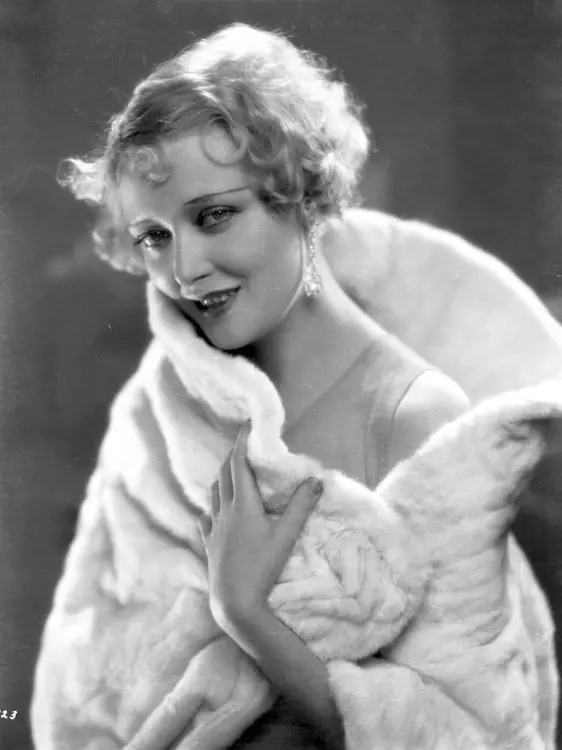
Is 'Das Parfüm der Mrs. Worrington' worth watching today? Short answer: yes, but with significant caveats that demand a specific kind of cinematic palate. This film is an intriguing, if often frustrating, journey for dedicated silent film scholars and those with a deep appreciation for early German cinema's unique aesthetic, but it will likely test the patience of casual viewers expecting modern pacing or narrative clarity.
For enthusiasts of cinematic history, particularly the nascent years of German filmmaking, this picture offers a fascinating window into a bygone era. For those who prefer brisk narratives, clear resolutions, and dialogue-driven character development, it's a challenging prospect. Its value is less in its immediate entertainment and more in its historical footprint and the interpretative exercise it demands from its audience.
Let’s get straight to it. Here’s a quick take:
“Das Parfüm der Mrs. Worrington” (The Perfume of Mrs. Worrington) immediately evokes a sense of mystery and sophisticated intrigue, a hallmark of many silent melodramas. While specific plot details are scarce, the title itself serves as a potent narrative device, implying a central figure whose influence, much like a pervasive scent, permeates every facet of the story. Mrs. Worrington, portrayed by the captivating Maria Mindzenty, is not merely a character but a force, her perfume perhaps a metaphor for her reputation, her secrets, or her subtle manipulations.
One can envision a scenario where her unique fragrance becomes a clue in a romantic entanglement, a social scandal, or even a crime. The narrative likely revolves around the impact of her presence on a tightly-knit community or a specific set of individuals, perhaps featuring the romantic entanglements of figures like Ernst Reicher and Manfred Koempel-Pilot, who navigate the intricate social dance dictated by Mrs. Worrington’s influence. The film, written by Hendrik Kerdon, would have relied heavily on visual storytelling to convey these emotional and dramatic beats, with the perfume serving as a recurring motif, a whisper of what is unspoken but deeply felt.
The beauty of such a title, particularly for a silent film, is its inherent ambiguity. It forces the audience to engage, to infer, and to piece together the emotional landscape through the performances and the visual cues. This isn't a film that spoon-feeds its narrative; it tantalizes with suggestions, leaving a lingering impression long after the credits roll.
Hendrik Kerdon, as both writer and likely director (though directorial credits for such early films can be fluid), was operating in a nascent cinematic landscape, where the rules were still being written. His approach to “Das Parfüm der Mrs. Worrington” feels deliberate in its creation of an atmosphere that transcends simple plot points. The emphasis appears to be on mood and character-driven mystique, a common yet often powerful technique in early German cinema, which was already beginning to explore psychological depth.
Kerdon’s direction likely privileged visual storytelling over explicit exposition. He would have used camera angles, lighting, and the actors’ physicalities to communicate the unspoken tensions and desires. For instance, a lingering shot on Mrs. Worrington’s face, or a subtle reaction from Ernst Reicher after she passes, would have been enough to convey a complex emotional exchange. This reliance on inference is not a flaw, but a stylistic choice, demanding an active audience, much like the subtle narrative threads in The Eternal Magdalene, where unspoken sentiments drive much of the drama.
I'd argue that the film's greatest strength lies not in its narrative clarity, but in its ability to evoke a potent sense of forgotten glamour and underlying tension, a quality often missed by modern audiences accustomed to faster cuts and direct dialogue. Kerdon's vision, for its time, was remarkably sophisticated in its understanding of non-verbal communication and the power of suggestion.
The cast of “Das Parfüm der Mrs. Worrington” comprises a roster of actors who were instrumental in shaping early German cinema. Maria Mindzenty, as the titular Mrs. Worrington, carries the weight of the film’s central mystery. Her performance, typical of the era, would have relied on exaggerated gestures and facial expressions, yet one can almost sense the subtle nuances she brought to the role – a flicker in the eye, a lingering hand gesture – that would have conveyed volumes without a single spoken word. Her screen presence must have been formidable, capable of commanding attention and embodying the very mystique the title suggests.
Ernst Reicher, a prominent figure known for his Detective Stuart Webbs series, likely brought a gravitas and understated intensity to his role. His ability to convey internal conflict or keen observation through subtle shifts in posture and gaze would have been invaluable in a film so reliant on suggestion. Similarly, Manfred Koempel-Pilot and Otto Wernicke, both seasoned performers, would have contributed to the film’s dramatic fabric, each adding their distinct presence to the ensemble. Their interactions, even without dialogue, would have painted a vivid picture of social dynamics and personal stakes.
The challenge for silent actors was immense: to communicate entire emotional arcs and complex character motivations purely through physicality and mime. This ensemble, under Kerdon’s direction, appears to have risen to that challenge, crafting performances that resonate with an almost theatrical intensity, a style distinct yet compelling. Their work serves as a powerful reminder of the artistry required to captivate an audience in an era before synchronized sound.
While specific details of the cinematography are scarce, one can infer that the film, like many German productions of the period, likely utilized dramatic contrasts of light and shadow to enhance its psychological undercurrents. The emerging influence of German Expressionism, though not fully formed, would have hinted at innovative uses of mise-en-scène to reflect inner states and heighten tension. Imagine stark, angular shadows falling across a character’s face during a moment of revelation, or soft, diffused light bathing Mrs. Worrington to emphasize her ethereal, almost untouchable quality.
The tone of “Das Parfüm der Mrs. Worrington” is undoubtedly one of elegant mystery, perhaps tinged with melodrama, a common genre for its time. The pacing, by modern standards, would feel deliberate, allowing scenes to unfold slowly, giving the audience ample time to absorb the visual information and the emotional weight of each gesture. This measured rhythm, far from being a flaw, is integral to the film's immersive quality, pulling viewers into a world where every glance and every movement holds significance. It’s a stark contrast to the rapid-fire editing of today, but it offers a different kind of immersion, one built on sustained observation.
The film’s aesthetic would have been defined by its black and white palette, relying on the interplay of light, costume, and set design to create visual richness. The very lack of color forces a focus on composition and form, creating images that are often painterly in their execution. This is where a film like A Small Town Idol, despite its different narrative, shares a common ground in its reliance on visual storytelling to convey character and setting without verbal cues.
Yes, absolutely, if you approach it with the right mindset. This isn't a casual watch. It requires patience and an appreciation for film history. It's a journey into a different era of storytelling.
For those who love silent films, it offers a fascinating glimpse. It shows how early filmmakers built suspense and character. The performances are a masterclass in non-verbal acting. It is a unique historical document.
However, it will not appeal to everyone. If you expect modern pacing or clear, explicit plots, you might struggle. It demands interpretation. It asks you to fill in the gaps. But for the right viewer, it's a rewarding experience.
Like any film from this nascent period of cinema, “Das Parfüm der Mrs. Worrington” comes with its own set of strengths and weaknesses, amplified by the passage of time and the evolution of cinematic language.
“Das Parfüm der Mrs. Worrington” is more than just a film; it’s a portal to a bygone era, a cinematic artifact that speaks volumes through its silence. It works. But it’s flawed. Its true value lies not in its ability to compete with contemporary blockbusters, but in its capacity to transport us to a time when cinema was still finding its voice, experimenting with visual poetry and the power of suggestion. It’s a fascinating relic, a testament to the enduring allure of mystery and the human desire to decipher the unspoken.
This film, for all its potential narrative gaps and archaic conventions, offers a profound lesson in the art of implication. It reminds us that sometimes, what is left unsaid, or merely hinted at by a lingering scent, can be far more powerful than any explicit declaration. Its perceived 'failure' to deliver a straightforward plot is, in my view, a misreading of its historical context and artistic intent; it succeeds precisely because it challenges our expectations of narrative clarity.
For those willing to engage with its unique language, to delve into its atmospheric depths, “Das Parfüm der Mrs. Worrington” offers a richly rewarding experience. It’s a film that lingers, much like a fine perfume, long after the final frame, prompting reflection on the subtleties of human connection and the enduring power of cinematic suggestion. It may not be for everyone, but for its intended audience, it is an essential piece of cinematic history, deserving of rediscovery and critical appreciation.
IMDb —
1936
Community
Log in to comment.