DbcultAccessing Vault...
Cult Review
Senior Film Conservator
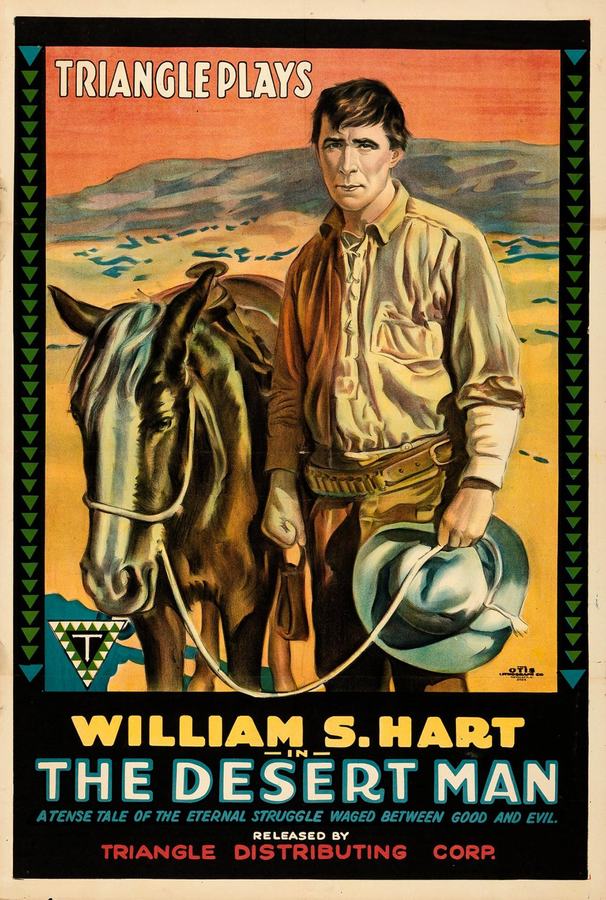
The silent era of cinema, often relegated to the dusty archives of film history, frequently surprises the contemporary viewer with its profound emotional depth and narrative sophistication. Among these treasures lies The Desert Man (1917), a film that, despite its age, resonates with an enduring power, offering a vivid tableau of human resilience against the stark backdrop of the American West. Directed by William S. Hart, who also delivers a commanding performance as the eponymous protagonist, Jim Alton, this picture transcends mere genre convention, delving into themes of unexpected guardianship, the redemptive power of love, and the unyielding pursuit of justice in a land where law was often a personal creed.
At its core, The Desert Man is a story of transformation. Jim Alton, a solitary prospector, embodies the quintessential Western archetype: rugged, taciturn, and seemingly content with the companionship of the vast, unforgiving landscape. His existence is one of quiet self-reliance, until a chance encounter shatters his isolation. Traversing the sun-baked desolation, he discovers a woman in her final moments, her life ebbing away, leaving behind a desperate plea for her young son, Joey. This pivotal scene, rendered with a poignant sobriety characteristic of Hart’s directorial style, immediately establishes the film's emotional stakes. Jim, portrayed with a compelling blend of stoicism and burgeoning tenderness by Hart, accepts this profound responsibility, setting him on an unforeseen path. This isn't merely a plot device; it's the crucible in which Alton's character is forged anew, shifting from solitary wanderer to reluctant protector. The immediate sense of moral obligation that washes over Jim is palpable, even without spoken dialogue, a testament to Hart’s masterful non-verbal communication and the evocative close-ups that define early cinema.
The journey to town with young Joey (Buster Irving, whose innocent presence provides a stark contrast to the harsh realities surrounding him) marks a significant turning point. Here, the narrative expands to introduce the dual forces that will shape Jim's destiny: the brutal antagonist, Razor Joe (Jack Livingston), Joey's biological but utterly depraved father, and Jennie (Margery Wilson), a beacon of purity and strength amidst the dusty frontier. Wilson's portrayal of Jennie is nuanced; she is not merely a damsel in distress but a woman grappling with her own profound sorrow, tending to her dying father (Walt Whitman). The intertwining of these two narrative threads—Jim's burgeoning paternal role and his nascent romantic entanglement—creates a rich tapestry of human experience, elevating the film beyond a simple good-versus-evil Western. The emotional complexity is particularly striking, showcasing the writers, Lambert Hillyer and Martin Brown’s, understanding of character-driven drama even within the seemingly simplistic framework of a silent film. The parallels to other foundational Westerns like The Girl of the Golden West are evident, particularly in the way a hardened man of the frontier finds his humanity through an unexpected bond and the love of a good woman, yet The Desert Man carves its own unique path through the depth of its moral dilemmas.
Razor Joe's malevolent presence is a stark reminder of the lawlessness that often permeated the frontier. Livingston imbues the character with a menacing physicality, a stark foil to Hart's measured intensity. The confrontation between Jim and Joe is inevitable, a clash of diametrically opposed moral codes. Jim's swift expulsion of Razor Joe from the town is not just an act of violence but a declaration of his commitment to protect Joey and, by extension, the burgeoning sense of community he hopes to foster. This act of frontier justice, so common in Western narratives, here feels deeply personal, rooted in Jim's newfound responsibilities. The subsequent scenes, where Jim attempts to establish a home for Joey, are imbued with a quiet pathos, depicting the awkward yet heartfelt efforts of a man unaccustomed to domesticity striving to create stability.
However, the narrative refuses to settle into easy domesticity. The film masterfully introduces further complications, ensuring that the characters are continually tested. Jennie's father's deteriorating condition plunges her into renewed despair, prompting Jim to ride for Dr. Howard (Henry Belmar) in a neighboring town. This journey underscores Jim's selfless nature and his deepening affection for Jennie. Upon the old man's inevitable passing, Dr. Howard, initially a figure of comfort, reveals a more manipulative side, convincing the vulnerable Jennie to marry him. This development is a cruel twist, a betrayal of trust that mirrors the harsh unpredictability of life on the frontier. The doctor, in his calculated deception, represents a different kind of villainy than Razor Joe’s overt brutality—a more insidious, psychological manipulation. It’s a narrative turn that, surprisingly for a film of its era, delves into the complexities of human weakness and moral ambiguity, reminiscent of the more intricate social dramas like The Root of Evil, which explored ethical quandaries within familial and societal structures.
Jennie's discovery of Dr. Howard's existing marriage in New York is a crushing blow, leaving her utterly adrift. Margery Wilson conveys this profound disillusionment with remarkable subtlety, her expressions conveying a world of shattered dreams. Her subsequent decision to seek employment in a dance hall, too proud to return home, is a powerful act of defiance and a desperate bid for independence. This choice, while born of necessity, places her in a precarious social position, highlighting the limited options available to women in that era, particularly those who had fallen from grace through no fault of their own. It’s a narrative element that adds a layer of social commentary, echoing the struggles seen in films like The World's Great Snare, where protagonists often find themselves trapped by circumstance and societal judgment, forced to make difficult choices for survival.
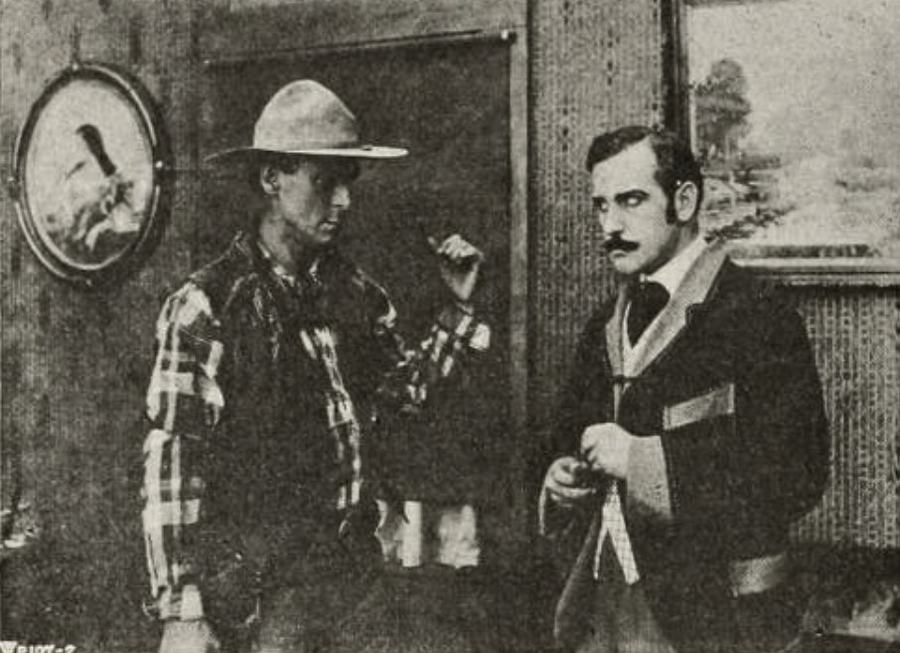
The film's visual language during this period is particularly effective. The contrast between the dusty, sun-drenched exteriors and the dimly lit, often raucous interiors of the dance hall serves to emphasize Jennie's descent into a world she never anticipated. The moral ambiguities of the frontier are starkly drawn here, where even a seemingly respectable professional like a doctor can harbor deceit, and a woman of virtue can find herself in a place of perceived ill repute through no fault of her own. This nuanced portrayal of morality is one of The Desert Man's most compelling strengths, preventing it from devolving into a simplistic morality play. William S. Hart, as both director and star, understood the complexities of the human spirit, even within the archetypal framework of the Western genre. His character, Jim Alton, embodies a stoic moral compass, but the world around him is far from black and white.
Just as the narrative seems to have reached a nadir for Jennie, the film unleashes its final, dramatic confrontation. Razor Joe, a persistent symbol of unvanquished evil, re-enters the fray, kidnapping Joey. This act is not merely a personal vendetta but an assault on the fragile new life Jim has painstakingly built. The abduction reignites Jim's protective fury, propelling him into a desperate pursuit across the familiar, yet ever-threatening, desert landscape. The climax is a classic Western showdown, with Jim confronting Razor Joe and his gang, guns drawn, in a tense struggle for Joey's freedom. The action sequences, though limited by the technical constraints of the era, are executed with a raw intensity that conveys the life-or-death stakes. Hart's prowess as a performer shines brightest in these moments, his steely resolve and unwavering determination palpable through the screen.
The rescue of Joey is not just a victory over Razor Joe; it's a reaffirmation of Jim's commitment to his adopted son and, by extension, his commitment to a future beyond solitary wandering. The film's resolution, where Jim and Jennie are reunited and, together with Joey, embark on a new life as a family, feels earned rather than simply tacked on. It's a culmination of their individual trials and their shared journey toward finding belonging and love in a harsh world. The final scenes are imbued with a quiet optimism, suggesting that even amidst the vastness of the desert, a small, resilient family unit can flourish. This sense of hard-won peace is a hallmark of many classic Westerns, yet The Desert Man achieves it through a particularly circuitous and emotionally taxing route for its protagonists. The film's ability to blend thrilling action with profound emotional arcs makes it a standout. One might even draw parallels to the enduring appeal of stories like The Medicine Man, where the protagonist's journey of self-discovery is inextricably linked to the protection and love he extends to others, ultimately leading to a more complete sense of self and purpose.
The enduring appeal of The Desert Man lies not just in its engaging plot but in its nuanced characterizations and thematic richness. William S. Hart, a seminal figure in the early Western genre, brought an authenticity to his portrayals that set him apart. His characters were often complex men, wrestling with their own moral codes in a lawless land, a departure from the more simplistic heroes that often populated early Westerns. Here, as Jim Alton, Hart embodies the 'good bad man' archetype, a man whose rugged exterior hides a deeply moral core. The supporting cast, including Milton Ross and Josephine Headley in uncredited roles, contribute to the textured world of the film, even if their specific contributions are less highlighted in historical records. The writing by Lambert Hillyer and Martin Brown crafts a narrative that, for its time, was remarkably intricate, weaving together multiple character arcs and plot developments without losing sight of the central emotional core.
Technically, the film leverages the strengths of silent cinema—expressive acting, evocative intertitles, and stark, beautiful cinematography that captures the majesty and menace of the desert. The use of natural landscapes is particularly effective, making the environment an active participant in the story rather than just a backdrop. The wide-open spaces emphasize the characters' isolation and the scale of their struggles, a common yet powerful motif in films of this genre. The film’s pacing, while deliberate by modern standards, allows for a deeper immersion into the characters' emotional states, a luxury often forgone in today's rapid-fire storytelling. It’s a masterclass in visual storytelling, where every gesture, every gaze, every shift in scenery carries narrative weight. For those interested in the foundational elements of American cinema, and particularly the evolution of the Western, The Desert Man offers invaluable insights.
In an era dominated by spectacle and fleeting trends, revisiting a film like The Desert Man is a refreshing experience. It reminds us that compelling narratives, strong character development, and universal themes of love, loss, and redemption are timeless, transcending technological limitations. William S. Hart’s vision, brought to life by a dedicated cast and crew, crafted a film that is not merely a historical artifact but a vibrant piece of cinematic art that continues to speak to the human condition. It stands as a testament to the power of silent film to convey profound emotion and complex storytelling, proving that the silent screen was anything but silent in its impact. For enthusiasts of classic Westerns and those curious about the roots of cinematic storytelling, The Desert Man is an essential viewing, a journey into a bygone era that still resonates with contemporary relevance. It’s a stark, beautiful, and ultimately uplifting story of how even in the most desolate of landscapes, hope and connection can take root and flourish. Much like A Kentucky Cinderella explored the transformative power of love and perseverance in a different setting, this film champions the spirit of those who refuse to yield to adversity, finding strength in unexpected bonds and forging a future against all odds.
IMDb 5.4
1930
Community
Log in to comment.