DbcultAccessing Vault...
Cult Review
Senior Film Conservator
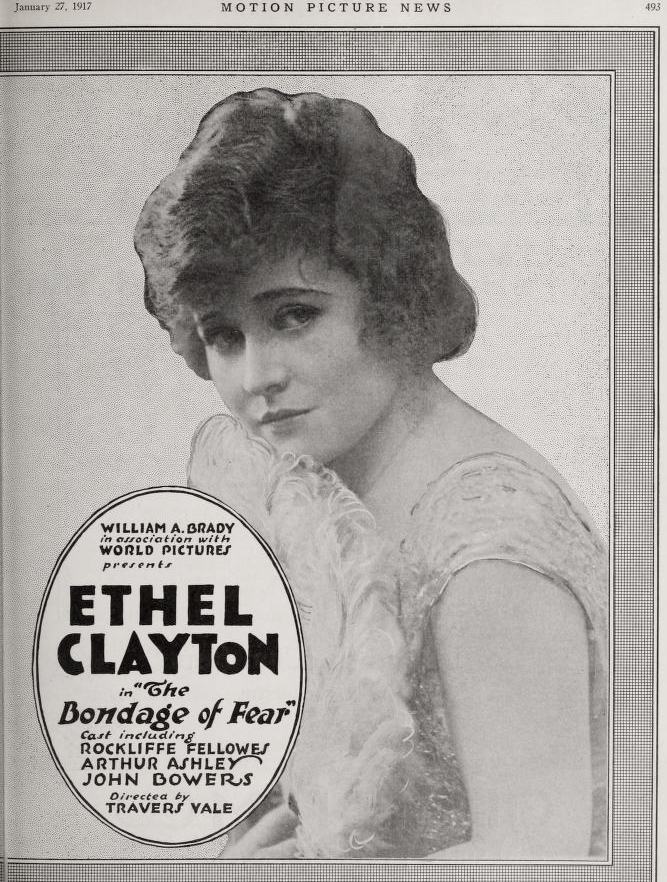
Stepping into the spectral glow of early cinema, one often encounters narratives that, despite their age, resonate with an astonishing contemporary psychological depth. The Bondage of Fear, a 1917 silent film, is precisely such a creation, a potent brew of romantic entanglement, unforeseen violence, and the crushing weight of a secret. Directed with a keen eye for human frailty and the insidious creep of guilt, this picture, starring the incomparable Ethel Clayton, Rockliffe Fellowes, and Edward Kimball, transcends its era to deliver a character study that is both harrowing and ultimately, profoundly liberating. It’s a testament to the enduring power of silent storytelling, where every gesture, every flicker of an eye, carries the weight of unspoken emotion.
At its heart lies Vesta Wheatley, a character etched with a complexity that belies the often-simplistic portrayals of women in early film. Initially, we find her ensconced in the comfortable, if somewhat naive, platonic friendship with Dick Mortimer. Their bond, a relic of shared childhoods, is one she cherishes, yet when Dick dares to elevate it to romantic affection, proposing marriage, Vesta recoils. Her refusal, framed as a desire to preserve the purity of their friendship from the perceived "spoilage" of love, hints at a deeper, perhaps unacknowledged, apprehension towards the transformative power of passion. This early scene sets a crucial precedent, establishing Vesta not as a passive recipient of affection, but as a woman with agency, albeit one whose choices will lead her down a perilous path.
The narrative then introduces John Randolph, a figure of urban sophistication and wealth, whose magnetic pull proves irresistible to Vesta. Their romance blossoms swiftly, culminating in a quiet wedding that promises a life of comfort and social standing. Yet, the film subtly suggests that Vesta's happiness, while genuine, is tinged with a nascent curiosity, a desire to taste the "worldly pleasures" previously unknown to her. This brief, almost ethereal flirtation with the periphery of conventional morality is swiftly reined in, as she returns to her husband with what appears to be an "increased love and respect." It's a fascinating, almost subversive, arc for a female protagonist of the era, hinting at an inner life far more adventurous than her demure exterior suggests. One might draw parallels here to films like Each Pearl a Tear, where societal expectations often clash with a woman's personal desires and moral dilemmas.
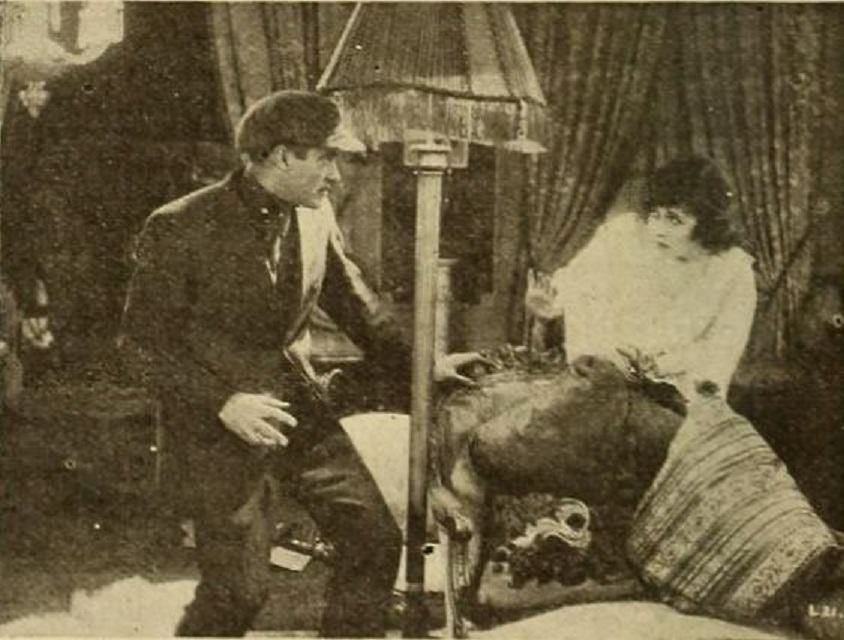
The catalyst for the story's dramatic escalation arrives with Dick Mortimer's inability to reconcile himself with Vesta's new life. Unable to bear the quietude of village existence post-Vesta's marriage, he gravitates to the bustling city, a decision that inevitably leads to a chance encounter with Vesta. Her innocent invitation for him to call, perhaps born of residual affection or merely polite social convention, proves to be a fatal miscalculation. John Randolph's unexpected return home, discovering Dick in conversation with his wife, ignites a dormant suspicion. A flashback, skillfully employed, reveals John's prior observation of Dick "making love" to Vesta in the country before their marriage, painting Dick's presence in their home in a far more sinister light. The film masterfully builds this tension, creating a sense of impending doom through unspoken glances and subtle shifts in body language, a technique that could be compared to the psychological undercurrents found in The World's Great Snare, where hidden pasts unravel present tranquility.
Despite his burgeoning mistrust, John suppresses his suspicions, and the couple retreats to their country lodge, a setting that, ironically, becomes the stage for the true horror. Dick, consumed by an obsessive longing for Vesta, follows them, his actions driven by a desperate, almost pathological, desire. His illicit entry into the lodge during John's absence marks a point of no return. Vesta's vehement rejection of his renewed declaration of love is not merely a moral stance but a desperate plea for self-preservation, a recognition of the precipice upon which they stand. The sudden noise outside, a harbinger of doom, intensifies her plea for Dick to leave. But it is too late. The door is violently breached, and "Skinny," a menacing gangster, bursts onto the scene, a brutal intrusion of raw criminality into this simmering domestic drama.
The ensuing struggle is swift and brutal, culminating in Dick's tragic, unexpected death at Skinny's hand. Vesta's immediate reaction—grabbing the pistol and holding Skinny at bay—demonstrates a fierce, primal instinct for self-defense, a moment of heroic defiance. However, it is Skinny's chilling counter-threat, his cold calculation regarding the scandal that would inevitably erupt should Vesta alert the authorities, that utterly disarms her. Cowed by the prospect of public ruin, of her carefully constructed life crumbling into ignominy, Vesta is forced into a horrifying silence, compelled to watch as Skinny drags Dick's lifeless body away, erasing the evidence of his crime and, in doing so, binding Vesta to a terrible secret. This moment of forced complicity is a brilliant, if chilling, narrative stroke, transforming Vesta from a victim into an unwilling participant in a cover-up, echoing the moral compromises faced by characters in films such as The Law Decides, where characters grapple with the complexities of justice and self-preservation outside conventional legal frameworks.
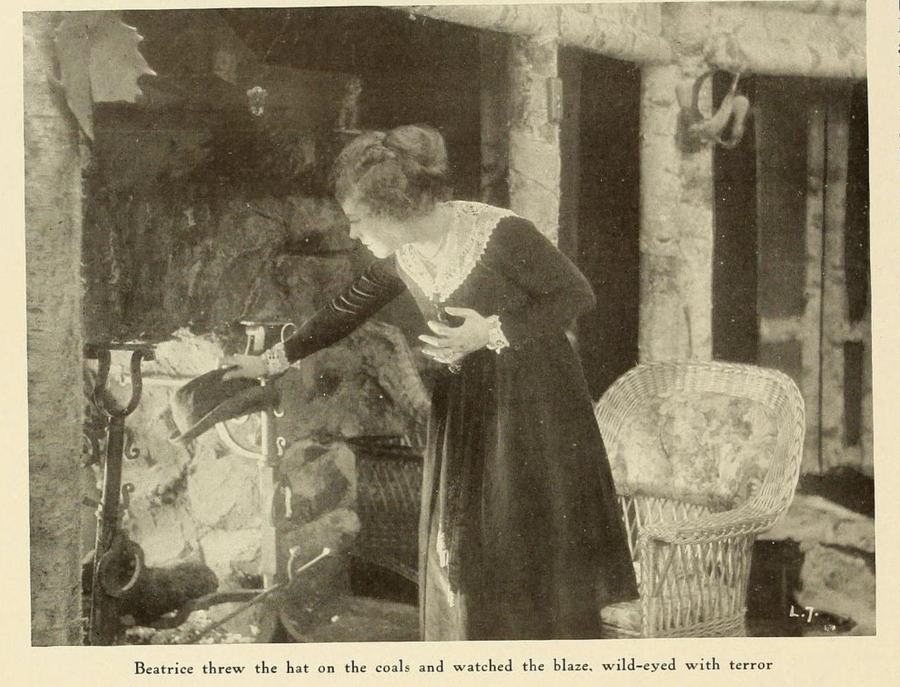
The aftermath of Dick's murder plunges Vesta into a psychological purgatory. Though her husband remains blissfully unaware, Vesta is haunted by the specter of the crime, her peace shattered by the incessant demands of Skinny, who exploits her secret for frequent, escalating blackmail. The film, in this phase, becomes a profound exploration of guilt, fear, and the corrosive power of secrets. Ethel Clayton's performance here is particularly poignant, conveying the unbearable weight of Vesta's torment through subtle facial expressions and body language, a masterclass in silent film acting. This sustained psychological pressure is reminiscent of the intense internal struggles depicted in films like Kindling, where characters are pushed to their breaking point by emotional and societal burdens.
The climax arrives when Skinny, emboldened by Vesta's compliance, demands an enormous sum, pushing her beyond the brink of endurance. In a moment of sheer desperation, perhaps even a nascent reclaiming of agency, Vesta seizes a pistol and kills him. This act, born of an unbearable psychological burden, is immediately followed by a chillingly composed, almost calculating, maneuver. She stages the scene, fabricating a story for the police: a burglar, a struggle, self-defense. Her performance, convincing and precise, leads the arriving officers to pronounce the killing justifiable. The "bondage of fear" is finally severed, not by external justice, but by Vesta's own decisive, if morally ambiguous, action. The film brilliantly avoids a simplistic moral judgment, instead presenting a complex portrait of survival in a world where justice is not always clear-cut, and where a woman's agency might emerge from the most desperate of circumstances, a stark contrast to the more straightforward heroic arcs often seen in adventure films like Elusive Isabel.
The final moments of The Bondage of Fear are unsettling in their resolution. Vesta is depicted as "happy with her husband, knowing that her tormentor is out of the way." This ending, while offering a form of relief for Vesta, leaves the audience with lingering questions about the true cost of her freedom. Has she truly escaped the bondage of fear, or merely exchanged one form of psychological burden for another – that of living with her own violent secret? The film brilliantly avoids a simplistic moral judgment, instead presenting a complex portrait of survival in a world where justice is not always clear-cut, and where a woman's agency might emerge from the most desperate of circumstances. It’s a powerful statement on the lengths to which individuals will go to protect their lives and reputations, a theme explored with different nuances in films like The Target, where characters are often forced into extreme actions.
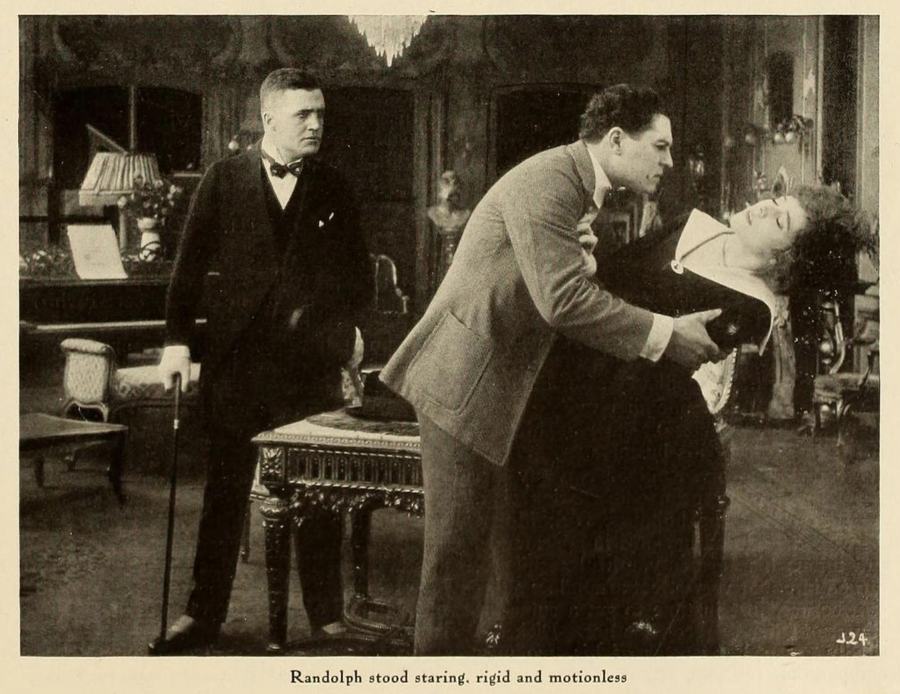
Ethel Clayton delivers a truly memorable performance as Vesta, navigating the character's journey from innocent friend to conflicted wife, from terrified victim to decisive survivor, with remarkable emotional range. Her expressive eyes and subtle physicality convey volumes, making Vesta's internal struggles palpable to the audience. Rockliffe Fellowes as Dick Mortimer effectively portrays the destructive nature of unrequited obsession, while Edward Kimball's John Randolph embodies the unwitting husband, a symbol of the domestic peace that Vesta desperately seeks to preserve. The film's writers, Thomas J. Kelly and Rosalind Ivan, craft a narrative that, while adhering to certain melodramatic conventions of the era, delves into surprisingly modern psychological territory, offering a glimpse into the darker corners of human nature.
In conclusion, The Bondage of Fear stands as a compelling example of early cinema's capacity for intricate storytelling and profound character development. It’s not merely a crime drama or a romance, but a nuanced psychological thriller that explores themes of desire, betrayal, blackmail, and the ultimate struggle for personal liberation. For those interested in the evolution of cinematic narrative, and particularly in the portrayal of complex female protagonists in silent film, this picture is an essential viewing. It reminds us that even in the absence of spoken dialogue, the human condition, with all its moral ambiguities and desperate struggles, can be communicated with astonishing power and clarity. The film's lasting impact lies in its unflinching portrayal of a woman forced to confront her deepest fears and make impossible choices, leaving an indelible mark on the viewer long after the final frame. The echoes of its themes can be seen in later, more celebrated works, proving its foundational strength in the tapestry of cinematic history.
Cast & Crew Highlights:
IMDb 7.4
1935
Community
Log in to comment.