DbcultAccessing Vault...
Cult Review
Senior Film Conservator
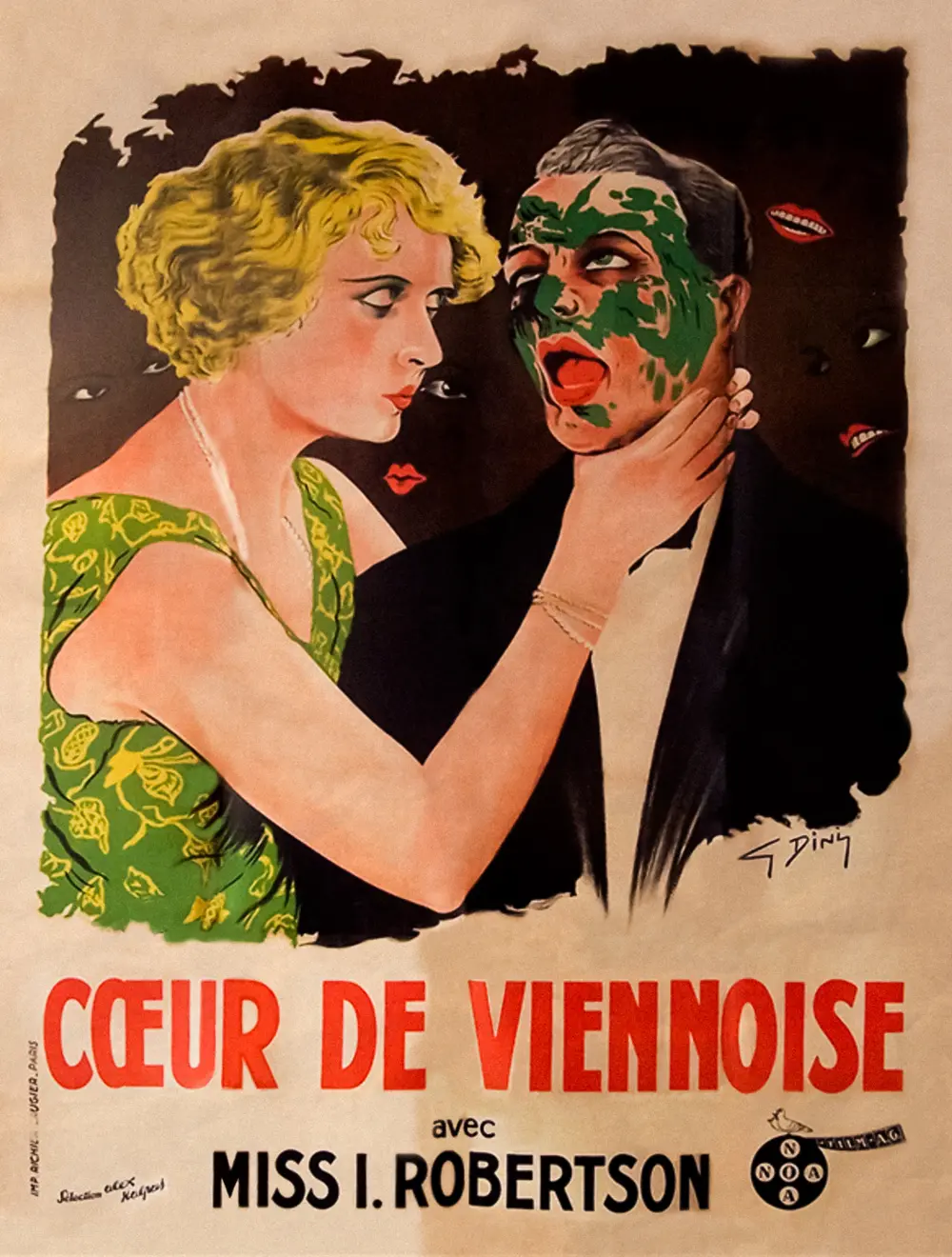
Short answer: yes, but with significant caveats. "Das süße Mädel" isn't a film for everyone, but for those with an appreciation for the foundational artistry of silent cinema, it offers a surprisingly engaging and historically rich experience. It works.
This film is absolutely for the cinephile, the historian, and anyone curious about the roots of cinematic storytelling. It's a window into a bygone era, a chance to witness the craft of early German filmmakers and performers like Hanni Reinwald, Ernst Morgan, and Paul Heidemann before the talkies reshaped everything. Its charm lies in its simplicity and its evocative power, a testament to what could be achieved with gesture, expression, and the nascent language of film.
Conversely, this film is decidedly NOT for viewers seeking fast-paced plots, complex dialogue, or modern production values. If you struggle with intertitles, prefer sound over silence, or demand contemporary narrative structures, "Das süße Mädel" will likely feel slow, perhaps even tedious. It requires patience and a willingness to meet it on its own terms, a journey back in time rather than a sprint through a multiplex.
To approach "Das süße Mädel" is to embark on an archaeological dig, unearthing the delicate craftsmanship of a cinema that predates the grand narratives and technical wizardry we now take for granted. This isn't a blockbuster; it's a whisper from the past, a silent film whose title alone, 'The Sweet Girl,' promises a gentle, perhaps melancholic, character study rather than high drama. And in that promise, it delivers a quiet, unassuming beauty.
The film, as a product of its time, resonates with a particular charm. It’s a testament to the ingenuity of filmmakers who had to convey entire worlds through expression, gesture, and the carefully composed frame. The brilliance of early cinema, often overlooked, lies in its demand for audience participation, for the viewer to fill in the gaps, to interpret the nuanced facial shifts of performers like Hanni Reinwald, who, in her portrayal of the titular 'sweet girl,' becomes the emotional anchor.
One might argue that the very lack of sound forces a deeper connection to the visual narrative, making every subtle movement, every tilt of the head, every set piece profoundly significant. It’s a challenge that, when met by skilled artists, yields a uniquely pure form of storytelling.
The performances in "Das süße Mädel" are, as expected for the era, a masterclass in physical acting. Hanni Reinwald, likely embodying the innocent charm suggested by the title, would have relied heavily on exaggerated yet precise gestures and facial expressions to convey emotion. Silent film acting is often unfairly caricatured as overly theatrical, but in the hands of a capable performer, it achieves a profound emotional clarity that transcends language barriers.
Consider a scene where our 'sweet girl' might experience a moment of joy or sorrow. Reinwald wouldn't have the luxury of a spoken line to articulate her feelings. Instead, a wide, open smile, a tilt of the head, or a sudden, dramatic slump of the shoulders would have to do the work of entire paragraphs of dialogue. This demands an incredible discipline and an innate understanding of human emotion, distilled to its most fundamental visual cues.
Ernst Morgan and Paul Heidemann, playing their respective roles, would have complemented Reinwald’s performance with their own distinct styles. Morgan, perhaps as a dashing suitor or a benevolent mentor, would use his posture and eye contact to project confidence or concern. Heidemann, possibly as a rival or a comic foil, would employ more overtly physical comedy or dramatic tension, his expressions broad enough to be understood even from the back row of a bustling cinema. This ensemble work, despite its silence, speaks volumes.
The brilliance of these actors is that they don't just act; they *emote* on a grand scale, ensuring that even the most fleeting sentiment is understood. It’s a performative style that, while different from modern method acting, is no less valid or impactful. In fact, one could argue it’s more demanding, requiring a constant, visible projection of inner life.
The direction in "Das süße Mädel," while perhaps not groundbreaking by today's standards, would have been highly effective for its period. Early cinema often relied on a more theatrical blocking, framing scenes in wide shots that resembled a stage play. However, by the mid-1920s, German cinema, particularly with the rise of Expressionism, was already experimenting with more dynamic camera work and lighting.
One can imagine director Manfred Noa, or perhaps another uncredited hand, employing thoughtful compositions, using deep focus to draw attention to multiple elements within a single frame, or strategically introducing close-ups to emphasize key emotional beats. A particular shot might feature Reinwald in the foreground, her face etched with concern, while in the background, a subtle action unfolds – perhaps a letter being passed, or a figure observing from a distance. This layered visual storytelling is where silent film direction truly shines.
The use of intertitles, far from being a mere textual interruption, was an integral part of the cinematic rhythm. They weren't just exposition; they were part of the visual flow, often designed with artistic flair, setting the mood or delivering punchlines. The pacing of these intertitles, their length on screen, and their placement within a scene, speaks volumes about the director's understanding of audience engagement. They are the film's voice, guiding the viewer through its emotional landscape.
Compare this to a contemporary film like The Forbidden City, which might have relied on grander spectacles. "Das süße Mädel" likely finds its strength in intimacy, in the smaller, human moments that resonate universally, regardless of the era. The director's skill would be in making these moments feel significant and visually compelling, using light and shadow to sculpt emotion, guiding the audience's eye with subtle camera movements or a sudden, impactful cut.
The cinematography of "Das süße Mädel" would have been crucial in establishing its tone and conveying its narrative without spoken words. Early German cinema was known for its innovative use of light and shadow, often predating and influencing Hollywood’s film noir aesthetic. One can envision scenes bathed in soft, diffused light to emphasize Reinwald's innocence, contrasting with harsher, more dramatic lighting for moments of conflict or intrigue.
Set design would have played an equally important role, serving as both backdrop and character. A bustling marketplace, a cozy parlor, or a grand ballroom – each set would be meticulously crafted to provide context and atmosphere. The details, from the pattern on a wallpaper to the arrangement of furniture, would not just fill the space but actively contribute to the storytelling, hinting at social status, personal taste, or the changing times.
Imagine a scene where the 'sweet girl' is introduced in a modest, sun-drenched cottage, all soft fabrics and simple furnishings, immediately conveying her humble origins and pure heart. Later, she might find herself in a more opulent, perhaps slightly overwhelming, urban environment, the stark lines and grand scale of the sets visually representing her journey and the challenges she faces. This visual shorthand is incredibly powerful.
The camera, operated by skilled cinematographers, would frame these environments with an artist's eye, composing shots that are not just informative but also beautiful. The textures, the depth of field, the interplay of light and dark – these are the silent film's dialogue, speaking directly to the viewer's emotions. It's a visual poetry that modern cinema, with its reliance on rapid cuts and special effects, sometimes forgets.
The pacing of "Das süße Mädel" is a point where modern viewers might either find profound appreciation or significant challenge. Silent films operate on a different rhythm than their sound counterparts. The absence of dialogue means that scenes often linger longer, allowing the audience to absorb the visual information, the expressions, and the implications of each gesture. Intertitles, while breaking up the visual flow, also provide moments of pause, allowing for reflection and anticipation.
This deliberate cadence can feel slow if one expects the quick-fire editing of today. However, it also allows for a deeper immersion into the film's world, a meditative quality that encourages careful observation. It's less about plot points rushing by and more about savoring the unfolding narrative, much like reading a novel where each sentence is given its due weight. It's a rhythm that fosters connection, not just consumption.
The tone, suggested by 'The Sweet Girl,' is likely a blend of lighthearted romance, gentle comedy, and perhaps a touch of melodrama – a common cocktail for films of this period. There would be moments of pure, innocent joy, perhaps a comical misunderstanding involving Paul Heidemann, and moments of genuine emotional struggle for Hanni Reinwald's character. The film navigates these shifts with a fluidity achieved through visual cues, a raised eyebrow here, a sudden shadow there, guiding the audience through its emotional landscape.
It’s a tonal balance that speaks to the sensibilities of its era, a time when cinema was still finding its voice, experimenting with how best to entertain and move an audience. While a film like The Knockout might prioritize physical comedy, "Das süße Mädel" leans into the emotional tapestry of its protagonist.
Here's an unconventional thought: the real strength of "Das süße Mädel" isn't just its story or its performances, but its unintentional role as a time capsule for social etiquette. Watching these films, you don't just see a narrative; you observe how people moved, dressed, interacted, and expressed themselves in a world that is utterly alien yet fundamentally human. The nuances of a bow, the formality of a greeting, the way a hat is worn – these are ethnographic details that are often more compelling than the explicit plot.
I firmly believe that silent cinema, particularly a film like "Das süße Mädel," offers a more profound understanding of the 'human condition' than many modern films. Stripped of dialogue and sound, the raw, unfiltered emotion conveyed through the actors' bodies and faces becomes universally legible, bypassing cultural and linguistic barriers in a way that spoken word often cannot. It forces a deeper empathy.
Another debatable opinion: the 'sweet girl' archetype, often dismissed as simplistic or naive, is actually a powerful vehicle for social commentary in films of this era. Her innocence highlights the corruption, the artifice, or the simple hardships of the world around her. She isn't just a character; she's a moral compass, and Hanni Reinwald’s portrayal would have been central to this.
The film's enduring appeal, for those willing to engage, lies not in its spectacle, but in its quiet humanity. It’s a film that asks you to slow down, to observe, and to truly feel, rather than merely consume. It works. But it’s flawed. Its deliberate pace is both its greatest asset and its biggest hurdle.
"Das süße Mädel" is more than just a film; it's a journey back to the genesis of cinematic art. It’s not a film for casual viewing, nor is it designed to compete with the sensory overload of today's blockbusters. Instead, it offers a different kind of reward: the quiet satisfaction of witnessing pure visual storytelling, of connecting with human emotion distilled to its most fundamental form. Hanni Reinwald's likely captivating performance, coupled with the understated elegance of early German direction, makes this a valuable, if challenging, viewing experience.
For those willing to invest the time and embrace its unique cadence, "Das süße Mädel" is a charming and insightful artifact. It reminds us that cinema's power lies not just in what it shows or tells, but in how it makes us feel, even in silence. It's a sweet, gentle film that, despite its age, still has something meaningful to say about human nature and the timeless appeal of a simple, honest story. It stands as a quiet counterpoint to the bombast of films like The Rise of Susan, proving that sometimes, less is indeed more.
IMDb 4.5
1916
Community
Log in to comment.