DbcultAccessing Vault...
Cult Review
Senior Film Conservator
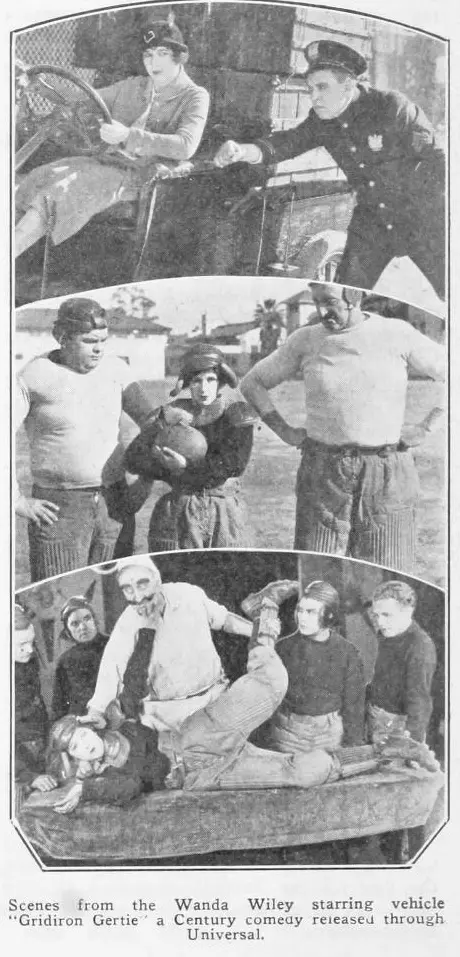
Is Gridiron Gertie worth dusting off today? Short answer: absolutely, but temper your expectations with a keen understanding of its historical context. This isn't merely an archival curiosity; it's a vibrant, if brief, snapshot of early filmmaking that still manages to entertain and even surprise a century later. It's a film for those who appreciate the foundational elements of cinematic storytelling, for historians of sport and gender roles in media, and for anyone seeking a delightful, unconventional underdog tale.
However, if your cinematic palate demands modern pacing, intricate character arcs, or high-fidelity visuals, Gridiron Gertie will likely fall short. This isn't a film designed for casual, passive viewing; it rewards an engaged, appreciative audience willing to meet it on its own terms. It is decidedly NOT for viewers who find silent film a chore or who are unwilling to look past primitive production values.
At its core, Gridiron Gertie is a testament to the power of the unexpected. The narrative, simple as it is, speaks volumes about resilience and subverting norms. Wanda's journey isn't just about winning a football game; it's about a woman stepping into a role traditionally denied to her, not through protest, but through sheer necessity and ingenuity. Edward Ludwig, in his directorial efforts, crafts a surprisingly engaging spectacle given the constraints of the era.
The film works because it taps into a universal appeal: the underdog triumphing against impossible odds. Wanda Wiley, as the titular Gertie, embodies this spirit with a physical performance that must have been exhilarating for audiences of the time. Her 'wits and tricky playing' are the engine of the film's charm, showcasing a cleverness that transcends the physical disparity between her and her male counterparts. This is not just a comedic short; it's a proto-feminist statement wrapped in slapstick.
This film fails because its brevity and the limitations of silent-era storytelling prevent deeper exploration of its fascinating premise. We glimpse Wanda's struggle and triumph, but the emotional resonance, the societal implications of her actions, are merely hinted at rather than fully explored. The 'pretty well roughed up' aspect, while a source of physical comedy, lacks the dramatic weight it might carry in a more developed narrative. One wishes for more scenes exploring her internal conflict or the reactions of the crowd and her teammates beyond simple cheers or jeers.
You should watch it if you are a fan of early cinema, appreciate historical curiosities, or enjoy simple, character-driven comedies where cleverness trumps brute force. It's also a fascinating piece for anyone interested in the portrayal of women in early sports narratives.
Wanda Wiley's portrayal of Gertie is the undeniable heart of this short. Without dialogue, her performance relies entirely on physical comedy, expressive facial work, and a palpable sense of determination. It’s a masterclass in silent film acting, conveying a range of emotions from initial trepidation to fierce resolve and eventual triumph. She's not just a woman playing football; she's a character with agency, a pioneering figure in a cinematic landscape often dominated by more passive female roles.
Consider the moments where she's 'roughed up.' Wiley doesn't just fall; she contorts, she reacts with exaggerated gasps and wide-eyed surprise, making every tackle a mini-drama. This isn't merely pain; it's a comedic resilience. When she employs her 'tricky playing,' one can almost see the gears turning in her head, a mischievous glint in her eye before she executes a clever dodge or an unexpected pass. It's a performance that demands attention, pulling the viewer into her plight and cheering for her improbable success.
Joe Bonner, as her ailing sweetheart, provides the initial catalyst, but his role is largely reactive. Les Bates and the unnamed ensemble players effectively create the rough-and-tumble environment of the football field. Their aggressive, almost cartoonish tackles provide the perfect foil for Wanda’s more agile and intelligent approach. The physicality is broad, a hallmark of silent comedy, and it serves the story well, emphasizing the challenge Wanda faces.
Edward Ludwig, in his early directorial outing, demonstrates a keen eye for action, particularly within the confines of a football game. He manages to convey the chaos and speed of the sport with surprising clarity for the era. The camera, while largely static by today's standards, is positioned effectively to capture the key plays, Wanda's reactions, and the general flow of the game.
There are moments of genuine ingenuity in how Ludwig frames the action. One can imagine a sequence where Wanda, clutching the ball, is seen in a medium shot, her eyes darting left and right, planning her next move, before a quick cut to a wider shot reveals her executing a bewildering pivot that leaves a hulking defender grasping at air. This kind of visual storytelling is economical yet effective, driving the narrative forward without a single intertitle explaining her strategy.
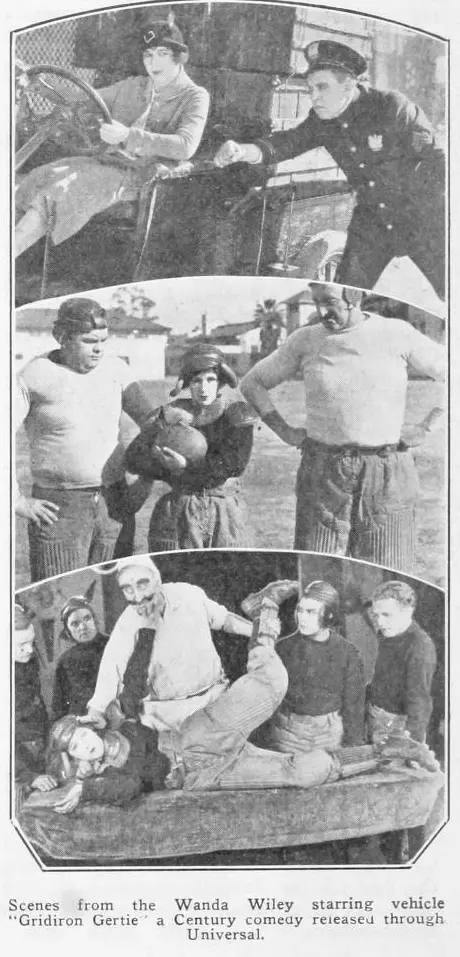
The editing, while not rapid-fire, maintains a decent pace, particularly during the game sequences. Ludwig understands the need to build suspense and excitement, even in a short film. The cuts between the action on the field and the reactions of the sidelines, or perhaps a close-up of the scoreboard, are rudimentary but serve their purpose in keeping the audience engaged. It’s a simple, functional approach that prioritizes clarity and comedic impact over stylistic flair.
As a silent short, Gridiron Gertie moves at a brisk pace. There's no time for meandering subplots or extensive character development. The film gets straight to the point: sweetheart gets sick, Wanda steps in, game ensues, Wanda wins. This directness is both a strength and a limitation. It ensures that the audience remains focused on the central conflict and its comedic resolution, but it also means that any deeper themes are only superficially explored.
The tone is overtly comedic, leaning heavily into slapstick and the inherent absurdity of a woman playing against men in a rough sport. The humor is physical, broad, and largely relies on the visual gags of Wanda's cleverness against the men's brute force. There’s a lightness to it, a sense of fun that prevents the 'roughing up' from feeling genuinely brutal. It’s a delightful, almost innocent humor that contrasts sharply with the often cynical comedies of later eras.
Compared to other films of its time, such as The Scarecrow, which also relied heavily on physical comedy and a concise narrative, Gridiron Gertie holds its own. It might not have the same iconic status, but it shares that spirit of inventive, visual storytelling. Its brevity ensures that it never overstays its welcome, leaving the viewer with a smile and a sense of admiration for Wanda's ingenuity.
Absolutely, yes. Gridiron Gertie is a charming, historically significant silent film. It offers a unique glimpse into early cinema and societal norms. While short and lacking modern complexity, its pioneering spirit and physical comedy make it a worthwhile watch for specific audiences. It works. But it’s flawed.
For silent film aficionados, it's a must-see. For anyone interested in the evolution of sports films, it provides a fascinating early example, particularly regarding gender roles. It's a quick, entertaining watch that provides more than just historical context; it delivers genuine laughs and a heartwarming underdog story.
However, if you're expecting the intricate plot lines or high production values of contemporary cinema, you will be disappointed. This film is a product of its time, and its enjoyment hinges on an appreciation for those specific qualities. It’s a film that requires a certain generosity from the viewer, an understanding that its value isn’t measured by today’s standards, but by its own historical and artistic merits.
Gridiron Gertie, despite its relative obscurity compared to other silent classics, carries a surprising cultural weight. It's an early example of a female protagonist excelling in a traditionally male sport, predating many similar narratives by decades. This isn't just a quirky short; it's a tiny, powerful ripple in the larger conversation about gender representation in media and sports. One could even draw a tenuous line from Gertie's grit to modern narratives of female athletes breaking barriers, making it an unexpectedly relevant piece of film history.
Its existence challenges the notion that early cinema was solely about passive female roles. Wanda Wiley's Gertie is active, intelligent, and ultimately triumphant through her own agency. This is a subtle but potent observation, often overlooked when discussing films from this era. It's a film that, perhaps unintentionally, champions the idea that skill and intellect can overcome physical disadvantage, regardless of gender.
While it won't be screened in major retrospectives alongside a Chaplin or Keaton, its unique premise and its protagonist's spirit grant it a special place in the annals of forgotten gems. It's a film that deserves to be rediscovered, not just for its historical value, but for its sheer, unadulterated entertainment.
Gridiron Gertie is far more than a historical footnote. It's a spirited, if brief, cinematic experience that showcases the enduring appeal of the underdog narrative and the power of clever, physical comedy. Wanda Wiley’s performance is a revelation, a testament to the skill of silent film actors who could convey so much without a single spoken word. Edward Ludwig’s direction, while straightforward, effectively captures the energy of the game and the charm of its protagonist.
While it won't redefine your cinematic palate, it will certainly offer a delightful diversion and a valuable insight into the nascent stages of filmmaking. Its limitations are largely a product of its time and format, but its strengths — particularly its pioneering spirit and comedic heart — shine through brightly. For those willing to embrace its silent charm, Gridiron Gertie is a surprisingly robust and thoroughly enjoyable early sports comedy. It's a small film with a big heart, and it absolutely deserves a place in the conversation about influential, if overlooked, silent era works. Don't expect a modern blockbuster; expect a slice of genuine, historical fun that still resonates today.
IMDb 5.5
1920
Community
Log in to comment.