DbcultAccessing Vault...
5.1/10
Senior Film Conservator
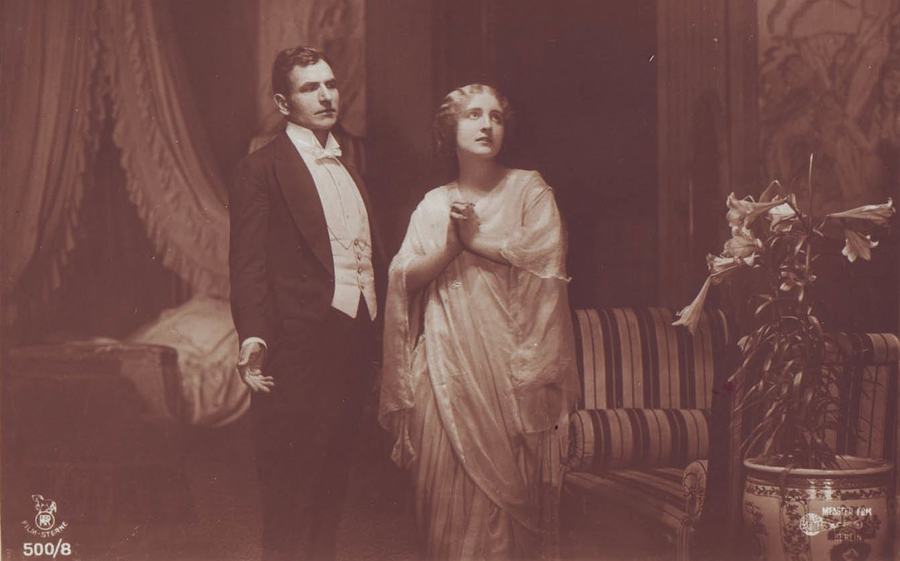
A definitive 5.1/10 rating for a film that redefined the boundaries of cult cinema. Das wandernde Licht remains a cornerstone of transgressive art.
In the nascent years of German cinema, a period pulsating with experimental energy and the burgeoning language of the moving image, certain films emerge not merely as historical artifacts but as vital precursors, offering profound insights into the artistic and psychological currents that would soon define an era. Robert Wiene’s 1916 production, Das wandernde Licht, stands as one such pivotal work, a silent drama that delves into the unsettling realms of suspicion, mental fragility, and societal expectation with a remarkable prescience. Far from a simple melodramatic construct, this film, propelled by the magnetic presence of Henny Porten, orchestrates a narrative symphony of unease, meticulously building a world where the foundations of truth are constantly eroded by insinuation and the specter of inherited affliction.
At its heart, Das wandernde Licht is a chilling exploration of psychological torment inflicted upon its protagonist, Anna von Glassner, on the precipice of one of life's most significant commitments. The plot, deceptively straightforward in its initial premise—a young woman, Anna, engaged to Count von Fahrenwald, begins to receive anonymous letters alleging her fiancé’s insanity—unfurls into a complex tapestry of doubt and investigation. These missives, arriving like harbingers of doom, do not merely state a fact; they plant a seed of terror, forcing Anna to question not only the man she is about to marry but also the very fabric of her perception. The film masterfully exploits the inherent vulnerability of its heroine, positioning her at the nexus of personal desire and overwhelming societal pressure. The expectation of marriage, particularly within the aristocracy, carries an immense weight, and Anna's dilemma is compounded by the public scrutiny and the potential shame associated with breaking an engagement, especially one involving such a grave accusation.
The brilliance of the screenplay, attributed to Ernst von Wildenbruch, Irene Daland, and Robert Wiene himself, lies in its refusal to offer easy answers. Instead, it immerses the viewer in Anna's subjective experience, allowing us to share in her mounting anxiety and her desperate quest for clarity. Is the Count truly afflicted, or is this a cruel machination, a deliberate attempt to sabotage her happiness? The film's title, 'The Wandering Light,' itself suggests an elusive truth, a flickering illumination that offers glimpses but never absolute certainty. This narrative strategy, which prioritizes the psychological journey over overt dramatic flourishes, distinguishes it from more overtly sensationalist contemporary works. While a film like Cocaine Traffic; or, the Drug Terror might rely on explicit moralizing and stark depictions of vice, Das wandernde Licht operates on a more subtle, insidious level, exploring the terror that resides within the mind rather than in external threats.
To speak of Das wandernde Licht without extolling the virtues of Henny Porten's performance would be a critical oversight of monumental proportions. Porten, a colossal figure in early German cinema, imbues Anna with a profound depth and vulnerability that elevates the film beyond mere genre fare. Her portrayal is a masterclass in silent acting, relying on nuanced facial expressions, subtle gestures, and an almost palpable inner turmoil to convey Anna's escalating distress. We witness her transition from an eager, if somewhat naive, bride-to-be into a woman consumed by dread, her eyes reflecting a growing weariness and suspicion. It is a performance of immense restraint and power, avoiding the theatrical excesses that often characterized silent film acting of the era. Porten’s Anna is not a passive victim; she is an active investigator, albeit one trapped by the conventions of her time, determined to uncover the truth, even if that truth promises to shatter her world.
Her ability to convey complex emotional states without a single spoken word is a testament to her extraordinary talent. The close-ups on Porten’s face are particularly potent, revealing the subtle shifts in her character’s psychological landscape – the fleeting hope, the sudden plunge into despair, the determined resolve. In an era where female characters were often reduced to archetypes, Porten crafts a woman of genuine complexity, making Anna's plight resonate deeply with contemporary audiences. Her presence anchors the film, providing a human focal point amidst the swirling currents of mystery and potential madness. This kind of intense, character-driven narrative, relying heavily on the lead actor's ability to convey internal states, set a precedent for later, more overtly psychological dramas. One might draw a thematic parallel to the intense emotionality found in American films like The Italian, where social pressures and personal tragedies are navigated with raw, expressive performances, albeit with different cultural specificities.
Robert Wiene, a director whose name would later become synonymous with the Expressionist movement, demonstrates an early command of atmospheric tension and visual storytelling in Das wandernde Licht. While not yet fully embracing the distorted sets and highly stylized aesthetics of his later, more famous works, Wiene nonetheless employs lighting, composition, and mise-en-scène to great effect. The shadows that play across the opulent interiors, the framing of characters within doorways or against imposing architectural elements, all contribute to a pervasive sense of confinement and foreboding. He understands that in a silent film, visual cues must carry the weight of dialogue, and he uses every tool at his disposal to communicate Anna's encroaching isolation and fear.
The pacing of the film is deliberate, allowing the suspense to simmer rather than explode. The gradual accumulation of evidence, or rather, of suggestive details, keeps the audience perpetually off balance, mirroring Anna’s own disorientation. Wiene’s direction is marked by an intelligence that understands the power of the unseen and the unspoken. The alleged madness of the Count is not graphically depicted but is instead suggested through the reactions of others, the subtle shifts in Bruno Decarli’s portrayal, and the mounting tension within the narrative. This approach contrasts sharply with films that might rely on more overt displays of conflict or danger, such as the direct physical threats depicted in adventure serials like The Hazards of Helen. Wiene’s genius here lies in his ability to create a sense of profound psychological peril without resorting to overt melodrama, a testament to his nascent but formidable talent.
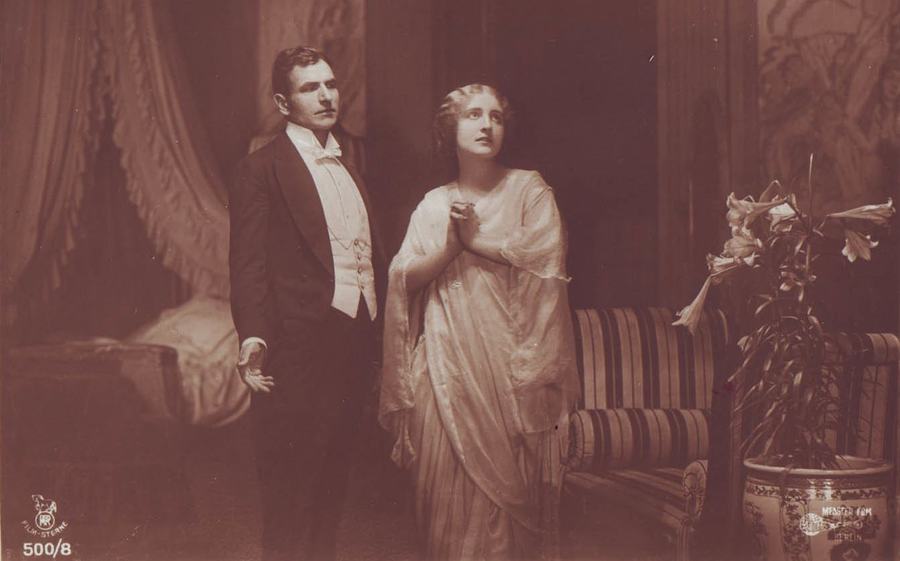
Thematically, Das wandernde Licht is remarkably rich. It probes the anxieties surrounding mental illness, a subject often sensationalized or stigmatized in early cinema. Here, it is treated with a degree of psychological nuance that is impressive for its time. The film asks profound questions about the nature of truth and perception: Can one truly know another's mind? How easily can reputation be tarnished by malicious gossip or a concerted campaign of defamation? The anonymous letters serve as a powerful symbol of hidden agendas and the corrosive power of whispered lies, creating an atmosphere akin to the insidious plotting seen in more overt thrillers. This thematic depth elevates it beyond a simple love story or a mystery, positioning it as a commentary on the fragility of human perception and the societal pressures that can warp reality.
Moreover, the film subtly critiques the constraints placed upon women in this era. Anna, despite her intelligence and determination, is largely powerless within the patriarchal structures of her society. Her agency is limited to private investigation and emotional suffering; she cannot simply walk away from the engagement without facing severe social repercussions. This aspect of the film might find a faint echo in the struggles of women characters in other silent dramas, such as those navigating difficult choices in A Florida Enchantment, though the latter often veered into comedic territory regarding gender roles. In Das wandernde Licht, the constraints are palpable and contribute significantly to Anna's escalating sense of entrapment.
While Henny Porten undeniably dominates the screen, the supporting cast plays a crucial role in constructing the film's tense atmosphere. Bruno Decarli as Count von Fahrenwald delivers a performance that is deliberately ambiguous, allowing the audience to share Anna's uncertainty. He is charming yet occasionally distant, affectionate yet prone to moments that could be interpreted as eccentric or alarming. This delicate balance is vital; if Decarli’s portrayal were overtly villainous or obviously insane, the central mystery would collapse. Instead, he maintains a facade that is just unsettling enough to fuel Anna's fears and the audience’s speculation.
The contributions of Theodor Becker, Elsa Wagner, and Emil Rameau, though perhaps less prominent, are essential in fleshing out the world around Anna, providing the societal backdrop against which her personal drama unfolds. Their reactions, whether of concern, judgment, or complicity, serve to amplify the pressures on Anna and to further complicate her search for truth. This interplay of characters, each with their own potential motives or biases, creates a rich dramatic environment, making the resolution of the central enigma all the more impactful. The ensemble's collective performance, even in its silent subtlety, contributes to the overall chilling effect, demonstrating a sophisticated understanding of dramatic tension.
As an early work from Robert Wiene, Das wandernde Licht offers a fascinating glimpse into the formative years of a director who would soon become one of the most influential figures in German Expressionism. While it predates the full stylistic flowering of that movement, one can discern the nascent seeds of Wiene's interest in psychological states, distorted realities, and the power of atmosphere to convey internal turmoil. The film's emphasis on subjective experience and its exploration of madness as a narrative device would find more extreme manifestations in later Expressionist masterpieces, but its groundwork here is undeniable.
Beyond its historical significance, Das wandernde Licht holds up as a compelling piece of psychological drama in its own right. Its ability to generate suspense and emotional resonance through purely visual means, anchored by Porten’s extraordinary performance, is a testament to the enduring power of silent cinema. It stands as a powerful reminder that the exploration of the human mind, its fears, and its vulnerabilities, has been a central concern of cinematic art from its very inception. For aficionados of early cinema, particularly those interested in the rich tapestry of German film history, this work is not merely an academic curiosity but a deeply engaging and thought-provoking experience, a flickering light that continues to illuminate the complexities of the human condition.
The film’s quiet intensity and its focus on internal conflict set it apart from the more overtly adventurous or grand historical narratives of its time, such as the boxing spectacle of Jeffries-Johnson World's Championship Boxing Contest or the epic scope of Sixty Years a Queen. Instead, Das wandernde Licht finds its strength in its intimate portrayal of a woman on the brink, a narrative choice that speaks to a sophisticated understanding of emotional drama. It is a film that rewards close attention, its subtleties revealing deeper layers of meaning with each viewing, affirming its place as a significant, albeit often overlooked, gem of early German cinema.
IMDb —
1917
Community
Log in to comment.