DbcultAccessing Vault...
5.6/10
Senior Film Conservator
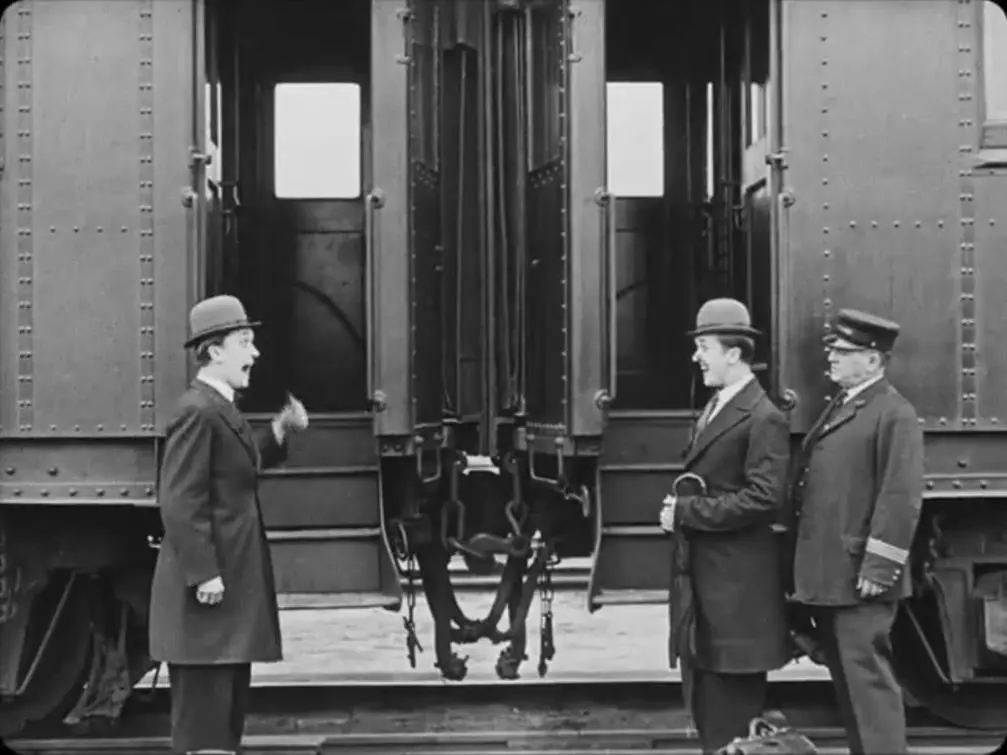
A definitive 5.6/10 rating for a film that redefined the boundaries of cult cinema. Twins remains a cornerstone of transgressive art.
Is Stan Laurel's solo performance in 1925’s Twins worth your time in the modern era? Short answer: yes, but primarily as a fascinating archaeological find for those interested in the evolution of slapstick comedy. This film is specifically for silent cinema enthusiasts and Laurel and Hardy completists who want to see the raw materials of Stan’s genius before it was refined by his partnership with Oliver Hardy; it is definitely NOT for those who demand high-definition pacing or sophisticated narrative twists.
1) This film works because Stan Laurel possesses an innate physical vocabulary that allows him to differentiate two identical characters through mere posture and timing, even when the script fails to provide deep characterization.
2) This film fails because the secondary cast, particularly the 'jealous wife' archetype, is played with such one-dimensional shrillness that the conflict feels repetitive rather than escalating.
3) You should watch it if you are a student of film history who wants to see how 1920s directors like Tay Garnett handled split-screen technicalities and the 'double' trope without the benefit of digital intervention.
Yes, Twins is a significant entry in the Hal Roach library. It provides a clear window into the era of 'personality' comedies where the star was the sole engine of the plot. While it lacks the emotional depth of a Chaplin feature or the architectural stunts of a Keaton film, it offers a pure, unadulterated look at Laurel’s solo capabilities. It works. But it’s flawed.
In Twins, Stan Laurel isn't just playing two roles; he is playing the audience’s expectations against the screen's reality. The plot is thin, almost dangerously so. A man leaves, his brother arrives, and the women in their lives are too distracted by their own tropes to notice the difference. This is a common thread in 1920s comedy, similar to the identity confusion seen in Meyer from Berlin, but Laurel brings a specific, twitchy energy that elevates the material. There is a specific moment in the hallway where Stan—the 'new' Stan—encounters the jealous wife. His reaction isn't just a double-take; it’s a full-body collapse of confidence. It is here we see the proto-Stan who would later become the world's most beloved 'child-man' character.
The acting by Beth Darlington and Billie Latimer is serviceable, though they are largely relegated to being the 'straight men' to Laurel’s chaos. Unlike the more nuanced performances in something like The Charm School, the women here are archetypes of 1920s domesticity. Darlington, as the fiancée, represents the innocent confusion of the era, while Latimer’s jealous wife is a whirlwind of silent-screen fury. Their performances are loud, even in silence. They serve as the anvil upon which Laurel’s rubbery physical comedy is hammered. It’s effective, but it lacks the charm found in contemporary dramas like M'Liss.
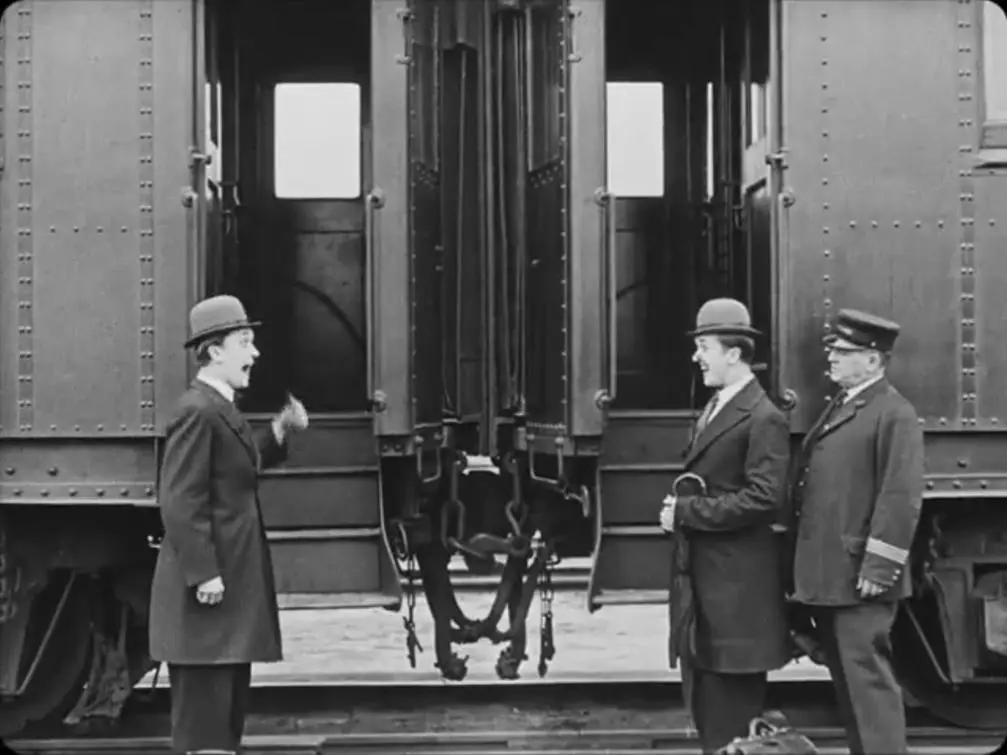
Tay Garnett, who would later go on to direct noir classics, shows a surprisingly firm hand here. The pacing is relentless. Garnett understands that the premise of Twins cannot survive a moment of quiet reflection. If the audience stops to think about why the wife doesn't recognize her own husband’s voice or gait, the illusion shatters. Therefore, the cinematography is functional, focusing on the center of the frame where Laurel can do the most damage. The split-screen work, while primitive compared to modern standards, is handled with a cleanliness that rivals The Bull's Eye. There is a scene where the two brothers are supposedly in the same vicinity, and the alignment of the frame is tight enough to maintain the gag without the seam showing too obviously to a 1925 audience.
"The genius of Twins lies not in its story, but in the realization that Stan Laurel could occupy twice the space and still feel like an underdog."
The tone of the film is one of escalating panic. It shares a certain DNA with the frantic energy of Mrs. Leffingwell's Boots, where the comedy is derived from the threat of social ruin. In Twins, the stakes are supposedly the sanctity of marriage and the future of a relationship, but Garnett treats these with a lightness that borders on the cynical. The film doesn't care if the marriage survives; it only cares if the next door-slam happens on beat. This mechanical approach to comedy is what makes it a 'Roach' film through and through.
Laurel’s performance is a masterclass in the 'slow burn.' Even without Hardy to play against, he manages to build tension through his own bewilderment. The film is also mercifully short, which prevents the thin premise from wearing out its welcome. Compared to the plodding pace of some contemporary dramas like The Secret of the Moor, Twins is a sprint.
The logic gaps are enormous. While we excuse a lot in silent comedy, the 'identical twin' trope is pushed to its absolute breaking point here. Additionally, the print quality of surviving versions can vary, sometimes obscuring the very facial expressions that make Laurel’s performance work. It lacks the polish of Trilby or the narrative cohesion of Human Collateral.
Most critics look at Twins and see a simple comedy. I see a film that is surprisingly anxiety-inducing. There is a subtext of identity erasure here that is almost Kafkaesque. Stan enters a world where everyone thinks they know him, yet no one actually sees him. He is a ghost in his brother's life. If you strip away the slide whistles and the pratfalls, Twins is a minor nightmare about the fragility of the self. It’s a stretch, perhaps, but it’s what makes the film linger in the mind longer than a standard short like An Honorable Cad.
Twins is not a masterpiece, and it’s not even the best thing Stan Laurel did in the 1920s. However, it is an essential piece of the puzzle. It shows a comedian in transition, testing the boundaries of his own physicality. The film relies heavily on tropes that were already tired by 1925, yet Laurel breathes a strange, jittery life into them. It is a loud, chaotic, and occasionally brilliant mess. If you go in expecting the refined slapstick of the 1930s, you will be disappointed. If you go in expecting a raw, energetic display of silent-era talent, you’ll find exactly what you’re looking for. It’s a solid 6/10 that earns an extra point for Laurel’s sheer commitment to the bit.
In the grand scheme of silent shorts, it stands taller than Bulling the Bolshevik but falls short of the conceptual brilliance found in later Laurel works. It is a historical document that still manages to trigger a few genuine belly laughs. And in the world of 100-year-old cinema, that is no small feat.
IMDb —
1919
Community
Log in to comment.