DbcultAccessing Vault...
Cult Review
Senior Film Conservator
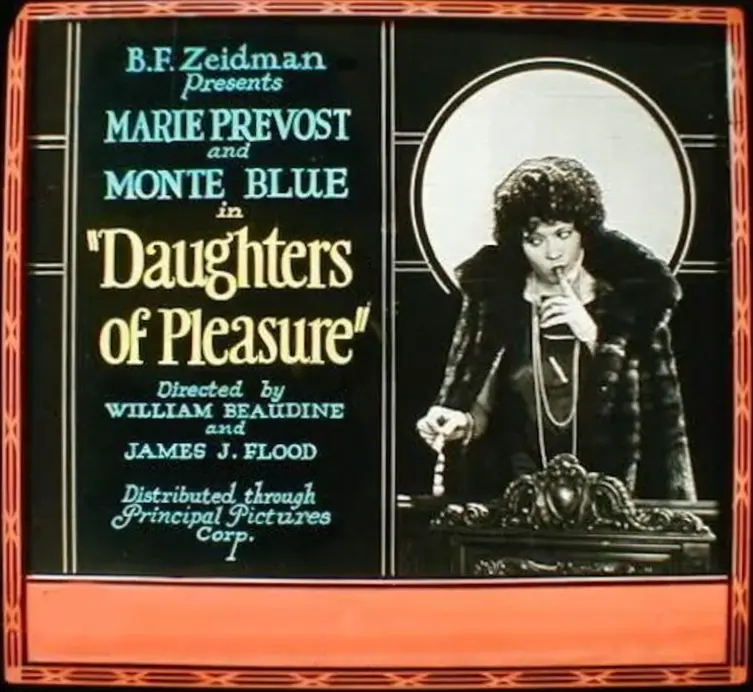
In the pantheon of 1920s cinema, few artifacts capture the vertiginous shift of social mores quite like William Beaudine’s Daughters of Pleasure. Released in 1924, this film serves as a quintessential specimen of the 'flapper' genre, yet it possesses a darker, more cynical marrow that distinguishes it from the frothy comedies of its contemporaries. It is a work that breathes the smoke-filled air of the speakeasy while maintaining the rigid posture of a Victorian parlor, creating a friction that remains surprisingly palpable a century later.
The narrative engine is fueled by the character of Mark Hadley, portrayed with a stolid, almost menacing respectability by Wilfred Lucas. Hadley is the archetypal 'new man' of the roaring twenties—wealthy, influential, and utterly convinced of his own moral infallibility. His demand that his daughter sever ties with Kent Merrill is framed not as a concern for her happiness, but as a preservation of the family's newfound social capital. By labeling Merrill a 'chippy chaser,' Hadley projects his own illicit appetites onto the younger generation, a psychological maneuver that Beaudine captures with an almost clinical detachment.
This projection is the film's most potent thematic weapon. While the silent era often relied on broad strokes, the screenplay here—crafted by the formidable trio of Harvey F. Thew, Caleb Proctor, and Eve Unsell—digs into the subtext of the nouveau riche experience. Much like the characters in The Social Code, the Hadleys are navigating a world where the rules are being rewritten in real-time, and the only constant is the performative nature of virtue.
While the paternal conflict provides the structure, the film’s heartbeat belongs to Marie Prevost and a burgeoning Clara Bow. Prevost, as the daughter, navigates the transition from dutiful child to disillusioned adult with a nuance that was often missing from the era’s more histrionic performances. Her realization of her father’s infidelity isn't just a plot point; it’s the death of an entire worldview. The juxtaposition of her Parisian sophistication with the tawdry reality of her father’s 'fling' creates a narrative resonance that echoes the complexities found in Comin' Thro' the Rye.
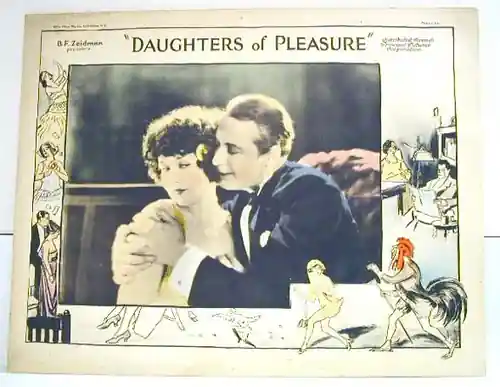
Then there is Clara Bow. Even in this relatively early role, Bow’s screen presence is an elemental force. She doesn't just act; she vibrates. In a film preoccupied with the stifling atmosphere of domestic propriety, Bow represents the chaotic, unbridled energy of the decade. Her performance serves as a counterpoint to the calculated maneuvers of the male characters, offering a glimpse into the 'new woman' archetype that would soon dominate the cultural zeitgeist. Her inclusion here elevates the film from a standard melodrama to a historical document of a changing femininity, much like the thematic undercurrents in Waifs.
William Beaudine’s direction is marked by an economical elegance. He utilizes deep focus and shadow to emphasize the isolation of his characters within their opulent surroundings. The Hadley estate is not a sanctuary; it is a gilded cage where every hallway seems to hold a secret. This visual claustrophobia is contrasted sharply with the more fluid, kinetic scenes involving the younger characters, suggesting a world in motion that the elder Hadley is desperately—and unsuccessfully—trying to contain. This stylistic choice mirrors the tension found in The Man Life Passed By, where the environment itself reflects the internal decay of the protagonist.
The intertitles deserve special mention. Rather than merely serving as narrative bridges, they are infused with the sharp, acidic wit of the Jazz Age. They capture the linguistic flair of the period, using slang and metaphor to heighten the satirical edge of the film. The choice of words—specifically the derogatory labels Hadley hurls at Merrill—serves to highlight the linguistic violence that often precedes social exclusion.
When placing Daughters of Pleasure alongside contemporary works like One Wonderful Night or Burning the Candle, it becomes clear that Beaudine was aiming for something more intellectually rigorous than simple entertainment. While many films of the mid-20s were content to celebrate the excesses of the era, this film is inherently suspicious of them. It shares a certain DNA with The Burning Question in its willingness to tackle the uncomfortable intersections of money, sex, and family loyalty.
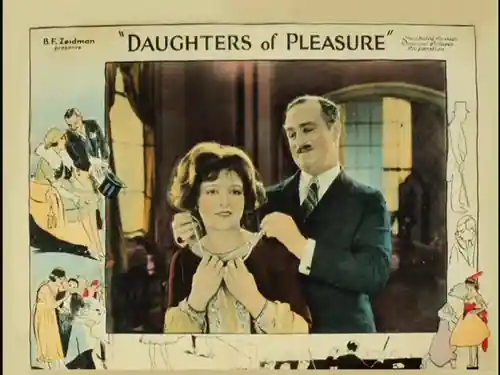
The 'French girl' trope, embodied by Lila, is handled with a surprising lack of xenophobia. Lila is not a caricature; she is a mirror. She represents the allure of the 'other' that the American nouveau riche sought to possess but could never truly understand. Her relationship with Hadley is transactional, yet the film allows her a level of agency that complicates the viewer's sympathy. This moral ambiguity is a hallmark of the more sophisticated silent dramas, such as Der Eid des Stephan Huller, where the lines between victim and perpetrator are perpetually blurred.
The sequence in which the daughter discovers her father in Lila’s apartment is a masterclass in silent tension. Beaudine eschews melodramatic outbursts in favor of lingering close-ups that capture the slow, agonizing realization of betrayal. The space between the characters becomes a vacuum, sucking the air out of the room. It is a moment of profound disillusionment that rivals the emotional stakes of The Brute Master.
In this moment, the film’s title takes on its full, ironic weight. Who are the 'daughters of pleasure'? Are they the young women seeking autonomy, or are they the collateral damage of a patriarchal system that views pleasure as a commodity to be hoarded by the powerful? The resolution, while satisfying the era’s requirements for a moral reckoning, leaves the viewer with a lingering sense of unease. The family unit is restored, but the foundation remains cracked.
Daughters of Pleasure is more than a mere curiosity for silent film aficionados. It is a sharp, unsparing look at the cost of social mobility and the inherent fragility of the 'self-made man.' With stellar performances from Monte Blue and the rest of the ensemble, it stands as a testament to the sophistication of early 20th-century storytelling. It lacks the saccharine sentimentality of The Right to Be Happy, opting instead for a gritty realism that feels remarkably modern.
As we look back through the lens of history, the film’s critique of hypocrisy feels timeless. The 'chippy chasers' and 'nouveau riche' of 1924 have been replaced by new archetypes, but the underlying power dynamics remain unchanged. Beaudine’s work, much like The Lady of the Photograph, reminds us that the camera is often at its best when it is exposing the secrets we try hardest to hide. In the end, Daughters of Pleasure is a vital, vibrant, and viciously intelligent piece of cinema that demands a place in the serious critical conversation.
Whether you are drawn to the historical significance of Clara Bow’s early career or the intricate social commentary of the Jazz Age, this film offers a wealth of material for analysis. It is a reminder that the silent era was not a period of simplicity, but one of immense psychological depth and stylistic innovation. It remains as piercing today as it was nearly a century ago, a shimmering reflection of the eternal struggle between public image and private truth.

IMDb 5.7
1931
Community
Log in to comment.