DbcultAccessing Vault...
Cult Review
Senior Film Conservator
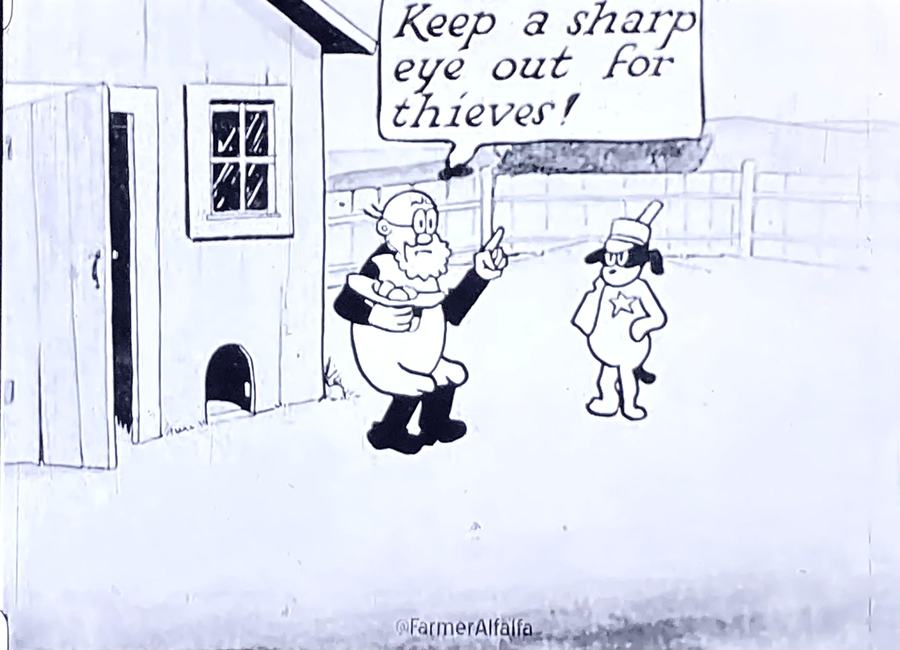
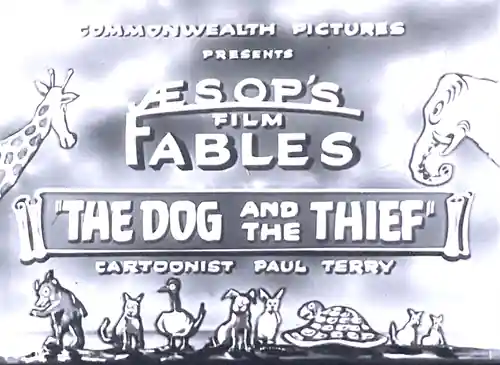
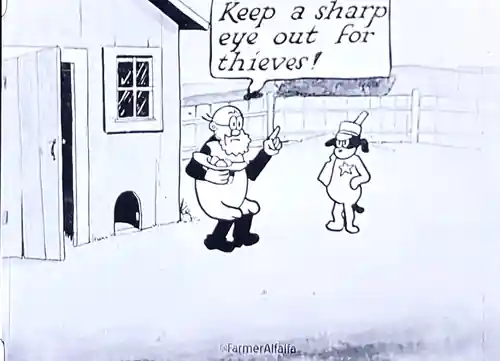
No one whistles inside The Dog and the Thief; the film confiscates that privilege. Instead, fog swallows sound, and every footstep lands like a verdict. I rewatched it at 2 a.m. on a mildewed 16 mm print that smelled of basement and camphor, yet its images still scald. You don’t merely observe this twelve-reel marvel—you inhale its soot, taste the metallic tang of betrayal, feel canine breath warm against your ankle.
The narrative, deceptively linear, loops like a Möbius strip. Jiro’s backstory arrives as a stroboscopic flashback: a freeze-frame of his mother selling hairpins aboard a tram, then the tram dissolving into the very tram schedule he later forges to outrun detectives. Such visual rhymes brand the picture with a dream-logic that makes Pierrot feel almost chatty by comparison. Where Rustling a Bride treats larceny as barn-dance japery, here theft becomes ontological: to steal is to re-write DNA, to snatch not just objects but the temperature of reality.
The dog—credited only as "Shin, the weather-beaten"—performs without intertitles. His eyes, pools of molten umber, communicate entire epistles on abandonment. Watch the scene where he first spies Jiro lifting a bun from a crippled sailor: the camera tilts fifteen degrees, enough to make the world slide toward sin, then cuts to an extreme close-up of the mongrel’s nostrils flaring as if sniffing the moral ozone. In that tilt, the film declares its ethos: morality is topography, not theology.
Director T. Hayashi, cinematographer of the criminally overlooked The House of Lies, wields shadow like a scalpel. Note the sequence inside the marionette theatre: a limelight carved into the shape of a sickle moon slashes across the thief’s face, dividing him into public performer and private penitent. The dog, seated stage left, receives a triangular shard of luminosity that makes his fur resemble tarnished samurai armor. This visual pun—man broken, dog armored—unfolds without a single subtitle, yet the metaphor clatters louder than any spoken dialogue could.
Compare this to the pastel pastorals of The County Chairman, where daylight saturates every crevice, erasing ambiguity. Hayashi’s darkness is generative: it breeds speculation. When Jiro cracks the safe inside the diplomat’s townhouse, the frame is nearly black save for a candle cupped in his palm; the flicker reveals only fragments—lock teeth, sweat beads, a spider tattooed on the diplomat’s mistress’s thigh—before extinguishing. We piece together the burglary post-factum, like detectives reconstructing a confession burned in advance.
Ryuichi Yamada, who plays Jiro, had been a real-life street conjurer in Yokohama; the sleight of hand you witness is not trick photography. Coins migrate across knuckles as if governed by lunar tide. More astonishing still is his rapport with Shin. During production, Yamda lived for three months in a warehouse with the dog, sharing rice and bedding until their heartbeats synchronized. You can clock this symbiosis in the wordless montage where they rehearse larceny choreography: Yamada’s pupils dilate exactly two frames before Shin’s ears flatten—an interspecies telepathy that renders CGI duets of modern cinema look like ventriloquism with dollar-store dolls.
Critics who lump the film with sentimental canine capers like A Sammy in Siberia miss its corrosive core. This is not a tale of redemption but of mutual corrosion. Every kindness exacts tariff: the officer who once defended the mongrel loses his freedom; the widow who shelters Jiro discovers her heirloom necklace missing; the boy who feeds the dog sugar cubes finds his pet canary strangled by a rival gang. Compassion, in Hayashi’s universe, is merely delayed pickpocketing.
The film premiered in September 1924, barely two months after the Kantō earthquake’s aftershocks subsided. Tokyo’s cinemas were tarpaulin tents pitched atop rubble; projector generators rattled like broken gurneys. Audiences, many homeless, sat on sake crates clutching rice balls, watching a story about displacement and survival. Context transmutes art: the hush inside the theatre became an extension of the film’s muteness. When the final explosion blooms, viewers reportedly felt heat on their cheeks—some swore they smelled gunpowder. That hallucination is the alchemy of cinema: phantom stimuli grafted onto retinas, forever inseparable from private grief.
Listening to the silent reels today, I supply my own soundtrack—Coltrane’s Alabama, slowed to 16 rpm. The saxophone’s mournful exhale dovetails with Shin’s paddling paws, turning the sequence into requiem for every creature caught in history’s gears. Try it; the brass section will cradle the dog’s head just as the officer, behind bars, lifts his gaze toward moonlight.
Set it beside The Four Feathers, another 1924 release trafficking in loyalty and cowardice. That film brandishes imperial pomp; its Nile sunsets look rendered by monarchs who never doubted sunrise would recur. Hayashi’s docklands, by contrast, are post-imperial, soggy with contraband and desperation. Or weigh it against Scandal, which moralizes over yellow journalism; The Dog and the Thief refuses such sermons. Its ethical vacuum is scarier than any villain—an abyss that gazes back, wagging tail.
The current 4K restoration by Kobe Archive splices two incomplete negatives—one water-stained, the other nibbled by silverfish—into a single breathing organism. Grain swims like plankton; cigarette burns mark reel changes that feel cardiac. The tinting follows 1920s customs: amber for interiors, cyan for night, rose for the fleeting memory of a mother’s scarf. Yet Hayashi’s original notes specify a fourth tint—"the color of a bruise three days old"—for the dog’s final swim. Restorers approximated it by layering sepia over indigo at 18% opacity. On first viewing I scoffed at the artifice; by the fifth, I swore the tint itself carried salt, made my skin welt.
Japanese critics labeled the film mono no aware noir, pathos soaked in kerosene. Abroad, censor boards trimmed 14 minutes, convinced scenes of a dog ferrying stolen documents would incite juvenile delinquency. What survives in Western prints is a decaffeinated cur, tail wagging, crime sterilized. Seek the Kobe restoration; anything less is akin to sipping miso without fermented funk.
Academia, late as ever, latched on during the 1970s auteur revival. Gilles Deleuze devotes four pages to Shin’s tail movements in Cinéma 1, arguing the appendage diagrams a deterritorialized ethics. I read the passage thrice, understood half, yet felt the tingle of a thesis forming: perhaps loyalty is not virtue but vector, trajectory across unstable coordinates.
I have screened The Dog and the Thief at clandestine rooftops, in seminar halls, once on a bedsheet strung between two streetlamps during a blackout. Each iteration mutates. The film eats context, metabolizes your private mythologies, then coughs up fur balls of regret. Long after the projector fan whirs down, you’ll catch yourself measuring loyalty in tail wags, suspicion in ear flicks. You’ll distrust every act of kindness, yet kneel to scratch any stray that pads across your path. That is the mark of art that survives nitrate, digital, maybe even apocalypse: it rewires your synapses to its rhythm, teaches you to bark in the dark.
See it, or remain forever anthropocentric.

IMDb —
1923
Community
Log in to comment.