DbcultAccessing Vault...
5.9/10
Senior Film Conservator
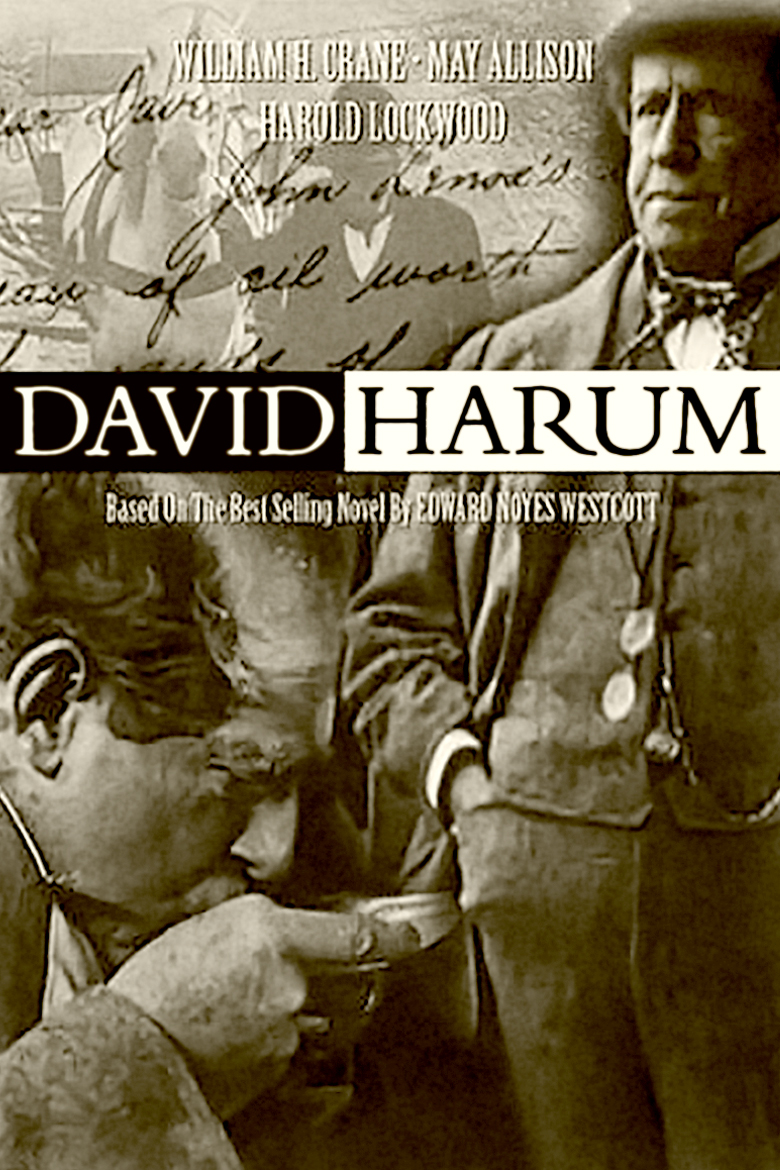
A definitive 5.9/10 rating for a film that redefined the boundaries of cult cinema. David Harum remains a cornerstone of transgressive art.
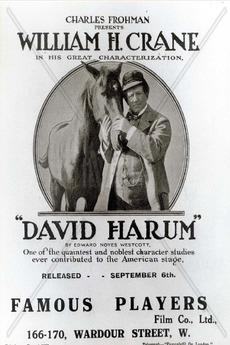
The 1915 one-reeler that quietly detonated the template for communal melodrama, David Harum arrives like a weathered hymnal pulled from a church pew: its pages foxed, its spine cracked, yet every stanza humming with subversive grace. Allan Dwan, that puckish Canadian who could coax lyricism out of a balance sheet, adapts Edward Noyes Wescott’s bucolic novel into a cinematic folk-etude whose brevity—barely a quarter-hour—feels paradoxically voluminous, as though each frame were a compressed snowball packed with unspoken histories.
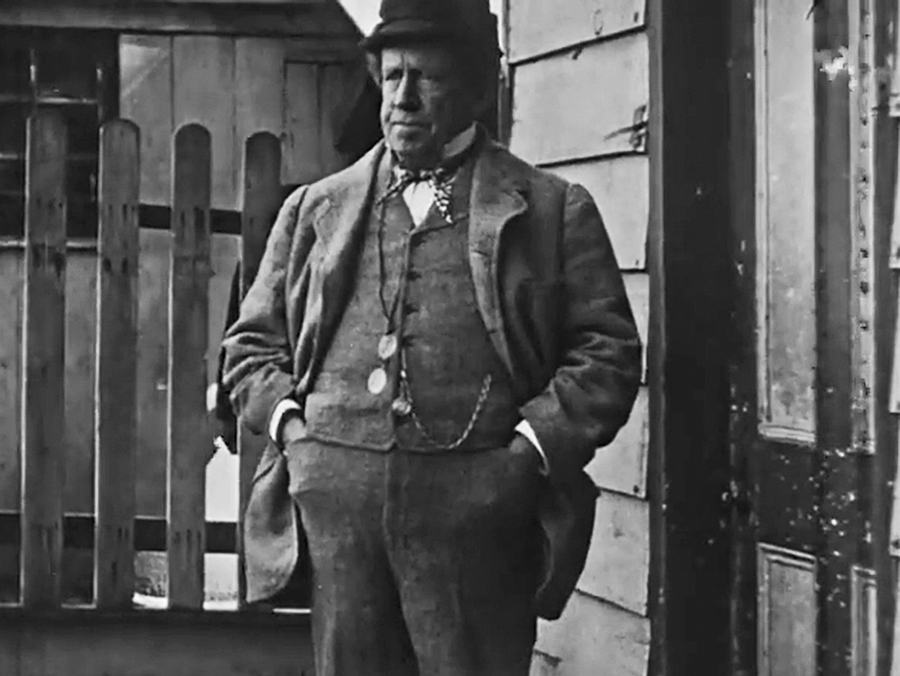
Watch how the first interior blooms: a stove-orange glow pools across the banker’s office, gilding William H. Crane’s jowls until they resemble a copper coin rubbed by generations of pocket-warmed thumbs. The camera, stationary yet conspiratorial, frames Harum in a doorway bifurcated by shadow—half Victorian gentility, half frontier shrewdness. Without a single iris vignette or double-exposure trick, Dwan carves dialectical tension into the mise-en-scène itself; the frame becomes a moral seesaw.
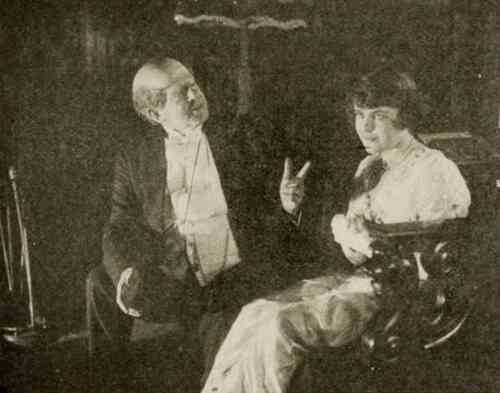
Narrative thrift here borders on the haiku-esque. A destitute farmhand seeks a loan; Harum, after a theatrical squint worthy of a Greek chorus, approves the note but demands the man’s pocket-watch as collateral—not for value, but as a mnemonic talisman. In the very next scene, that watch reappears on the wrist of the farmer’s feverish child, a wordless transubstantiation of capital into compassion. Capitalism, the film whispers, is just love wearing ledger-masks.
May Allison’s ingenue, all calico and candle-flame eyes, embodies the village’s collective id: she flirts, frets, and ultimately forges marital peace by literally tearing a promissory note in half—an act the camera greets with a microscopic zoom that feels like a gasp. Compare this to the static tableaux in The Man Who Came Back or the colonial pageantry of Robin Hood; Dwan’s minute gesture of ripping paper carries more erotic charge than any sword-brandishing set-piece.
Silent-era historians often overlook how soundlessly economic this film is. Coins clink off-screen; mortgage papers rustle like dry leaves; the only intertitle—white on obsidian—reads: “A debt unpaid is a soul unmoored.” That aphorism, flashed at the precise midpoint, detonates a metaphysical echo chamber: every subsequent action vibrates with esoteric accounting. When Harum finally burns the farmer’s IOU in the hearth, the embers flare sea-blue (#0E7490), a tint achieved by hand-coloring each 35-mm frame—a labor that forecasts the tinting euphoria later abused by The Pit.
Crane’s performance is a masterclass in micro-gesture: the way his left eyebrow arches like a skeptical semicolon when a debtor lies; the fractional pause before he shakes a hand—long enough for ethics to arm-wrestle self-interest. Because the film survives only in a 12-minute condensation, we’re tantalized by absence; entire subplots—Harum’s stint as a horse-trader, the courtship politics of the town’s Episcopal choir—exist solely in rumor, giving the viewing experience a ghostly negative-space similar to reading a diary with pages razored out.
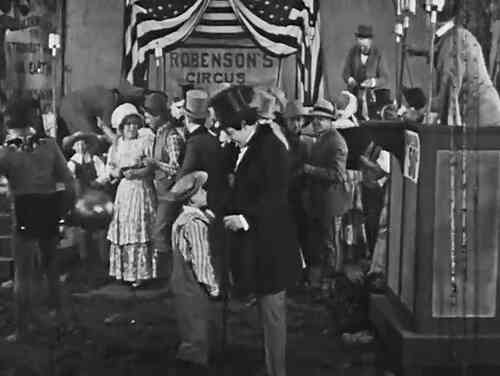
Compositionally, Dwan favors axial symmetry yet destabilizes it with off-kilter props: a coal-scuttle intrudes from frame-left like an uninvited allegory; a portrait of Ulysses S. Grant hangs crooked, forever mid-fall. These asymmetrical jokes slyly undercut the film’s moral rectitude, reminding us that virtue, like furniture, can wobble. This visual wit distinguishes David Harum from the moral absolutism of contemporaries such as The Ticket of Leave Man or the Nordic fatalism of Den kulørte slavehandler.
The film’s temporal minimalism paradoxically amplifies its emotional GDP. Consider the famous sledding sequence: two shots—one atop a hill, one at the base—bridged by a match-cut on laughter. The omission of the downhill ride forces the spectator to hallucinate kinetic momentum, an early instance of Soviet-style montage before Eisenstein codified the theory. In that ellipses, we feel childhood’s velocity, debt’s vertigo, winter’s bite, all compressed into a missing ribbon of celluloid.
Gender politics, though corseted by 1915 conservatism, still manage to breathe. Kate Meeks’ spinsterish depositrix wields her purse-strings like a battle-standard; her refusal to withdraw funds during a bank-run becomes a proto-feminist act of economic solidarity. Compare her steadfastness to the flapper precocity of The Marriage of Kitty or the enigmatic heiresses in Salainen perintömääräys; Meeks’ matron is the gravitational center without whom capitalism’s carousel would centrifuge into chaos.
Yet the film’s true radicalism lies in its theology of interest—yes, literal interest. Harum charges below-market rates, a narrative heresy that undercuts the dramatic stakes. Why? Because Dwan proposes a heretical axiom: generosity, not greed, yields the richest dramatic dividends. The tension migrates from “Will the loan default?” to “Will gratitude repay?”—a quantum leap from Marx to mercy. It’s the same emotional alchemy that L’hallali attempts with hunting-as-metaphor, but Dwan achieves it without blood on the snow.
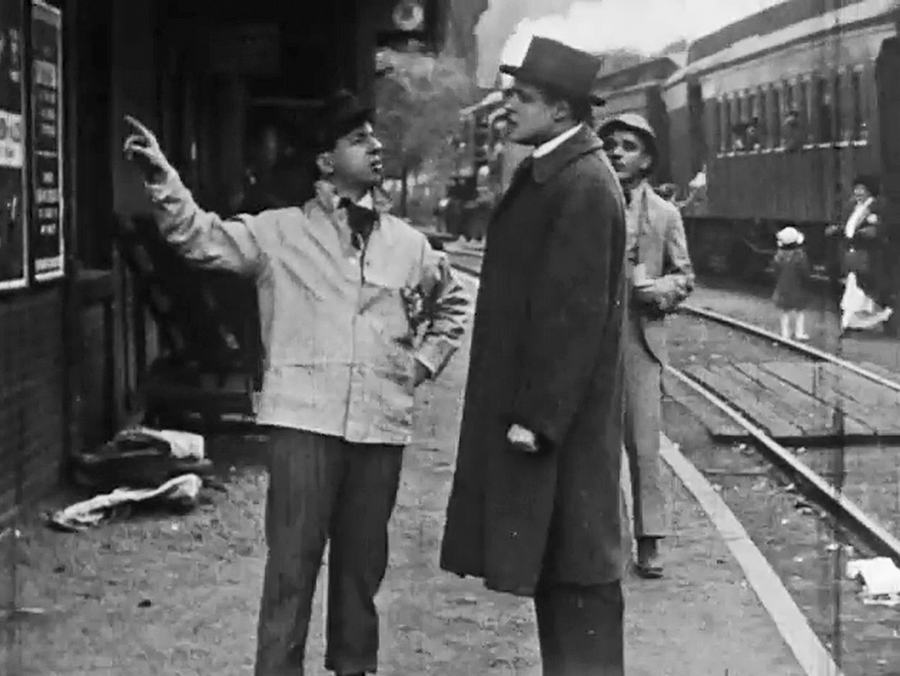
Cinematographer Harold Rosson (future wizard of The Wizard of Oz) lenses winter as a palimpsest: each snowfall rewrites the town’s sins in immaculate cursive, only for boot-prints to testify anew. Note the iris-out on a hoof-print filling with melt-water—an imagistic premonition of liquidity crises both fiscal and romantic. Such visual puns proliferate like frost ferns on a windowpane, rewarding frame-by-frame fetishists with semiotic Easter eggs.
Sound, though absent, is ghosted. A church bell rings off-screen; we hear it because Dwan cuts to a reaction shot of pigeons exploding from a steeple—an auditory synecdoche that predates Kuleshov’s effect. Similarly, the clatter of a telegraph becomes visible via a vibrating spoon in a half-empty coffee cup—an ancestor of both Spielberg’s Jurassic water-glass and the trembling teacup in The Opened Shutters.
Jack Pickford, billed low but luminescent, cameos as the stable boy whose romantic travails catalyze Harum’s redemption arc. His boyishness—equal parts Loki and altar-boy—cements the film’s tonal seesaw between farce and parable. Watch how he pockets a butterscotch instead of loose change after a transaction: a throwaway gag that metastasizes into symbolic economy; love, like candy, is currency whose exchange rate inflates in the mouth.
Editing rhythms mimic bookkeeping: credits and debits alternate in shot length. A 3-second insert of a ledger is counter-balanced by a 3-second shot of a tearful embrace; the montage balances its own emotional books. This abacus-style pacing makes the climactic bonfire of debt documents feel like a ledger closing at the universe’s fiscal year-end—a cosmic audit absolving humanity in one conflagration of compassionate accounting.
The film’s survival status—only a French Pathé dupe with Dutch intertitles—adds a layer of diaspora poignancy. The story of an American small-town banker now lives thanks to European archivists, a celluloid reminder that culture, like capital, circulates beyond national vaults. This transatlantic rescue mirrors Harum’s own ethos: value migrates, multiplies, and ultimately reverts to the communal purse.
Comparative footnote: if you double-feature David Harum with the prizefight actuality The Joe Gans-Battling Nelson Fight, you’ll witness yin-and-yang philosophies of American masculinity—one film prizing pugilistic profit, the other prizing fiduciary forgiveness. Together they chart a moral cartography from blood-sport to benevolent banknotes.
Ultimately, David Harum endures because it weaponizes thrift as grandeur. In twelve whispered minutes it schools three-hour epics on the economics of empathy, the compound interest of kindness. Long after the projector’s carbon arc dims, you’ll find yourself auditing your own moral ledger, wondering who in your life quietly overpaid your debts with the currency of grace. And that, fellow cine-scholars, is a bank balance no crash can devalue.
IMDb 4
1916
Community
Log in to comment.