DbcultAccessing Vault...
4.1/10
Senior Film Conservator
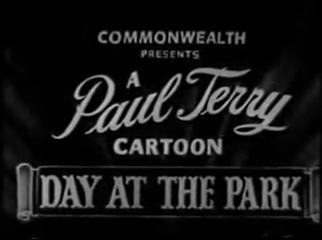
A definitive 4.1/10 rating for a film that redefined the boundaries of cult cinema. Day at the Park remains a cornerstone of transgressive art.
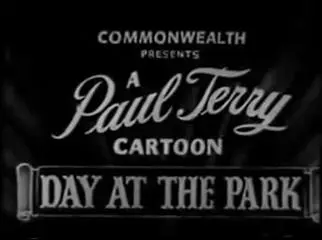
Paul Terry’s Day at the Park arrives like a brittle nitrate postcard from an alternate 1920 where physics took a sabbatical and dignity was optional. The film, barely seven minutes of jittery ink, is a pocket cosmos of centrifugal panic: every line wobbles, every background shrub jitters as though secretly laughing. Farmer Al Falfa—part-time hayseed, full-time municipal martyr—dons a patrolman’s coat two sizes too ambitious and roller-skates whose wheels seem forged by the same malevolent gremlins that would later haunt Pants. The park he polices is no pastoral retreat; it is a Dadaist battleground where statuary wink, benches lunge, and even the koi in the pond appear to smirk.
The opening shot—an iris-in on Al’s spindle legs—announces the film’s governing aesthetic: the body as contraption. His skates clatter across the cobblestones with the arrhythmic desperation of a man trying to outrun his own skeleton. Each push of the foot is a petition to gravity, and gravity, being a merciless silent-era critic, denies the appeal. Momentum hurtles him toward flowerbeds, baby carriages, and a brass band whose tuba becomes a magnet for his cranium. The gags accelerate in geometric perversion: a simple stumble begets a spiral of ever-expanding catastrophe, echoing the domino logic found in Everybody’s Business, yet stripped of that film’s social sermon and distilled into pure kinesthetic amphetamine.
What elevates the mayhem above mere mechanized slapstick is the film’s sly anthropomorphism. A monkey—part Harpo, part Puck—materializes without narrative fanfare, swinging from a tree limb like a furry indictment of human pretense. The primate’s eyes, inked with just two white dots, radiate the cold bemusement of a prosecutor. It watches Al’s pratfalls the way one studies a moth battering a lamppost: with detached curiosity, waiting for the wing to singe. When the moment ripens, the monkey descends, nimble as a rumor, and relieves the patrolman of his coat, his badge, his striped trousers, and finally his dignity. The theft is not swift; it is ceremonial, performed with the languid grace of a courtier disrobing a king who has already lost the war.
Stripped to union-suit absurdity, Al becomes a living burlesque of authority. His bare knees—two pale moons—flash in the sunlight like a semaphore of shame. The monkey, now wearing the patrolman’s cap at a rakish tilt, parades across the frame in a victory lap that feels eerily prophetic: a century early, it prefigures every meme that would later crown random fauna as monarchs of the internet. Yet Terry withholds easy revenge. There is no chase, no reclamation of garb, no restoration of social order. The film ends on a freeze-frame of Al’s mortified grimace, the monkey perched atop a fountain cherub, both figures suspended in a tableau that mocks the very concept of closure.
Technically, the short is a fossilized fever of pre-cel ingenuity. Backgrounds jitter because cels were still a luxury; animators drew directly onto paper, then photographed the smudged result. The wavering line-work is not incompetence but celluloid respiration: each quiver betrays the human hand that conjured it. Compare this to the glass-smooth polish of The Master Mind, released the same year, where every contour feels embalmed in its own perfection. Day at the Park chooses instead the trembling vitality of a charcoal sketch dashed off by a drunkard who happens to be a genius.
The color palette—what little survives in tinted prints—leans toward bile greens and cadaverous mauves, as though the park were lit by gaslight filtered through a hangover. Contemporary restorations have attempted digital sepia, but the authentic experience is closer to watching a daguerreotype melt. Sound, of course, was never native; exhibitors in 1920 paired it with whatever jaunty piano the house could afford. Today, on YouTube, you’ll find accompaniments ranging from honky-tonk pastiche to glitch-hop remixes. I recommend silence: let the clatter of Al’s skates echo like distant artillery, let the monkey’s soundless laughter reverberate inside your skull until you question every badge you’ve ever saluted.
Interpretively, the film is a libertarian daydream smuggled inside a child’s cartoon. The park—supposed commons—reveals itself as a panopticon where surveillance is not only futile but inherently ridiculous. Al’s patrolman is the last believer in municipal sanctity; the monkey is chaos incarnate, proving that authority is just fabric, easily doffed. One thinks of The Seal of Silence, where conspiracies fester beneath civic monuments, yet that feature required reels of exposition to arrive at what Terry achieves in seven wordless minutes. The monkey’s strip-search becomes a radical democratization: anyone can wear the badge, therefore no one deserves it.
Gender, too, undergoes subversive contortion. Al’s masculinity is inseparable from his uniform; once removed, he is rendered pre-pubescent, a blotchy cartoon cherub. The monkey, sexless and gleeful, transcends binary expectation—an early animated instance of what theorists might call queer mischief. Compare this to the hyper-masculine posturing in The Rough Lover, where male identity is fortified through fisticuffs. Terry proposes an alternate route: unfetter the self from sartorial signifiers and watch hierarchy collapse into farce.
Yet the film is not a manifesto; it is too busy laughing at itself. When Al’s derby transforms into a nesting bowl for an irate goose, the gag is not revolution but pure rhythmic absurdity—comedy as percussion. The secret engine is acceleration: each subsequent indignity arrives faster than the brain can rationalize, creating a euphoric short-circuit. Psychologists call this the ‘incongruity-resolution theory’; I call it the moment when the viewer becomes the roller-skate, helplessly careening toward the fountain’s brink.
Influence-wise, DNA from this seven-minute romp can be traced through the century. Chuck Jones’ Feed the Kitty borrows the slow-motion pathos of a predator robbed of dignity. The Minions owe their gibbering anarchy to Terry’s monkey, stripped of dialogue yet eloquent in mischief. Even the Joker’s pencil-trick in The Dark Knight partakes of the same zero-sum humiliation: authority figure reduced to punchline. Terry intuited that the shortest distance between audience and catharsis is a banana-peel placed beneath the constabulary boot.
Restorationists face a dilemma: how much instability should be stabilized? Over-digital scrubbing risks amputating the ghostly aura that makes pre-sync cinema feel like séance rather than spectacle. The best prints retain flecks, scratches, the occasional hair—each flaw a reminder that celluloid once coursed through sprockets at ninety feet per minute, vibrating with the same life-force that animated the monkey’s grin. Accept the damage as patina, the way we forgive cracked paint on a Giotto fresco.
Viewing tip: queue it between Girls and Obmanutaya Yeva to create a triptych on voyeurism and exposure. The tonal whiplash—from sentimental melodrama to Slavic psychodrama to anarchic cartoon—will leave your neural synapses tap-dancing. Better yet, watch on a phone while waiting in line at the DMV; the surrounding bureaucratic theater will assume its rightful place as mere continuation of Al’s skater-hell.
Critical reception in 1920 was nonexistent; trade papers dismissed it as “another Farmer Al Falfa wheeze.” Only in the 1960s, when archivists excavated early American animation, did scholars recognize the short as a missing link between McCay’s dreamlike elegance and the rhythmic brutality of later slapstick. Today it circulates mostly as GIF fodder: the monkey doffing the cap, Al’s trousers fluttering like a surrender flag. Reduced to looped snippets, it still performs its original function: to sabotage the dignity of whoever watches while wearing a uniform—be it police blues or corporate lanyard.
So, is Day at the Park a masterpiece? The term feels pompous for a doodle that lives to pants its own protagonist. Call it instead a pocket-sized miracle: proof that seven minutes of ink and panic can disrobe authority more efficiently than a Senate hearing. Watch it once for the slapstick, again for the anarchic philosophy, a third time to notice how the monkey’s tail forms a perfect question mark—cinema itself asking who, exactly, is running this zoo.
IMDb 6.5
1936
Community
Log in to comment.